
Green family photo outfits work best when everyone shares a color story without wearing the same shade from head to toe. Start with sage, cream, denim, or navy, then let one emerald piece carry the stronger contrast. The result feels coordinated without looking like a uniform.
- Build Sage Layers for Soft Family Portraits
- Should Emerald Lead the Accessories?
- Blue and Green: A Calm Contrast
- Let Emerald Cut Through Black
- Keep Sage Shirts Crisp With Cream Trousers
- The Emerald Blazer as Your Anchor
- Assign Each Green Shade a Role
- Choose Olive and Sage for the Park
A practical budget can stay flexible:
- Build Sage Layers for Soft Family Portraits
- Should Emerald Lead the Accessories?
- Blue and Green: A Calm Contrast
- Let Emerald Cut Through Black
- Keep Sage Shirts Crisp With Cream Trousers
- The Emerald Blazer as Your Anchor
- Assign Each Green Shade a Role
- Choose Olive and Sage for the Park
- Mix Green Knits Without Bulk
- When Sage Meets Denim in the Studio
- Tie the Group Together With Emerald Accessories
- Move From Pale Sage to Deep Emerald
1Build Sage Layers for Soft Family Portraits
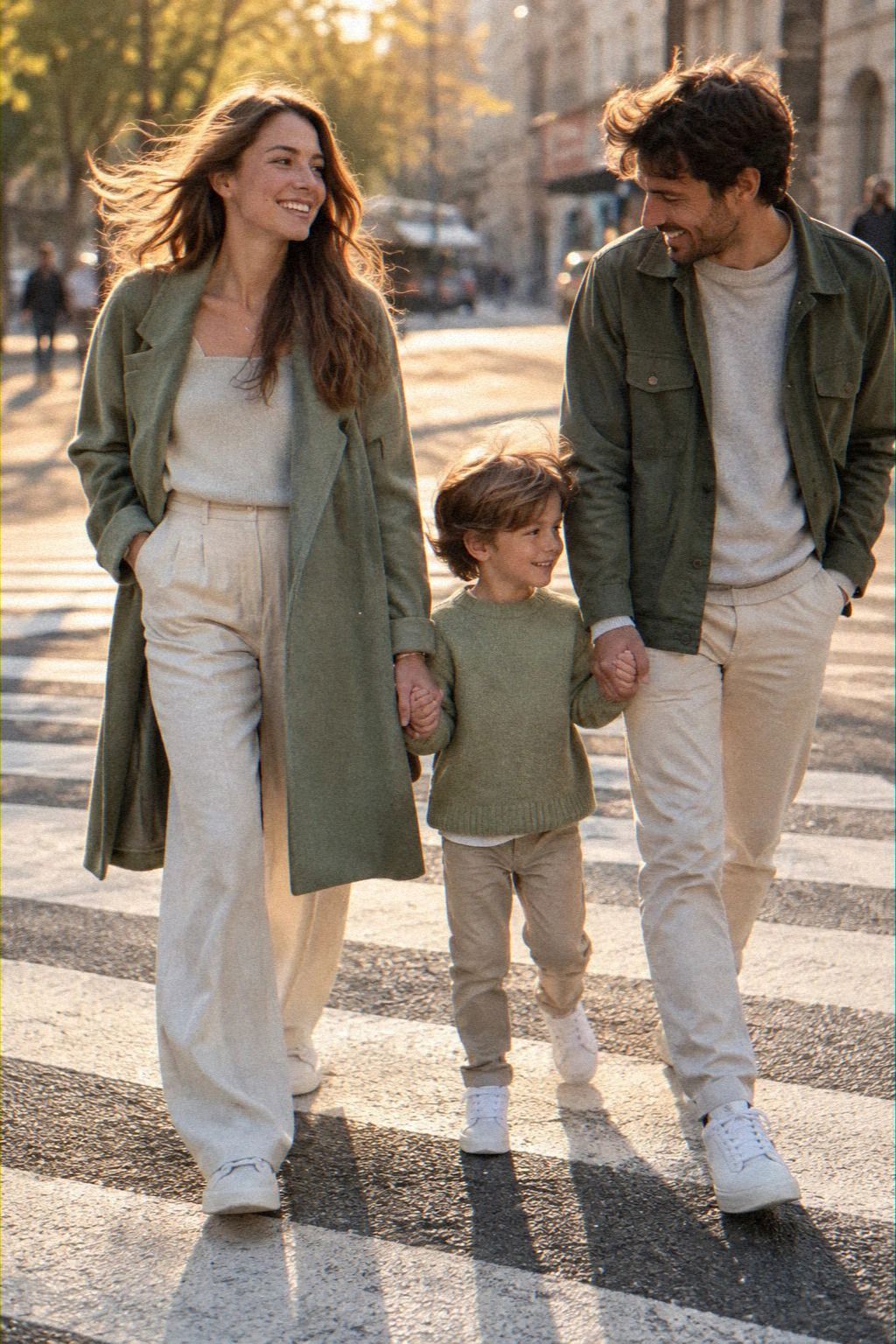
A terracotta cotton overshirt, stone base layer, and relaxed olive trousers give you movement without making the outfit feel busy. In a crosswalk or city setting, motion already creates energy, so your clothes need a calm shape.
Choose washed terracotta cotton for the outer layer and let the fabric move slightly as you walk. A stiff jacket would fight the movement.
A shirt-jacket with roomy sleeves will feel more natural.
Keep your supporting pieces quiet. A stone tee softens the warmer green, while olive sneakers or brown loafers ground the lower half.
If you’re styling several people, repeat olive once more through a scarf, overshirt, or small bag, then stop. Avoid putting everyone in olive trousers because the group could lose depth.
A layer of dark denim gives the eye somewhere to land, and everyone will still look connected.
The neutral family photo outfits that never look dated are useful when terracotta needs a quieter companion. If you’re worried about wrinkles, choose a cotton blend with a dry, crisp surface rather than lightweight linen.
Your clothes don’t need to look freshly pressed to feel polished, but they should keep their shape as you move. You’ll get a more effortless result when each piece is one you would wear again.
2Should Emerald Lead the Accessories?
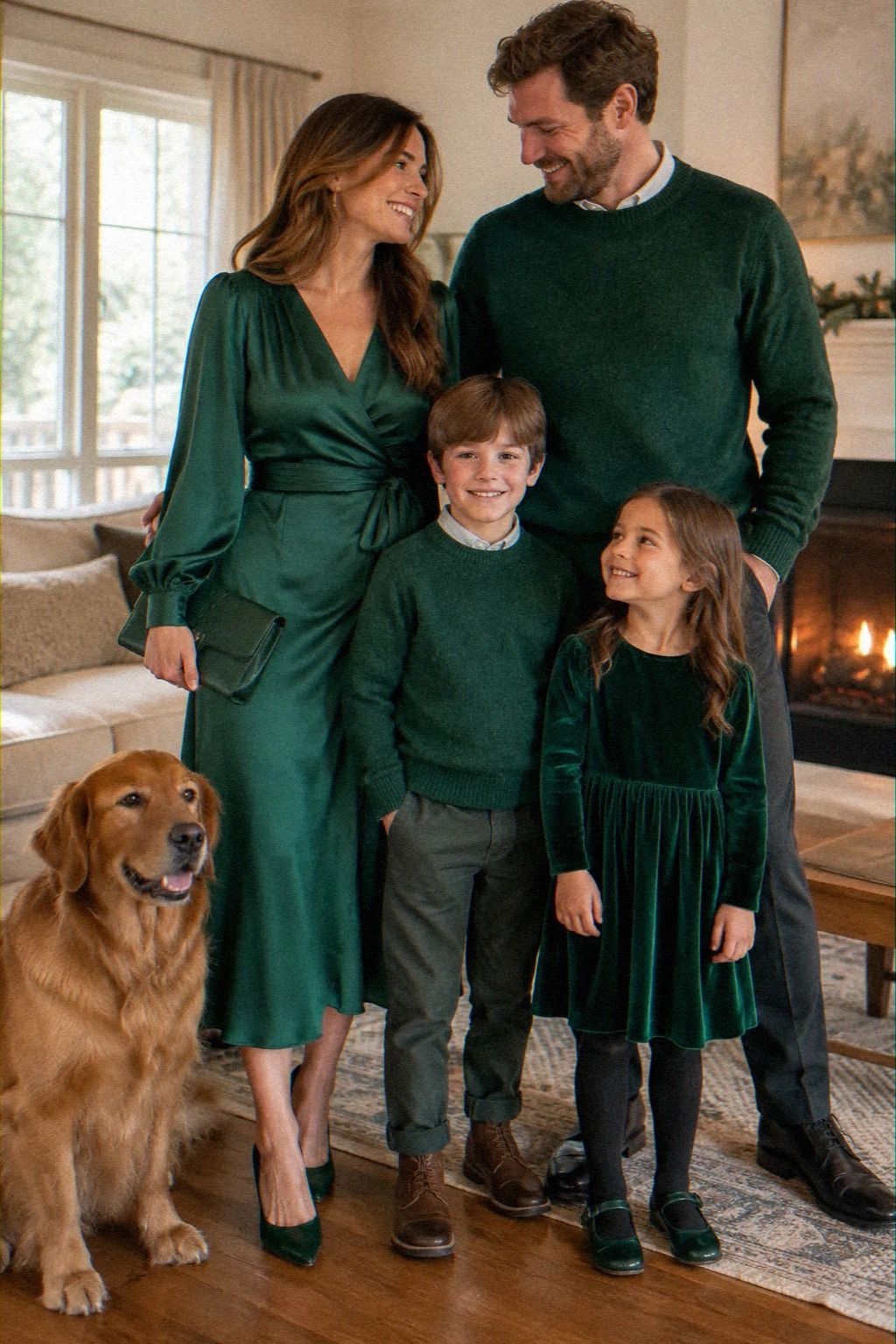
A small emerald accent can make a family palette feel vivid without forcing everyone into a green garment. Ground it with clay, natural linen, and one aged-brass detail so the stronger green feels intentional rather than isolated.
3Blue and Green: A Calm Contrast
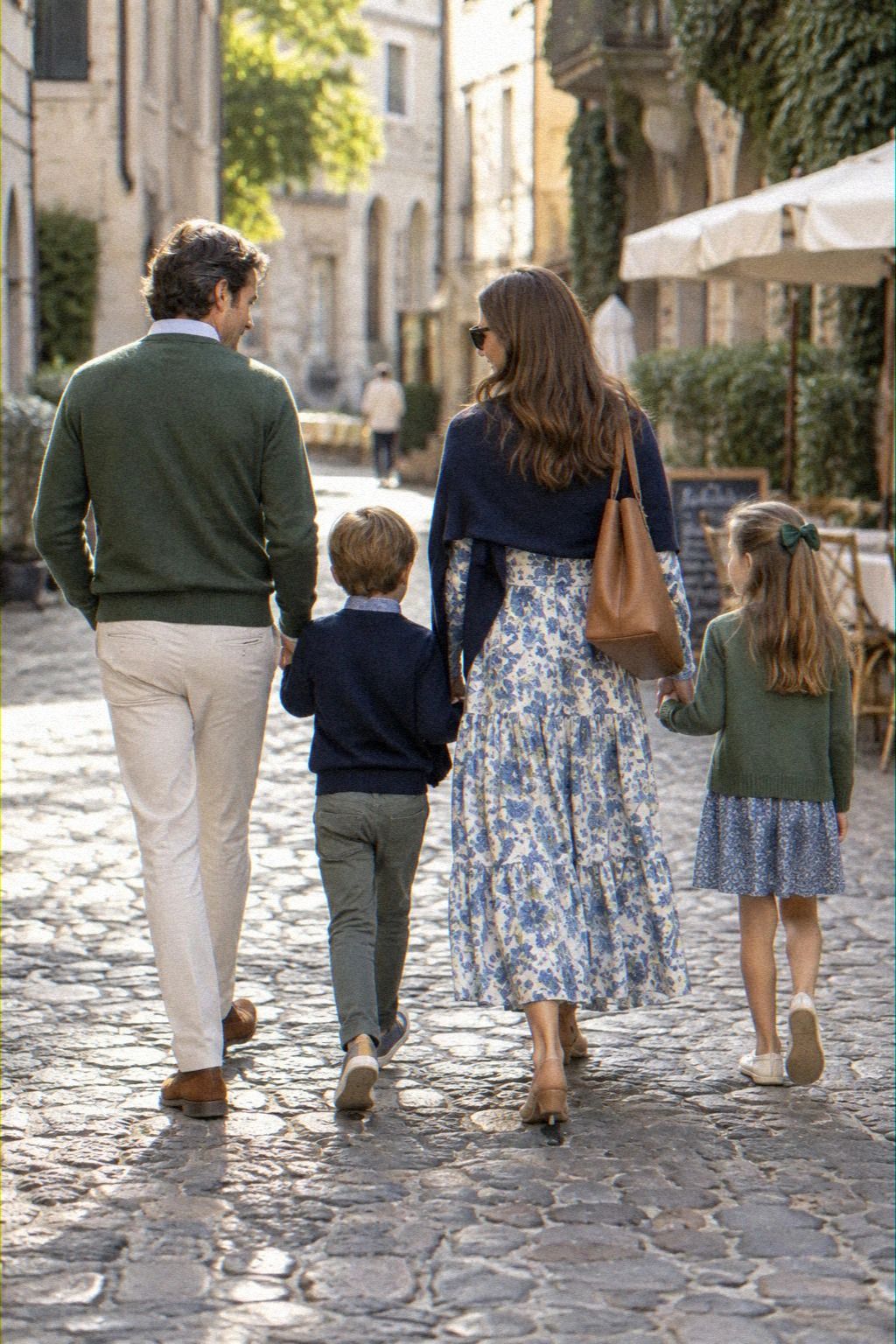
Blue and green family photo outfits feel especially natural when softened by plum, grey, and a restrained rose-gold detail. Try a deep teal overshirt with grey trousers, then bring in sage through a knit or scarf. The warmer plum note keeps the palette from feeling too predictable.
The editorial mood calls for restraint. A plum chore jacket, soft green shirt, and grey canvas sneakers will feel more intentional than bright athletic pieces or loud logos.
Repeat blue through one garment and green through another instead of asking every person to wear both colors. That keeps the group from looking like a costume palette.
A small family doesn’t need more than three main colors. Pick blue, green, and one light neutral, then use texture to make the outfits distinct.
Brushed grey wool works beside cotton poplin because the surfaces feel different without adding visual noise. If you’re deciding between cobalt and navy, choose navy for this setting.
Cobalt can dominate the quieter green, while navy lets the softer shades keep their balance.
The blue and white family photo outfits for a classic look show how much restraint can help a blue-led palette. You can also compare the neutral family photo outfit guide when the green needs a warmer, softer base. If your group already owns denim, this is one of the easiest palettes to assemble.
4Let Emerald Cut Through Black
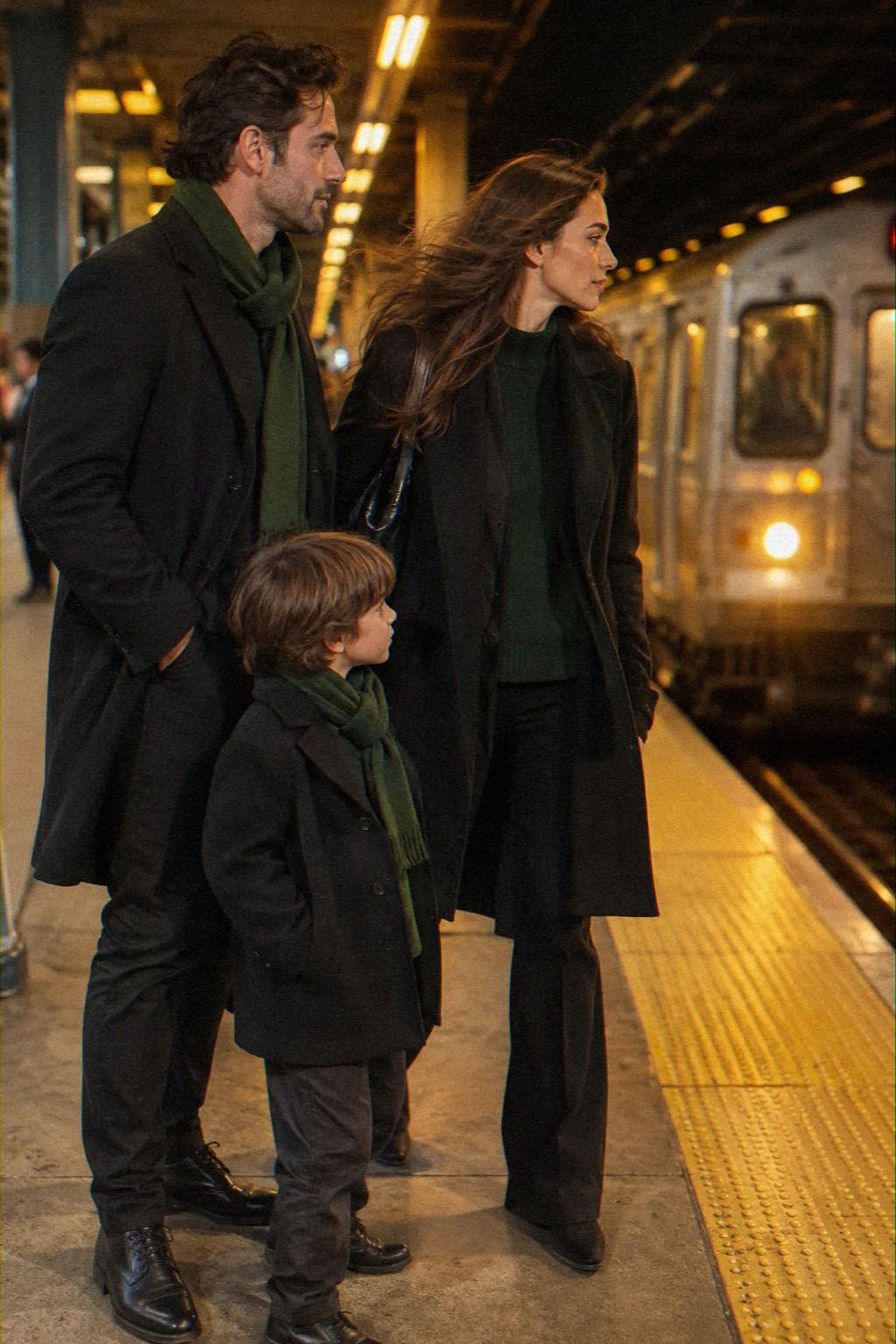
Green and black family photo outfits have more drama, which suits an urban setting with hard artificial light. Use one saturated green piece against black wide-leg trousers, a white shirt, or a fitted jacket. Saturated emerald crepe will hold its color better than very pale green, which can look muted beside dark clothing.
Your outfit should have one clean point of contrast. An emerald blouse with black trousers is stronger than emerald, black, metallic silver, and white all competing together.
Avoid putting everyone in black leather because the group could feel heavy fast. Instead, mix surfaces: matte black cotton, smooth green satin, and one walnut-brown accessory.
A collar, shoulder seam, or long sleeve will give the outfit a clean point of definition. If you’re styling a jacket, choose one that finishes near the hip rather than cutting across the widest part of the body.
It simply gives the silhouette a clean interruption.
Your group can share black while each person keeps a different green shade, from pine green to emerald. Add a warm white or stone-toned piece when the palette needs relief.
The black and cream family photo outfits that look expensive offer a softer alternative, but black and emerald create the more striking contrast. You won’t need much jewelry because the color relationship already feels powerful.
5Keep Sage Shirts Crisp With Cream Trousers
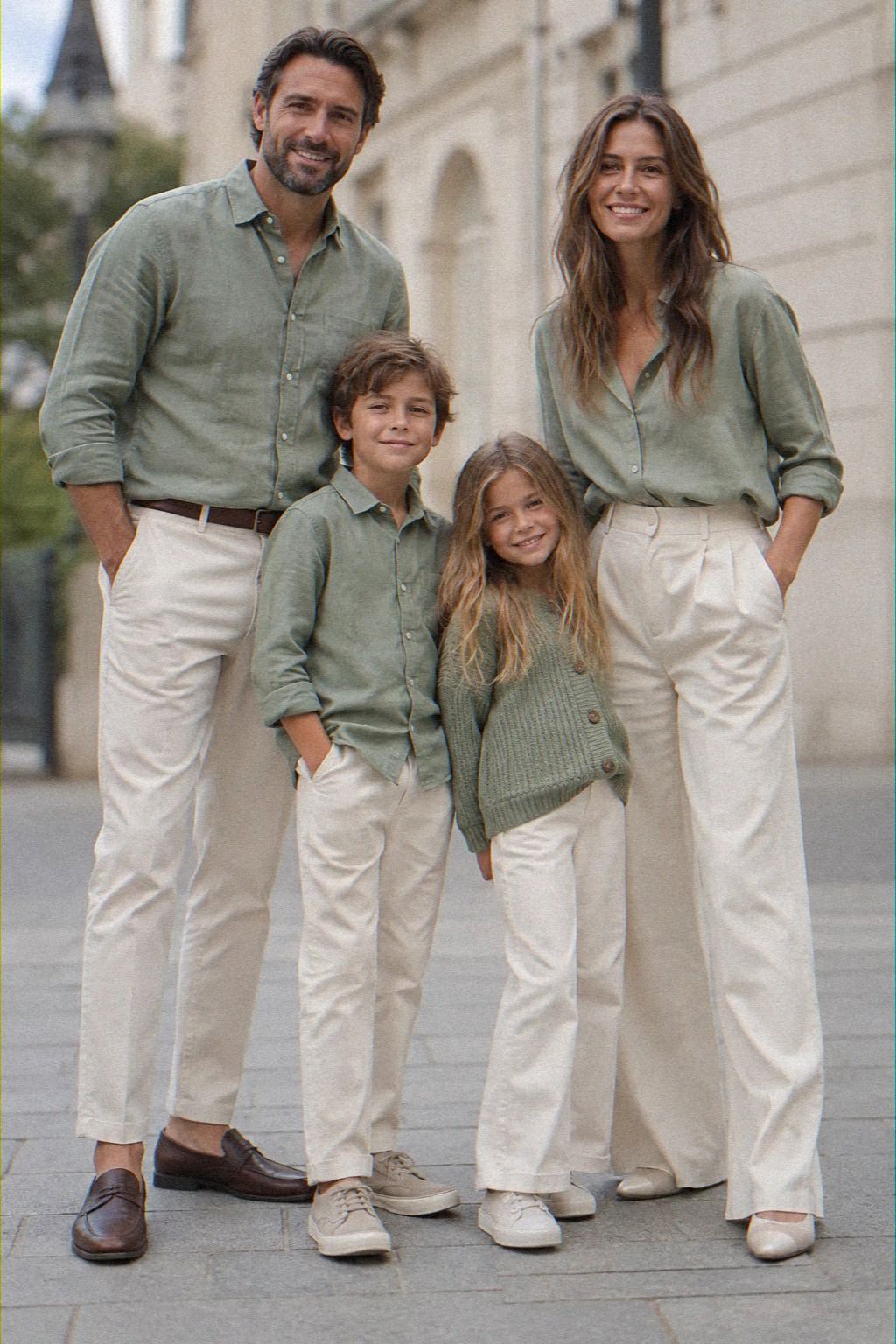
A studio setting is quiet, so the clothes need to carry visual interest through proportion and fabric. Emerald, cream, and muted gold create a clear palette, while an unlacquered-brass buckle or watch adds warmth as it develops a softer patina.
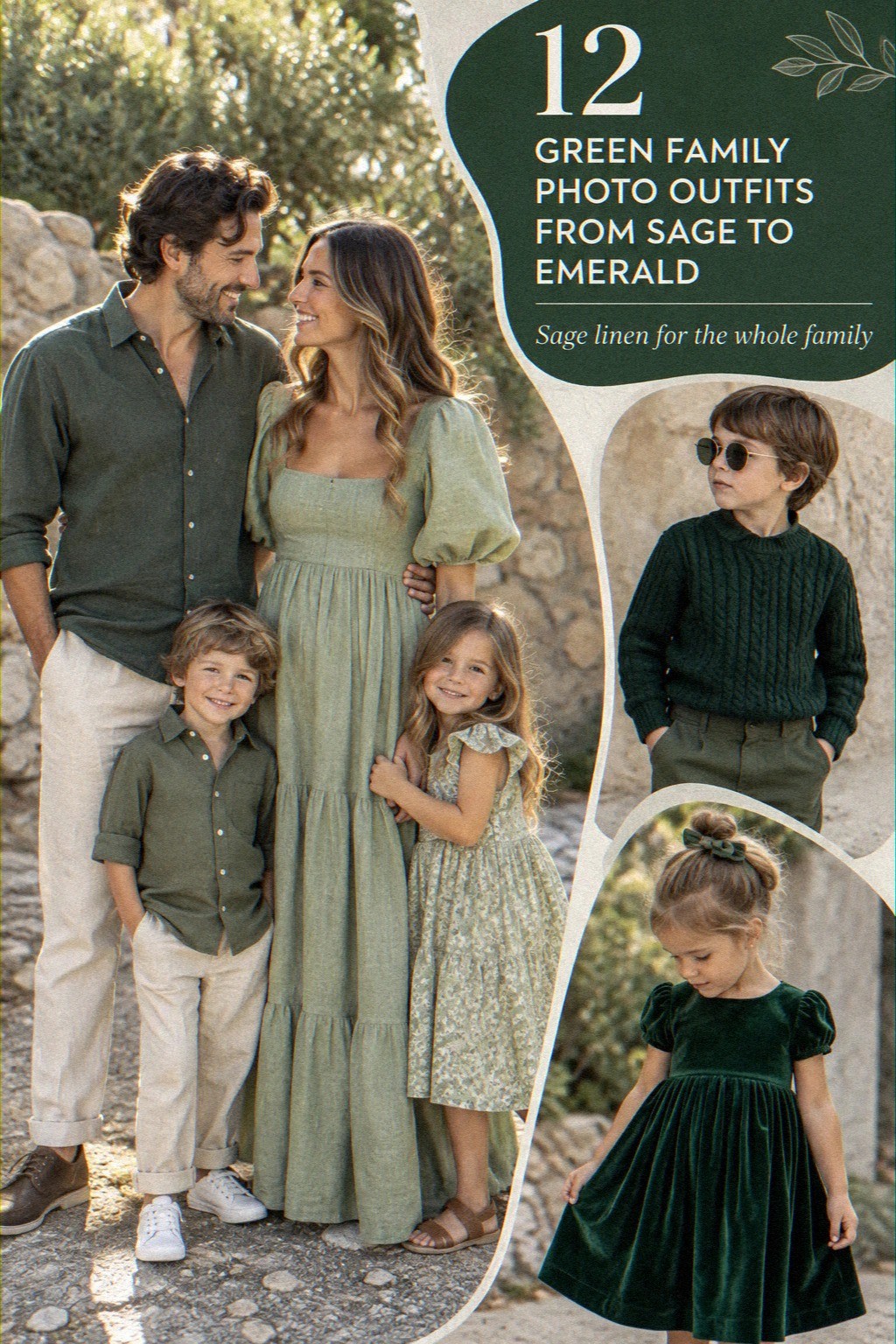
6The Emerald Blazer as Your Anchor
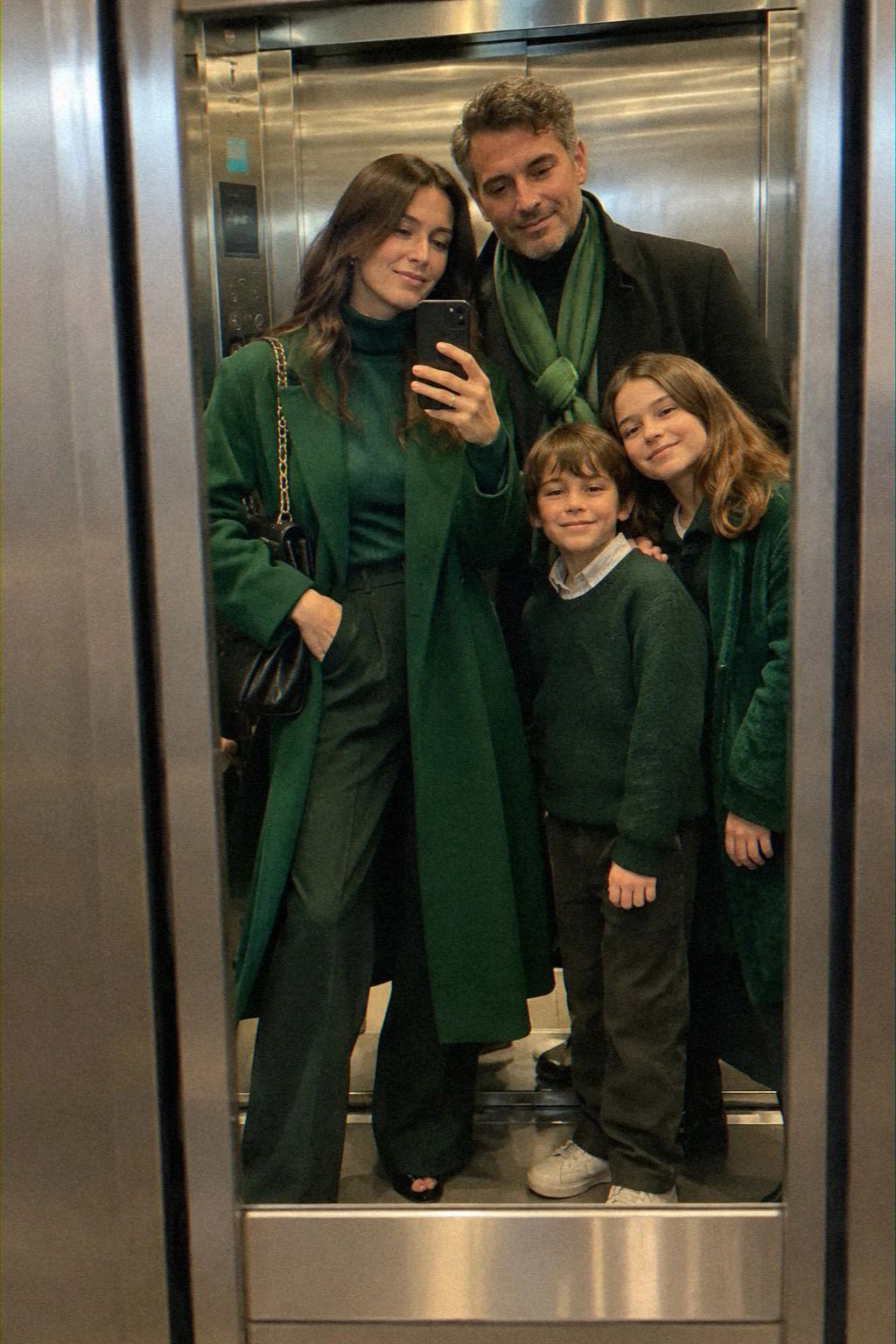
An emerald tailored blazer gives a group portrait a visual anchor, especially when the surrounding outfits include rust, cream, and forest green. Wear it over a neutral top, or choose an emerald dress with a clean neckline. The statement piece should be easy to recognize and strong enough to hold its color beside warm neutrals.
Keep everyone else more restrained. Black, cream, charcoal, and rust can support emerald without competing with it.
Avoid giving two people equally bold emerald jackets because the eye won’t know where to rest. One lead piece is enough. You can echo it with a narrow belt, small handbag, or natural-oak-toned ribbon.
Clear lines make the outfit feel polished. Sleeves shouldn’t swallow your hands, and the jacket shouldn’t have so many pockets or zippers that the front becomes noisy.
A compact wool-blend blazer gives structure without looking formal. With a dress, choose a flat shoe or simple boot so the look remains practical rather than costume-like.
A little tension helps. The clothes can stay refined while the pose feels unplanned. That contrast makes the group look lively and memorable.
If you’re unsure about the anchor, put on the blazer first and let every other outfit answer it.
7Assign Each Green Shade a Role
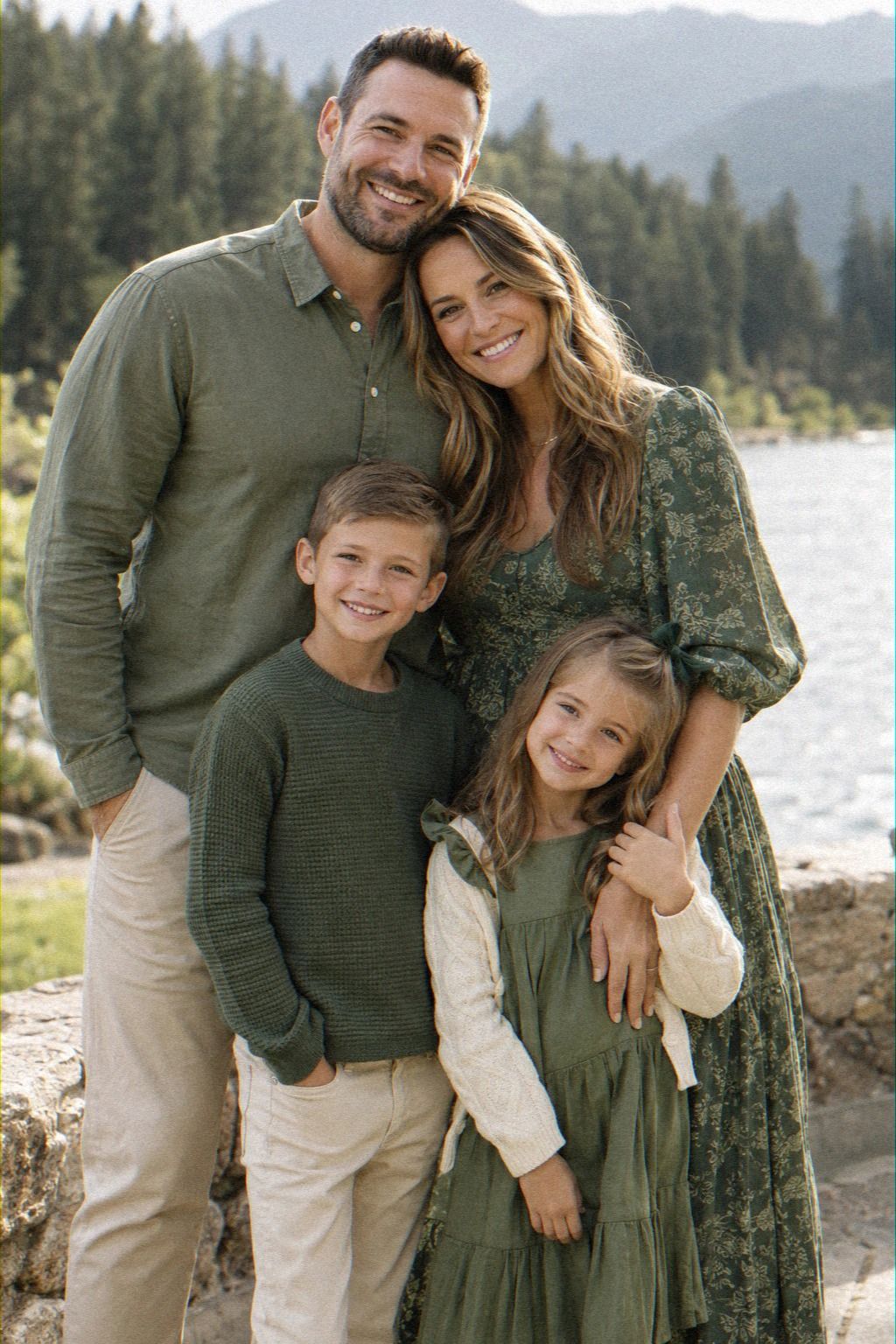
A mixed-green flatlay works when each shade has a clear purpose. Give one outfit the lightest green, another a middle tone, and one a deeper accent. Add dusty rose, charcoal, and a small brass detail so the palette feels organized rather than crowded.
Pale sage can act as the light base, leafy green as the lively middle, and olive or emerald as the visual punctuation. Charcoal twill beside a glossy green accessory creates a useful surface shift, while dusty rose breaks up the darker tones.
Repeat one neutral across the group, such as cream socks, tan shoes, or a soft brown belt. This keeps the palette connected without making the clothes identical.
Five bright greens is too many, because equally saturated shades compete for attention.
If you’re uncertain, place the darkest garment at one edge and build toward pale green. Your eye will read the arrangement more easily.
The blue and white family photo pairing guide can help if you want to replace brown with blue, while the neutral family photo guide offers softer supporting combinations. You’ll see the hierarchy immediately once the pieces are grouped by depth.
8Choose Olive and Sage for the Park
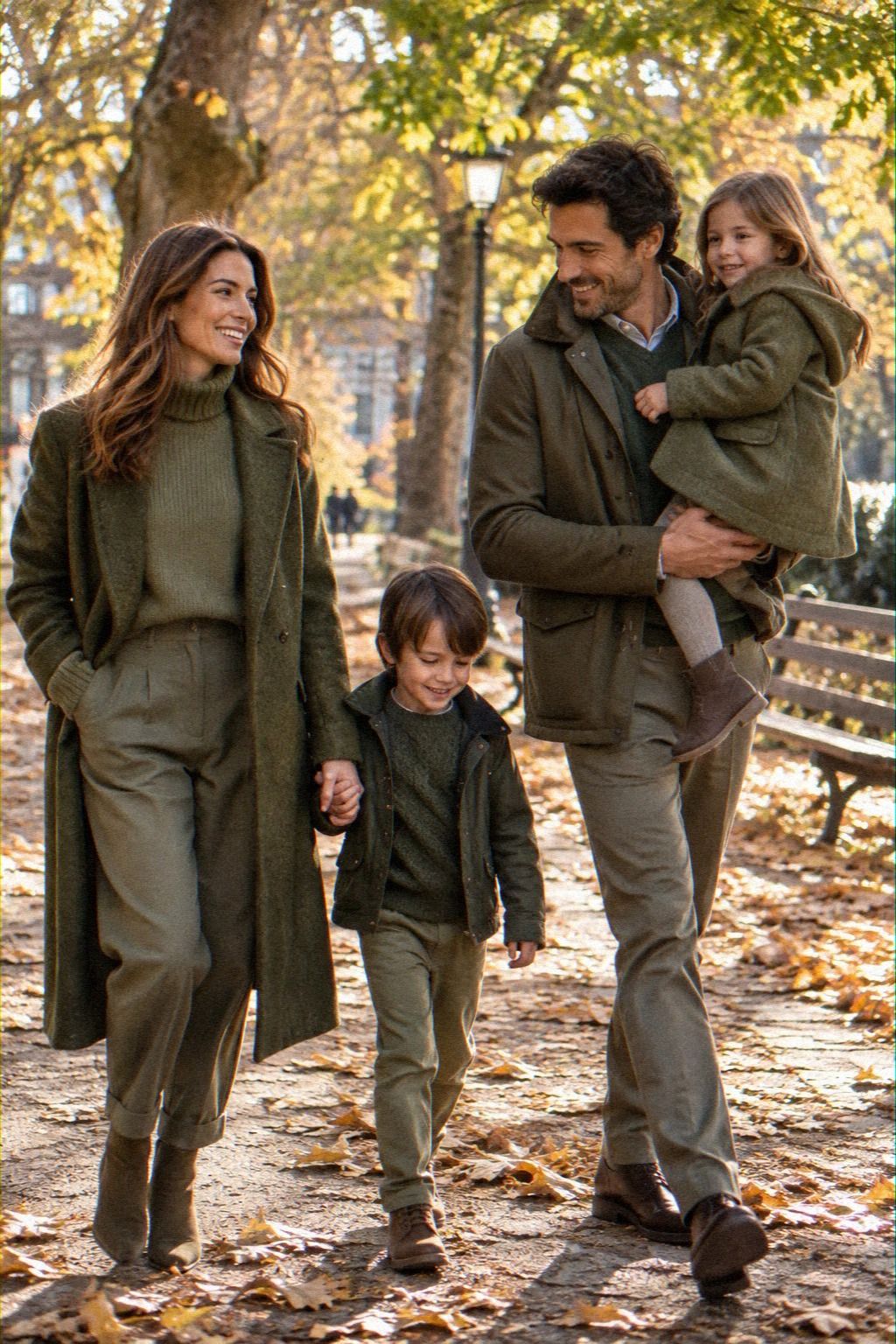
Olive and sage work naturally with an autumn park, where leaves and warm sunlight already supply rich color. Use olive brushed cotton for a jacket, overshirt, or trouser, then bring sage sweater closer to the face. Add warm white, camel, and a small black accent so your clothes remain distinct from the setting.
For movement, choose pieces that can bend and swing. A soft knit, loose trouser, or unlined overshirt will feel more graceful than a stiff suit.
One olive anchor and two sage variations can create enough separation. Add oatmeal knit or camel for warmth, but keep those colors in small doses.
Skip a yellow-green olive when the sunlight already has a golden cast. That combination can look sharp in person and muddy beside autumn leaves.
A gray-olive or moss tone will be calmer. Ribbed merino knit gives visible texture without a loud pattern, and it works well beside canvas or denim.
For shoes, choose brown suede, warm white canvas, or dark leather rather than introducing a bright new color. A shagreen-textured belt or small bag can add interest without changing the palette.
The sage green nails article offers another small way to echo the palette when hands appear in a close detail. If you’re dressing children, prioritize flexible layers so nobody feels restricted.
9Mix Green Knits Without Bulk
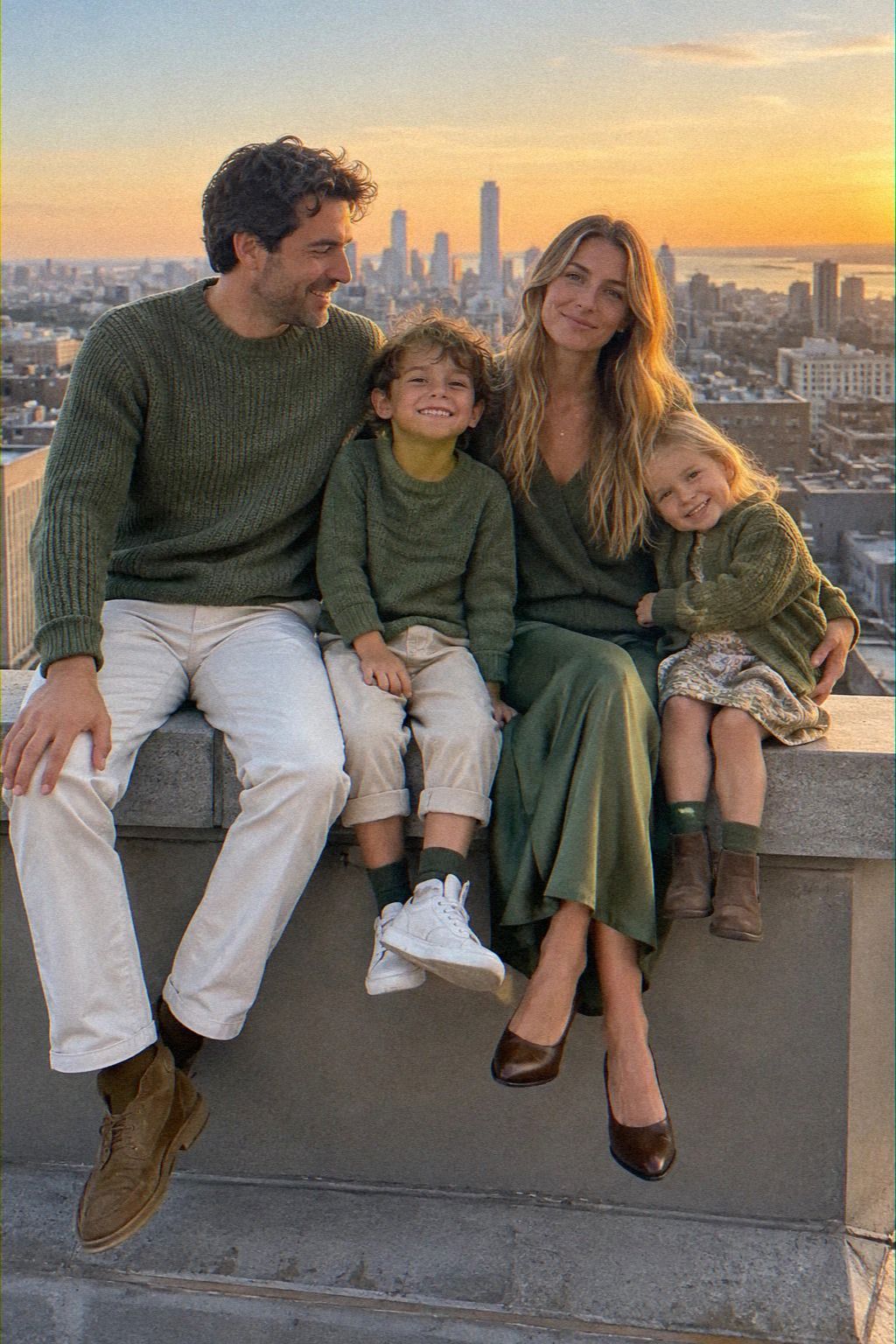
Green knit pieces give a casual family palette tactile depth. Try a midnight-blue cable knit beside a finer sage cardigan, then add one darker green garment and an ivory base so the group doesn’t become a single block of color.
Choose bottoms that keep a clean line while seated, such as straight denim, relaxed chinos, or a midi skirt with enough room to fold naturally. Skip the thick sweater on every person because the group could look bulky. Mix one substantial knit with lighter cotton or washed Belgian linen.
A fine-gauge forest cardigan can repeat the green story without making the outfits identical. Vary the neckline and sleeve length so each person keeps a distinct silhouette. A small copper detail can warm the midnight blue, while ivory keeps the overall palette light.
If you’re taking a casual phone portrait, avoid tiny stripes and very tight ribbing. Larger knit textures read more clearly, especially beside bright city light.
The black and cream family photo guide can help you add a neutral base without losing the relaxed mood. You can also use the neutral family photo outfit guide when your knits already provide enough color.
10When Sage Meets Denim in the Studio
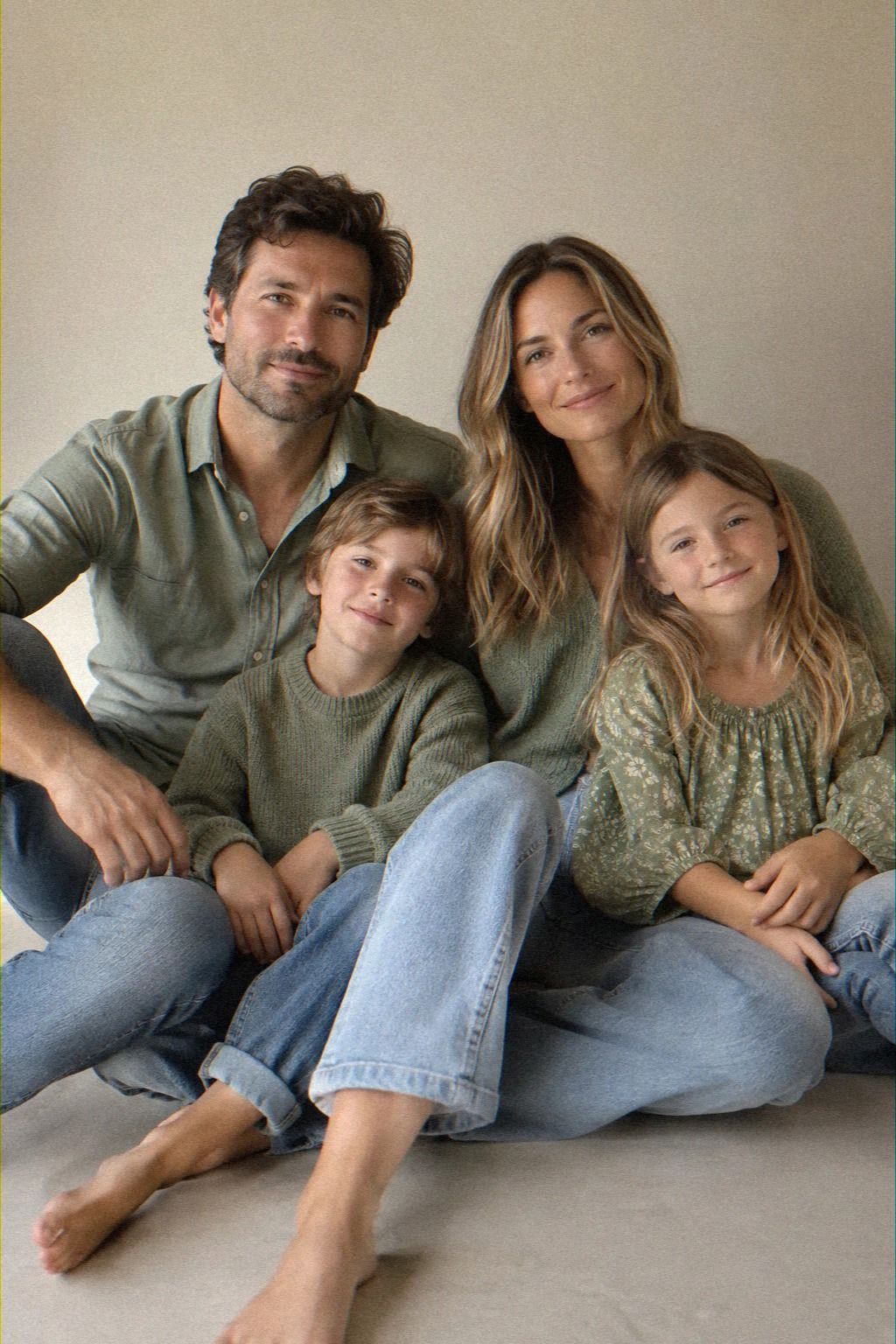
Sage and denim are easy partners in a seated studio portrait because denim gives pale green enough visual weight. Add warm cream, a natural-wood tone, or one organic bouclé layer when the outfit needs more tactile interest.
11Tie the Group Together With Emerald Accessories
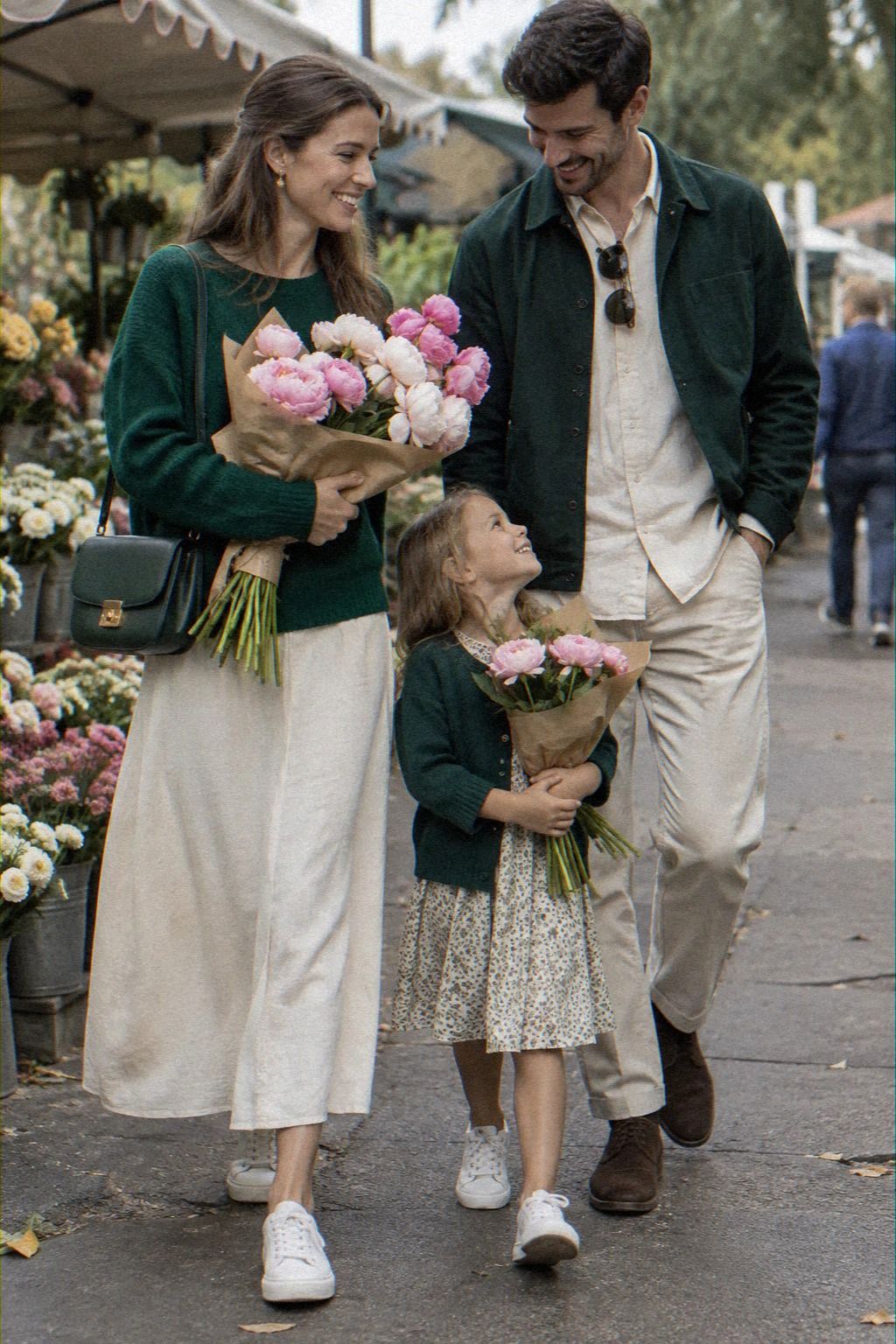
Emerald accessories should be small but intentional when the setting already contains plenty of color. Start with terracotta, stone, or olive outfits, then add one emerald leather handbag, scarf, belt, or pair of flats. The accessory can connect several people without forcing everyone into a green garment.
This approach works well when family members have different style preferences. One person can wear a stone dress with a green bag, another can choose an olive shirt, and another can use emerald earrings or a belt.
The repeated color appears in small points across the group, and the accessories can differ.
A market-inspired palette rewards practical fabrics. Canvas, cotton, leather, and light wool feel believable beside flowers and produce.
Skip sequins because they can feel disconnected from a relaxed morning mood. Deep green leather offers polish without unnecessary sparkle.
A scarf can frame the face when worn loosely or give a bag a little movement when tied to the handle. Emerald stands out against stone and warm cream, while forest green disappears more easily beside leaves.
A black-and-white veined accessory can add definition without introducing another bright color. The black and cream family photo outfits that look expensive can help you build the neutral foundation.
If you’re coordinating several people, repeat the accessory color only two or three times.
12Move From Pale Sage to Deep Emerald
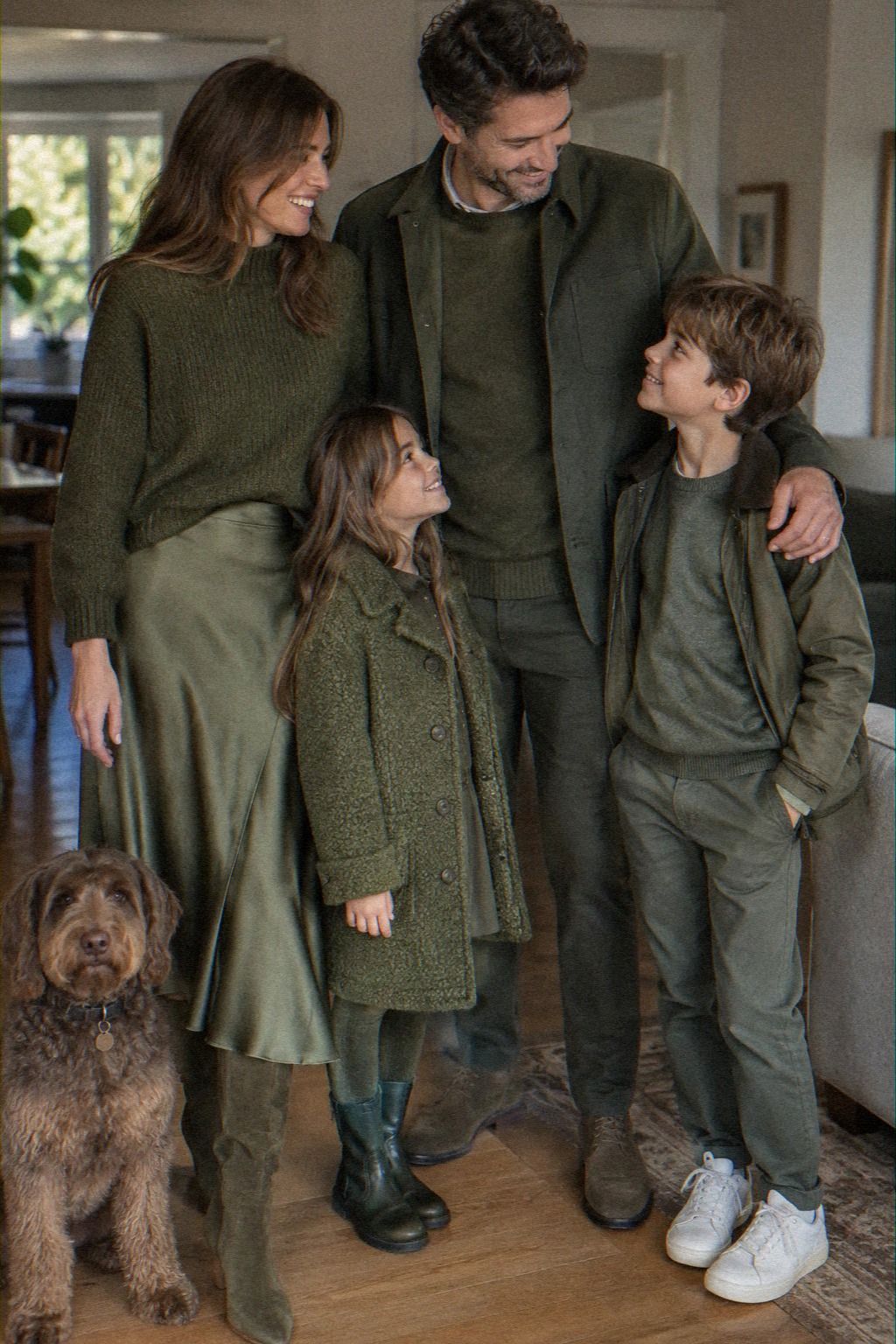
A monochrome green palette feels most sophisticated when it moves gradually from pale sage to deep emerald. Ground the progression with clay, linen, and an aged-brass detail. A deep-pile mohair or velvet layer can give the darkest shade more depth without adding another color.
Why Green Works Better as a Family Story Than a Uniform
Coordinated family photos don’t require matching colors from every person, and that approach often makes the clothing look more important than the people. Green works differently. It has enough range to move from pale sage to olive and emerald, so you can build a visual relationship without flattening everyone’s personal style.
The most useful decision is choosing where the strongest green belongs. A saturated emerald dress can anchor a group, while sage shirts and cream trousers create a softer rhythm around it. If everyone wears the deepest shade, the outfit may feel heavy.
If everyone wears pale green, the group can lose definition.
Texture matters more than adding another color. A matte cotton shirt, brushed knit, washed denim, and polished leather make the palette feel considered even when the pieces are simple.
Existing cream, navy, brown, black, and denim pieces can do most of the supporting work.
Avoid buying matching outfits before checking the setting. A city location needs stronger contrast than a soft outdoor portrait.
A studio setting can handle cleaner tailoring, while a walking setting needs pieces that move. Start with the setting, then choose the clothes.
A plan built around the setting keeps the outfits practical.
Common Questions
Which colors pair best with green for a family photo?
The easiest starting point is sage with cream, denim, or navy. Choose one stronger piece, such as an emerald dress or tailored blazer, then keep the other outfits quieter.
A clear color hierarchy helps the portrait feel connected without making everyone look identical. You can adjust the depth of green to suit each person’s style.
Where can you find green pieces on a budget?
Look at Target, thrift stores, Facebook Marketplace, and your existing wardrobe before buying a full outfit. Search for sage shirts, olive overshirts, cream trousers, and emerald accessories rather than a complete matching set. The neutral family photo outfit guide can help you choose supporting colors.
Shop for one or two people first and add the rest over time.
How much should a family spend on coordinated outfits?
A simple plan can cost about $100 to $300 if you need several new pieces, but your total depends on what you already own. Start with free wardrobe sorting, then buy one anchor garment and fill gaps with thrifted neutrals.
One strong emerald piece can do more than several random green accessories. If your budget is tight, choose the person who needs the most visible anchor first.
What if someone in the family dislikes wearing green?
Give that person a neutral and let green show up in a small way, such as a scarf, socks, or a pocket square. Cream, navy, denim, and brown all sit comfortably beside green.
The group still reads as connected when one outfit stays neutral. The blue and white family photo outfits for a classic look show how useful a restrained base can be.
A single green accent is enough to tie that outfit to the rest of the group.
What green color works best for family photos in 2026?
Sage, olive, and deep emerald are flexible choices because they work with cream, denim, navy, black, and warm brown. Choose the shade based on the location.
Muted sage suits a bright studio or soft outdoor portrait, while emerald holds more presence in a darker urban setting. You’ll get the most timeless result when your green works with pieces you already own.
Is green a good idea for an outdoor family photo?
Yes. Green can connect naturally with grass, trees, and autumn surroundings, but avoid matching the background too closely.
Use cream, denim, tan, or black to separate the clothing from the setting. Olive works best when someone nearby wears lighter sage or deeper emerald.
The neutral family photo outfits that never look dated offer useful ideas for keeping the group distinct.
How do you keep different green shades from clashing?
Give each shade a job. Use sage as the light base, olive as the earthy middle, and emerald as the accent.
Then repeat one neutral across the group. Several equally bright greens compete for attention, while a clear hierarchy feels calmer and more polished.
The black and cream family photo guide can help when you need a strong neutral break.
Where to Start
Start with sage shirts and cream trousers. The pairing stays readable in studio light, works across different silhouettes, and gives your family room to add denim or emerald without a color fight.
Pin this formula for later, then build the group around the pieces you already own.