
Blue and white family photo outfits work best when everyone shares a color story but wears a different texture or silhouette. You don’t need identical shirts. I’d combine denim, cotton, knitwear, and one tan accent so your portraits feel polished without becoming stiff. These combinations are easy to repeat, adapt, and shop from your own closet.
- Start With Crisp White Shirts and Classic Blue Denim
- Why Blue Dresses and White Sneakers Work
- Build Denim Layers for a Moving Portrait
- Add a Tan Accent to White Outfits
- Pair Cream Knitwear With Deep Blue Denim
- Give Sibling Portraits Matching Blue Cardigans
- Can White Dresses Use Blue Hair Ribbons?
- Layer Navy Blazers Over Crisp White Shirts
- The Oxford Shirt Rule for Cream and Blue
- Add Tan Boots to White and Denim
- Let Blue Details Lead White Ensembles
- The Floral Accent: Blue Dresses With White Details
- Build a Cream Trouser and Pale Blue Shirt Look
- Finish With Timeless White and Blue Formal Styling
1Start With Crisp White Shirts and Classic Blue Denim
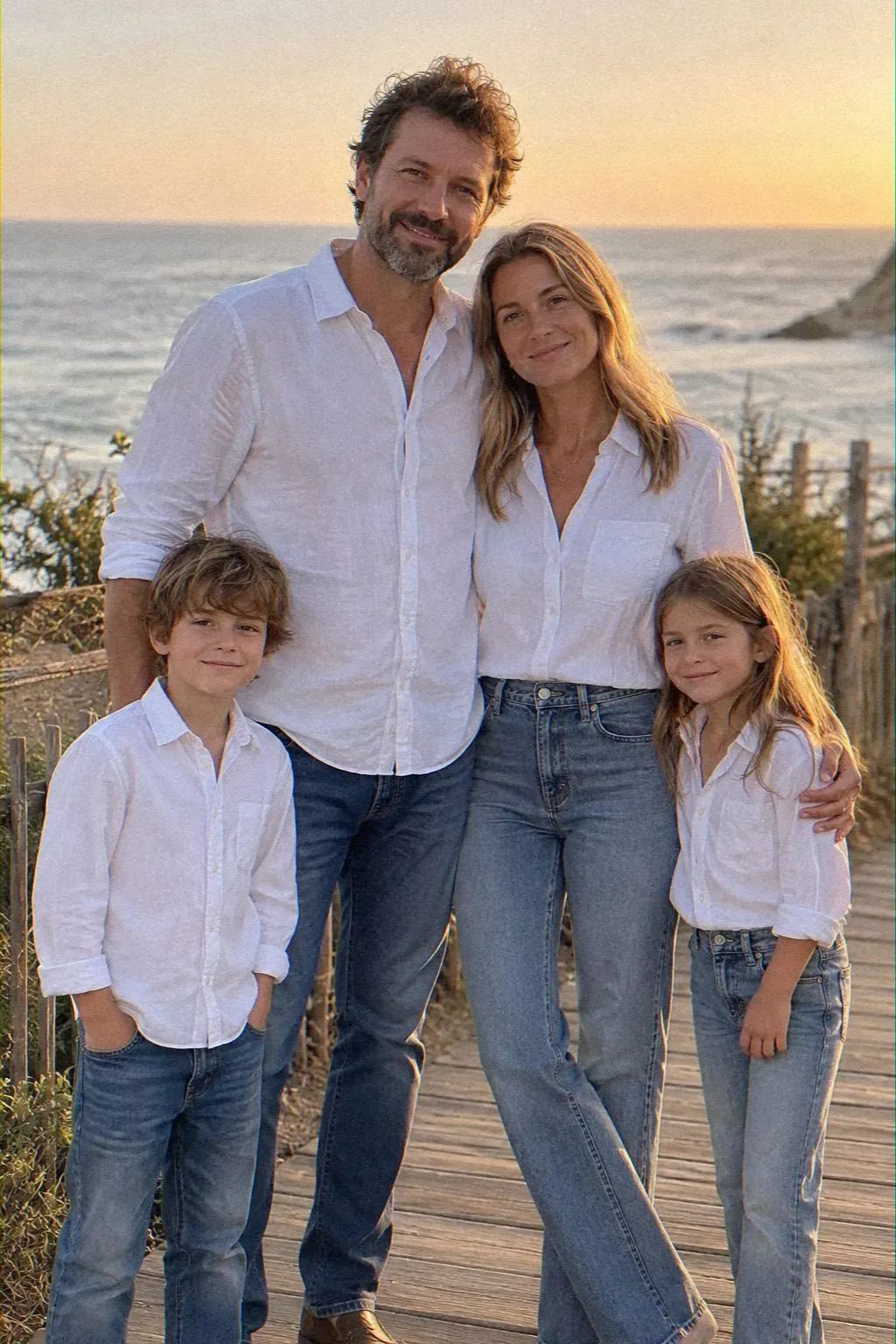
Crisp white shirts and blue denim give you the cleanest starting point because every piece stays recognizable. Choose cotton poplin shirts with slightly different collars, then vary the denim from straight-leg denim to a softer chambray skirt. You’ll get a bright, timeless family photo without making everyone look like they bought the same outfit.
Keep the white shades close, but don’t force them to match exactly. A warm ivory shirt beside a clear white blouse can look more natural than five identical tops. You’ll want one person in medium-wash jeans, one in deep indigo, and one in a pale vintage wash so your group has depth.
My favorite version includes medium-wash jeans, white sneakers, and one small brown leather detail. If you’re styling your own group, keep logos off the clothing and roll one or two cuffs only. That small shift matters!
For another classic palette, compare these neutral family photo outfits that never look dated.
2Why Blue Dresses and White Sneakers Work
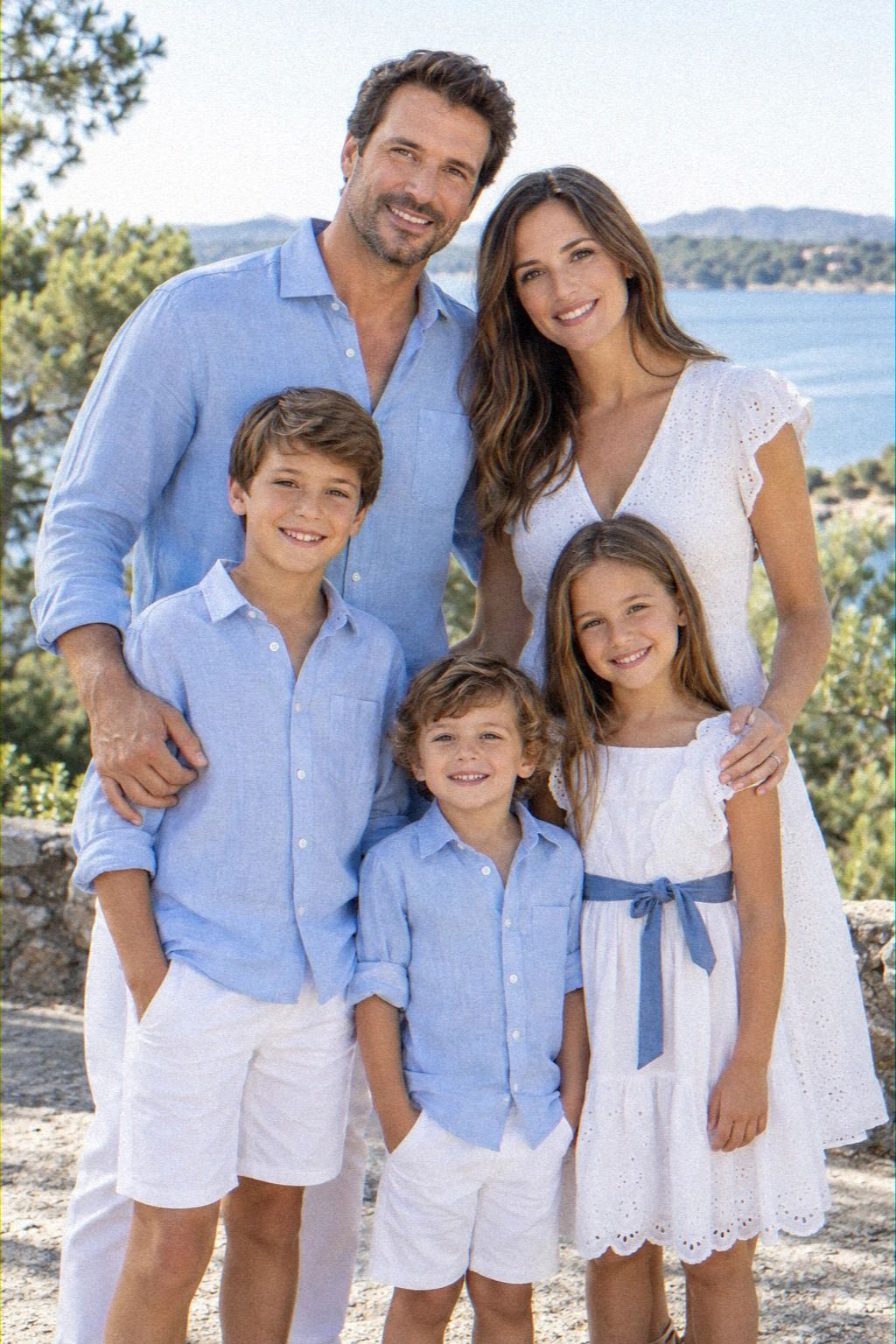
Blue dresses with white sneakers feel relaxed enough for movement while still looking refined in a family photo. You can give each person a different length or neckline, then connect the outfits through color.
A cobalt blue dress brings energy, while a washed-blue dress feels softer. I’d pair one with white leather sneakers, another with simple ballet flats, and a third with a low-profile canvas shoe. You don’t need the same hemline, but you’ll want similar levels of formality.
If your dress fabric is floaty, choose a structured shoe so the silhouette doesn’t become too delicate. A cotton poplin dress looks clear and polished, while a lightweight jersey style gives you more movement. Your accessories can stay minimal: a navy ribbon, small hoops, or a tan belt is enough.
You can borrow additional proportion ideas from this texture mixing technique for everyday outfits.
3Build Denim Layers for a Moving Portrait
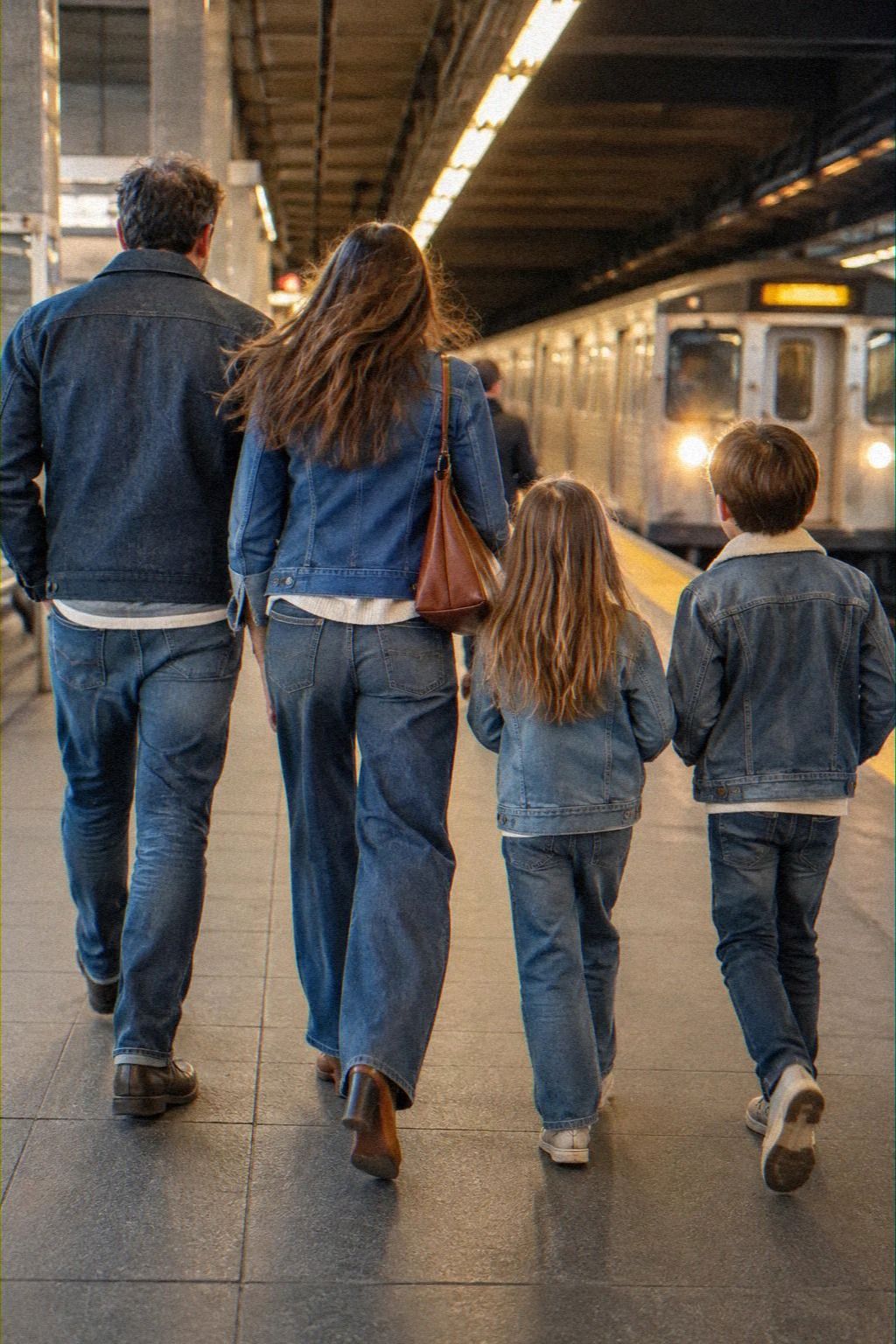
Coordinated denim layers are useful when you’re photographing your family while walking.
4Add a Tan Accent to White Outfits
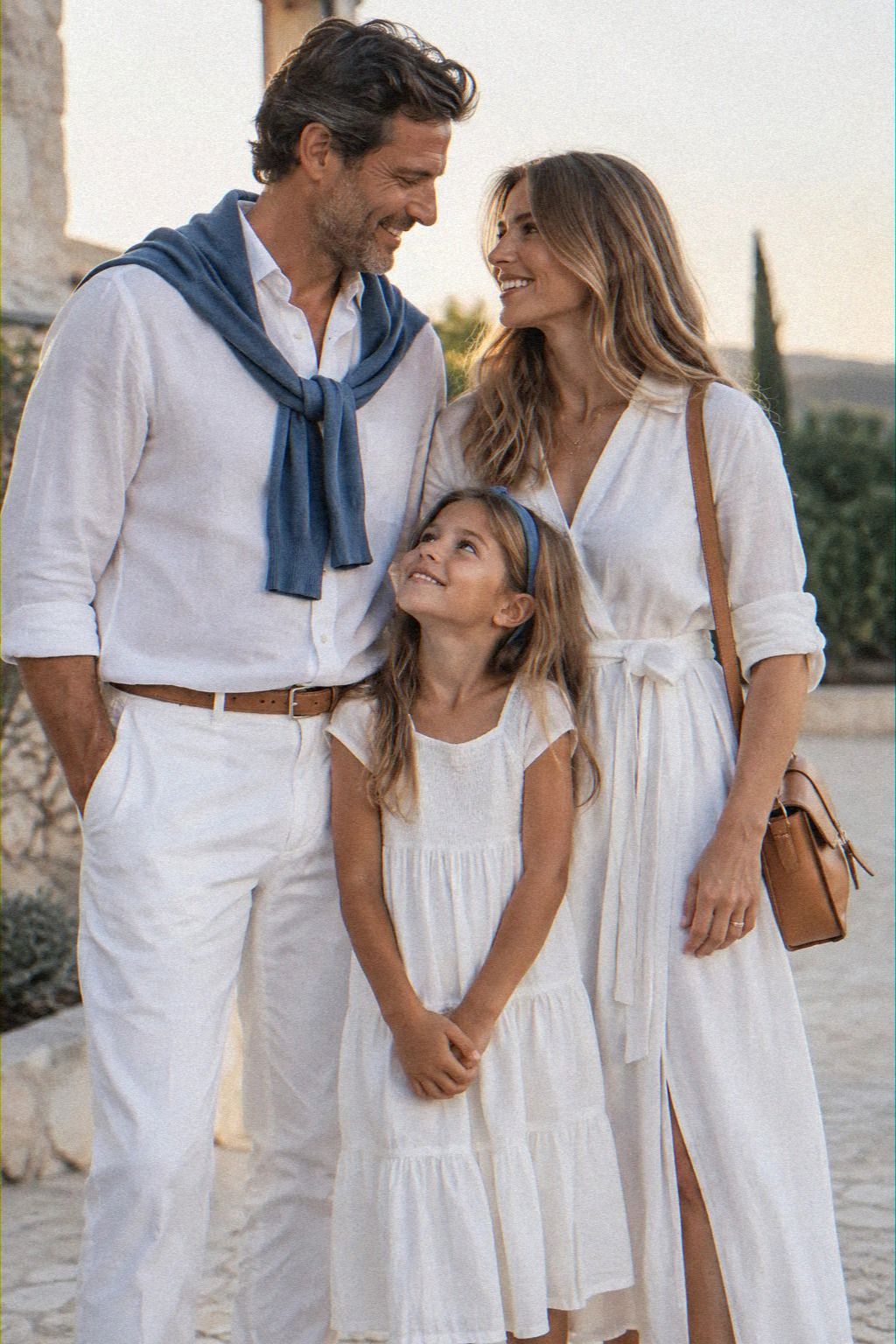
Blue and tan accessories give white outfits enough contrast without overwhelming the photograph. Begin with white linen separates, then add a navy belt, tan sandals, or a small woven bag. Your clothes stay calm and bright while the accessories add warmth.
You’ll want to repeat tan in at least two places, but it doesn’t need to appear on everyone. One person might wear leather sandals, another might carry a tan crossbody, and a third could use a narrow belt. I like this approach because your group feels connected without looking matched.
My strong preference is matte leather over glossy faux leather because it has a quieter finish. If you’re using a polished accessory, keep the rest of your outfit simple. You can add a tan watch strap, belt, or shoe without changing the entire color story.
For more ways to combine warm accessories with light clothing, save this texture mixing technique for everyday outfits. Keep it simple!
5Pair Cream Knitwear With Deep Blue Denim
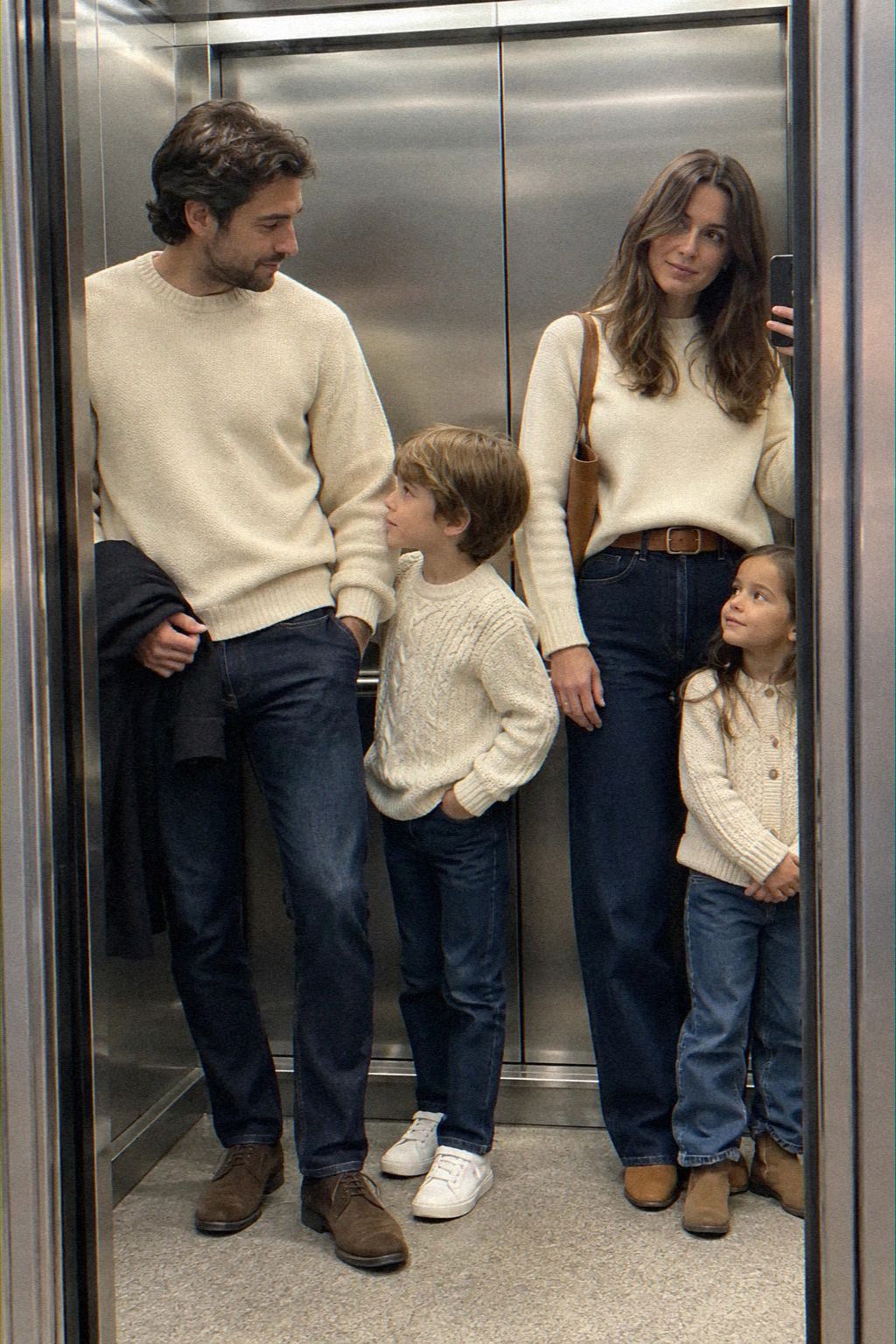
Cream knitwear against deep blue denim creates a soft contrast that still has enough structure for family portraits. Choose cream merino knitwear, ribbed cotton sweaters, or a fine-gauge cardigan, then pair each piece with dark indigo denim. The cream layers catch light more gently than bright white.
You’ll want the knits to have different surfaces. A ribbed sweater, a smooth cardigan, and a cable detail can share the same cream family without looking duplicated. I’d avoid oversized sleeves if your group is sitting or moving because they can bunch at the wrists.
For a lighter silhouette, choose a fine-gauge cardigan instead of a heavy cable knit. Your upper body will look cleaner, especially under strong indoor lighting. A small silver watch or navy hair ribbon can finish the palette without making the outfit feel formal.
If you’re unsure whether cream will photograph well, place the pieces beside a window before shopping. You’ll see which fabric looks soft and which one turns yellow under indoor light. This classic mid-length layers guide can help you balance longer cardigans with different trouser shapes.
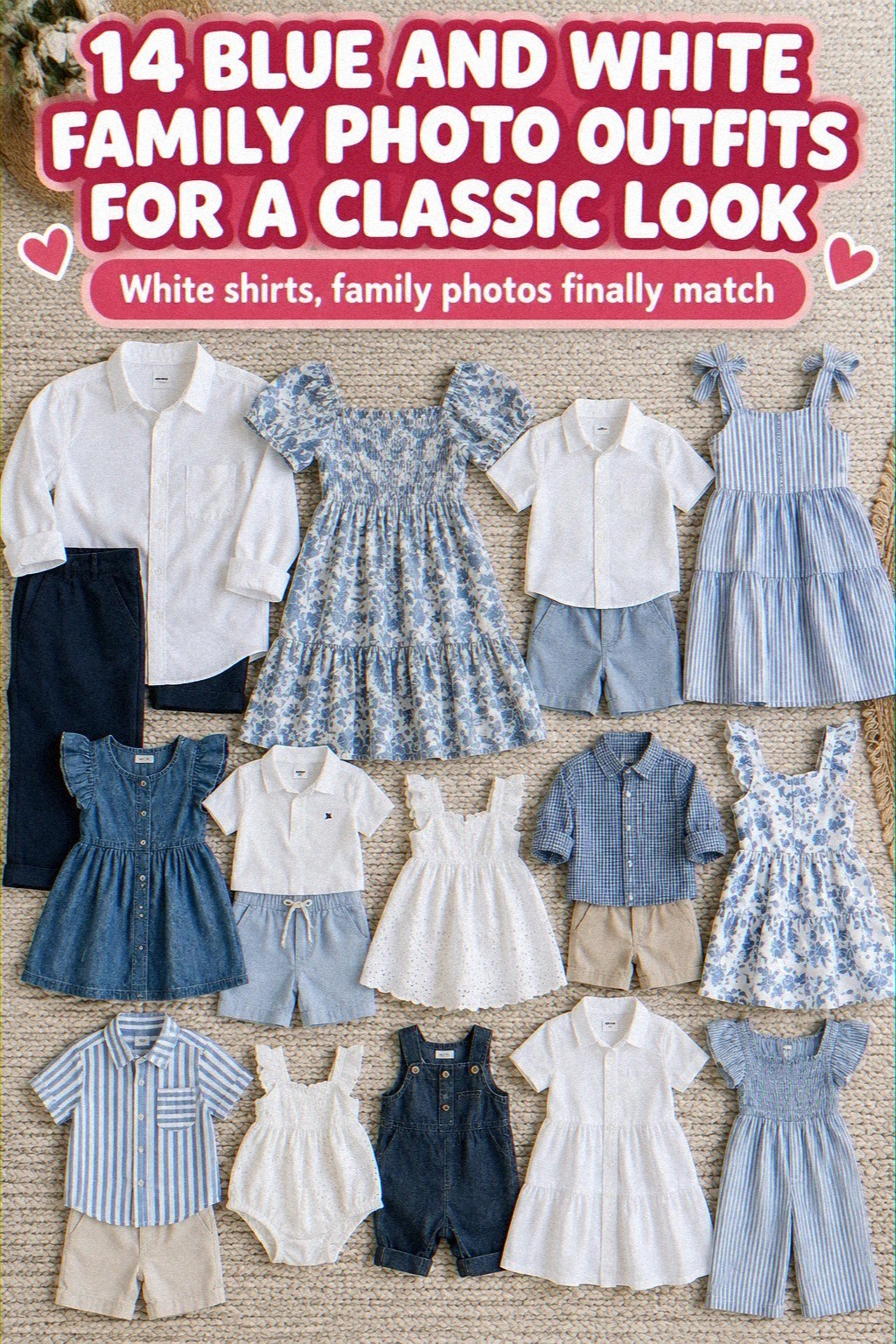
6Give Sibling Portraits Matching Blue Cardigans
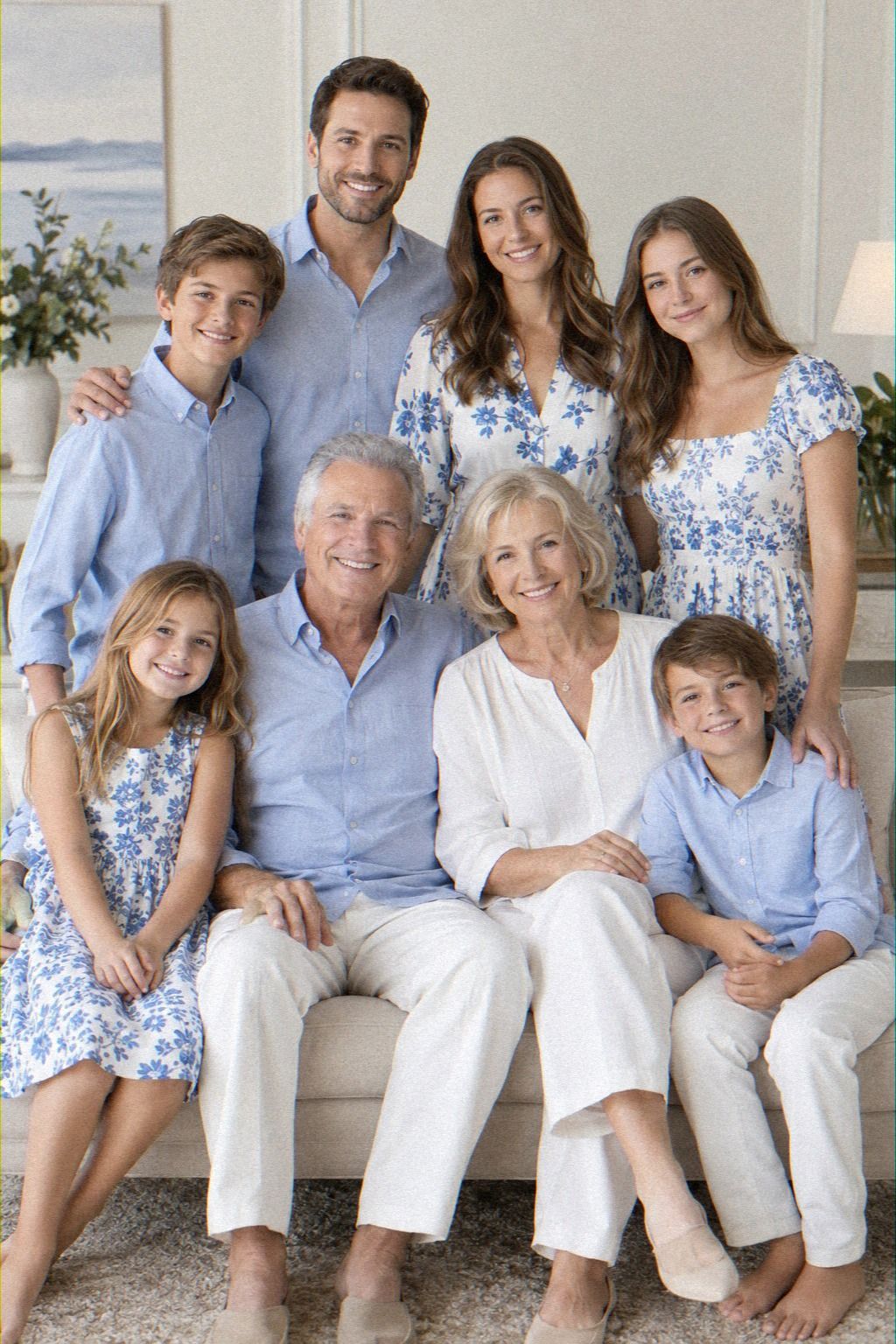
Matching blue cardigans can work for sibling portraits when the rest of the clothing stays deliberately different.
7Can White Dresses Use Blue Hair Ribbons?
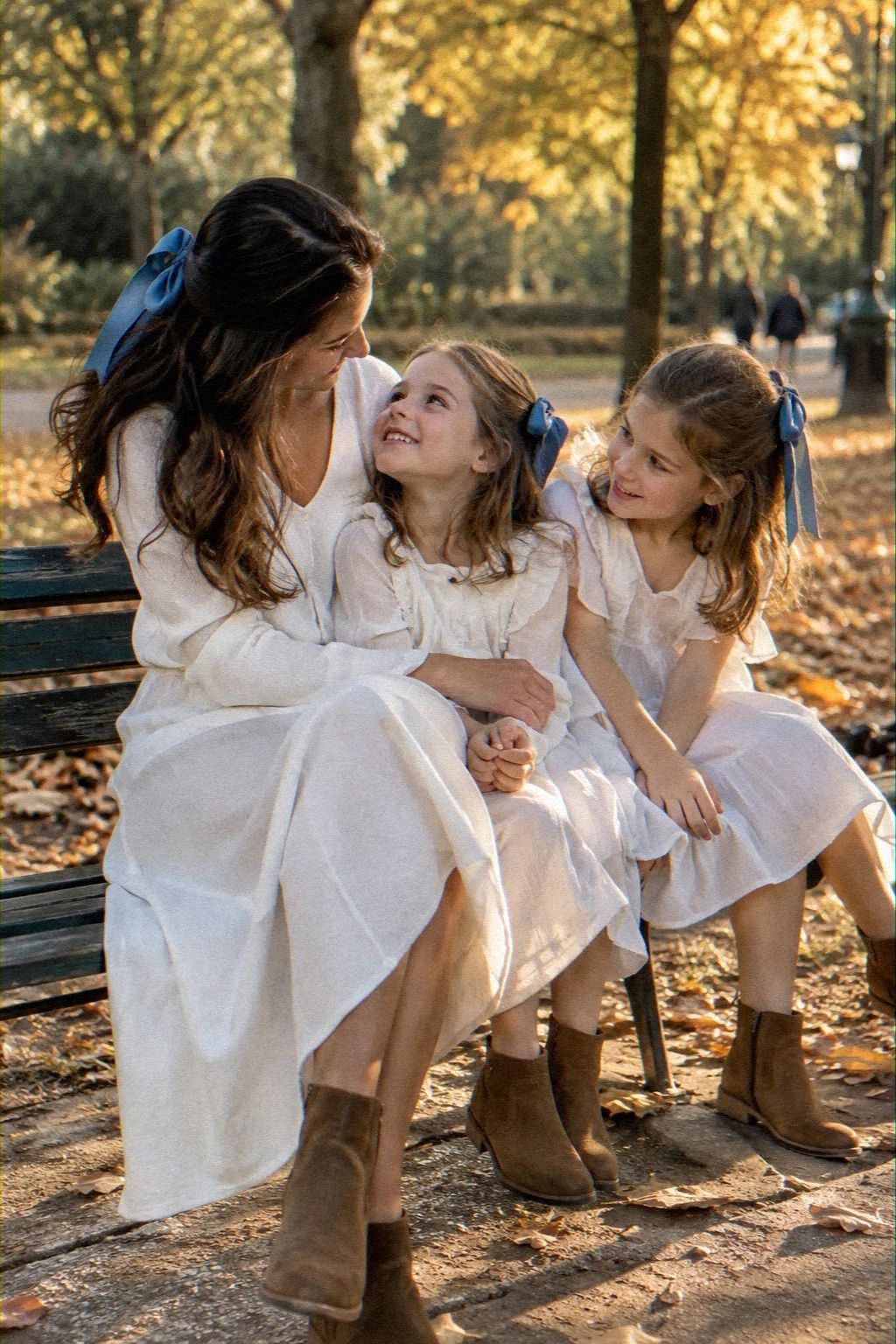
White dresses with blue hair ribbons create a romantic detail without requiring every garment to match. You can use the ribbon as the repeating element while keeping each dress different in length, sleeve shape, or texture.
A white cotton dress works well for a younger child, while an older sibling might wear a simple white blouse with a blue skirt. I’d keep the ribbon width consistent but vary the placement. One person can wear a ponytail bow, another a headband, and another a narrow wrist tie.
For a softer result, choose a pale blue sash or a small embroidered detail instead of a bright accessory. You’ll want the blue to remain visible from a distance, so tiny details may disappear in the finished portrait. A fine floral embroidery can add interest without competing with the ribbon.
If you’re adding shoes, choose white canvas sneakers or tan sandals. Your outfits will stay light and practical. This texture mixing technique for everyday outfits offers more ideas for combining delicate details with everyday pieces.
8Layer Navy Blazers Over Crisp White Shirts
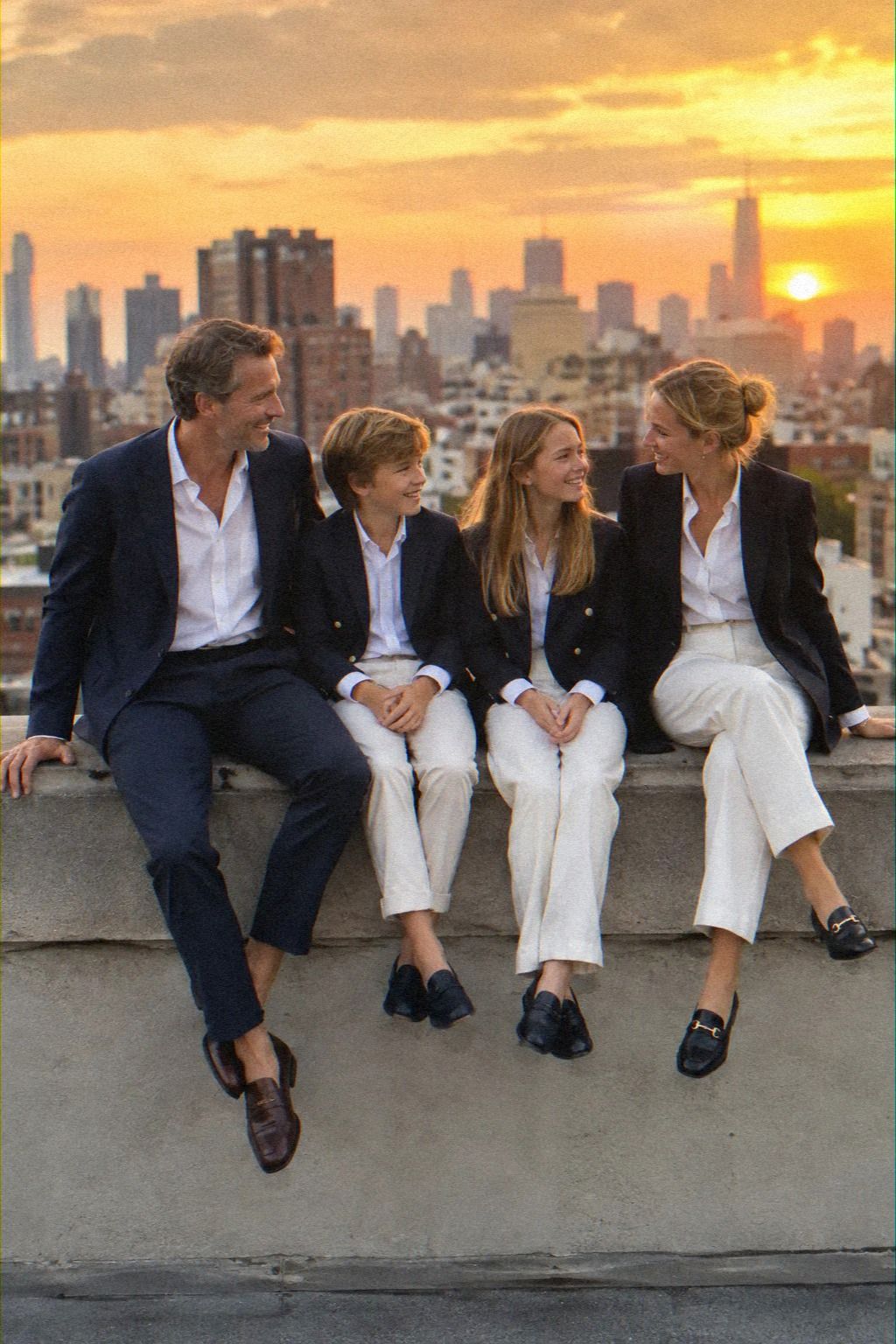
Navy blazers over crisp white shirts give family portraits a tailored shape, especially when you’re working with an architectural or outdoor setting.
9The Oxford Shirt Rule for Cream and Blue
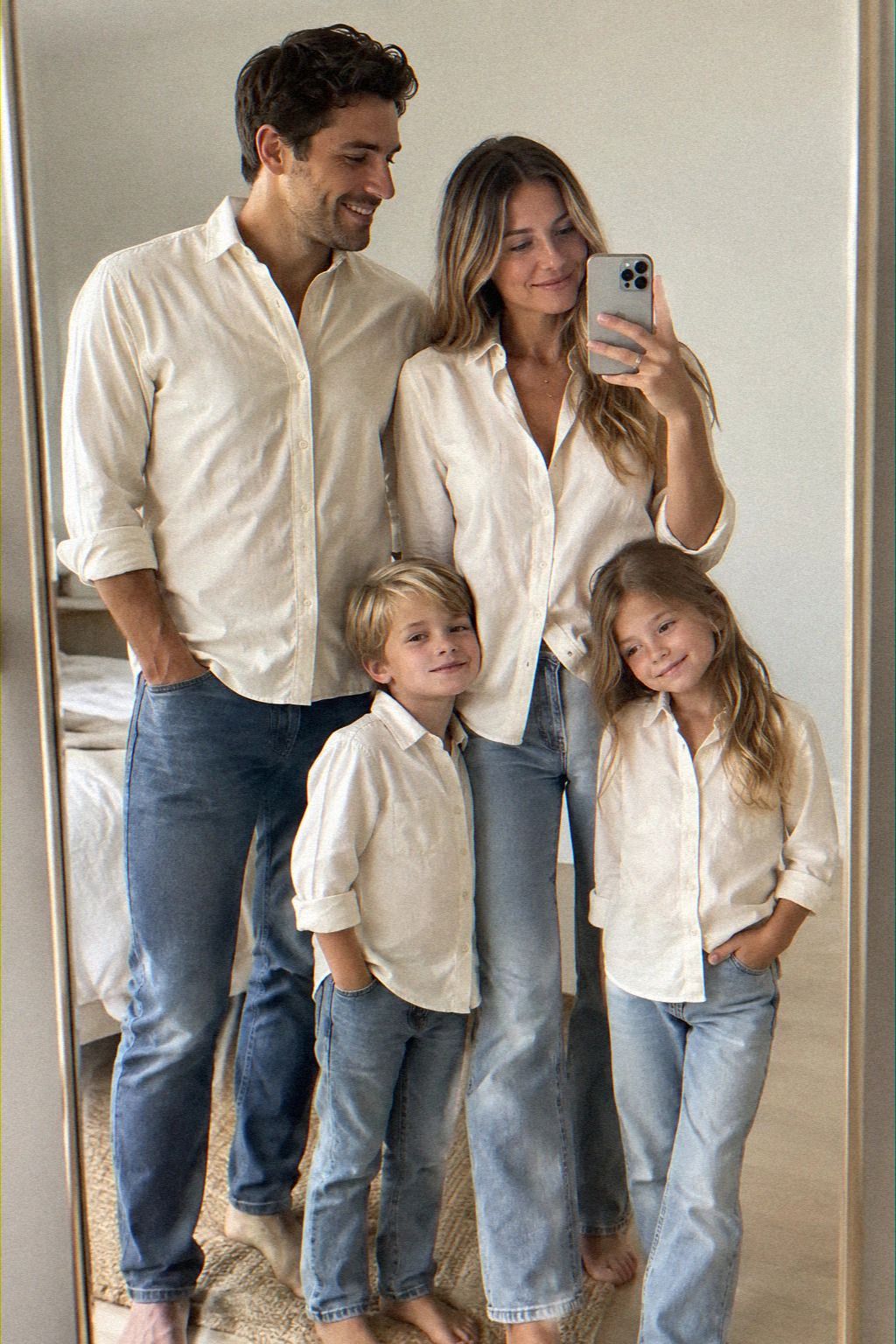
Blue jeans and cream button-downs are a warmer alternative to bright white shirts. Choose cream cotton button-downs, then let each person wear a different denim rise or wash. The palette feels relaxed because cream softens the contrast between your skin, fabric, and blue denim.
You’ll want to keep the cream shades within the same temperature. Ecru, oat, and warm cream usually sit together more comfortably than a yellowed ivory beside a cool gray-white. I’d vary the collars too: a camp collar, a pointed collar, and a collarless blouse can share the same visual story.
For a casual portrait, tuck only some shirts. You’ll get a mix of waistlines instead of one horizontal block. High-rise straight denim balances a longer shirt, while a cropped shirt works better with a fuller leg.
If you’re unsure about the color, test the pieces beside a window first. Your eye will catch a yellow cast before the finished image does. These neutral family photo outfits that never look dated can also help you compare warm and cool neutrals.
10Add Tan Boots to White and Denim
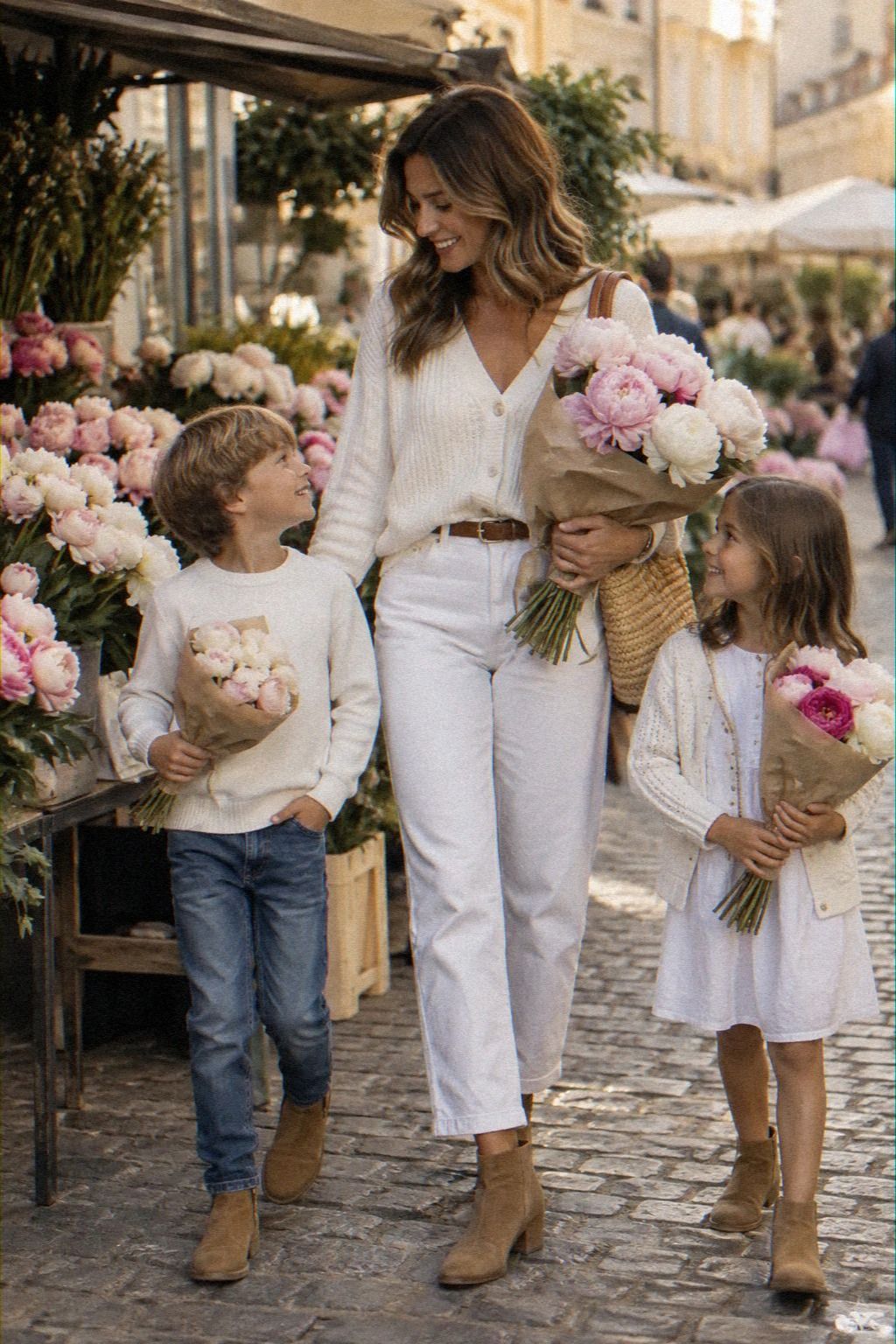
White and denim outfits with tan boots bring a grounded note to an outdoor portrait. You can start with a white dress, denim jacket, or cotton shirt, then use the boots as the warm element that connects the group.
A white midi dress looks balanced with a medium-wash denim jacket, while jeans and a tucked white shirt can take a more rugged tan ankle boot. I’d use a suede belt or tan bag on another person so the footwear doesn’t feel isolated.
You’ll want the boot height to suit the hemline. An ankle boot works with a midi skirt, while a taller boot can disappear under a longer dress. If you’re photographing children, choose a stable low heel or flat sole so movement stays easy.
The best supporting textures are cotton canvas, washed denim, and matte leather. Your group won’t need a second strong pattern. For more everyday combinations, use this texture mixing technique for light outfits.
11Let Blue Details Lead White Ensembles
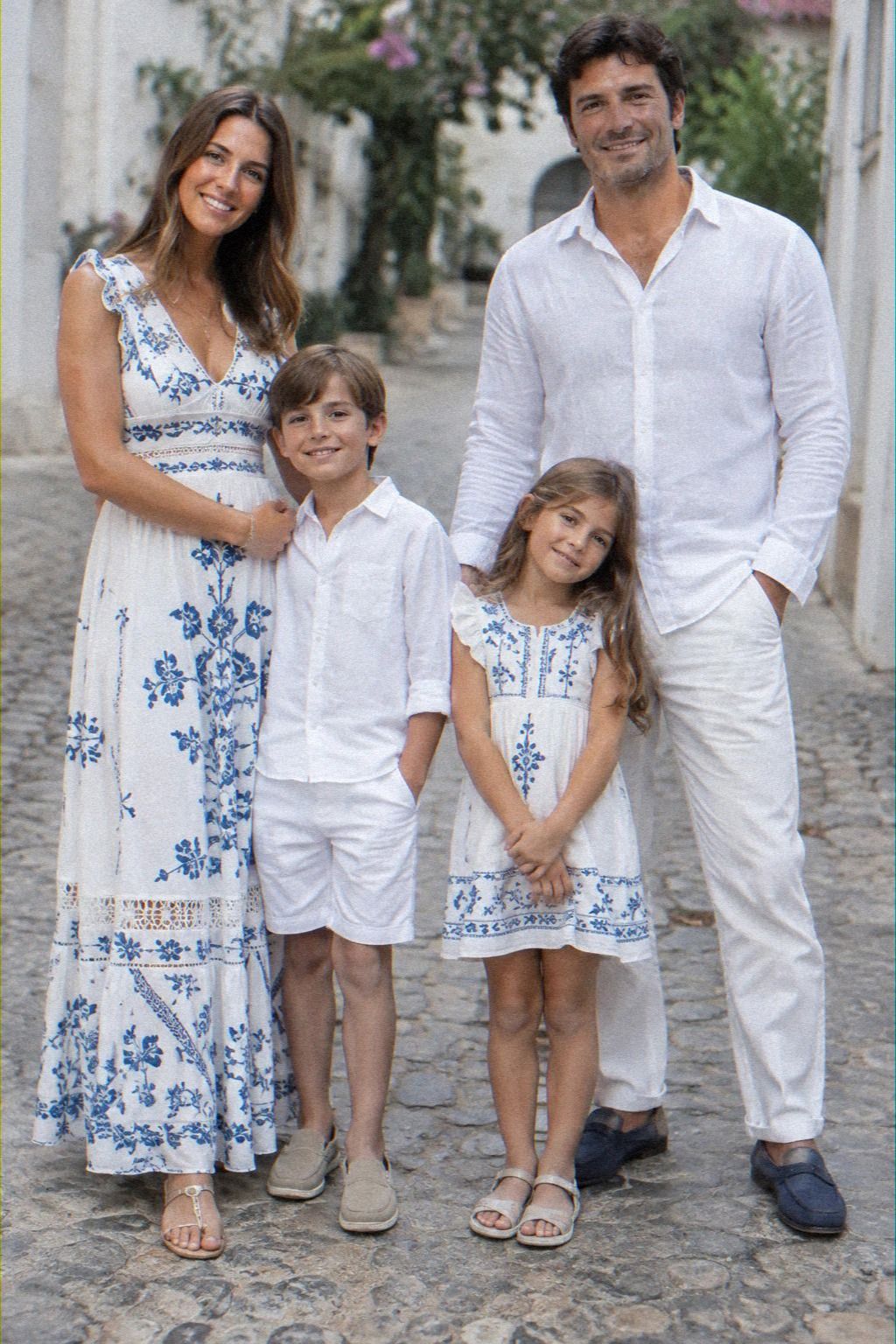
Monochrome blue details on white ensembles let you use several shades without making the clothing look busy. Start with white cotton separates, then add navy socks, pale blue stitching, a cobalt scarf, or a denim overshirt.
You’ll want to limit the strongest blue to one or two people. If everyone wears saturated cobalt, your photograph can lose its soft balance. I’d use navy on one person, powder blue on another, and a medium-blue accessory elsewhere.
Laying the pieces together makes this concept easy to plan because you can check whether the dark accents are evenly distributed. If you’re working with tiny details, make sure they’re large enough to remain visible in the finished portrait. Your strongest accessory should have a clear shape.
Indigo cotton twill is a dependable anchor because it has enough texture to show clearly. Pair it with smooth poplin, lightweight jersey, or subtle eyelet fabric. This classic mid-length layers guide can help you decide where a darker layer should end.
12The Floral Accent: Blue Dresses With White Details
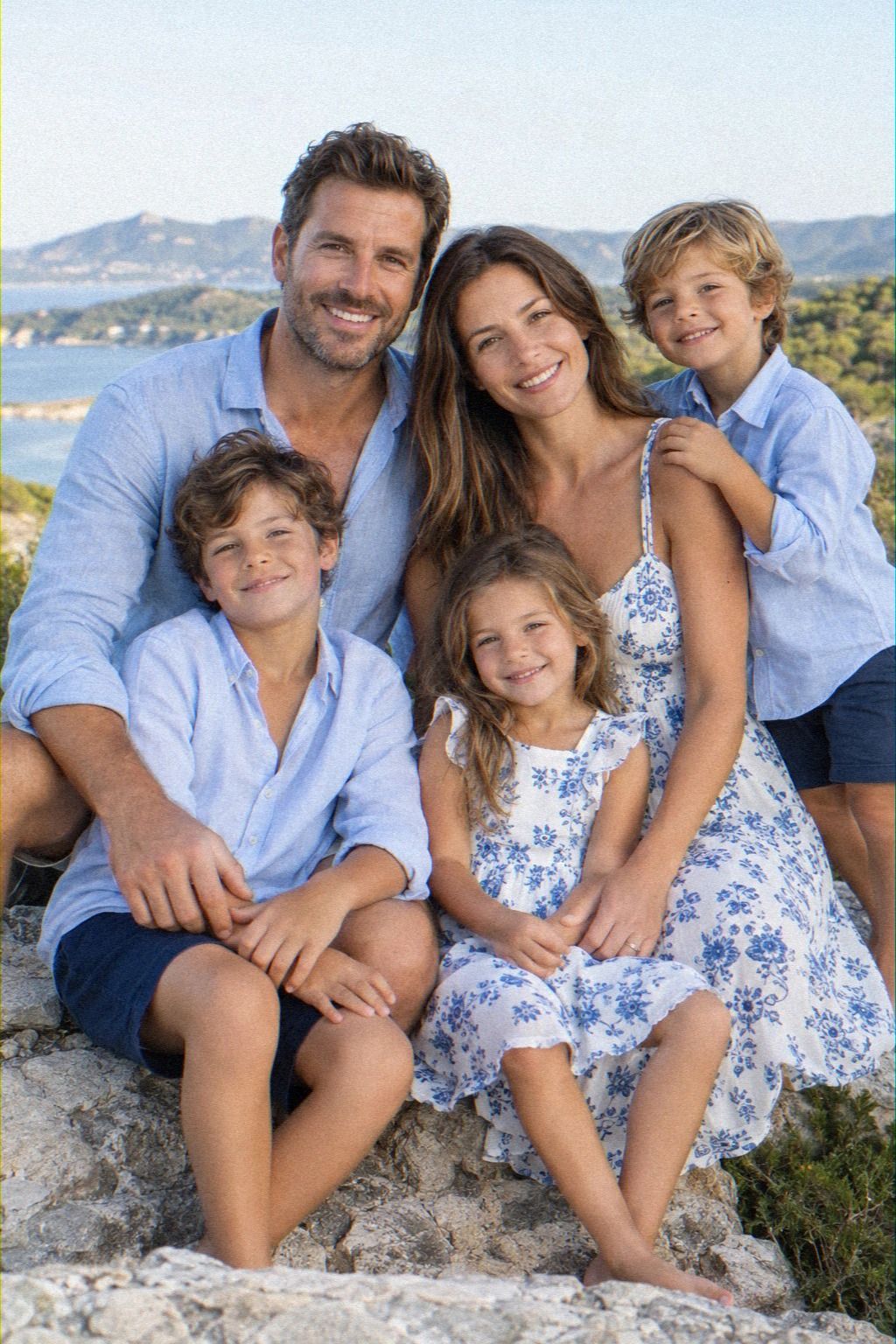
Blue dresses with white floral accents bring a relaxed, romantic feeling to a family portrait.
13Build a Cream Trouser and Pale Blue Shirt Look
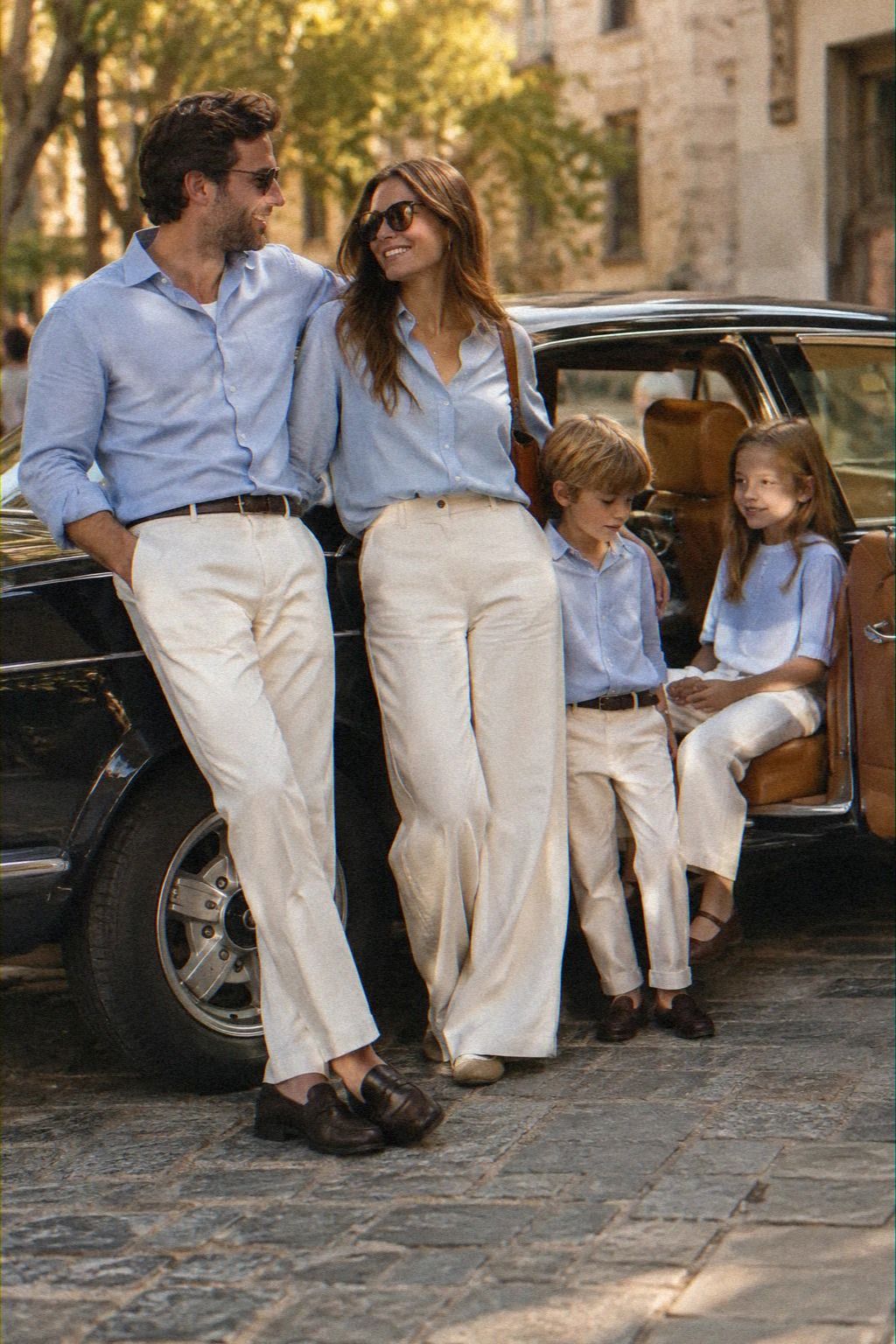
Cream trousers and pale blue shirts create a polished silhouette with enough softness for a street-style portrait. Choose cream twill trousers, wide-leg pants, or tailored chinos, then pair them with pale blue shirts in different cuts.
You’ll want the trouser shapes to vary carefully. A straight leg, a relaxed pleat, and a softly wide leg can work together, but several oversized shapes may overwhelm your group. I’d keep the shirts lighter than the denim used elsewhere so this outfit has its own identity.
For a vintage setting or shaded street, use belts and shoes as small linking details. Tan loafers, white sneakers, or a navy belt can connect the outfits without making them formal. Pleated cotton trousers are useful because they hold a clean front while still allowing movement.
I’d skip thin cream fabric that becomes transparent in bright light. A heavier twill will look more substantial and keep your silhouette neat. If you need further layering ideas, this texture mixing technique for everyday outfits is a useful reference.
14Finish With Timeless White and Blue Formal Styling
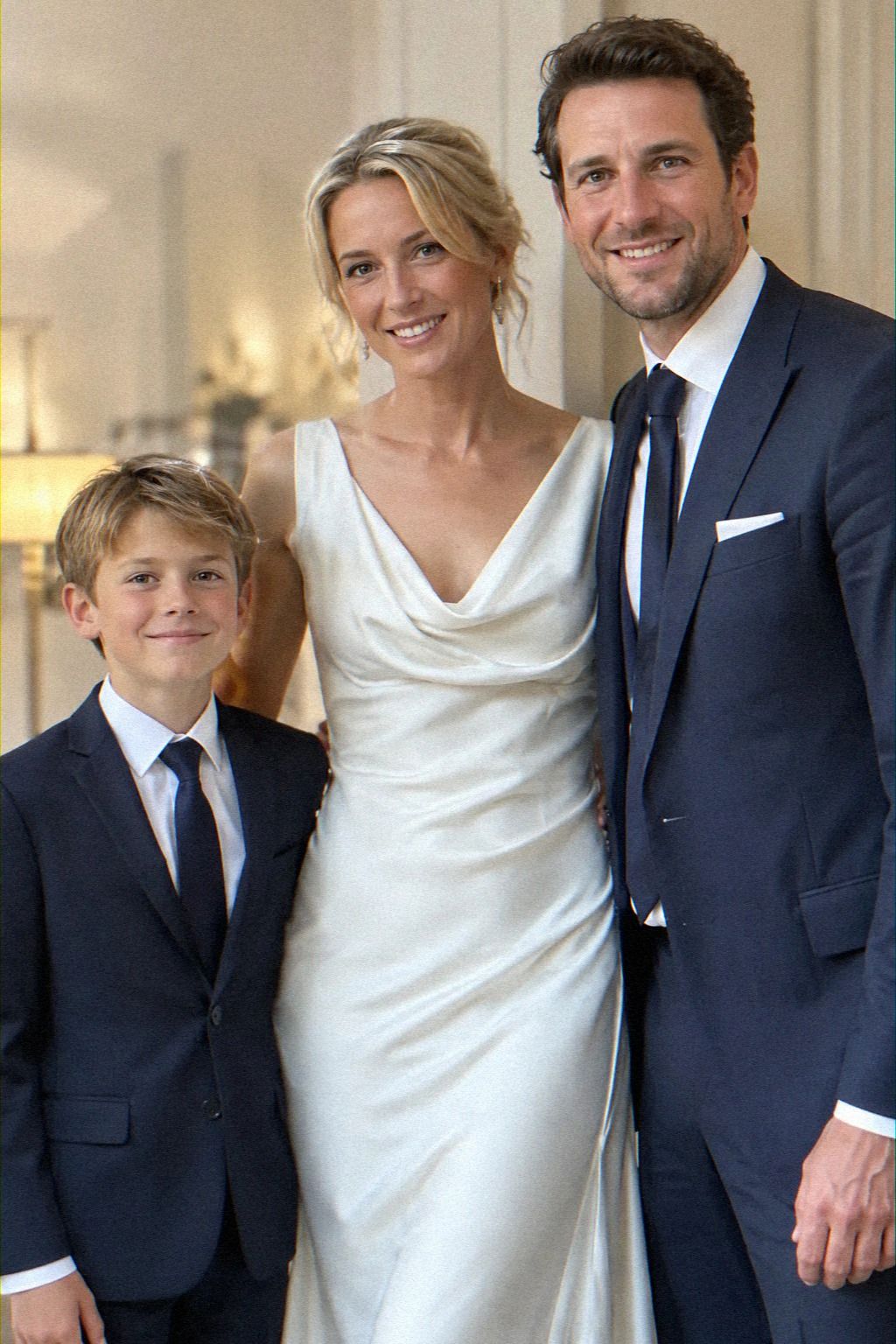
Timeless white and blue formal styling works when the clothes share a palette but not a level of decoration. You can combine a tailored suit, a dress, a blouse, and polished separates as long as the fabrics have similar visual weight.
A tailored navy suit can anchor the group, while someone else wears a white dress and another person chooses a blue oxford shirt with trousers. I’d avoid putting every person in satin or sequins. Your portrait will feel more natural when one outfit is formal and the others are refined but relaxed.
For a softer finish, add dark denim to one person and polished loafers to another. You’ll create contrast without leaving the blue-and-white story. If you’re dressing a larger family, repeat one accessory color rather than one exact garment.
The result should feel considered, not ceremonial. A cream blouse, navy jacket, or tan belt can give your group enough variation. This classic mid-length layers guide can help you keep formal layers proportional.
The Three-Tone Rule, the Two-Denim Rule, and the One-Pattern Limit
The strongest family photo outfits usually follow three quiet decisions: three main tones, no more than two denim washes, and one dominant pattern. I keep returning to this because matching is rarely the real problem. The problem is visual noise.
Start with white or cream as the light base, blue as the connecting color, and tan as the optional warm note. You can use navy, pale blue, denim, and cobalt inside the blue family, but one shade should lead. I’d rather see five different blues with similar fabric weight than five identical shirts in slightly different colors.
The two-denim rule matters because denim already has a visible texture and a strong blue identity. One faded wash and one deep indigo wash give your group contrast. Three nearly identical washes can look accidental, especially when you’re planning the outfits together.
The one-pattern limit is the rule I’d defend most strongly. A small floral dress, striped shirt, or embroidered blouse can provide enough movement for the entire group.
You’ll get a more inviting photograph when the eye has one place to pause. Keep the palette generous, your textures varied, and the pattern restrained.
Start there!
A practical budget guide:
For a final comparison, save these neutral family photo outfits that never look dated.
What People Always Want to Know
What is the best blue and white family photo outfit for a small group?
A white shirt with medium or dark denim is the safest starting point because different silhouettes still look connected. Add one cream knit or tan accessory so your group doesn’t look overly matched.
I’d choose one relaxed piece, one tailored piece, and one softer texture. You can also borrow the simple contrast from these black and cream family photo outfits.
Where can I buy blue and white outfit pieces on a budget?
Target, thrift stores, Facebook Marketplace, and local consignment shops are useful places to look. Start with white shirts and denim, then search for accessories second.
You’ll save money by using owned basics and buying only the missing texture or color. I’d spend first on the piece that affects the largest part of your silhouette.
How much does a blue and white family photo outfit refresh cost?
A budget refresh can cost about $100 to $300, depending on how many pieces you already have. Existing shirts, jeans, sneakers, and belts may cost nothing. If you’re shopping, spend first on the item that fills the largest gap, such as one good denim layer or a polished white shirt.
Can I create these outfits on a budget?
Yes, and you can start with three free moves: gather every white or cream top, sort denim by wash, and place the pieces together before shopping. Then add inexpensive ribbons, belts, or one tan accessory.
You don’t need a complete new wardrobe for a cohesive result. Good news!
Is this color combination worth it in a small setting?
Yes, because blue and white give a clear visual line without making the clothing feel heavy. Keep darker blue toward the center or lower half of the group, and avoid large competing prints.
Your background can stay simple while the fabric supplies the interest. I’d choose matte textures if the surroundings already have strong visual detail.
Is blue and white styling a good idea for a rental or temporary setting?
Yes. Clothing needs no permanent changes, and you can adapt the palette to any location.
Use removable accessories such as ribbons, belts, scarves, and bags, then choose a simple background. You’ll have a polished result without needing an elaborate setup.
Where I’d Start With the Three-Tone Rule
If I had to pick one, I’d start with crisp white shirts and classic blue denim. The contrast stays readable in almost any light, and different fits keep your group from looking uniform. Pin that combination for later, then add one tan accessory only after you’ve checked what you already own.
A simple palette gives you room to vary the details, and that’s what makes the finished portrait feel timeless.