
Black and cream family photo outfits look polished when the contrast is controlled, not when everyone wears the same thing. Start with one black anchor, soften it with cream knitwear, then repeat texture and shape across the group. You’ll get a confident, memorable result without making anyone look copied. The hard part is editing. This guide makes the decisions easier.
- Start with one black anchor outfit
- Why cream knits soften the contrast
- The Trouser-and-Top Pairing
- Tan accessories: the quiet bridge
- Let children move in simple silhouettes
- One pattern, not three
- Repeat the blazer without cloning the outfit
- What belongs under a structured black jacket?
- Choose matte fabrics for a richer result
- Black shoes, different personalities
- Brown accents need restraint
- Plan tonal outfits around one cream shade
- Hems change the whole group silhouette
- Check every outfit before you leave
- Gold should whisper, not dominate
1Start with one black anchor outfit
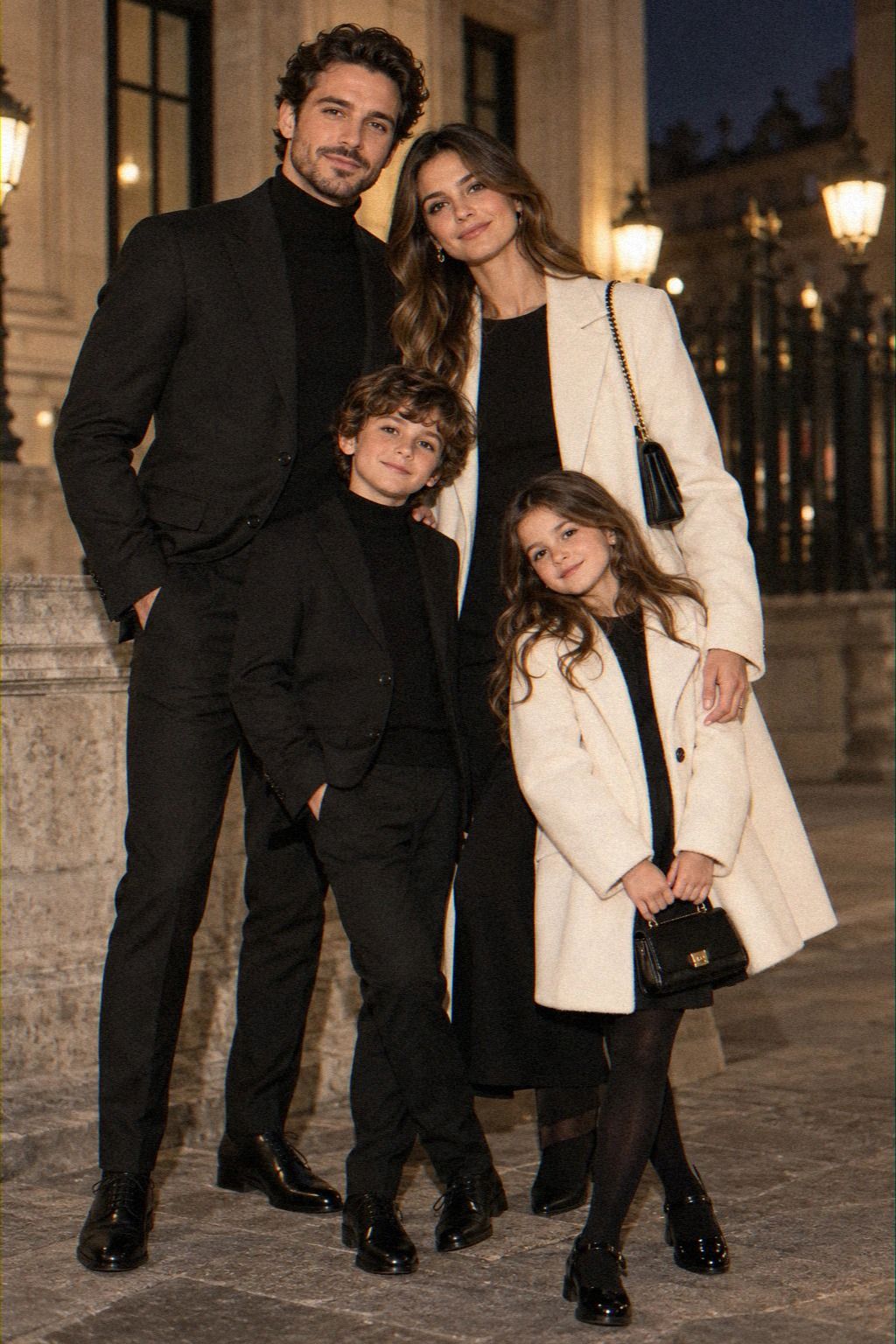
Choose one person’s full outfit as the visual anchor. You’ll want a matte black outfit with enough shape to read clearly, such as a black wool-blend coat, straight trousers, and simple leather shoes.
You don’t need sequins or a dramatic cut. I’d choose a quiet surface because glossy black can catch stray light and make the group feel busy.
Keep the anchor close to the body without making it tight. A black cotton-twill blazer from Uniqlo, COS, or a similar label gives you structure.
A plain black knit keeps the neckline calm. If you’re planning several family outfits, begin here before shopping for anyone else.
You’ll find that every later choice becomes simpler once one strong silhouette leads the group.
The anchor doesn’t need to be formal. A black jumpsuit, a tailored trouser, or a clean midi dress can create the same effect.
Choose the piece that feels most like the person wearing it. Your strongest result will feel natural when the anchor looks intentional rather than forced.
For another restrained direction, compare this with these neutral family photo outfits that never look dated. You’ll also find a useful texture starting point in this five-minute texture mixing technique.
2Why cream knits soften the contrast
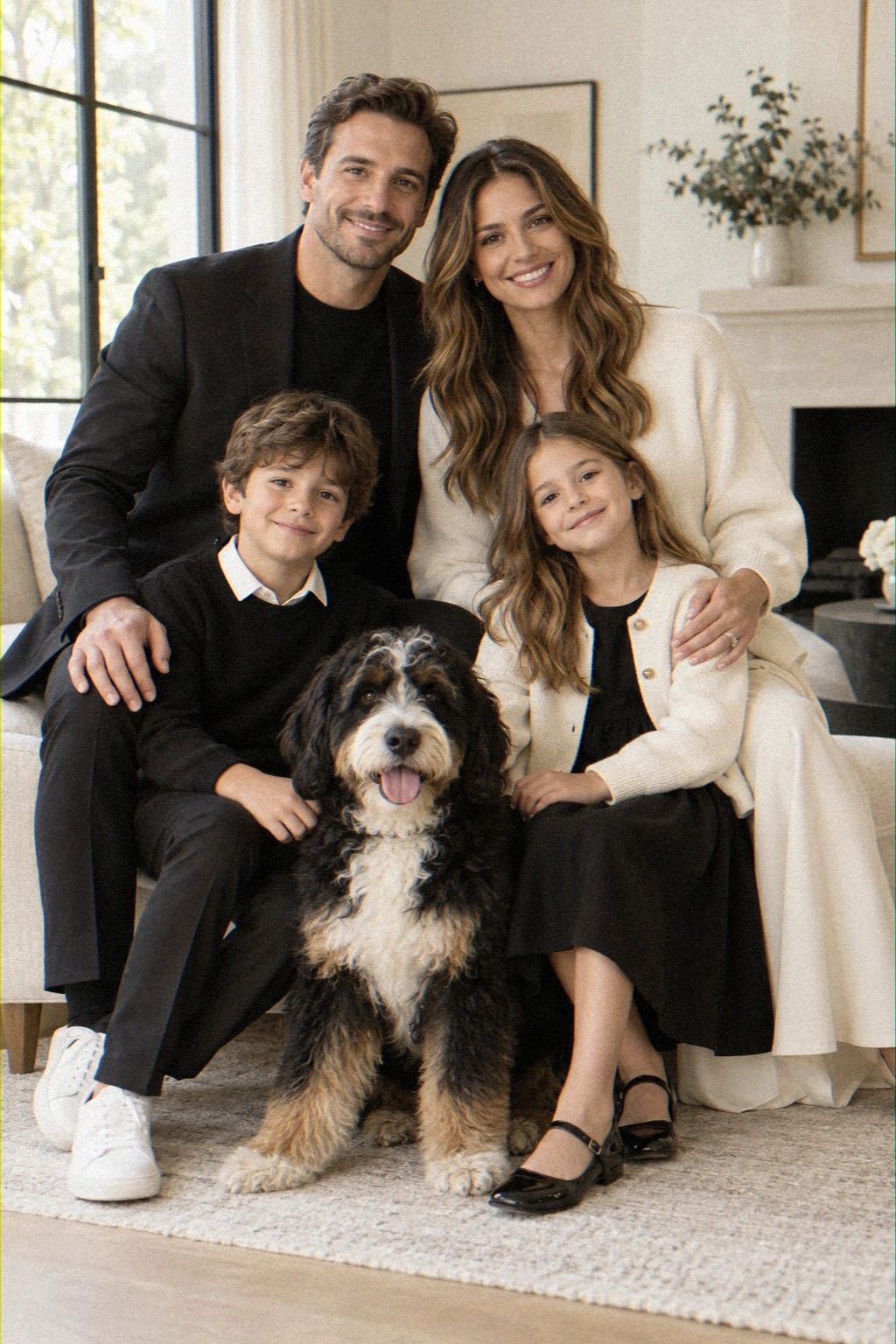
Cream knitwear makes black feel less severe, especially when several people stand close together.
3The Trouser-and-Top Pairing
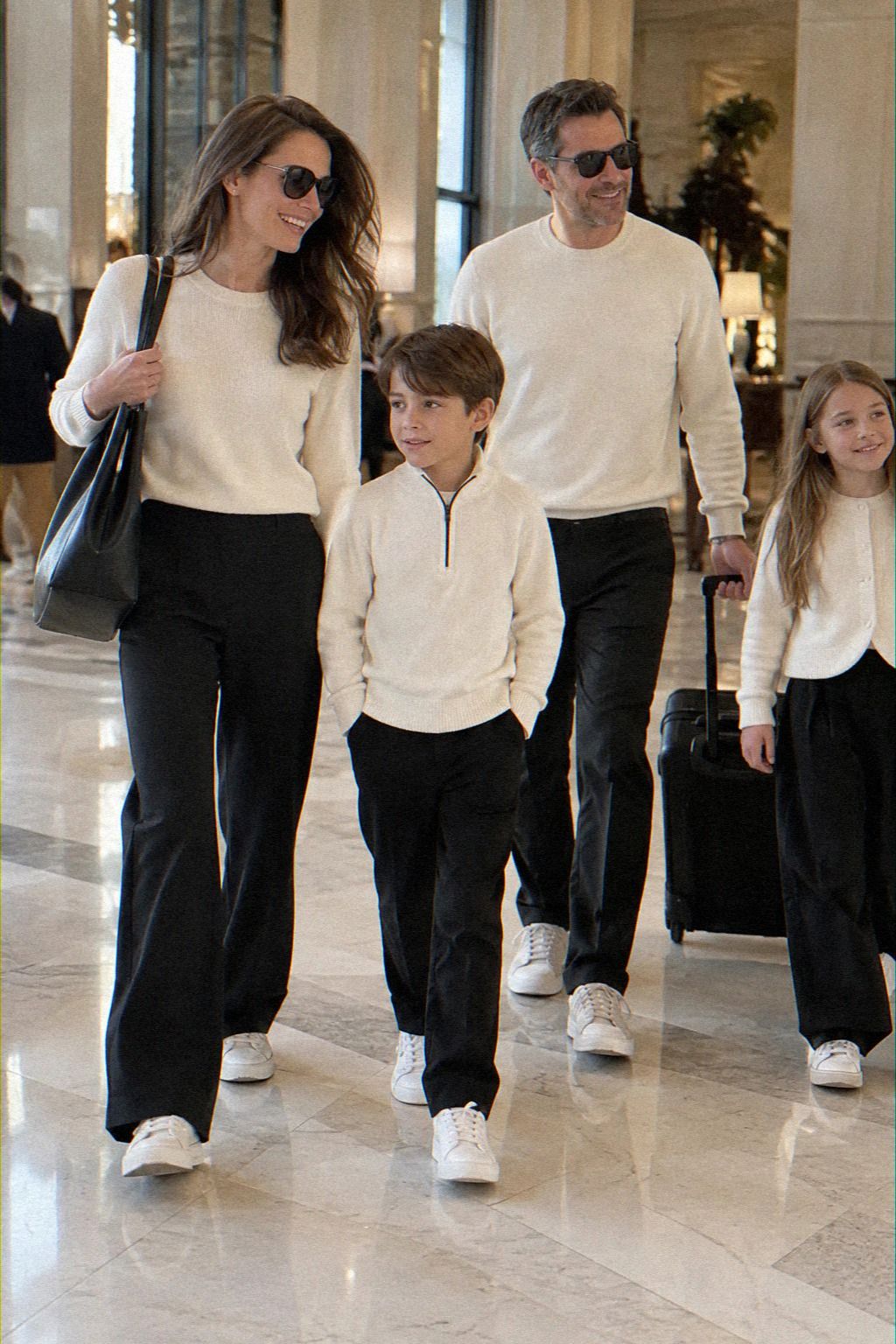
Build the middle of the group around black trousers and cream tops. You’ll get a clean, elegant base without asking every person to wear the same outfit. I’d mix a straight black trouser, a wide-leg black trouser, and a simple black jean, then balance each with a different cream neckline.
A fitted cream tee works with a fuller trouser. A relaxed cardigan looks sharper with a narrower leg.
You can also use a cream blouse, knit polo, or lightweight sweater if you want the group to feel more refined. Your aim is rhythm, not uniformity.
Pay attention to where each top ends. A cropped hem can give a high-waisted trouser a fresh proportion, while a longer knit can create a relaxed line. You’ll keep the palette cohesive while allowing each person’s style to stay visible.
For a small group, three different proportions are enough. Try one narrow trouser, one wider leg, and one skirt or dress. You don’t need more variety than the eye can read.
4Tan accessories: the quiet bridge
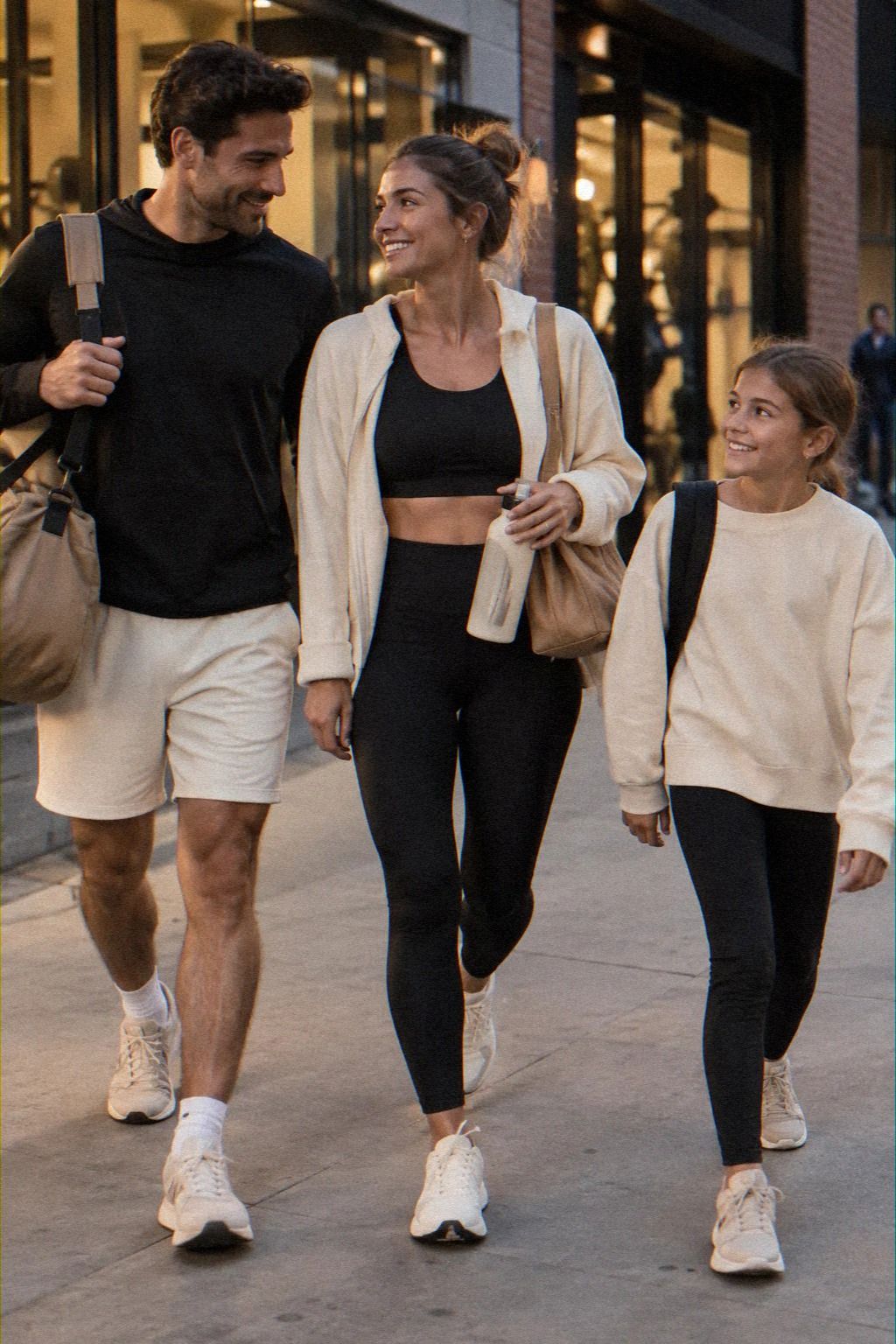
Use tan accessories as a bridge color rather than a third full outfit color. A tan leather belt, caramel crossbody, or warm leather sneaker can connect athletic pieces with the black-and-cream palette.
You’re looking for small interruptions, not a whole brown outfit. I’d choose one tan accessory per person at most.
Try a vegetable-tanned leather belt, a canvas tote with tan straps, or a muted camel cap. Brands such as Madewell, Target, and Coach offer different levels of polish, but the material matters more than the label. If you’re working with active children, choose accessories that stay close to the body and won’t twist during movement.
Don’t make every tan piece the same shade. A muted saddle color can sit next to cream, while a deeper cognac bag gives your eye a resting point. One warm accent can make the palette feel welcoming without making it busy.
A simple planning budget can keep the styling realistic:
These are planning ranges, not fixed prices. You’ll spend less when you identify the one missing item instead of replacing every outfit.
You’ll find more polished ideas in these subtle accessories that make outfits look more expensive, as well as this guide to neutral family photo outfits.
5Let children move in simple silhouettes
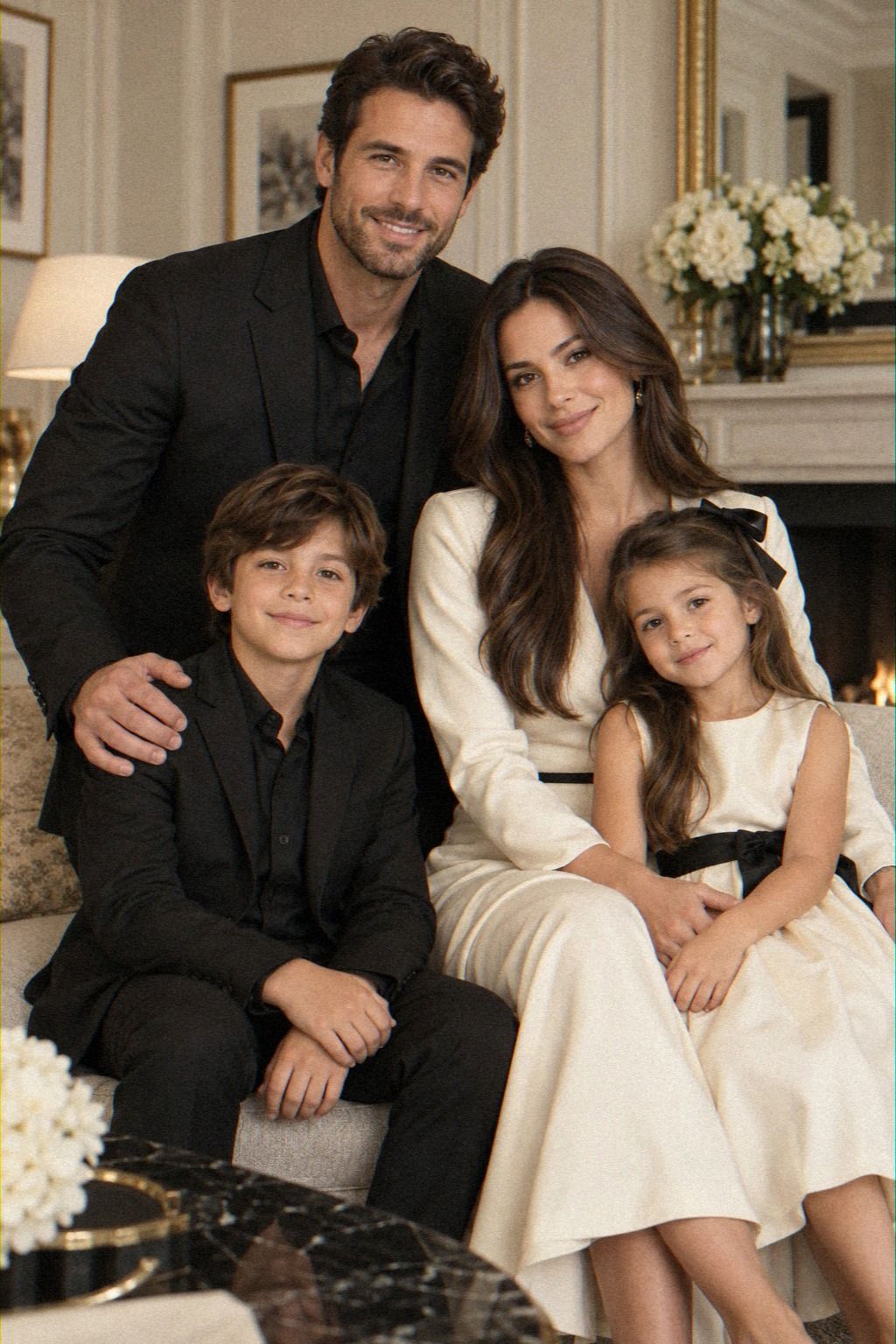
For children, prioritize clean silhouettes over miniature versions of adult tailoring. You’ll want a soft black knit, straight trousers, or a simple cream dress that allows movement. I’d avoid complicated layers, stiff collars, and accessories that need constant adjustment.
A child can wear a cream sweatshirt while another family member wears a finer cream cardigan. Those pieces will still relate if their undertones are close. Your goal is a lively, comfortable group, not a rigid catalogue pose.
Keep shoes practical and hems easy to manage. A neat cuff, a simple waistband, or a visible sock can add personality without competing with faces. You’ll get a more natural and charming result when children aren’t concentrating on their clothes.
Choose fabrics that can handle sitting, walking, and sudden movement. A soft cotton jersey often looks better than a stiff formal fabric because the child can actually relax.
6One pattern, not three
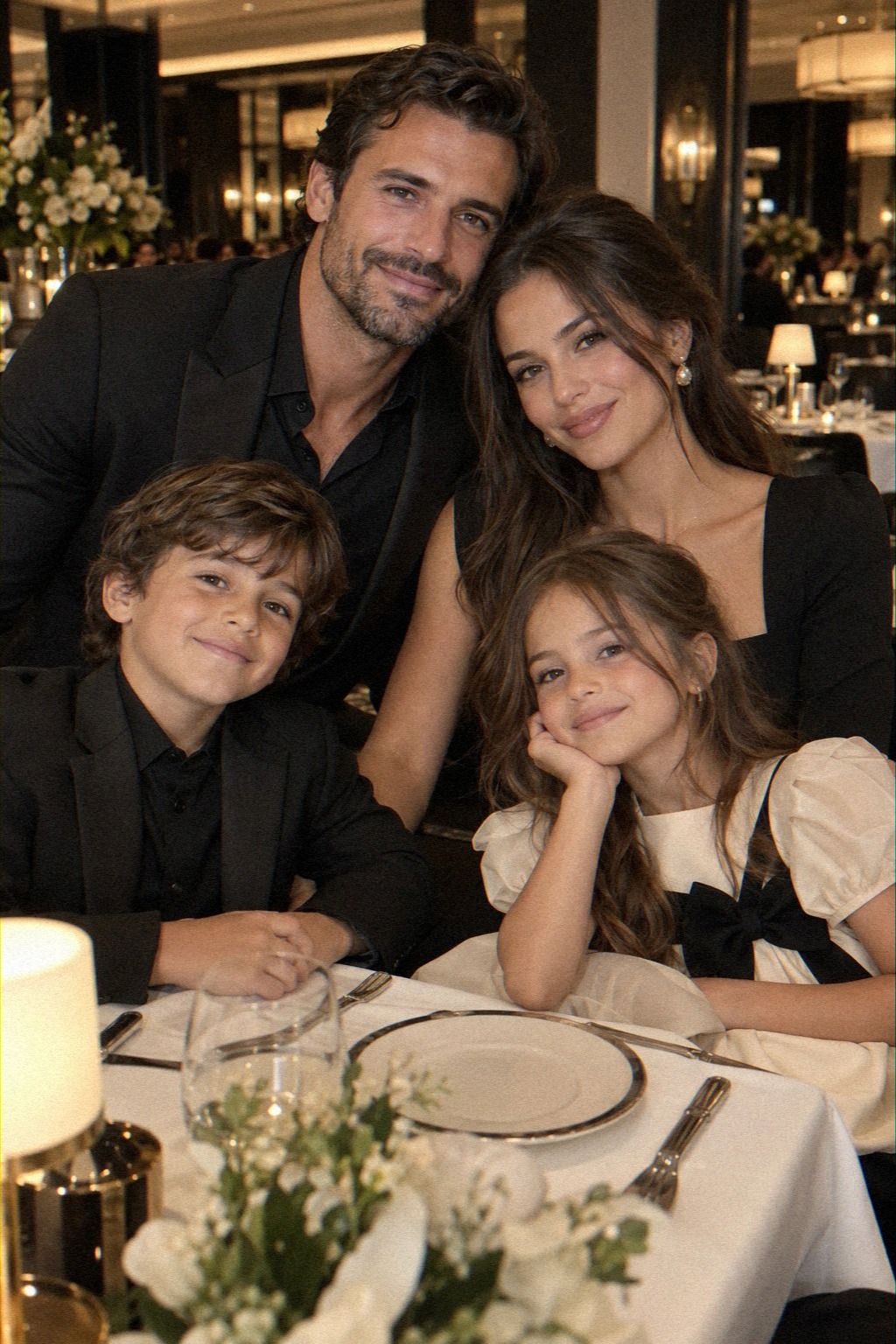
Choose one patterned outfit and let the rest of the family support it.
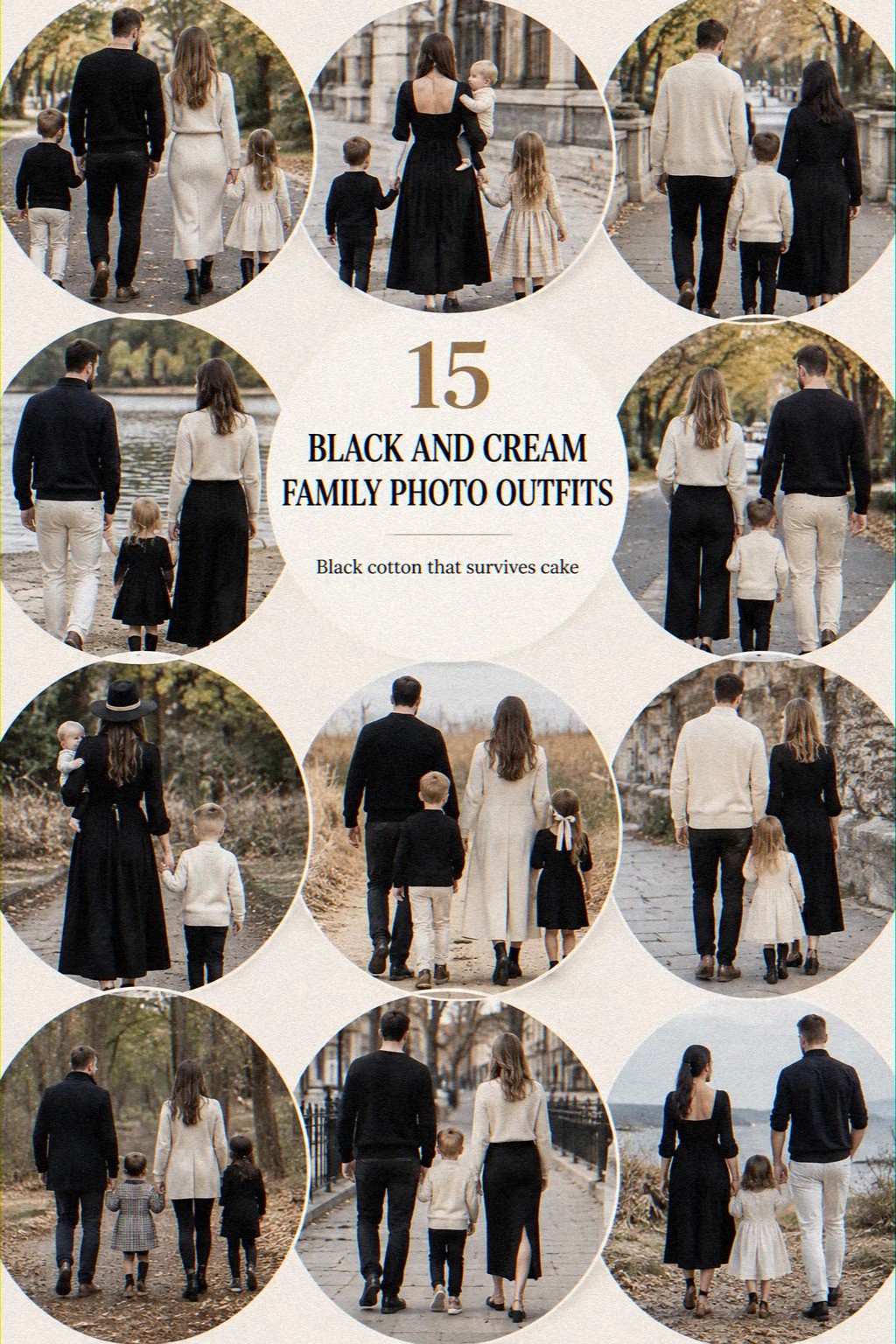
7Repeat the blazer without cloning the outfit
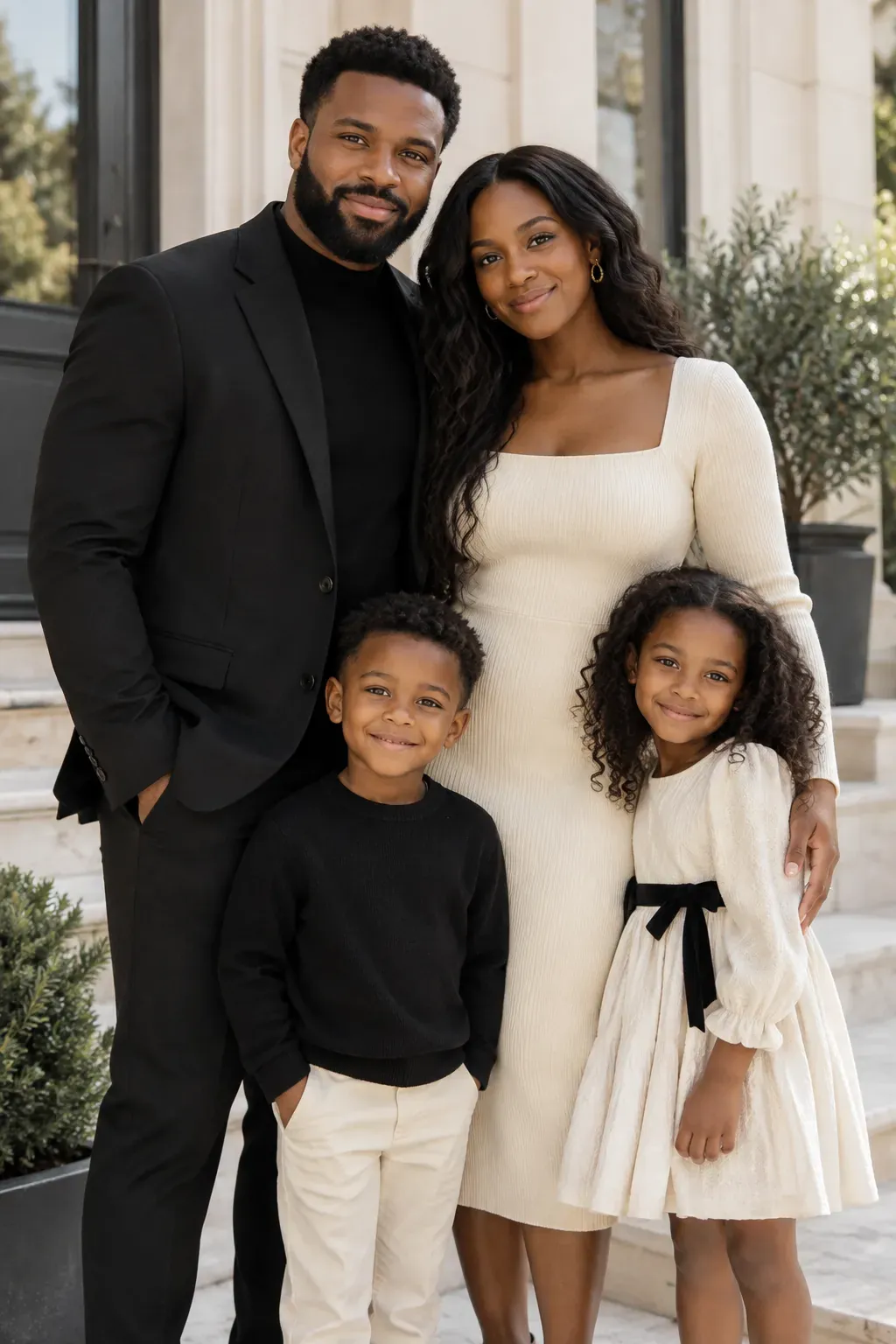
Use one blazer as the repeating piece, but style it differently in each combination. You can pair it with black trousers once, cream denim another time, and a knit skirt or simple dress in a third combination. The jacket becomes the thread without making the outfits identical.
Choose a matte black crepe blazer or soft wool jacket with a defined shoulder. J.Crew, Mango, and Theory offer useful references for comparing cuts, but your own wardrobe may already contain the right shape. I’d avoid a shiny polyester finish because it can look costume-like and distract from the outfit.
If you’re dressing several adults, one person can wear the jacket while another carries the same black through shoes or a belt. You’ll get connection without cloning the outfit. If the blazer is oversized, balance it with a narrow trouser or fitted knit so your group keeps a readable silhouette.
You can also repeat the blazer across separate family combinations. Keep its black lapel, button shape, and shoulder line visible in every version. That way, the article’s idea stays clear when you move from one outfit to another.
For more accessory-led combinations, revisit these subtle accessories that make outfits look more expensive. One repeated garment can make a group feel sophisticated and connected.
8What belongs under a structured black jacket?
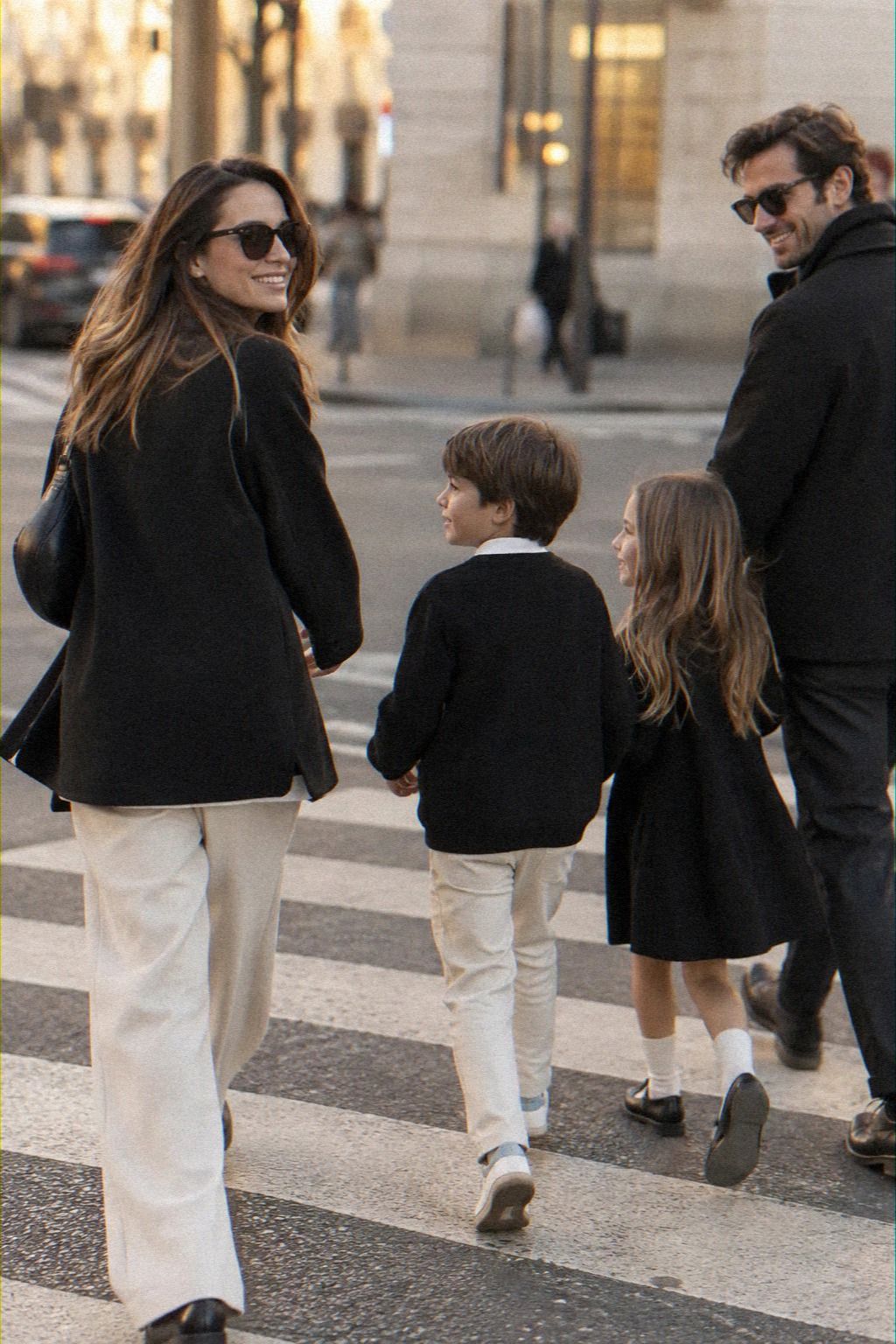
Layer a cream base under a black jacket to create a bright line near the face. You can choose a cream ribbed tank, a crisp poplin shirt, or a lightweight knit depending on the occasion. I’d keep the neckline simple if the jacket already has a strong shoulder.
A cream cotton shirt gives you a crisp, polished contrast. A fine cardigan feels softer and more relaxed. If you’re dressing a child, a clean crewneck often works better than a complicated collar that bunches under the jacket.
You’ll want the lighter layer to remain visible when the person moves. Check the collar, cuffs, and hem before you leave, then stop adjusting. Your outfit will feel more effortless when it has structure but the person can still move naturally.
A square neckline can open the look, while a crewneck feels more understated. Use the neckline to balance the jacket instead of adding another accessory.
9Choose matte fabrics for a richer result
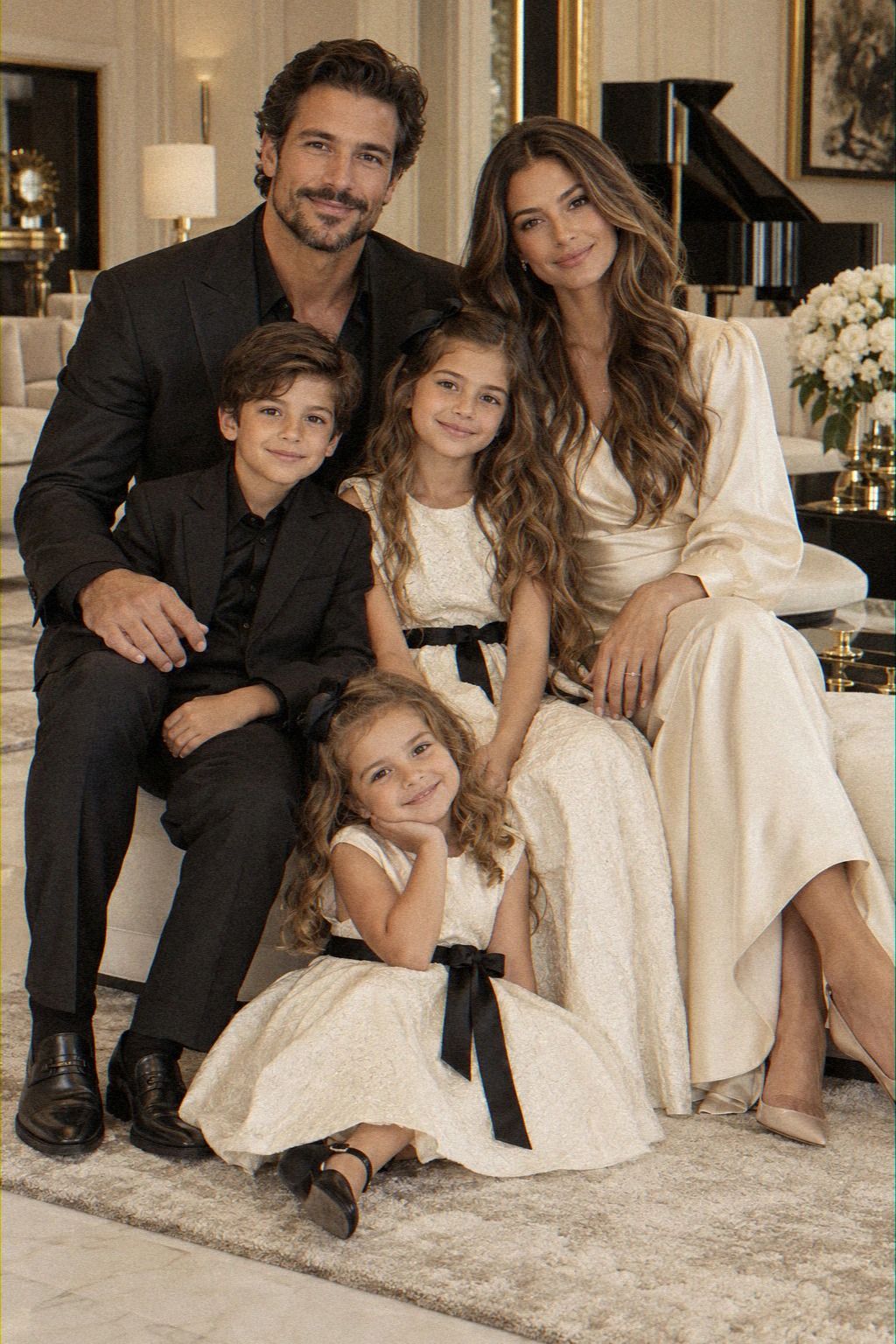
Choose matte fabrics when the setting includes mirrors, glass, neon, or strong daylight. Washed cotton, brushed wool, and matte satin bring texture without creating distracting shine. You’re not trying to remove every glossy detail.
A small amount on a shoe or bag can be useful.
Look at the surface from several angles before you decide. A cotton twill trouser should show a quiet diagonal weave, while a brushed knit should look soft rather than fuzzy. Brands such as COS, Uniqlo, and Levi’s offer useful fabric references, but you may already own the right pieces.
The richest result usually comes from contrast between surfaces. You’ll want one smooth item, one textured item, and one matte base across the group. If your surroundings are already soft, add structure through a crisp shirt or tailored waistband instead of another fuzzy layer.
A linen-blend shirt can bring an airy, relaxed note. A ribbed knit adds depth.
A smooth crepe skirt creates a clean counterpoint. Together, those surfaces make the outfits feel considered and editorial.
You can compare this approach with the five-minute texture mixing technique and these formal wedding guest dresses for less. You’ll see how surface contrast creates a richer, more polished effect.
10Black shoes, different personalities
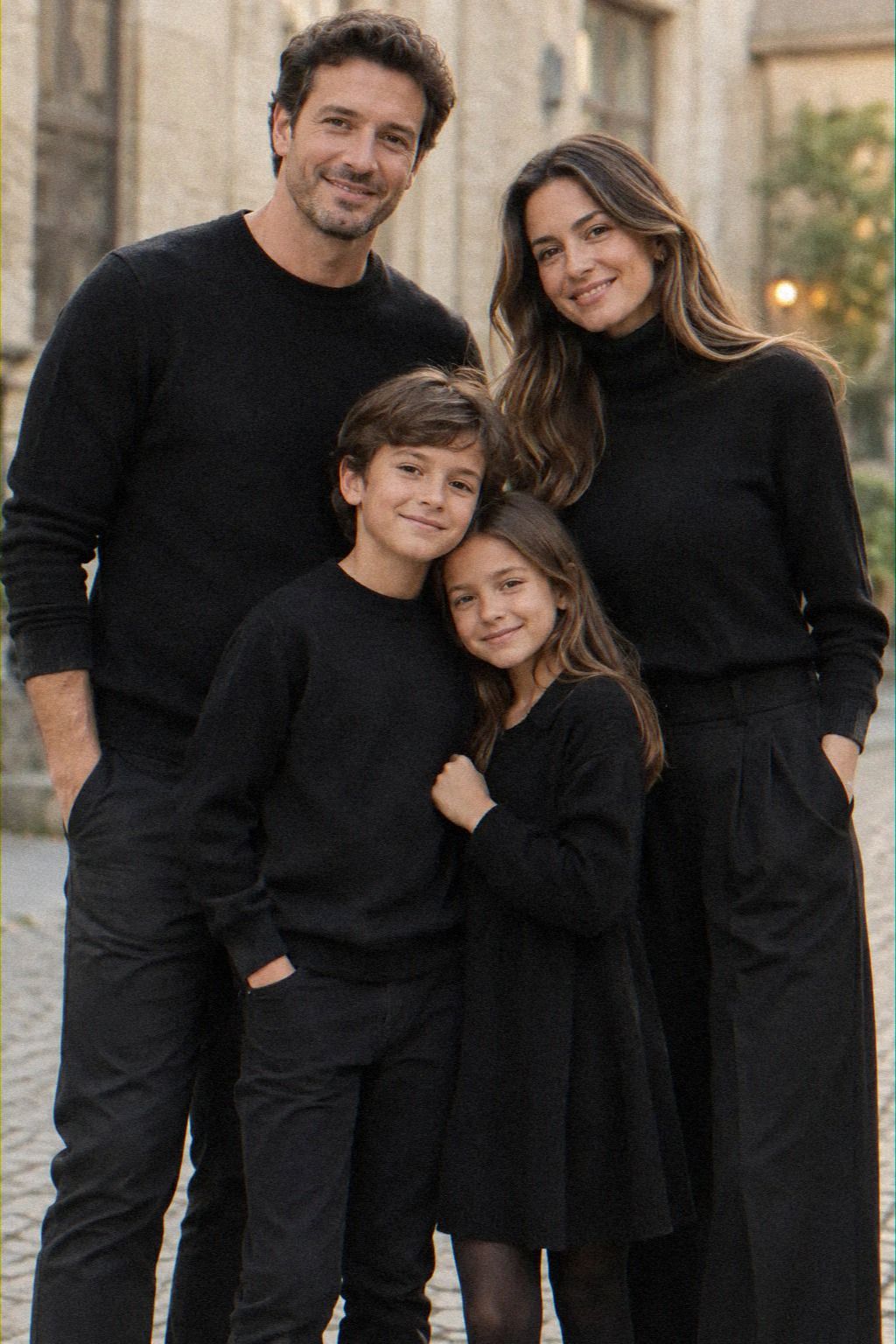
Coordinate black shoes by repeating the color, not the design. You can use loafers, simple ankle boots, ballet flats, or black sneakers depending on the setting. I’d avoid making everyone wear the same shoe because identical styling can flatten your family’s personality.
Choose smooth black leather or a matte leather alternative with a simple finish. A loafer from G.H.
Bass, a black sneaker from Adidas, or a plain ankle boot can support the same palette without creating a uniform. If you’re dressing children, flexible soles and secure closures matter more than decorative details.
Think about the line from hem to floor. You’ll want a cropped trouser with a low-profile shoe, while a wide trouser can handle a slightly heavier sole.
The choice isn’t about making anyone look taller. It’s about keeping your outline clean.
A ballet flat feels graceful with a cropped trouser. A lace-up boot gives a relaxed dress more edge. A clean sneaker keeps a child’s outfit cheerful and practical.
Different shoes can still produce a polished group.
For another event-focused reference, browse these black-tie guest dresses for less and notice how footwear stays visually quiet.
11Brown accents need restraint
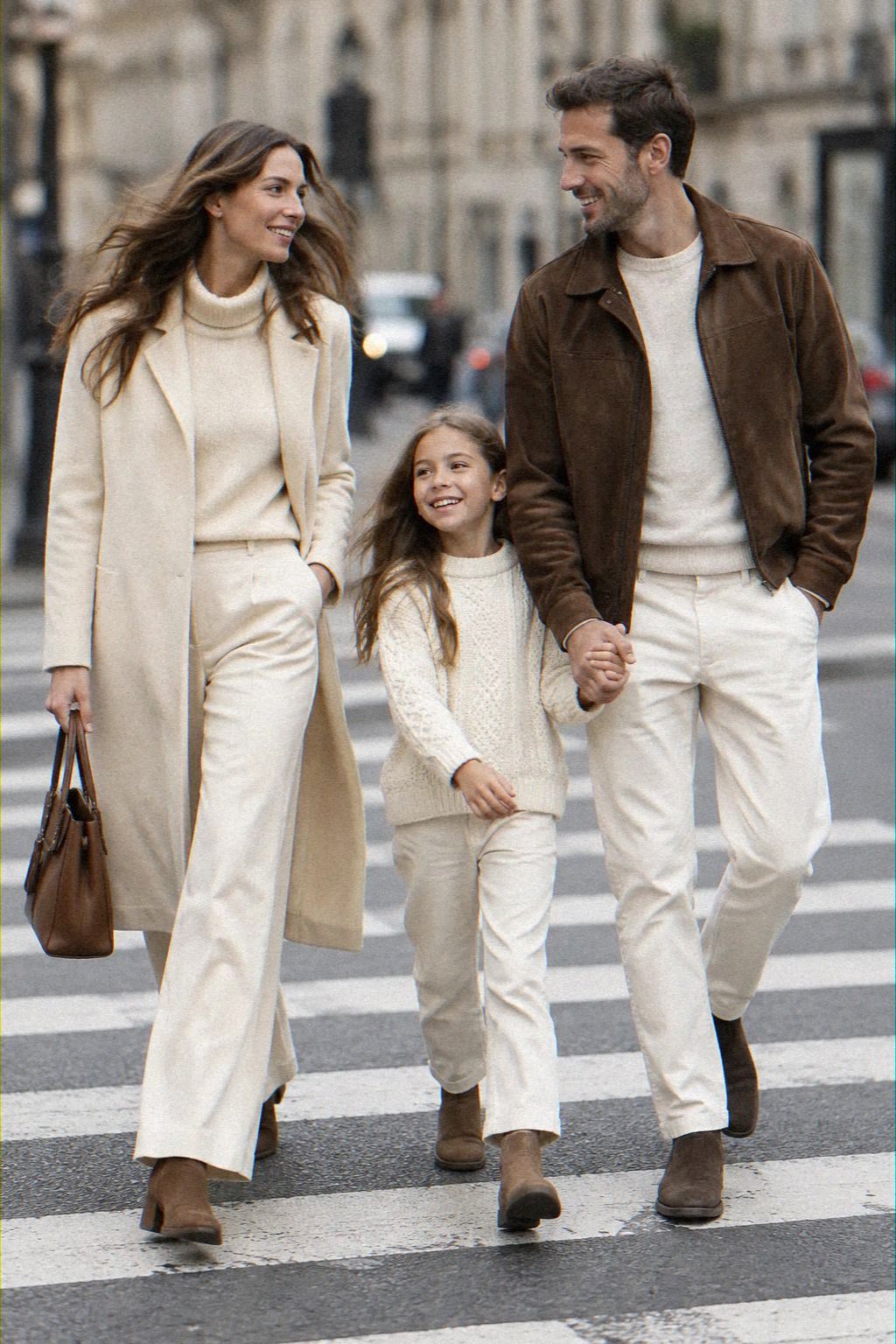
Add brown only after black and cream are already working. You can use a cognac belt, a brown watch strap, or a warm leather bag, but you don’t need all three. I’d treat brown as a graceful supporting note rather than a new color story.
A dark chocolate shoe can look elegant with cream denim. A lighter tan bag feels more relaxed beside black tailoring. If you’re using several brown shades, repeat the texture rather than forcing an exact color match.
Your best test is simple: remove the brown accessories and look at the group again. If the black and cream palette already feels complete, add one warm detail only where it improves balance. You’ll keep the finished look intentional instead of over-styled.
Brown works especially well when it appears near the hands or feet. A small leather watch, belt, or bag can connect the people without pulling attention away from their faces.
12Plan tonal outfits around one cream shade
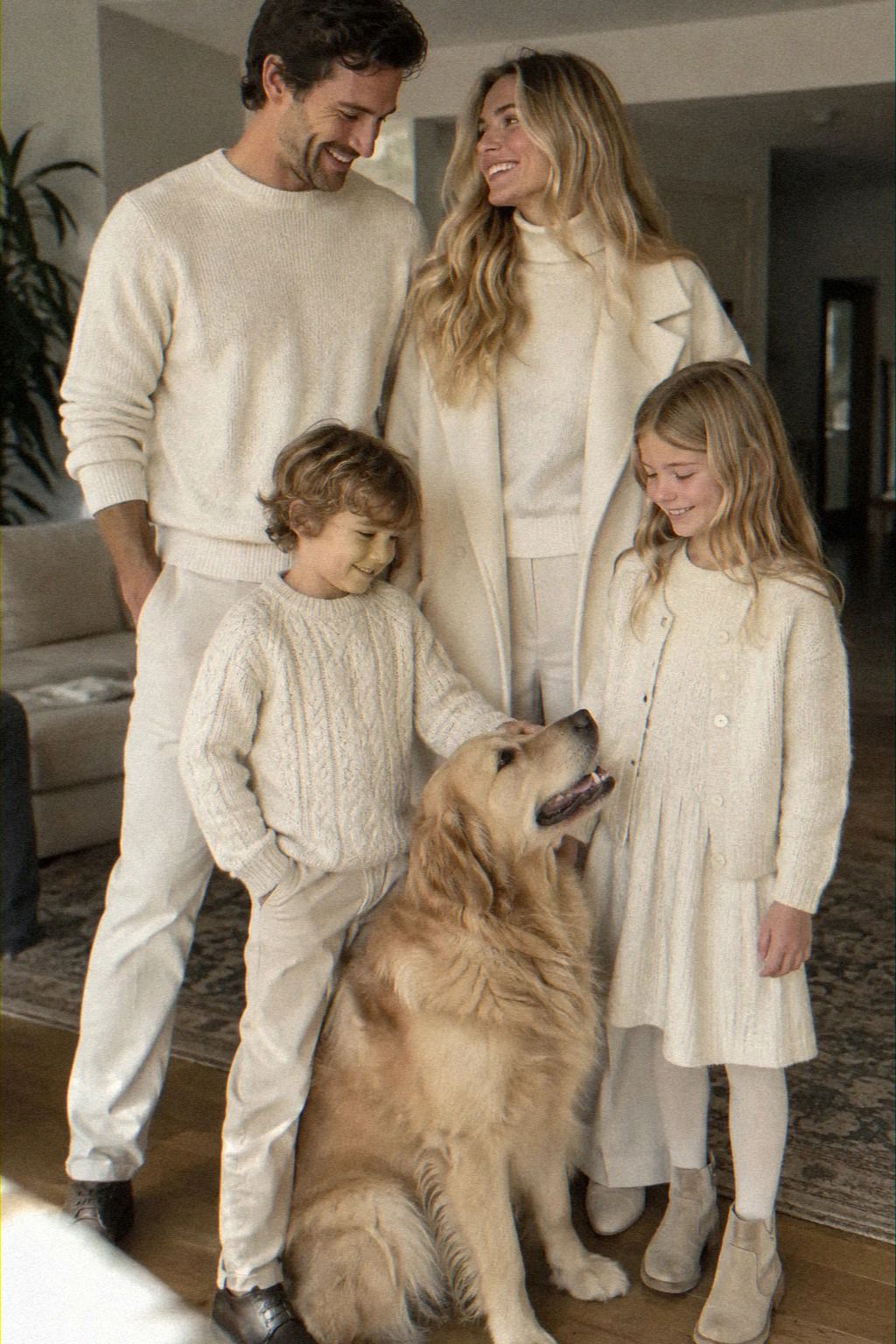
Pick one cream shade before you assign individual outfits.
13Hems change the whole group silhouette
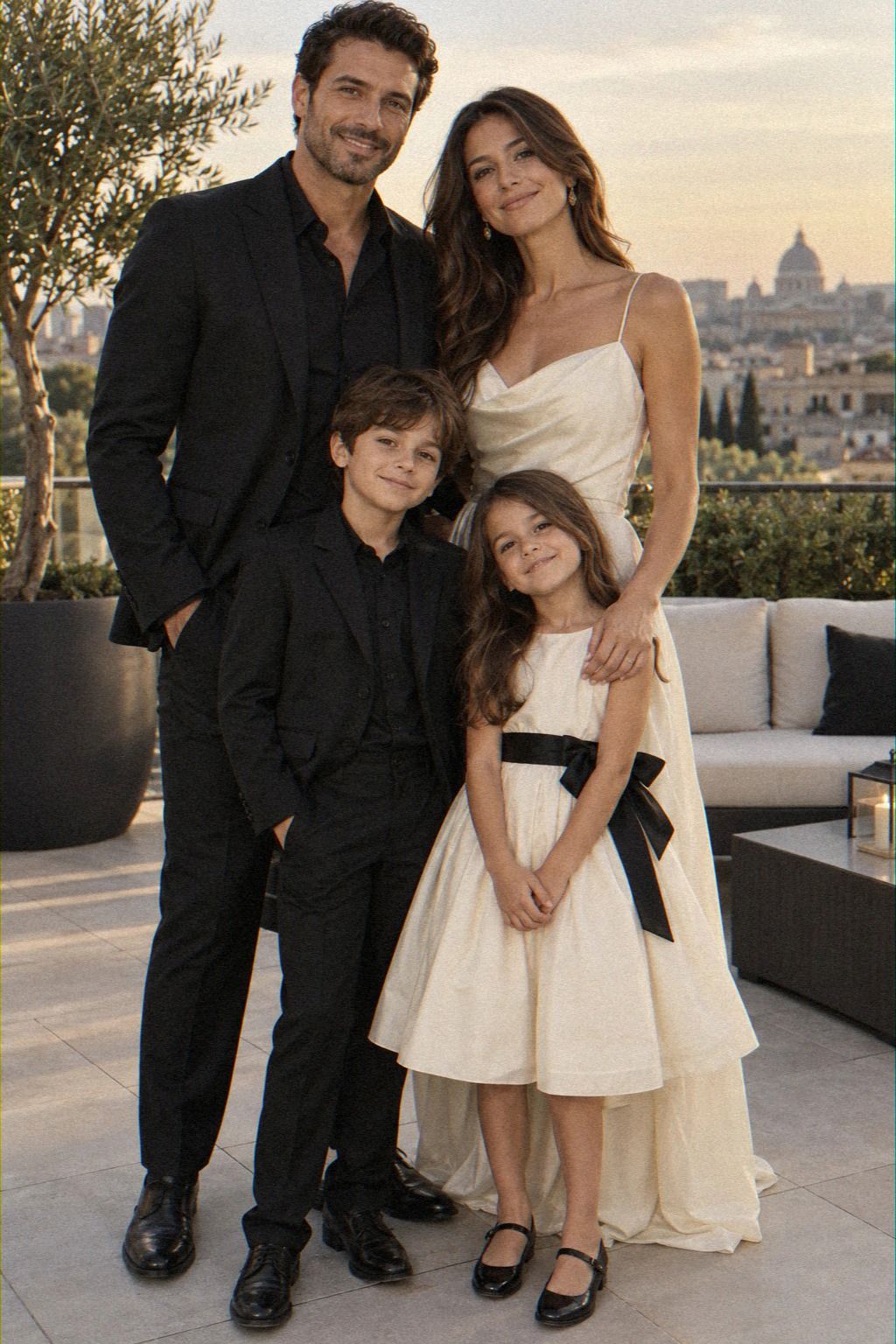
Vary hems so the family doesn’t become one horizontal block. You can combine a cropped trouser, a midi skirt, a full-length trouser, and a simple dress while keeping the palette consistent. I’d avoid giving everyone the same rise, hem, and shoe shape.
Look for visual breathing room between garments. A shorter jacket can balance a longer skirt, while a longer cardigan works well with a narrow trouser. Your group will look more dynamic when the silhouettes create a gentle rhythm.
You don’t need to use proportions that feel uncomfortable. If you prefer relaxed clothes, keep them relaxed and vary only the length or neckline. You’ll get a more confident result when each person recognizes themselves in the outfit.
A midi hem adds movement. A cropped trouser shows the shoe.
A full-length skirt or wide leg creates a slower, more dramatic line. These small changes give the group several shapes to read.
14Check every outfit before you leave
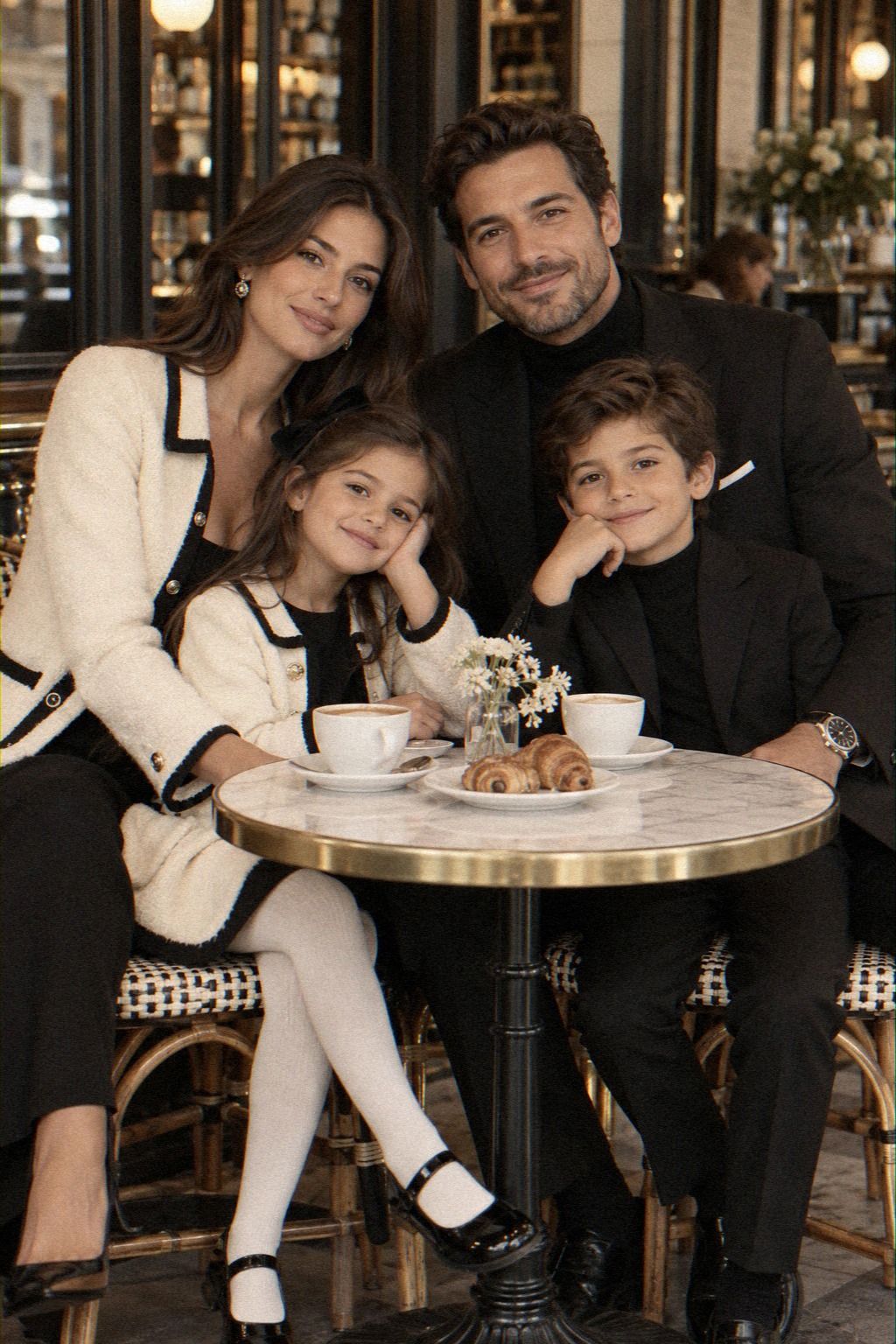
Before leaving, check the outfits in daylight. You’ll want to see whether cream is still cream and whether black has turned into a featureless block. I’d judge the clothes on the people wearing them instead of relying on a mirror alone.
Look for medium-weight cotton twill, matte knitwear, and jackets with visible edges. If the surroundings are light, a black sleeve needs enough separation from them. Ask each person to turn slightly so the fabric texture and garment shape remain clear.
Your goal isn’t a frozen lineup. It’s a group with readable shapes and natural posture.
Check collars, hemlines, and stray tags, then let people move. A candid expression is worth more than a perfectly centered belt.
Take this check before you add jewelry or extra layers. You’ll see the real problem faster when the outfits are still simple. If one person blends into the surroundings, change the texture or hem first.
If you’re still choosing between polished and formal, compare these black-tie wedding guest dresses with these winter wedding guest dresses for less. You’ll notice how the strongest outfits preserve movement while keeping the outline clear.
15Gold should whisper, not dominate
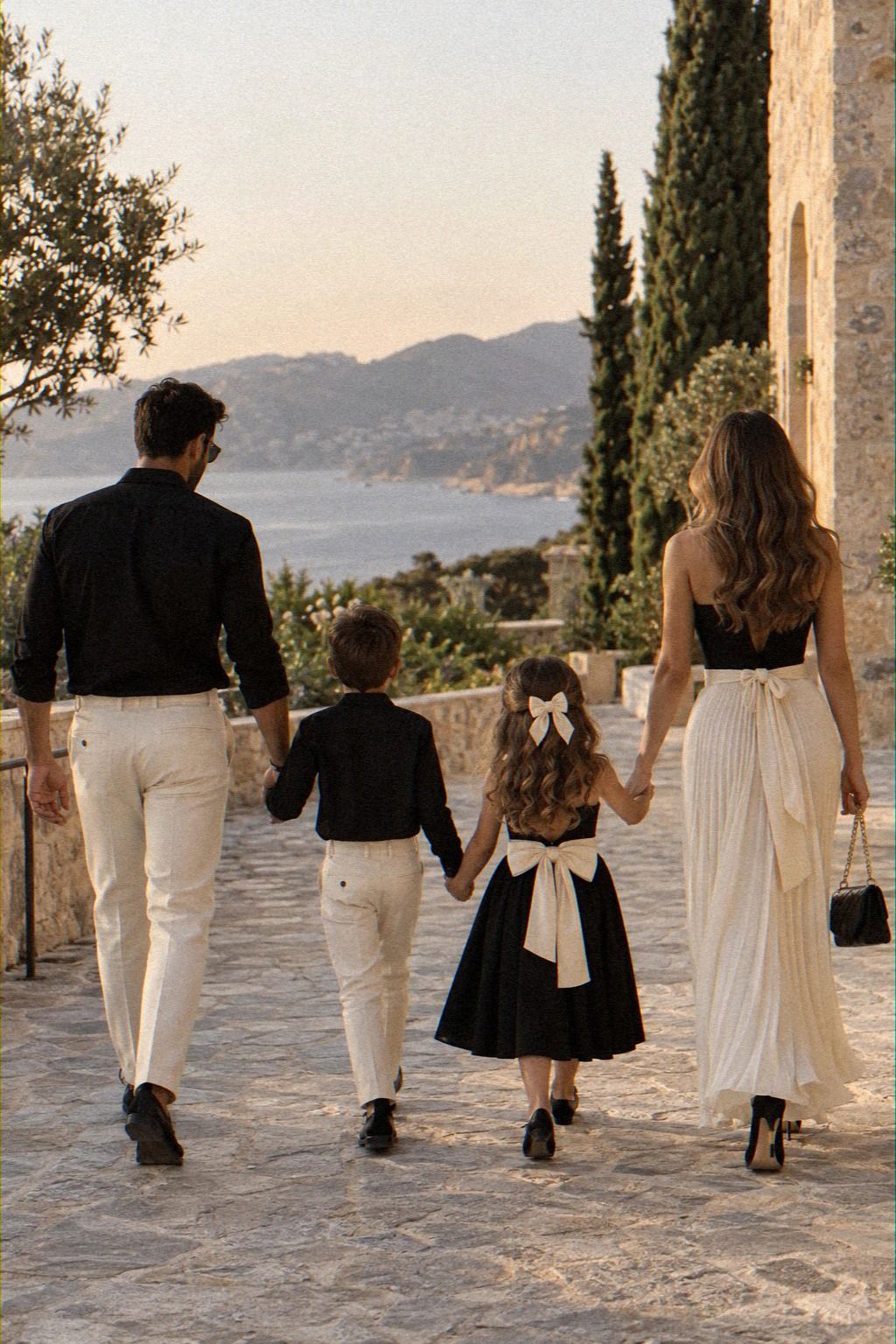
Finish with one small gold detail, not a full collection of jewelry. A slim gold hoop, narrow watch, delicate chain, or tiny gold clasp can add warmth without overwhelming the black-and-cream palette. You’ll want the finish to look warm and quiet.
Choose brushed gold or soft satin metal instead of a mirror-bright finish. A simple Mejuri-style chain, small hoops, or an heirloom-looking watch can give the outfit a polished edge. If you’re coordinating children, a gold-toned hair clip or small button detail may be enough.
Keep the placement varied. You’ll want one person with earrings, another with a watch, and another with a small necklace rather than identical pieces everywhere. If the setting already has warm lights, use less metal.
Gold works best when the rest of the outfit feels settled. A small pendant can brighten a cream neckline.
A slim gold buckle can connect a belt to the shoes. Stop when the detail feels intentional.
Browse these subtle accessories that make outfits look more expensive for more restrained ideas. A quiet gold detail can make the finished look feel special.
The Black-and-Cream Rule I’d Keep
I think black and cream works because it gives every person room to look like themselves. The mistake is treating coordination as duplication.
When everyone wears the same cream sweater, black trouser, and shoe, the result loses the small differences that make a family portrait feel alive. I’d rather see one excellent anchor outfit, two simple knit textures, and a child whose sleeves are slightly rumpled than a group dressed like a catalogue page.
My preferred order is practical. I start with the deepest black, then choose one cream shade, then add texture, then decide whether tan or brown is needed.
That sequence keeps me from buying an accessory just because it looks attractive on its own. You’ll notice the same discipline in these neutral family photo outfits: the palette organizes the group while the silhouettes carry personality.
I also think restraint creates a stronger result than shoppers expect. A matte black trouser gives the eye a quiet landing place.
A cream knit brings light near the face. A single pattern adds a lively pulse.
Gold finishes the look only when the rest is already settled. If you’re unsure, remove one item and reassess.
The cleaner outfit usually has more emotional space.
There’s no reason to force a blazer onto someone who hates structured clothing. You can repeat its black color in a cardigan, trouser, or shoe.
You can repeat cream through a collar or sleeve. What matters is the visual relationship, not the label on the garment.
That’s why your final check should ask whether each person can move comfortably, not whether every outfit follows a rigid formula.
The Questions I Get Asked Most
What is the best starting point for a small black-and-cream family?
Start with one black anchor, one cream knit, and one tan accessory. A simple three-color base gives a small group enough contrast without making the look feel crowded.
You can add a patterned jacket or gold detail after you see the first outfit combination. If you want more options, compare these neutral family photo outfits before shopping.
Where can I find the pieces on a budget?
Look at Target, Old Navy, Uniqlo, and secondhand shops for cotton knits, black trousers, and simple accessories. Existing wardrobe pieces are free, and Facebook Marketplace or a local thrift store can fill one missing category. You don’t need to replace every outfit to create a polished group.
How much does a black-and-cream outfit plan cost?
A rough range is $100 to $300 if you already own black shoes and basic trousers. The free part is styling, including repeating colors, changing layers, and testing outfits before buying anything. You’ll spend less when you identify the one garment that is actually missing.
Prices vary by brand and fabric. I’d set the budget after you assess what you already own.
Can I create the look without shopping?
Yes. Rework what you own, choose one cream shade, borrow one blazer, and use a single tan belt or bag to connect the colors. You can also use the texture mixing guide to find combinations already in your wardrobe.
Is this palette worth using in a small space?
Yes, because a small space makes coordination easier to see. Fewer visual distractions help the clothes read clearly, so you can use one black anchor, one cream shade, and varied hems. Keep bags and loose layers close to the body if the setting is tight.
Is black and cream a good idea for a rental location?
Yes. Clothing needs no permanent changes, so you can create the look with removable accessories and layers.
Choose matte fabrics if the rental has mirrors, glossy floors, or strong overhead lighting. These formal winter outfit ideas can help you judge how much structure the setting needs.
Where I’d Start First
If I had to pick one step, I’d start with the black anchor outfit. It gives every cream knit, tan accessory, and gold detail a visual place to land, so you won’t keep adding pieces to solve a problem the first silhouette created.
Then I’d choose one cream shade and lay every outfit beside it in daylight. You’ll see which pieces belong together before you spend anything. Add texture, vary the hems, and check the full group before making the final choice.
You can pin this guide beside the neutral family photo outfit guide and build the rest around one strong outline.