
The expensive-looking formal winter wedding guest dress starts with proportion, not price. A floor-length velvet dress, clean tailoring, and one deliberate accessory can look more polished than a crowded outfit with glitter everywhere. I’ve made that mistake before. These 15 steps will help you build a refined, warm, elegant look without losing your personal style.
- Start With a Floor-Length Velvet Dress
- Pick Deep Jewel-Tone Formal Winter Dresses
- Choose Long Sleeves for Cold Ceremonies
- Prioritize Tailoring Around the Waist
- Match Satin Heels With Rich Dress Tones
- Layer a Structured Coat Over Formal Dresses
- Add Crystal Earrings to Elevate Simple Necklines
- Select Pointed-Toe Shoes for Sleeker Proportions
- Balance Statement Sleeves With Minimal Jewelry
- Style a Satin Clutch With Velvet Dresses
- Check Hem Length With Evening Footwear
- Keep Metallic Details Focused on One Accessory
- Plan Warm Layers Without Hiding the Silhouette
- Finish With Polished Hair and Makeup
- Carry a Compact Shawl for Outdoor Photos
1Start With a Floor-Length Velvet Dress
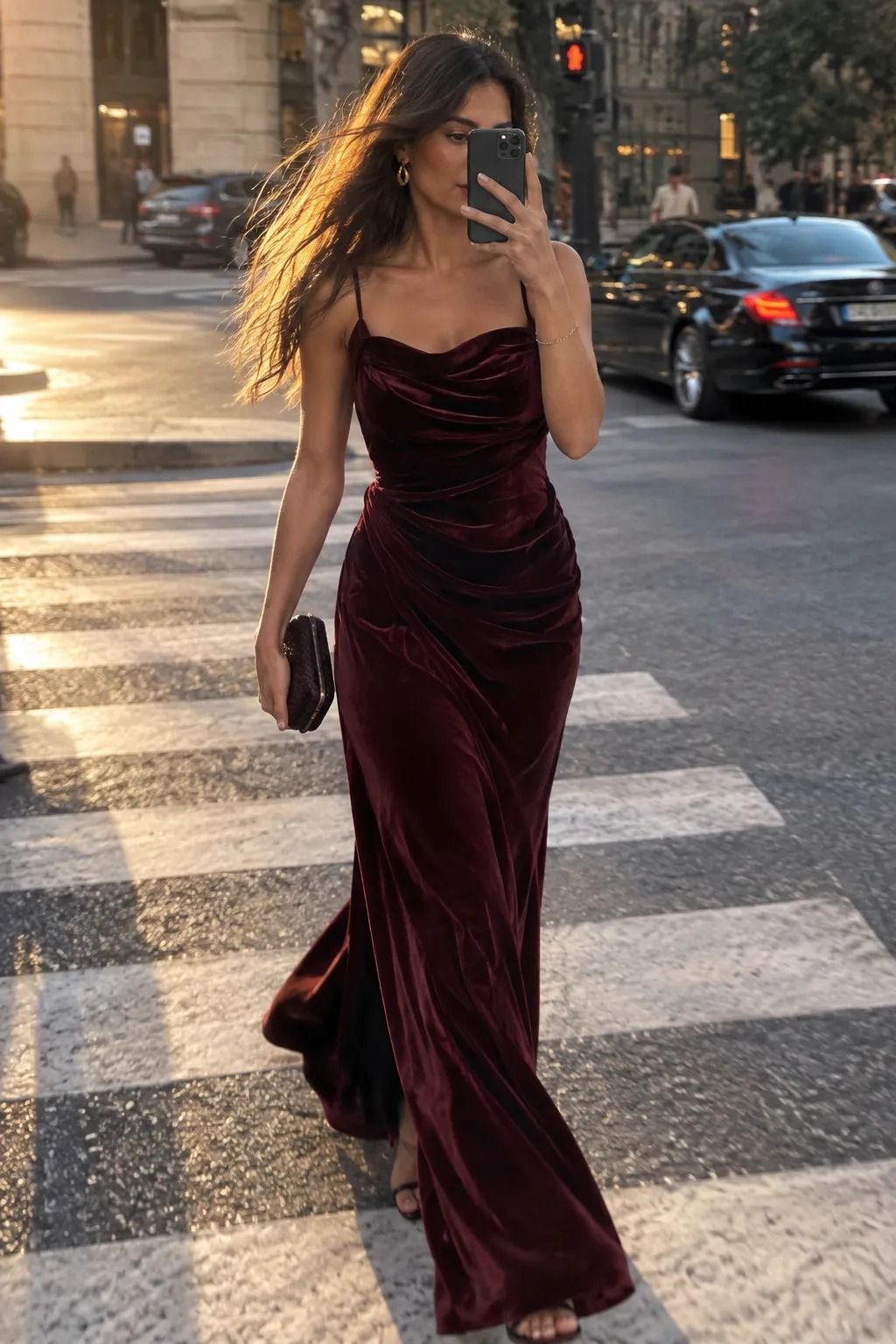
A floor-length velvet dress gives you instant evening presence because the fabric catches light differently as you move. For a formal winter wedding guest outfit, choose a clean column or softly draped skirt in deep emerald velvet, midnight blue, or burgundy. The crosswalk styling in this look works because the dress moves with the stride instead of sitting stiffly around the legs.
Look for a neckline that leaves room for one strong detail. A square neck feels modern, while a long sleeve feels more practical for a cold ceremony.
You’ll want the hem to skim the shoe rather than drag behind you. I’d skip thin, shiny polyester velvet because it reflects light unevenly and can look costume-like.
A matte, dense pile will look richer in photographs, and your silhouette will remain polished even with motion blur.
If you’re comparing formal silhouettes, this guide to black tie wedding guest dresses that look expensive for less is a useful place to refine your starting point. And yes, velvet can feel dramatic without becoming loud!
Typical cost by tier (US averages):
2Pick Deep Jewel-Tone Formal Winter Dresses
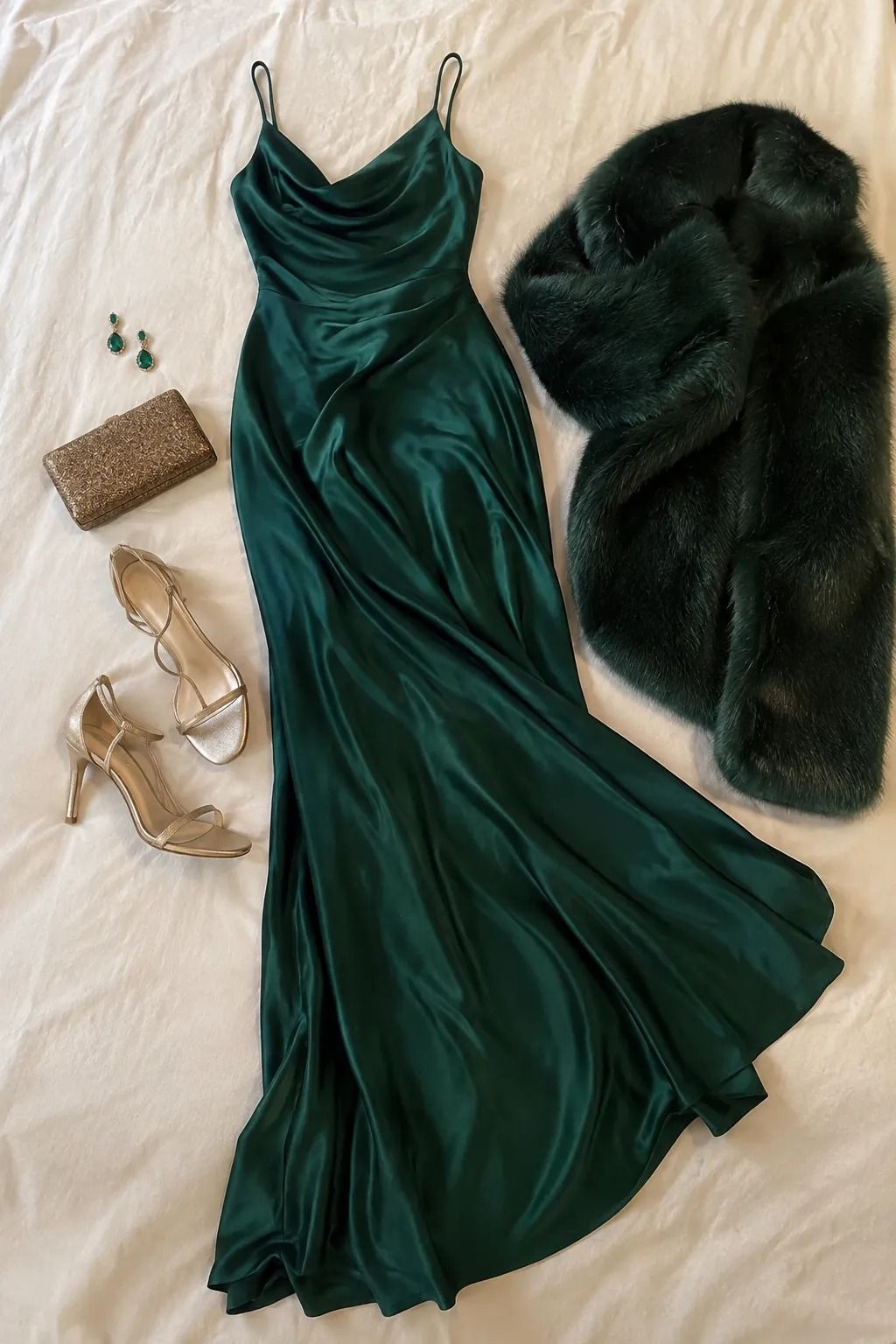
Lay out your winter wedding guest outfit before you try it on. A top-down arrangement makes it easier for you to see whether the dress, shoes, earrings, and bag belong to the same visual family. Choose one saturated shade, such as sapphire blue satin, ruby, forest green, or amethyst, then keep the surrounding pieces quiet.
A jewel tone looks luxurious because it has depth, but the finish still matters. Satin reflects a broad band of light, velvet absorbs it, and crepe keeps the color controlled.
You’ll get the most refined result when only one item shines. A sapphire satin dress with crystal earrings and a matte black heel is more polished than sapphire, silver glitter, rhinestones, and metallic shoes competing together.
Try arranging three options on a plain surface: the dress, the shoe, and the clutch. I’d choose the combination that still looks intentional from a distance. Your eye should land on the dress first, then move naturally to one accessory.
3Choose Long Sleeves for Cold Ceremonies
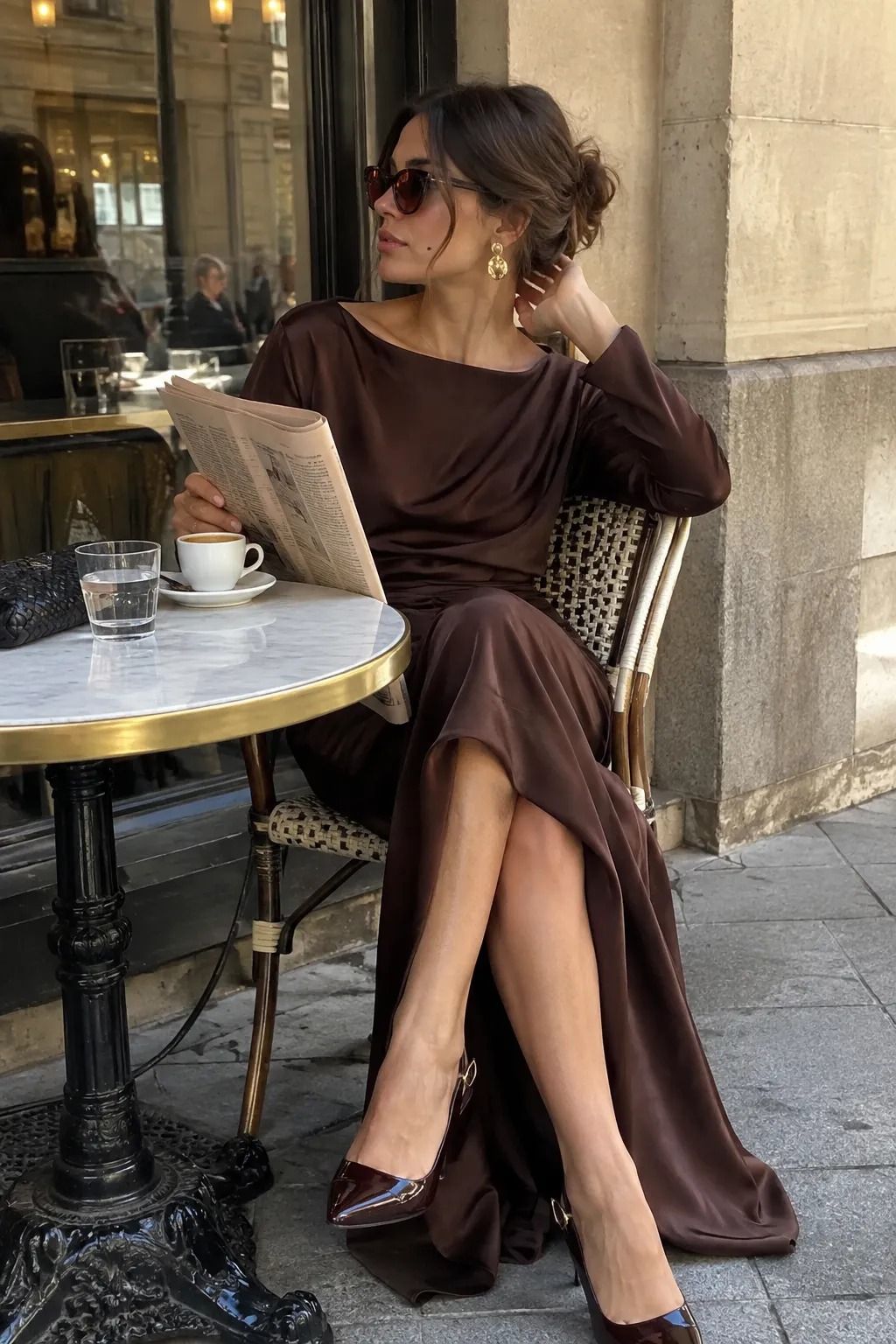
Long sleeves solve two problems at once: they keep your formal winter wedding guest dress seasonally appropriate, and they give a simple silhouette more structure. A café chair, crossed leg, and espresso detail suit a dress with graceful movement because the sleeve becomes part of the pose rather than an afterthought.
For a polished result, choose stretch crepe sleeves that follow the arm without pulling across the elbow. Sheer sleeves can look elegant, but the fabric should be fine and even, not overly gathered at the wrist. A fitted velvet bodice with sheer black sleeves feels romantic and refined, while a full satin sleeve creates a sharper, more modern effect.
You don’t need to cover every inch of skin to stay warm. Your dress can have an open back or lower neckline if the sleeves and coat provide balance. I’d avoid a tight sleeve with a tight skirt, though.
You’ll move more comfortably in a column dress with a little ease through the forearm and hip. But if your ceremony is outdoors, choose lining and coverage before decoration.
4Prioritize Tailoring Around the Waist
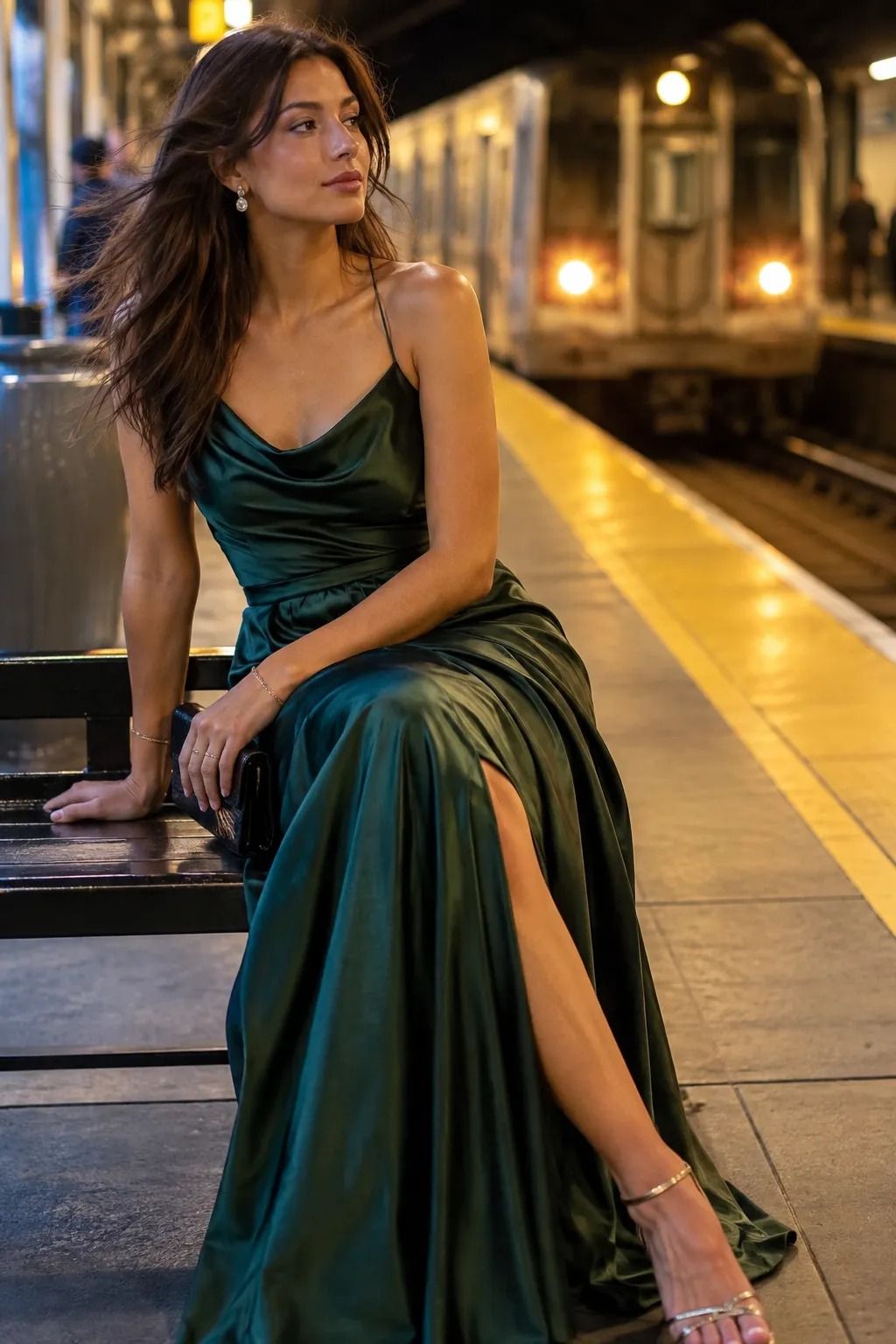
A formal winter wedding guest dress looks expensive when the waist placement is deliberate. On a subway platform, the clean line of the dress becomes easier to notice because the background is busy. That is the point: tailoring gives your outfit visual calm while everything around you feels in motion.
Check three areas before you commit. The shoulder seam should sit at your shoulder, the waist seam should rest where the dress intends it to rest, and the skirt should fall without pulling across the front. You’ll want enough room to sit, walk, and lift your arm without creating horizontal strain lines.
A wool-blend crepe or substantial stretch satin usually holds a cleaner line than very thin fabric.
If the dress fits your bust and hips but floats at your waist, a tailor can adjust the side seams. I’d choose that over cinching the whole look with a large belt, which can interrupt a formal silhouette. Your waist doesn’t need to look tiny.
It needs to look placed. That distinction makes the outfit feel intentional rather than overly engineered.
5Match Satin Heels With Rich Dress Tones
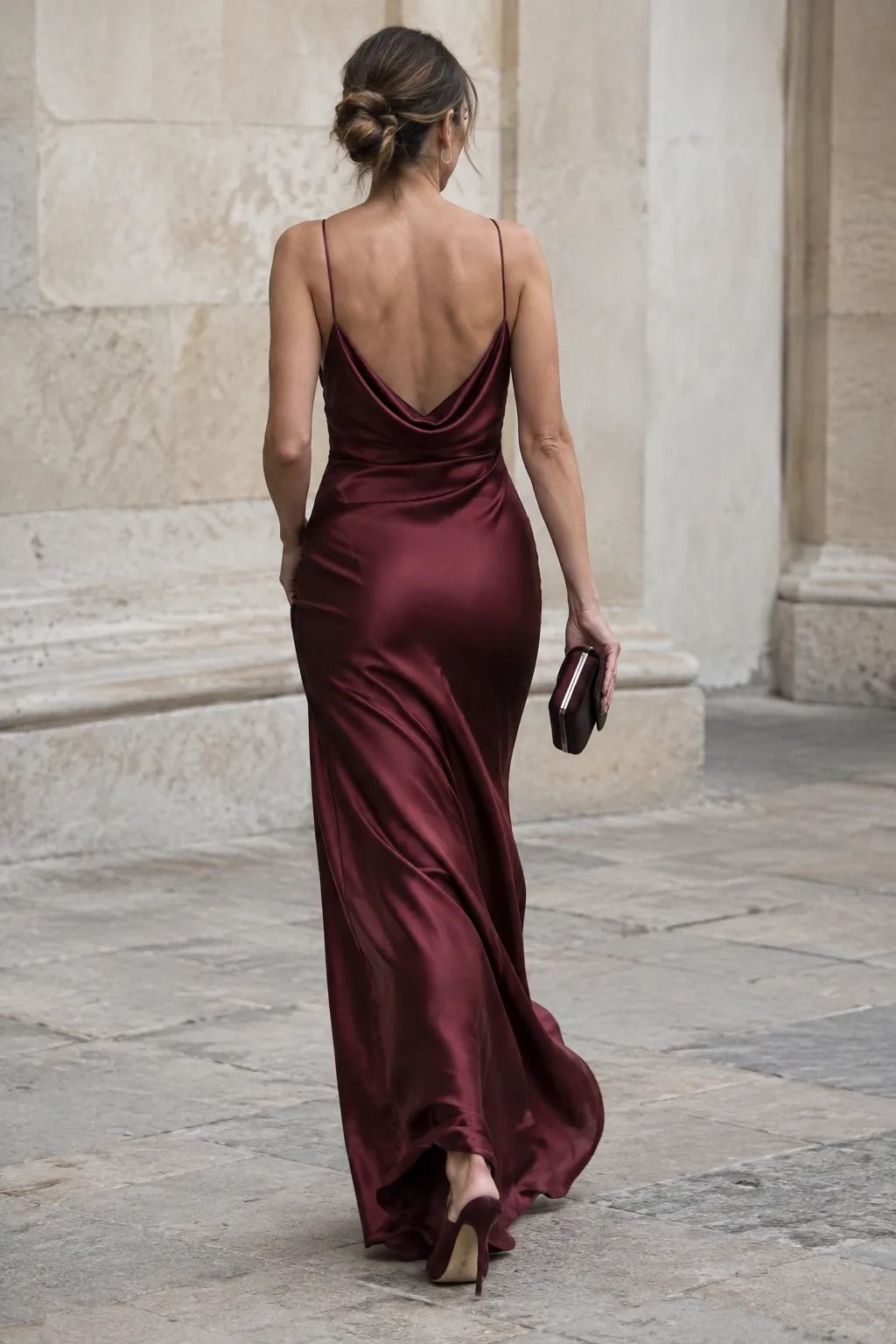
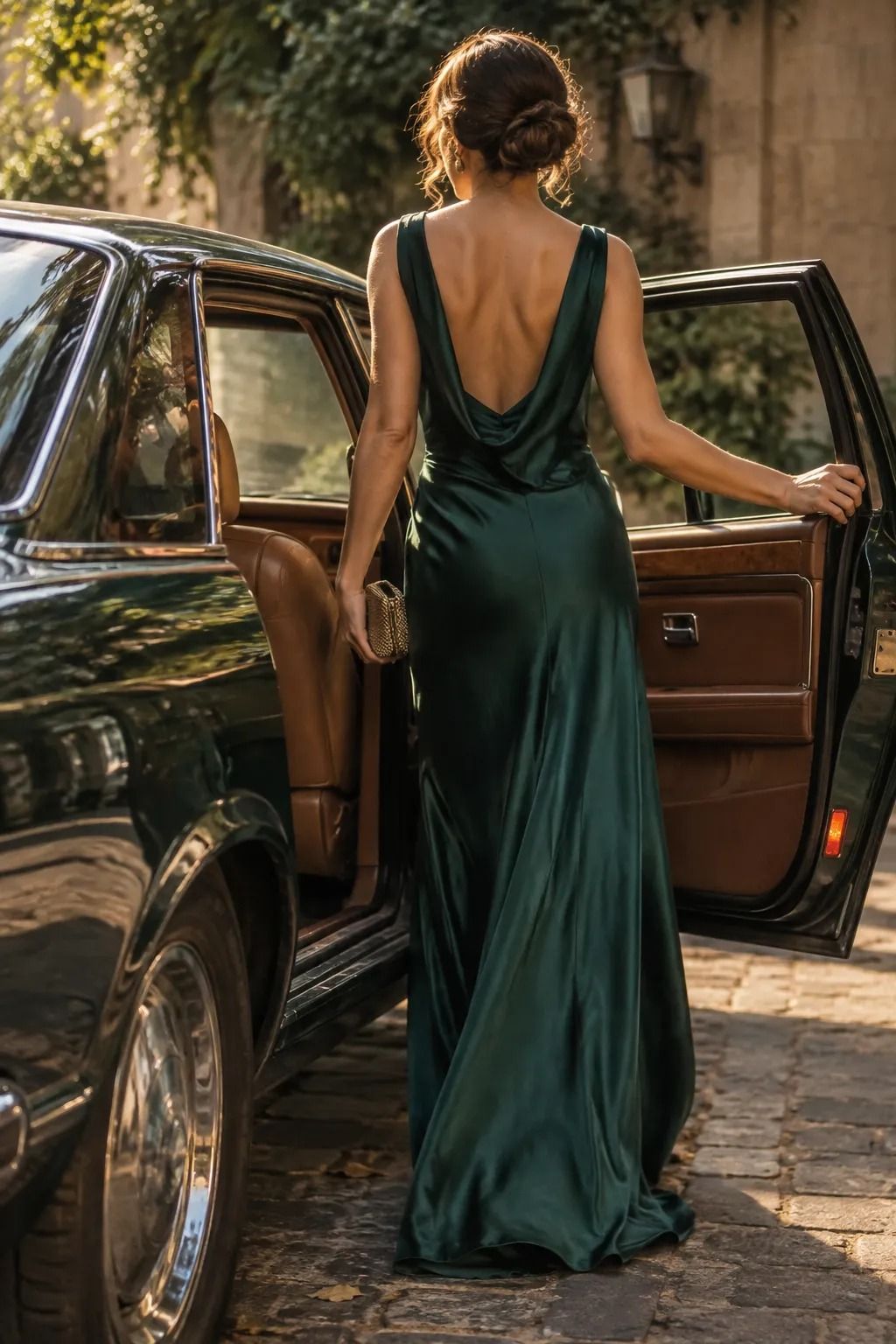
Satin heels work best when they echo the depth of your dress rather than compete with it. In a clean studio-style view, a back-facing walk shows why the shoe matters: the heel changes the line of the ankle, the length of the skirt, and the way the dress moves behind you.
Pair burgundy velvet with wine satin, navy crepe with midnight satin, or an emerald gown with a neutral champagne shoe. You’ll create a longer visual line when the shoe is close in value to the dress, but you can also choose a soft contrast for personality. Silk satin heels look more refined than high-shine synthetic shoes that catch every light source.
I’d skip a heavily embellished heel with an already textured dress. Your eye needs somewhere to rest.
A simple pointed pump can look more luxurious than a crystal-covered platform because its shape stays legible. If you want more ideas about choosing a polished shoe, see the guide to pearl gray pumps that made summer dresses look more elegant.
You’ll notice the same principle: clean shape first, decoration second.
6Layer a Structured Coat Over Formal Dresses
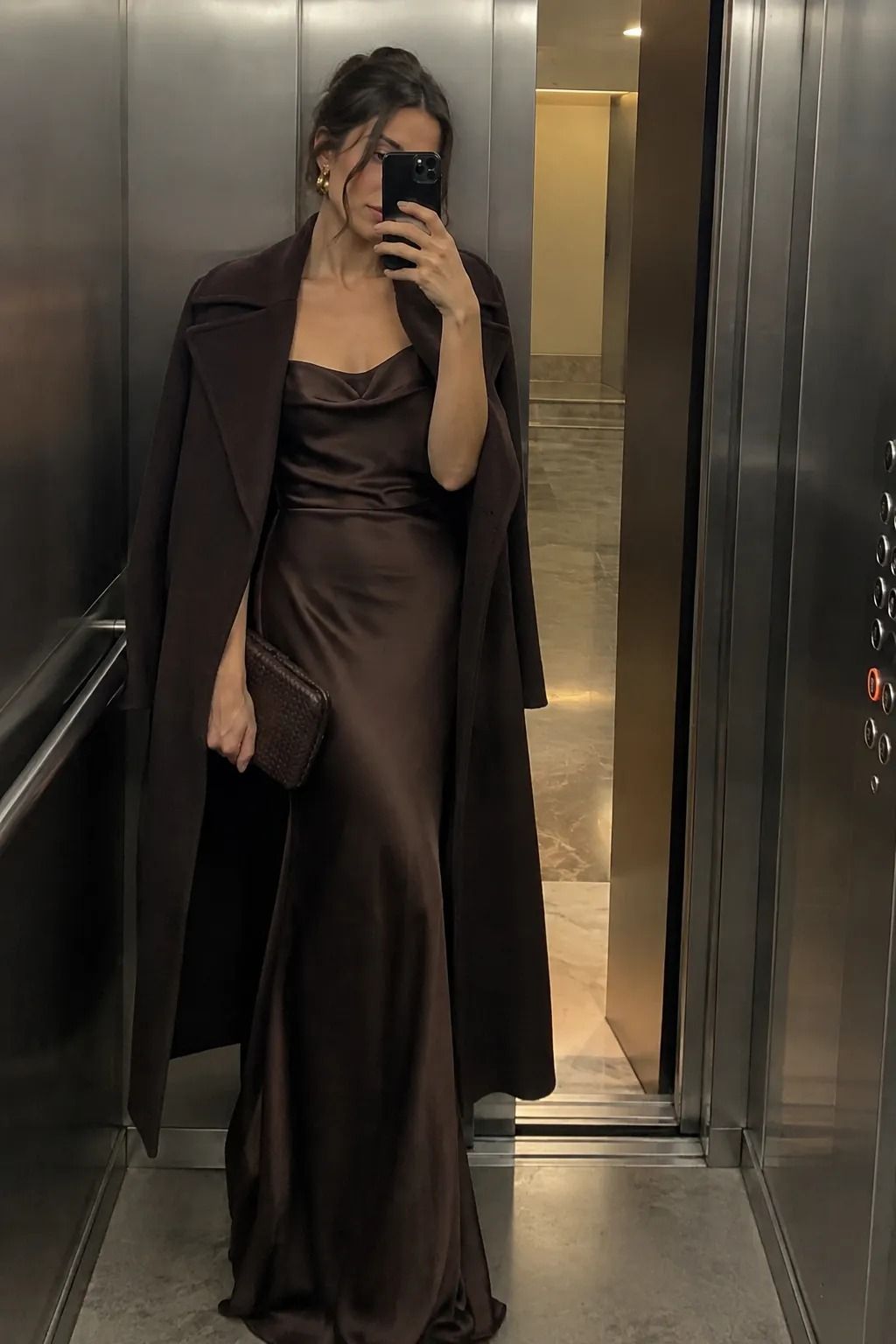
A formal dress needs an outer layer that respects its proportions.
7Add Crystal Earrings to Elevate Simple Necklines
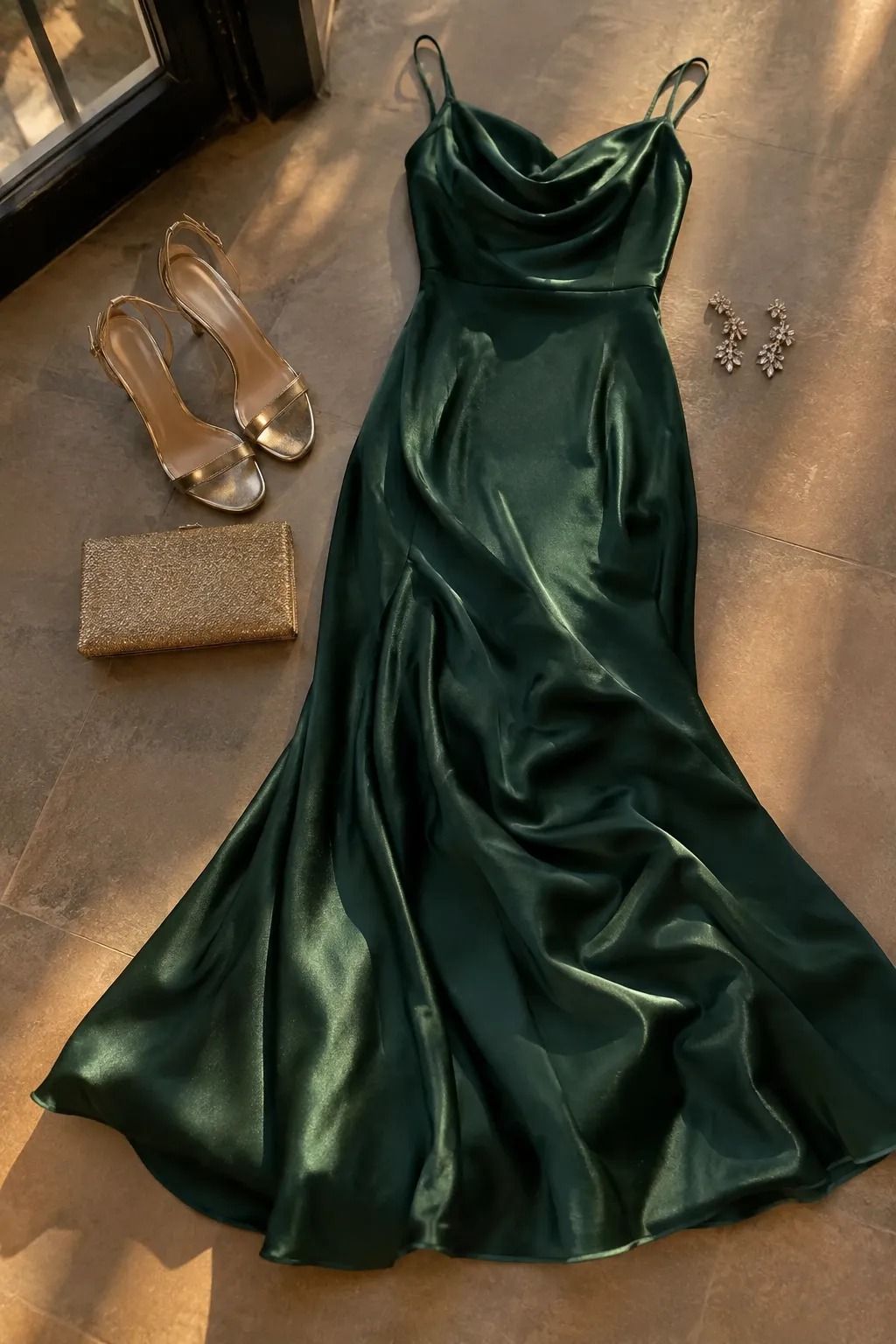
Crystal earrings give a plain neckline a focused point of light. For the flatlay, keep the pieces separate so you can judge scale: one dress, one pair of earrings, one shoe, and one clutch. A simple clear crystal drop earring can make a navy crepe dress feel evening-ready without adding sequins across the bodice.
Choose the earring length according to your neckline. A strapless or square-neck dress can handle a longer drop, while a high neckline usually looks better with a smaller hoop or short cluster. You’ll want the jewelry to frame your face, not brush the shoulder seam or compete with a sleeve.
I’d avoid wearing a necklace automatically. If your dress already has a strong neckline, the necklace can make the upper half feel crowded.
Your earrings may be enough, especially with hair pulled back or tucked behind one ear. And if you’re building a complete wedding guest wardrobe, this texture-mixing technique for making outfits look more expensive explains why contrasting finishes can do more than extra jewelry.
8Select Pointed-Toe Shoes for Sleeker Proportions
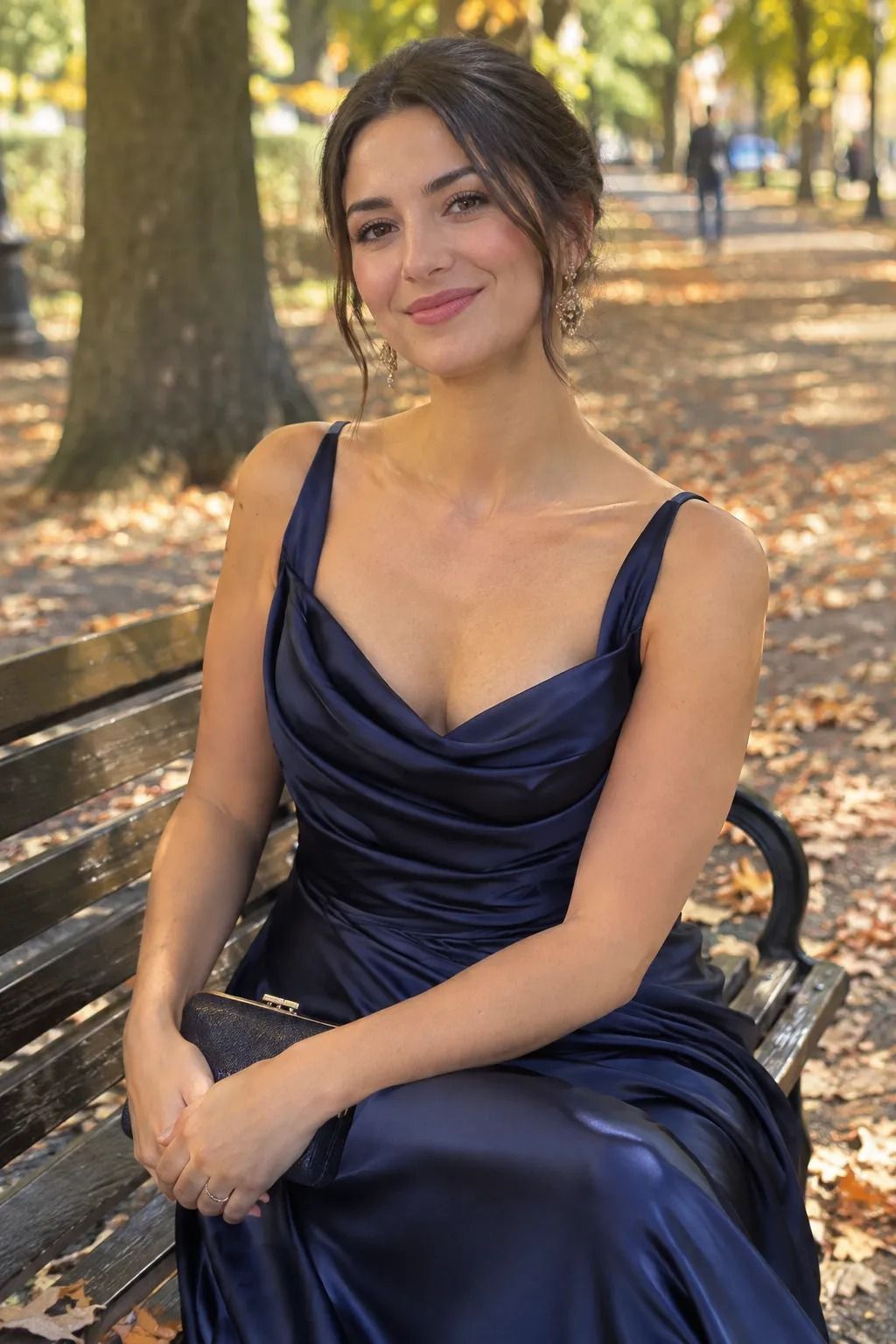
A pointed-toe shoe gives a formal dress a precise finish, especially when the skirt has a straight or lightly flared shape. In a park setting with autumn leaves and dappled light, the shoe keeps the outfit elegant even when the surrounding scene feels relaxed.
Choose nappa leather pointed pumps for a quiet finish, or satin if you want the shoe to echo the dress. A low kitten heel can work for you if you’ll be standing through cocktails, while a slim higher heel creates a sharper evening line. You don’t need an extreme height to make the proportions feel formal.
Check the toe box before the event. If your toes are compressed, you’ll change the way you walk, and the dress won’t hang as cleanly. I’d skip an overly rounded toe with a floor-length gown because it can make the shoe disappear in a heavy way.
Your shoe should be visible enough to explain the hem, but subtle enough to support the dress.
9Balance Statement Sleeves With Minimal Jewelry
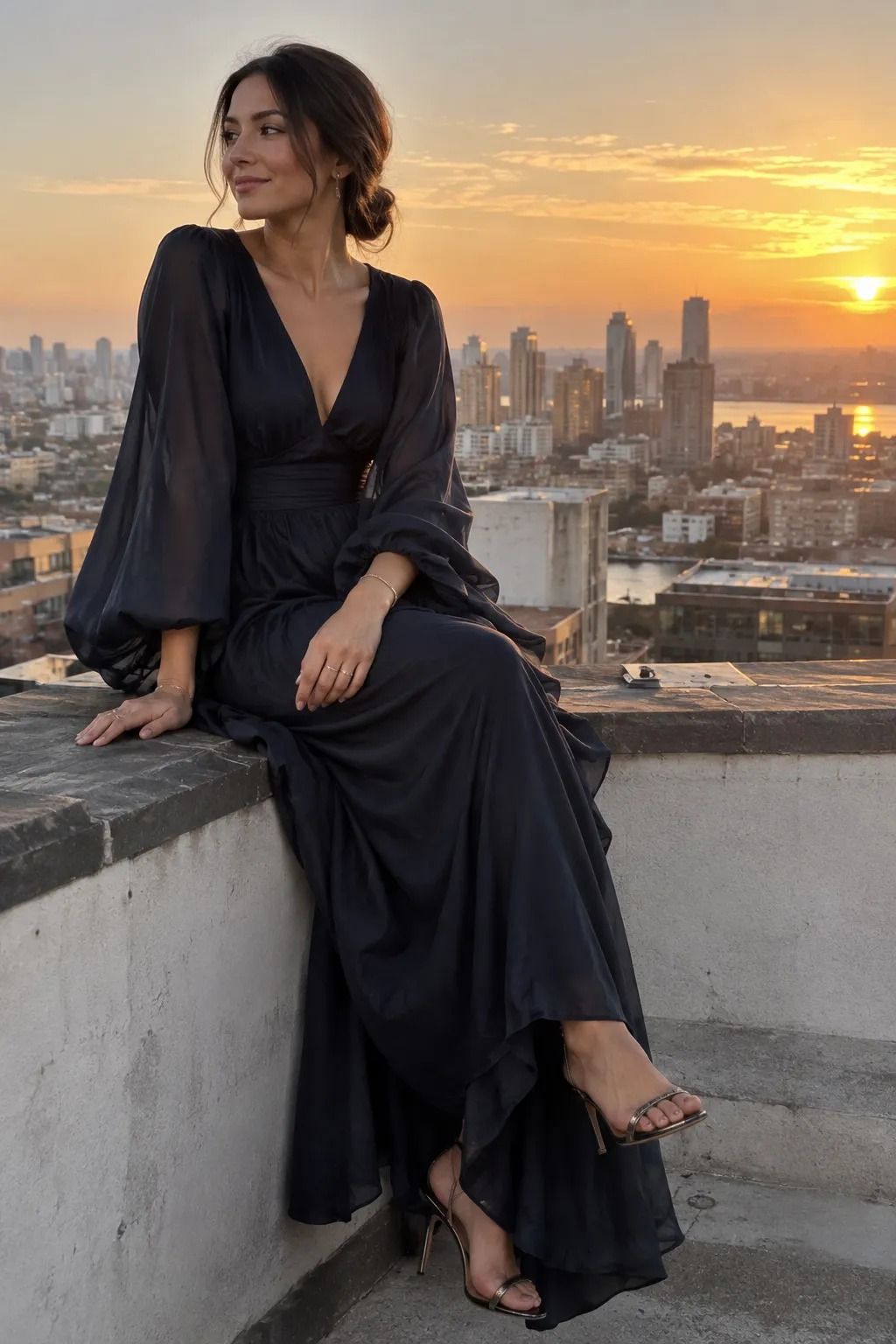
Statement sleeves already create movement, so the rest of your accessories should become quieter. At a rooftop edge, the sunset and skyline provide enough drama. Your outfit needs one controlled feature, such as sculptural organza sleeves, rather than several competing ones.
If the sleeve is ballooned, keep your earrings narrow and your bracelet minimal. If the sleeve is sharply pleated, a smooth metal ring can repeat that clean geometry. You’ll want the jewelry to sit away from the fullest part of the sleeve so nothing catches when you move your arms.
I’d choose a compact clutch in satin or smooth leather instead of a beaded bag. The contrast keeps the outfit sophisticated and lets the sleeve remain the headline. Your dress should still look formal from the back and side, not only from the front.
But don’t confuse minimal jewelry with no personality. A single sculptural earring or an unusual ring can make the look feel intimate and modern.
10Style a Satin Clutch With Velvet Dresses
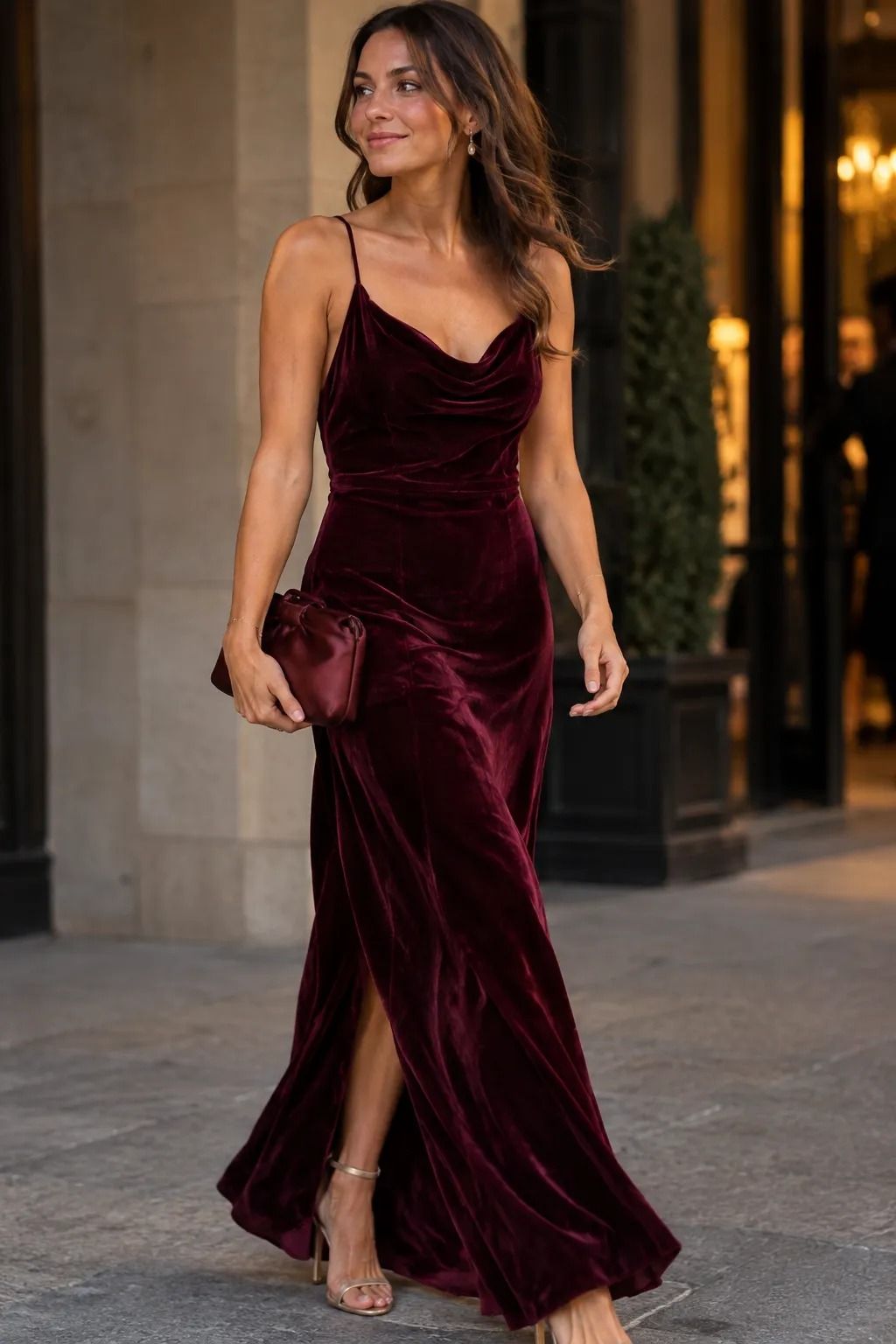
Velvet and satin work beautifully together because one absorbs light while the other reflects it.
11Check Hem Length With Evening Footwear
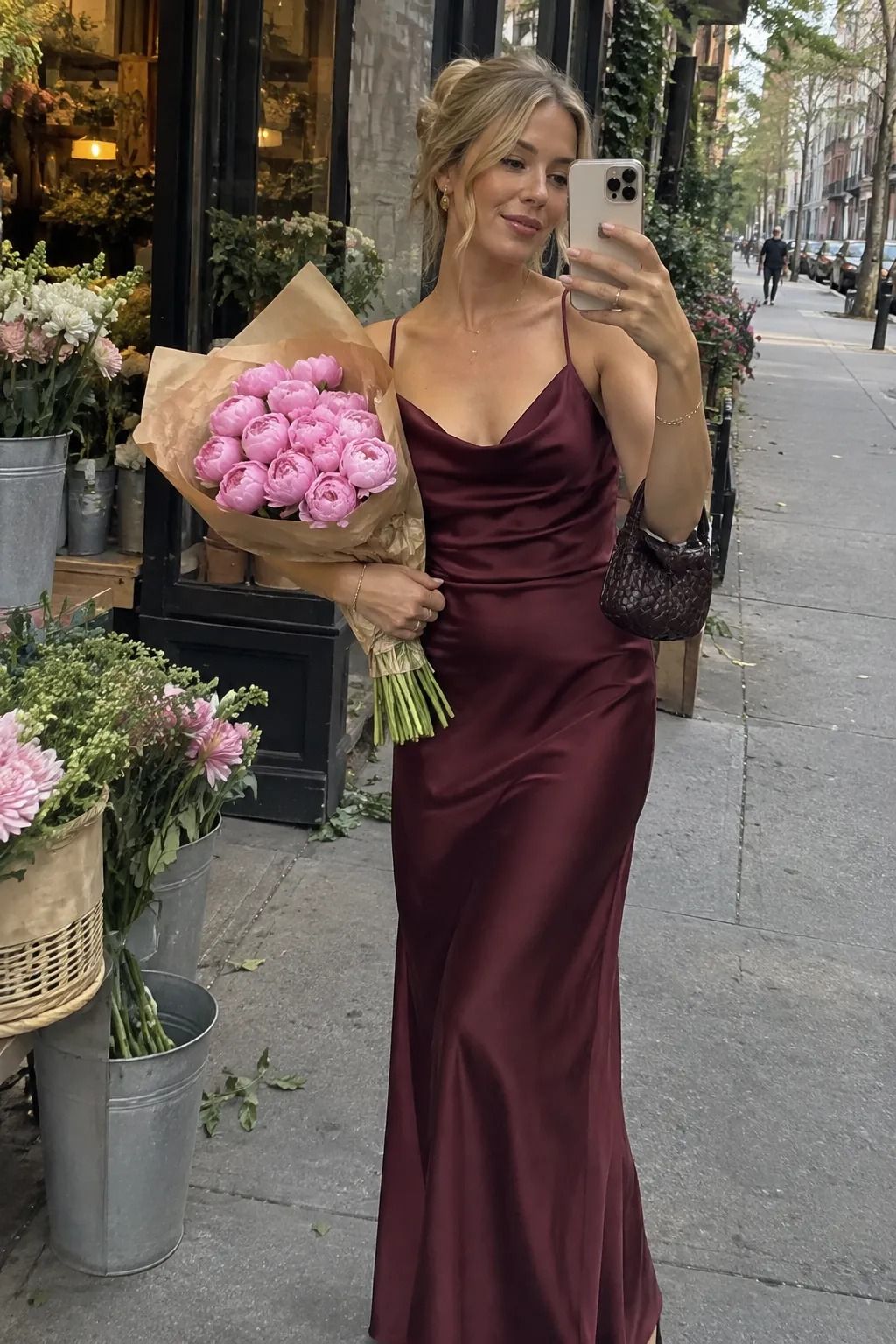
Always check the hem with the shoes you’ll wear to the wedding. A mirror selfie at a flower market may look casual, but the same test catches practical problems before your formal winter wedding. Walk, turn, sit, and take one stair if you can.
You’ll quickly notice whether the skirt catches under the heel or swings too close to the ground.
A floor-length hem should skim the top of the shoe, not cover the entire foot. With silk-blend crepe, the fabric should glide over the shoe rather than bunch around it.
If the dress is slightly short, a pointed toe can make the gap feel intentional. If it is too long, altering the hem is safer than relying on a higher heel you can’t comfortably wear.
I made the mistake of checking a dress in bare feet once. The hem looked fine, then became awkward with evening shoes. Don’t repeat that.
Your walking pace, posture, and confidence will all improve when the length is right. And no guest wants to spend the reception lifting a skirt away from every doorway.
12Keep Metallic Details Focused on One Accessory
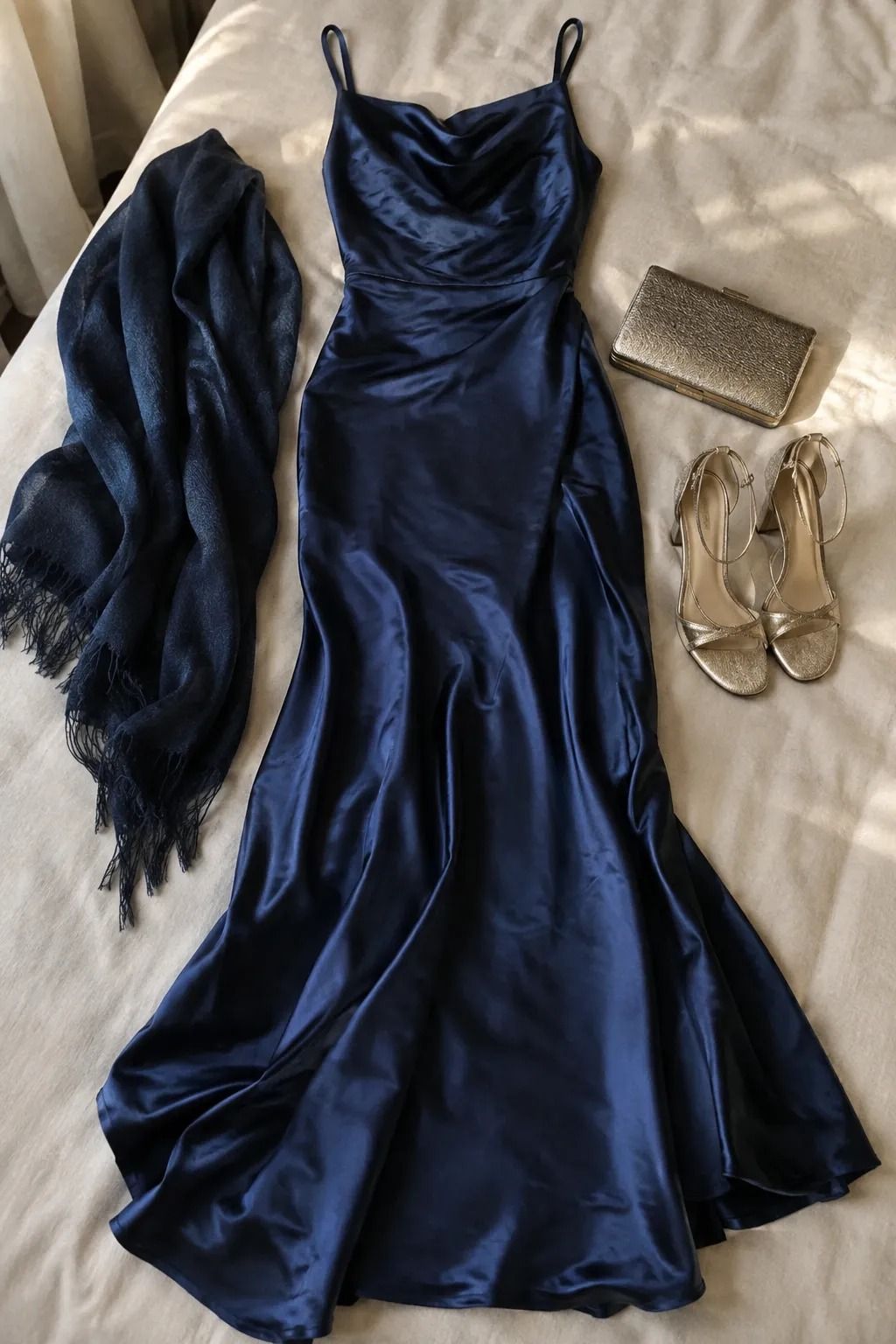
Metallic details look expensive when they’re concentrated. In a flatlay, select one focal point: gold earrings, a silver clutch, or a metallic shoe.
Then let the other pieces stay matte. This approach gives your formal winter wedding guest outfit a clear visual hierarchy.
Choose the metal according to the dress undertone. Brushed gold hardware works with burgundy, chocolate, olive, and warm champagne.
Silver or gunmetal feels sharper with navy, black, icy blue, and cool plum. You’ll want the finish to remain consistent, although a small mixed-metal ring can work if it is deliberately subtle.
I’d skip metallic shoes, a metallic bag, and metallic earrings together. The result can look busy under flash photography, especially beside a glossy dress.
Your one metallic accessory should feel like a decision. If the dress already has beading, choose a matte clutch instead.
What matters is the light pattern, not the number of reflective surfaces.
13Plan Warm Layers Without Hiding the Silhouette
Winter dressing becomes easier when you separate the visible layer from the insulating layer.
14Finish With Polished Hair and Makeup
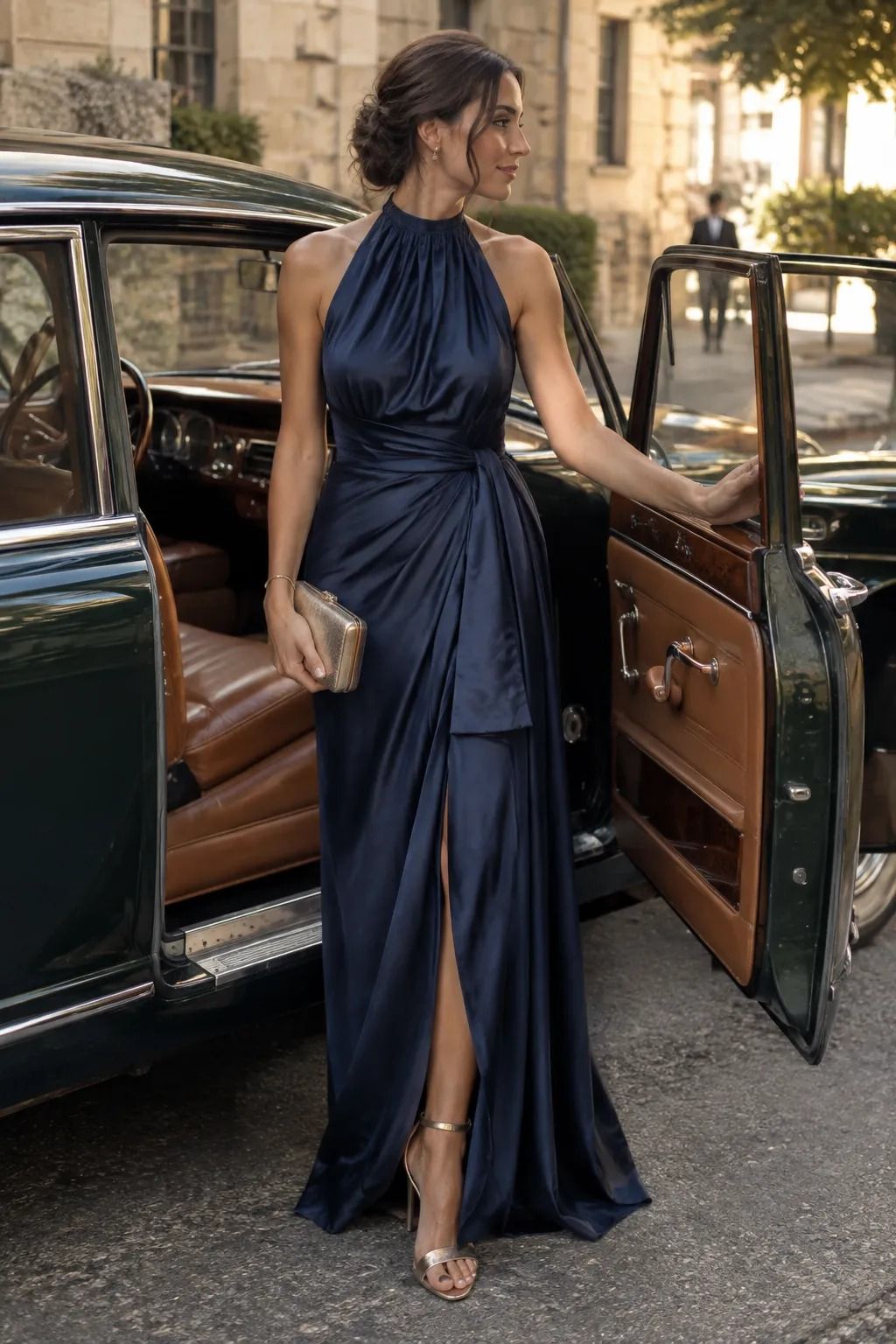
Hair and makeup should complete the dress rather than introduce a second theme. A profile view beside a vintage car suits a smooth low bun, a brushed wave, or a clean ponytail because the neckline remains visible and the finish feels refined.
Choose hair texture according to the dress structure. A sleek gown can handle a soft wave, while a romantic chiffon or draped satin dress can take a more relaxed updo.
You’ll want the hair away from crystal earrings if those earrings are your main accessory. Makeup can stay luminous and understated, with one defined feature such as a berry lip or softly lined eye.
I’d skip a complicated hairstyle that needs constant checking. You’re going to greet people, sit through dinner, and move between indoor and outdoor spaces.
A polished style should survive those transitions. If you’re considering a shorter cut for the season, this winter haircut styling guide offers useful inspiration for keeping the finish neat and wearable.
But your hair doesn’t need to look rigid. Movement keeps the outfit human.
15Carry a Compact Shawl for Outdoor Photos
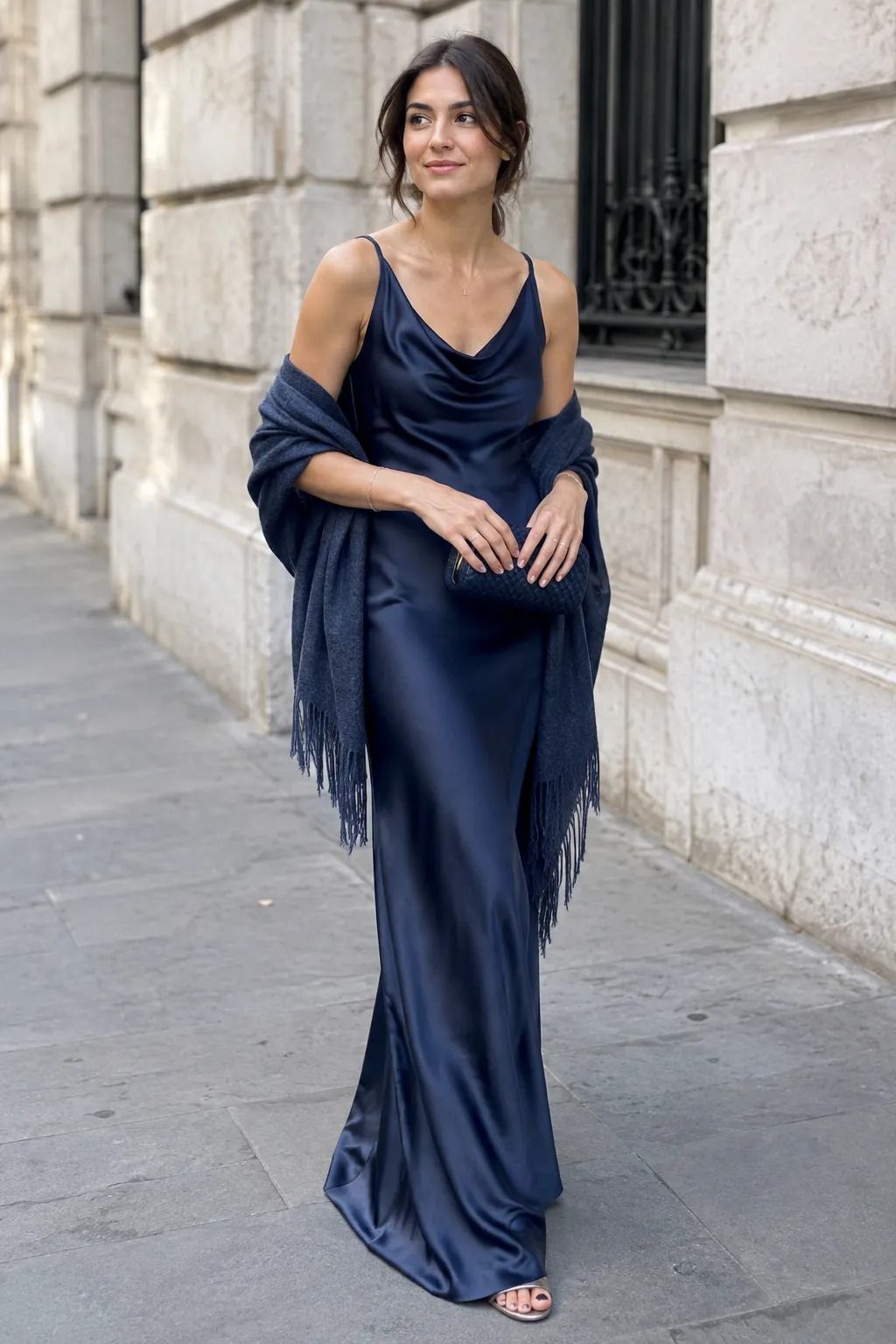
A compact shawl is the most flexible finishing layer for outdoor photographs because you can wear it over your shoulders, fold it across your arms, or carry it neatly once you return indoors. In a clean full-body setting, the shape should remain narrow enough to show the dress underneath.
Choose cashmere-blend knit for softness or silk faille for a more formal finish. A shawl in a related tone, such as plum over burgundy or oyster over navy, looks considered without becoming matchy. You’ll want enough width to cover your shoulders, but excessive fabric can blur the waist and sleeves you worked to tailor.
I’d avoid a shawl with large fringe if your dress already moves dramatically. The edge can catch on earrings, clutch hardware, or coat buttons. Your best option is usually a smooth, compact layer that photographs clearly and folds into your bag.
Bring it even if you think you won’t need it. Outdoor portraits often take longer than expected, and warmth helps you keep a relaxed posture!
The Velvet Test I Trust
I’ve styled enough winter wedding looks to know that “expensive” rarely means more decoration. It usually means the fabric, proportion, and finish agree with one another.
A dense velvet dress can look richer than a heavily embellished gown when the hem is correct and the neckline is clean. A simple satin shoe can look more deliberate than a glittering platform when the color supports the dress.
My own weak spot is outerwear. I’ve chosen a beautiful dress and then treated the coat like an emergency purchase, which made the whole arrival look unfinished.
Now I check the coat, shoe, and bag before I decide on earrings. You’ll notice the difference immediately because the first photograph happens before you enter the venue.
I also think winter is the best season for restraint. Dark jewel tones, matte textures, and one reflective detail already create an elegant mood.
You don’t need to add a second necklace because the neckline feels quiet. You don’t need a metallic shoe because the clutch is satin.
Your eye should move through the outfit in a calm order.
The most useful test is movement. Walk in the dress.
Sit in it. Put on the coat. Carry the bag.
If the sleeve pulls or the hem catches, no amount of jewelry will fix the distraction. But if the clothes move easily, your posture changes, and the outfit begins to look polished without effort.
That’s the feeling I trust most.
The Questions Worth Answering First
What is the best formal winter wedding guest dress for a small formal wedding?
A floor-length velvet or crepe dress in navy, burgundy, or forest green is a strong choice because it looks formal without needing heavy decoration. You’ll get the most flexibility from a clean neckline, long sleeves, and one refined accessory. For more evening references, browse black tie dress ideas that look expensive for less.
Where can I buy formal winter wedding guest dress pieces on a budget?
Look at department stores, rental services, and secondhand platforms before buying new. You can also check J.Crew, Mango, or local consignment shops for velvet, crepe, and satin pieces. A used clutch or coat can be excellent if the lining, hem, and hardware are intact.
Your money is better spent on fit than extra decoration.
How much does a formal winter wedding guest outfit cost?
The range depends on whether you already own shoes, outerwear, and jewelry. A dress you already have may only need a tailored hem and one accessory, while a complete look costs more because the coat and shoes carry much of the visible finish. You can keep the outfit polished by choosing one new focal piece.
Can I create an expensive-looking formal winter wedding guest outfit on a budget?
Yes, and you can start with three choices: a clean dress silhouette, one controlled texture such as velvet, and a simple pointed shoe. Borrow a clutch, reuse a coat, and choose crystal earrings instead of buying a full jewelry set. Your styling decisions matter more than having a different accessory for every outfit.
Is a formal winter wedding guest dress worth it in a small space?
Yes, because a smaller venue rewards proportion and restraint. You won’t need a dramatic train or multiple layers to make an impression. Choose a dress that moves easily, then let one jewel tone or satin detail carry the look.
A compact clutch will also keep your hands free during dinner and conversation.
Is a formal winter wedding guest dress a good idea for a rental wardrobe?
Yes, especially if you select pieces that can be styled three ways. A velvet dress can work with crystal earrings for a wedding, a tailored coat for a formal dinner, and simpler shoes for another evening event. You’ll want neutral accessories and a hem that works with more than one heel height.
Where I’d Start First
If I had to pick one step, I’d start with the floor-length velvet dress. Its texture gives you depth before you add jewelry, and its movement photographs better than thin shine. Choose the hem carefully, add one satin accessory, and pin this guide for your next winter invitation.