
Classy New Year’s Eve outfits that look expensive usually need one clear idea, not more sparkle. The strongest combinations rely on velvet, satin, clean tailoring, and deliberate accessories. The result can feel polished, festive, and memorable without covering every surface in sequins.
Start with the piece that carries the outfit. Then let the other details support it.
A sharp shoulder, a clean trouser break, or one luminous accessory can create more impact than five competing accents. The shortcut is simple!
Here’s what the outfit needs first:
The starting point is often a rack of attractive pieces competing for attention. There may be shine, texture, color, and embellishment, but no visual order. When every item asks to be noticed, your outfit loses its elegant rhythm.
The better approach is to choose one focal point. Repeat a material only when it serves a purpose.
Give the silhouette enough space to read. You don’t need a new wardrobe for this.
You need a sharper edit and a clear idea of where your eye should land.
A useful place to begin is this texture-mixing technique for expensive-looking outfits. The principle works beautifully for evening dressing. Contrast one tactile material with quieter, cleaner pieces.
- Start With Velvet, Not Sequins
- Let Black Trousers Set the Line
- Gold Earrings or Metallic Heels? Choose the Scale
- Add Satin Beneath Tailoring
- Crystals Beat a Full Sequin Surface
- Can Pointed Pumps Lengthen the Outfit’s Line?
- Make One Statement Ring the Focus
- Thread a Silk Scarf Through the Ponytail
- Why Pearl Drops Still Work With Tailoring
- Balance a Plunging Neckline With Wide-Leg Trousers
- Finish With a Structured Clutch
- Keep the Metal Family Consistent
- Test Tights Against the Evening Dress
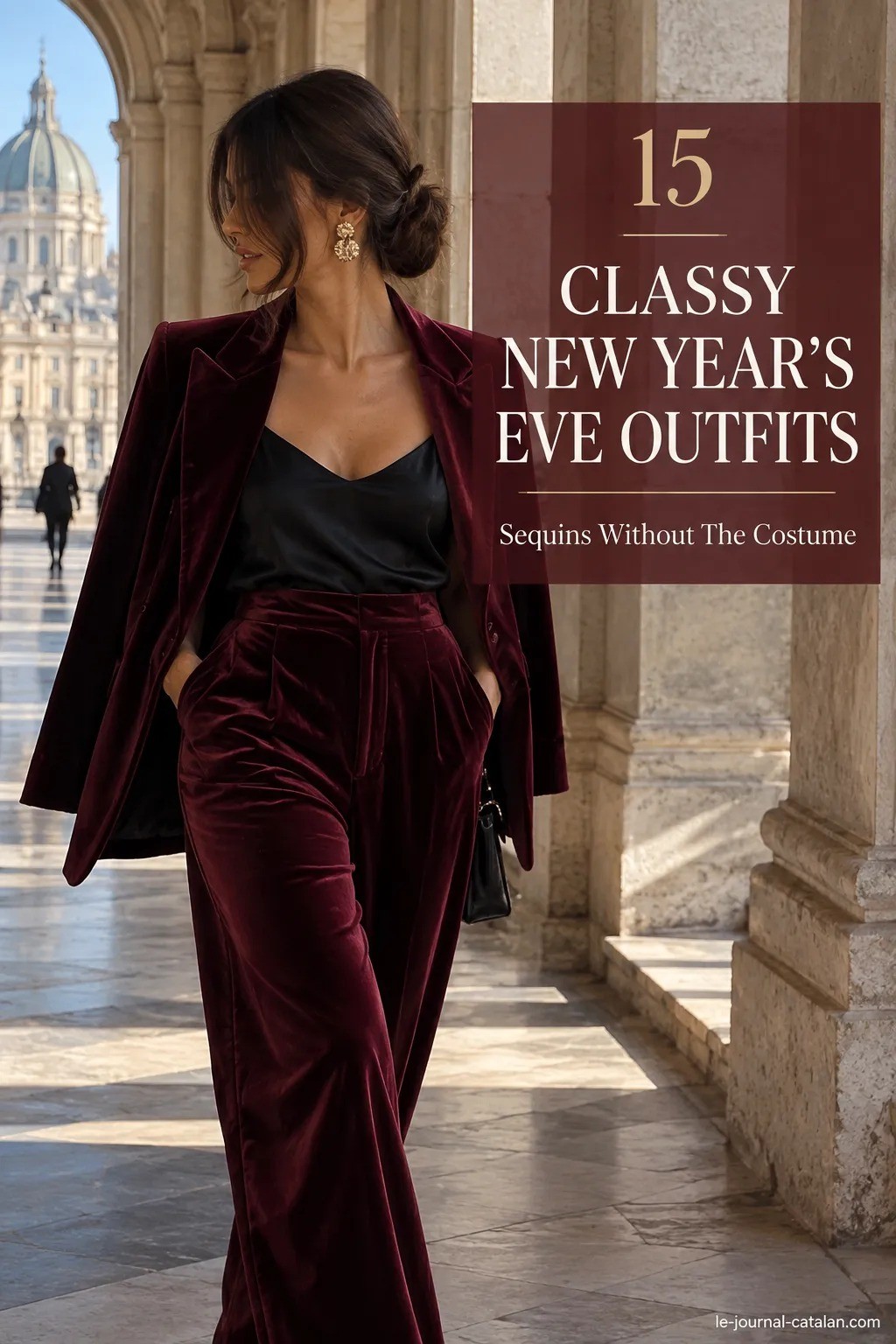
- Burgundy Velvet Brings Quiet Drama
- Let Sleek Nails Finish the Outfit
1Start With Velvet, Not Sequins
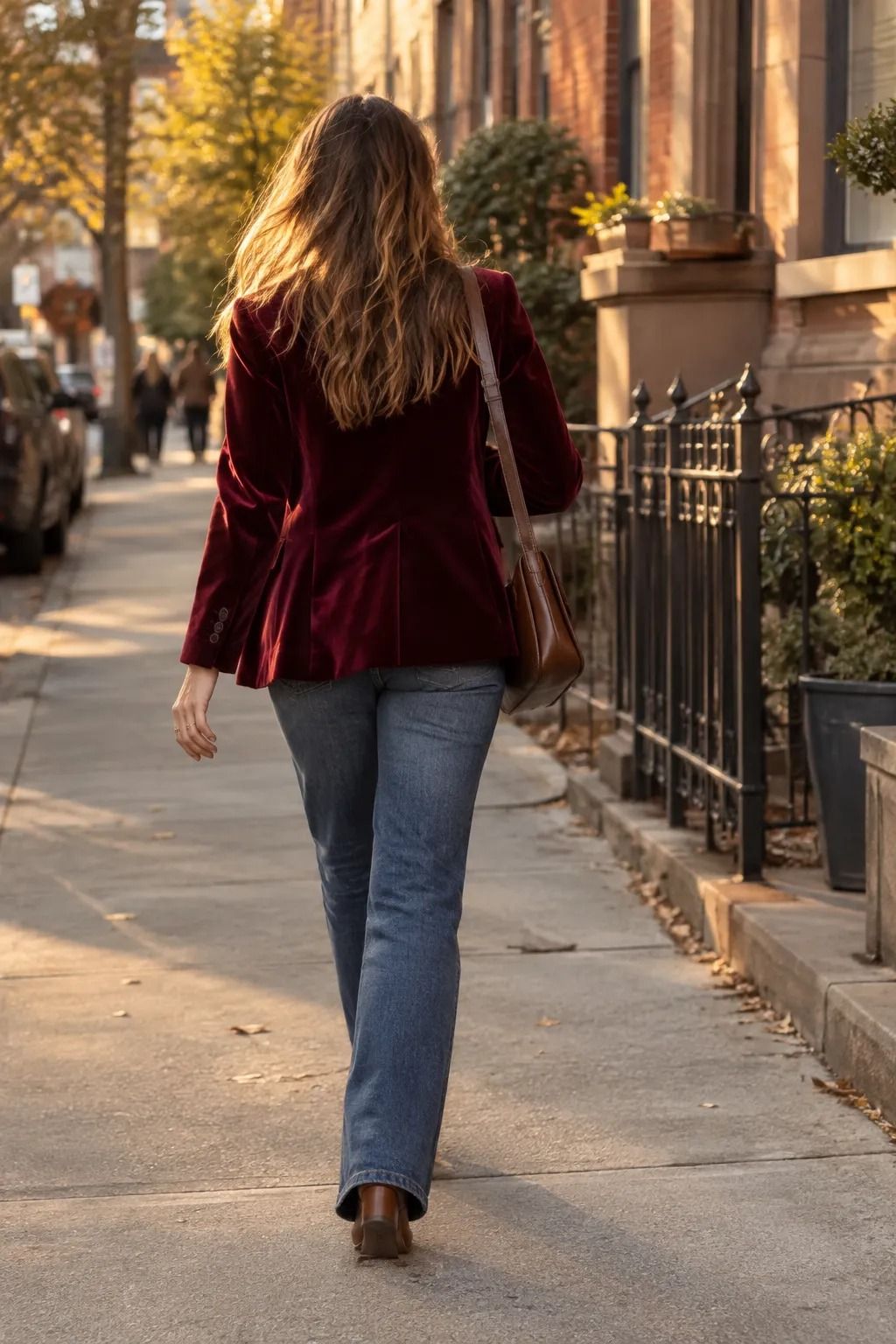
A black velvet blazer gives a New Year’s Eve outfit depth without making every surface flash. Look for a clean shoulder, a smooth lapel, and a slightly relaxed waist. The pile catches the light as you move, but it doesn’t shout from across the room.
That difference creates a refined mood rather than costume energy.
Wear it over a silk camisole, straight trousers, and one narrow shoe. The shape feels polished while remaining comfortable enough for a dinner, house party, or late-night toast. A heavily embellished jacket can look festive in a mirror and strangely flat in motion.
Velvet has more dimension because it changes subtly with the light.
If you already own a tailored jacket, don’t dismiss it because it isn’t labeled eveningwear. A strong shoulder and rich texture can do the work.
The key is contrast. Pair a matte trouser with velvet, or let a fluid satin layer soften the blazer.
Avoid stacking velvet, sequins, metallic shoes, and a statement necklace in the same outfit. One dramatic material is usually enough. This texture-mixing guide offers another useful starting point.
2Let Black Trousers Set the Line
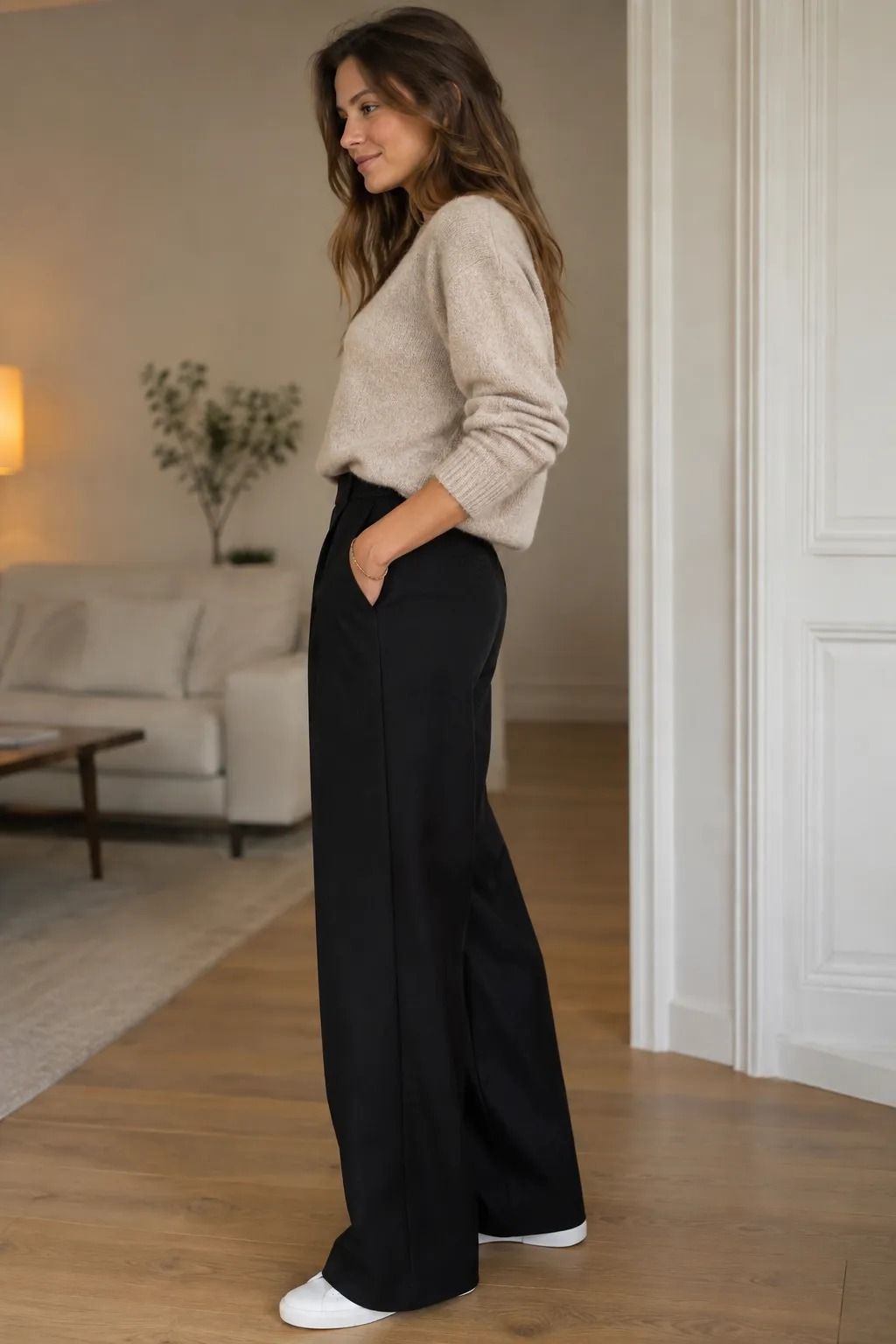
Black trousers become the anchor because they make every upper layer work harder. A high-waisted wool-blend trouser with a straight leg, pressed crease, and enough room through the hip creates a long, uninterrupted column. The fabric should skim rather than cling.
The rise matters. A higher waist gives a camisole or cropped jacket a deliberate stopping point.
A mid-rise can work too, but the top should finish cleanly instead of bunching around the waistband. Check the hem with your intended shoe.
A trouser that breaks heavily over a pointed pump can make the whole outfit feel less crisp.
Your top can be satin, velvet, or a fine knit, but the trouser needs to stay simple. A cropped glitter top and oversized necklace may turn the proportions busy fast.
Instead, let one texture sit above the waistband. Keep the shoe narrow or pointed.
Black doesn’t have to mean severe. A fluid leg, soft pleat, or subtle sheen can make the base feel graceful. If you want more color, this three-color technique for an expensive-looking wardrobe can help you keep the palette controlled.
3Gold Earrings or Metallic Heels? Choose the Scale
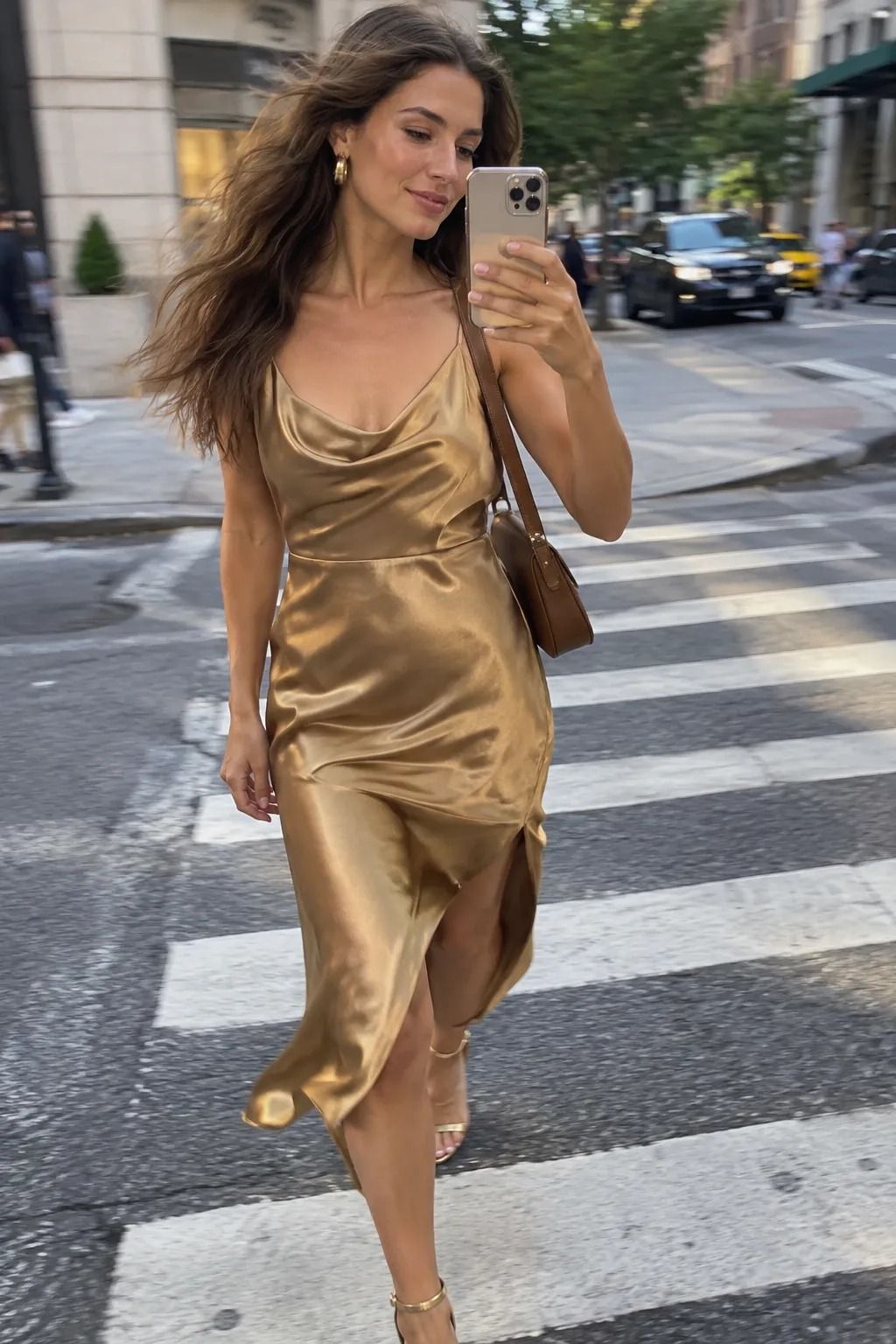
Matching gold earrings with metallic heels sounds obvious, but scale determines whether the result feels refined or overdone. If the earrings are large and sculptural, the shoes should carry only a small metallic detail. If the shoes are highly reflective, choose restrained earrings.
A small gold hoop can work with a silver-toned shoe when the rest of the outfit is quiet. A thin metallic sandal can support a stronger earring because the shine is lower on the body and doesn’t crowd the face. Think in terms of visual weight rather than exact matching.
The finish matters too. Brushed gold feels warm and understated.
Mirror-shine gold feels glamorous and festive. Combining both can work when one finish is clearly dominant. Equal amounts of competing shine often look accidental.
Keep your jewelry close to the outfit’s mood. Gold suits burgundy, cream, espresso, and black particularly well. Silver can feel cooler and more graphic with charcoal, navy, or icy satin.
A controlled palette creates a confident finish.
The texture-mixing method also applies here. Contrast finishes, but don’t let every piece become a separate focal point.
4Add Satin Beneath Tailoring
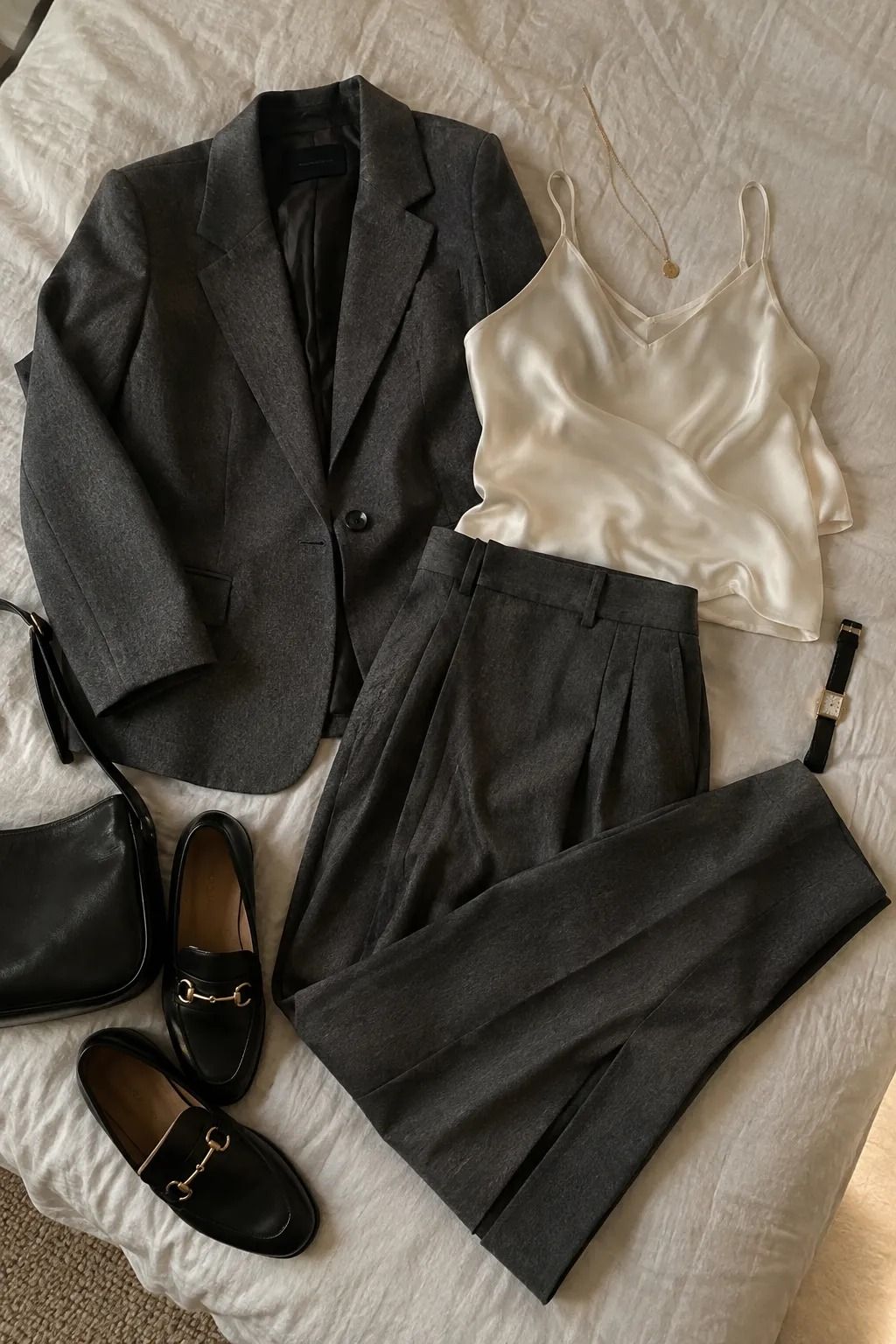
A satin camisole changes tailoring because it introduces movement under a structured jacket.
5Crystals Beat a Full Sequin Surface
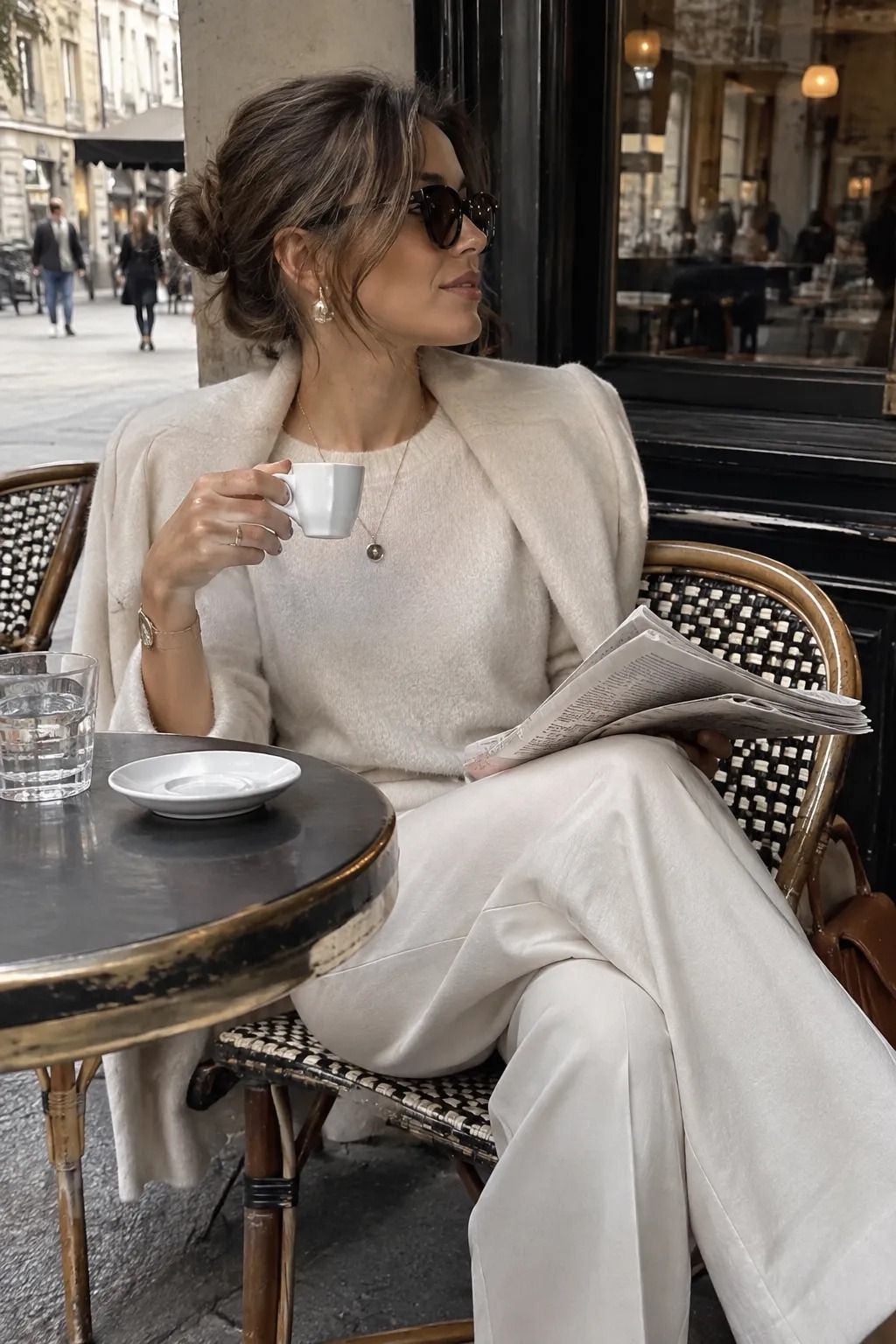
Sequins cover a lot of surface, while crystal details can place light exactly where you want it. A crystal hair pin near the side part, a small clasp on the bag, or one embellished shoe can create a luminous accent without visual noise.
This approach works with a plain black dress, a satin blouse, or a simple column skirt. Choose one area for sparkle and let the rest stay matte. A crystal shoe plus crystal earrings may be enough, especially when the neckline is open.
Placement is more important than quantity. A small detail near the face brings attention upward.
A clasp or brooch makes a quiet outfit feel more intentional. A crystal shoe can animate a simple trouser line.
The effect becomes glamorous because the shine has a destination.
If the first detail seems too subtle, resist the urge to add three more immediately. Evening light does a lot of work. A restrained accent can become surprisingly striking once the room darkens.
A three-color dressing approach can help keep the sparkle from competing with the rest of your palette.
6Can Pointed Pumps Lengthen the Outfit’s Line?
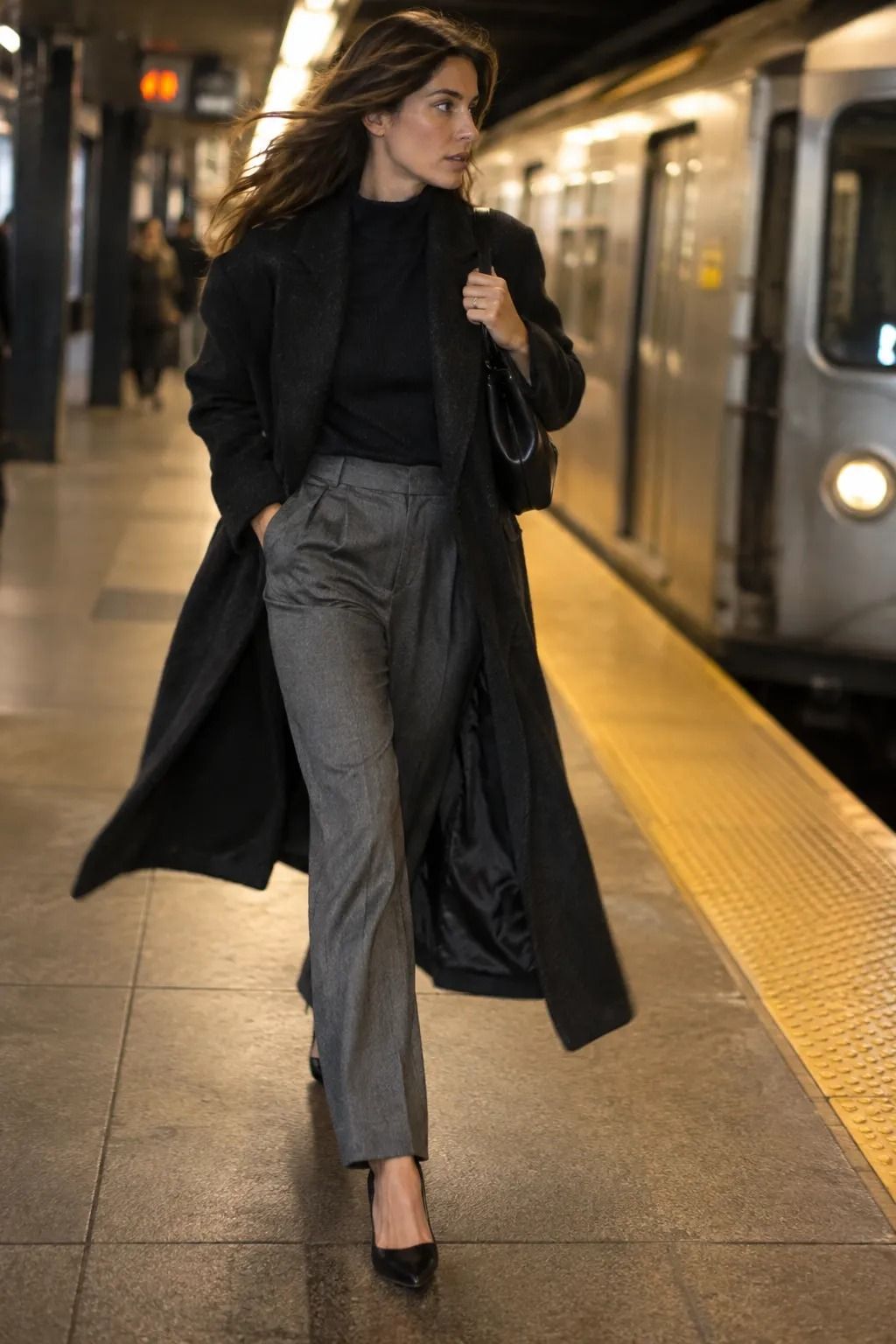
A pointed pump sharpens a formal outfit because the toe carries the line forward. The effect is especially clean beneath straight trousers, a long skirt, or a column dress. A low vamp exposes more of the foot, while a higher vamp creates a more covered, graphic finish.
The heel doesn’t need to be dramatic. A modest kitten heel can look just as polished when the toe shape and trouser hem are right.
The important detail is continuity. If the shoe is black, matching it to black tights or trousers creates a calm visual path. If the shoe is metallic, let it become the intentional accent.
Check the hem before the event. Trousers should skim the top of the shoe without dragging.
A dress should allow the toe to appear naturally rather than catching awkwardly at the hem. These small adjustments make your outfit feel tailored.
A narrow shoe works best when the upper half already has volume. With an oversized blazer or wide-leg trouser, it brings welcome definition. With a delicate slip dress, a slightly rounded toe may feel softer.
The goal is balance, not a rigid rule. A clean shoe can make a familiar outfit feel newly polished!
7Make One Statement Ring the Focus
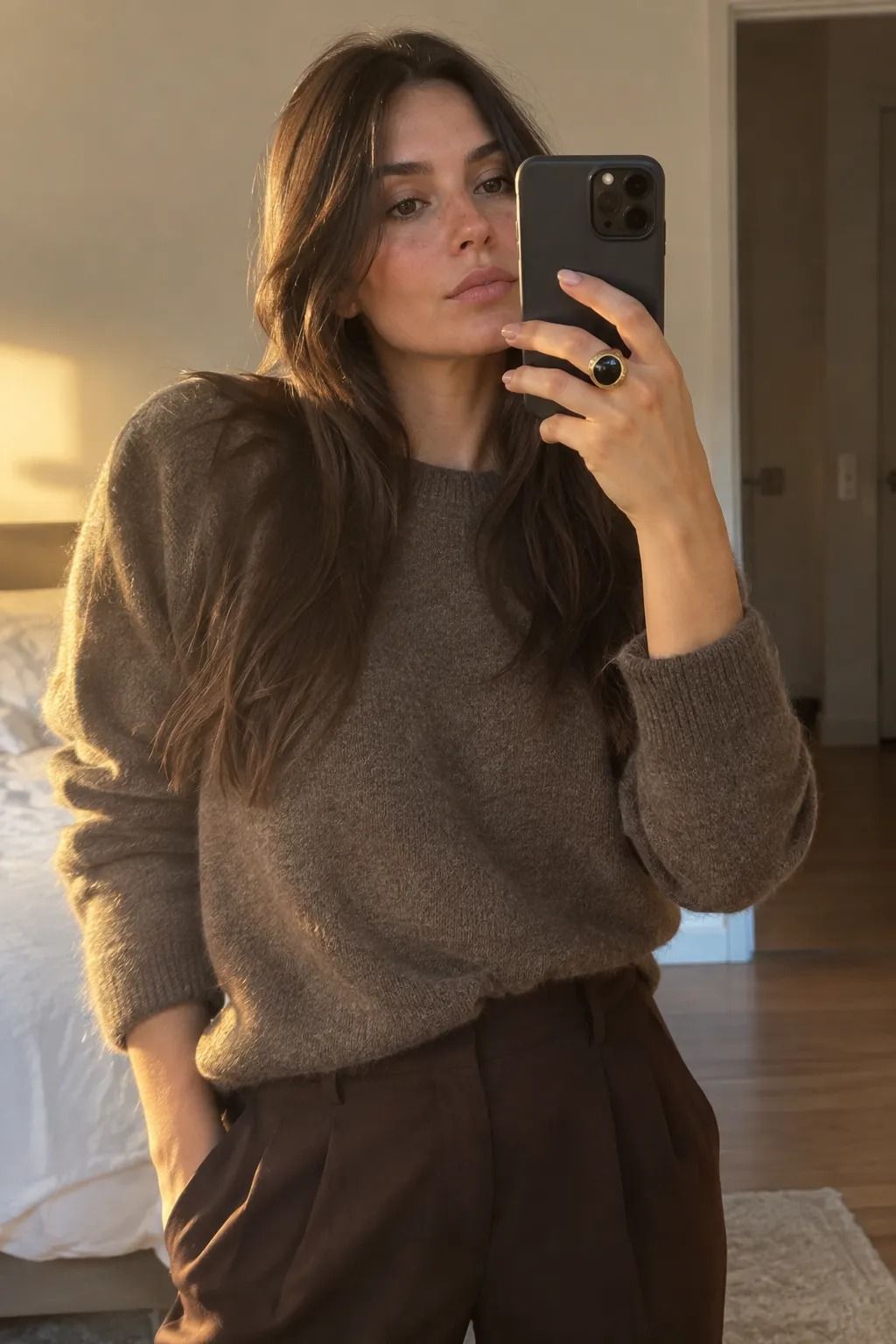
One statement ring gives your hands something deliberate to do without turning the outfit into an accessories display.
8Thread a Silk Scarf Through the Ponytail
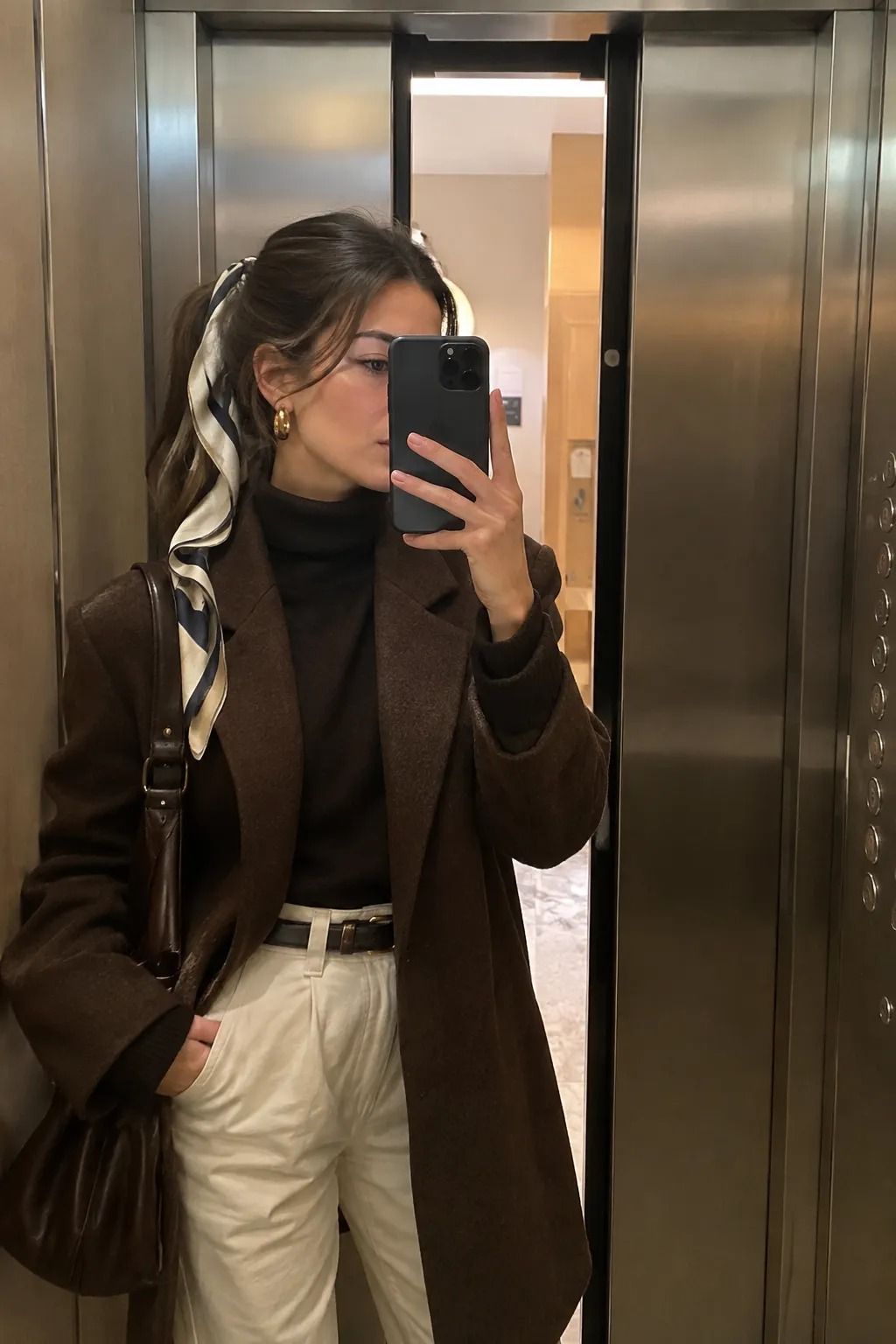
A silk scarf can make a simple black outfit feel personal, especially when the rest of the styling is restrained. A narrow burgundy scarf threaded through a low ponytail adds warmth near the face without requiring a statement necklace.
Keep the knot small so it doesn’t look costume-like. The ends should be long enough to move but not so long that they compete with the neckline. A low ponytail works with a blazer, satin camisole, or simple evening dress because it leaves the shoulders and collar visible.
Repeat one color quietly in your shoe, manicure, or lipstick if you want the scarf to feel integrated. The repetition should be subtle. An exact head-to-toe match can appear overly planned, while one echo creates a more effortless finish.
Avoid pairing the scarf with a large printed bag. Both pieces will compete for attention.
A smooth black clutch or muted metallic bag gives the scarf room to read. The result feels playful, polished, and unexpectedly chic.
This emerald velvet styling reference also shows how one saturated accent can transform a quieter base.
9Why Pearl Drops Still Work With Tailoring
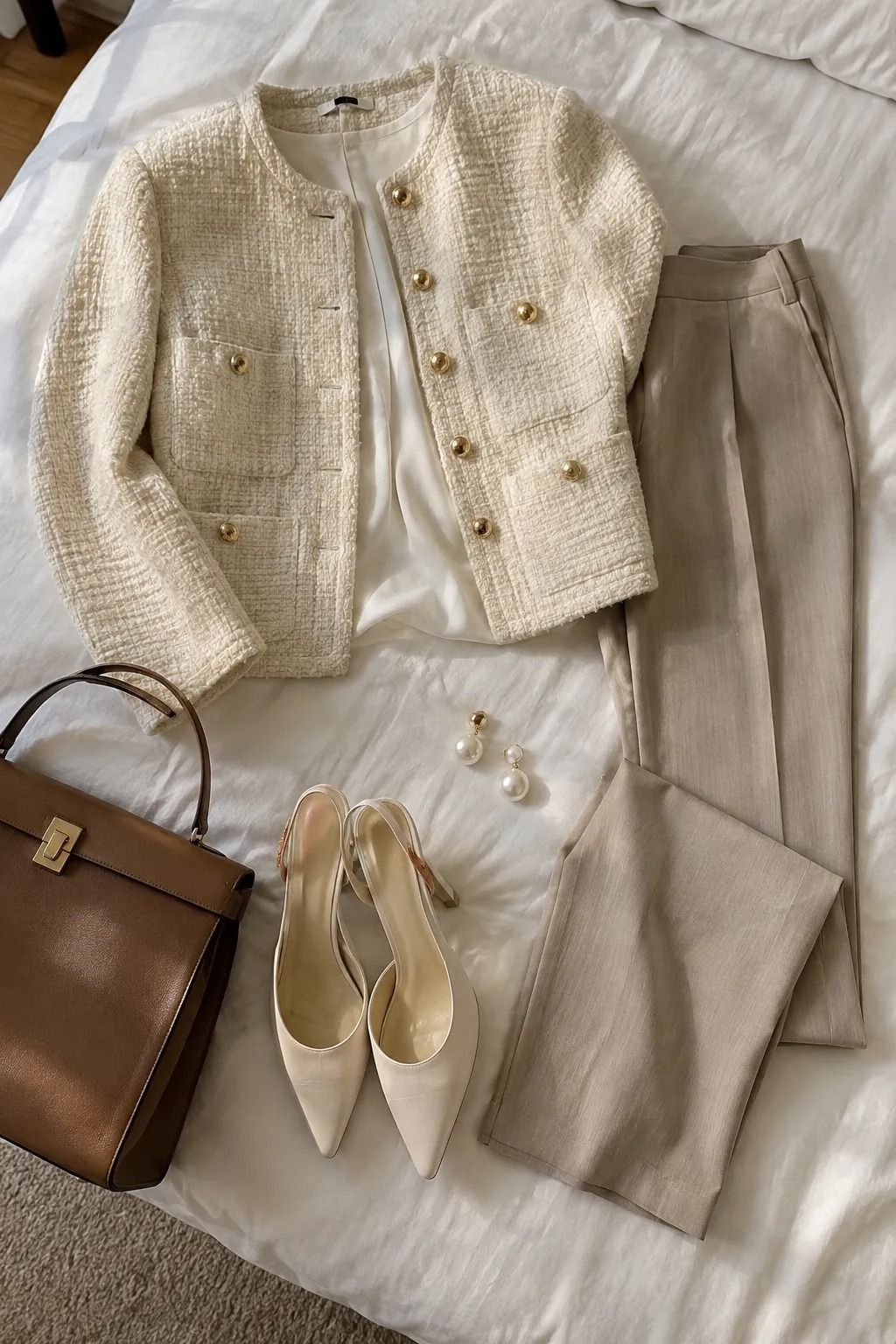
Pearls work especially well with a charcoal blazer, black trousers, ivory satin, and deep burgundy.
10Balance a Plunging Neckline With Wide-Leg Trousers
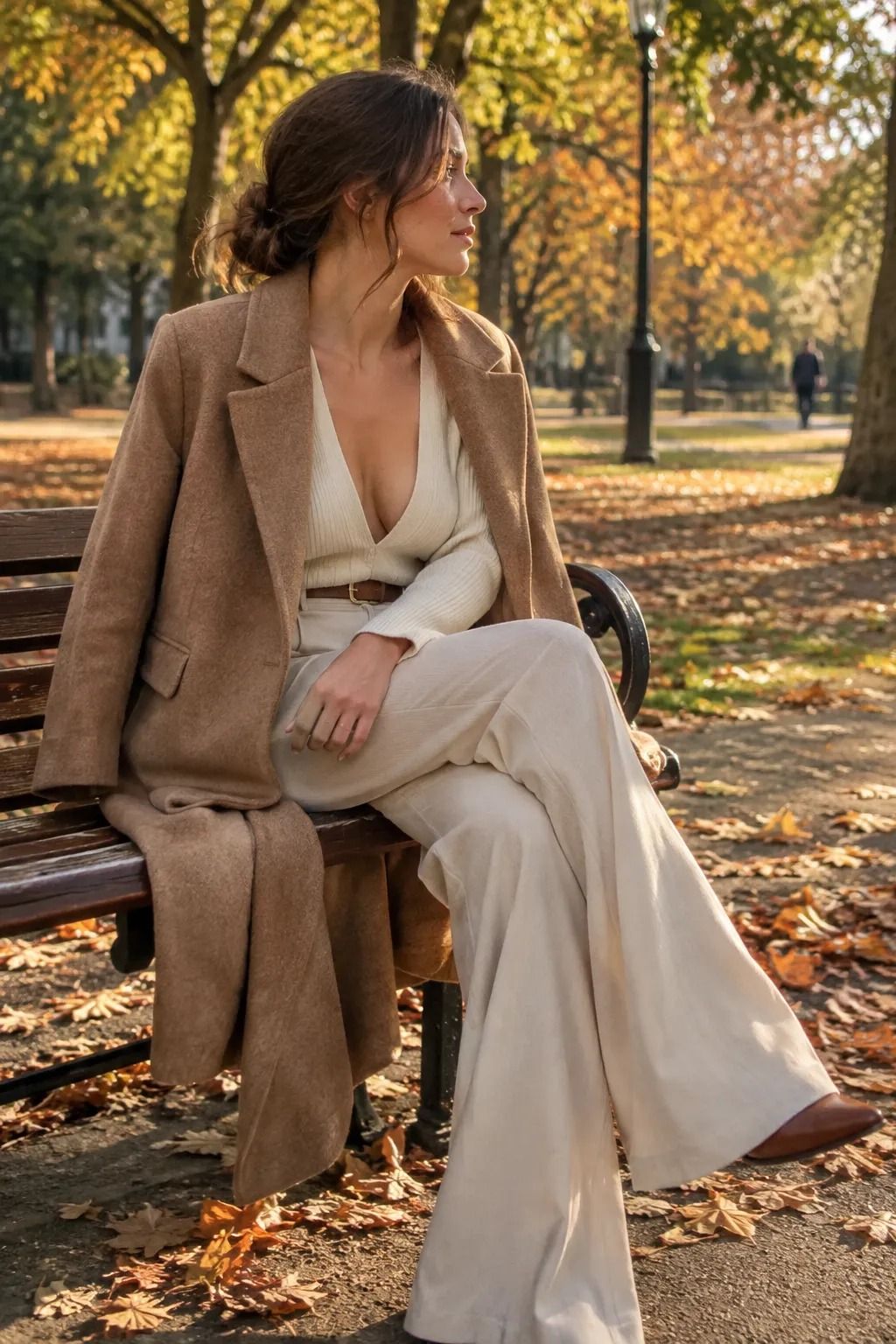
A plunging neckline needs balance, not panic. Wide-leg trousers counter the sharper opening above by giving the lower half fluidity and presence. The contrast feels dramatic but still composed.
Choose wide-leg crepe trousers with a fluid fall. The fabric should move without clinging or becoming transparent under bright light.
A higher rise gives the top a clean place to finish. A heavier crepe prevents the lower half from looking flimsy.
Avoid adding a short skirt, tall boots, and a plunging neckline all at once. That combination creates several competing points of exposure and drama. If your top is bold, let the earrings, shoes, and bag become supporting characters.
The same principle applies to proportions elsewhere. A fitted top can balance a full trouser. A boxy jacket may need a straighter bottom.
A long, flowing skirt may benefit from a compact shoulder line.
This texture-mixing idea can help you decide which surface should stay quiet.
11Finish With a Structured Clutch
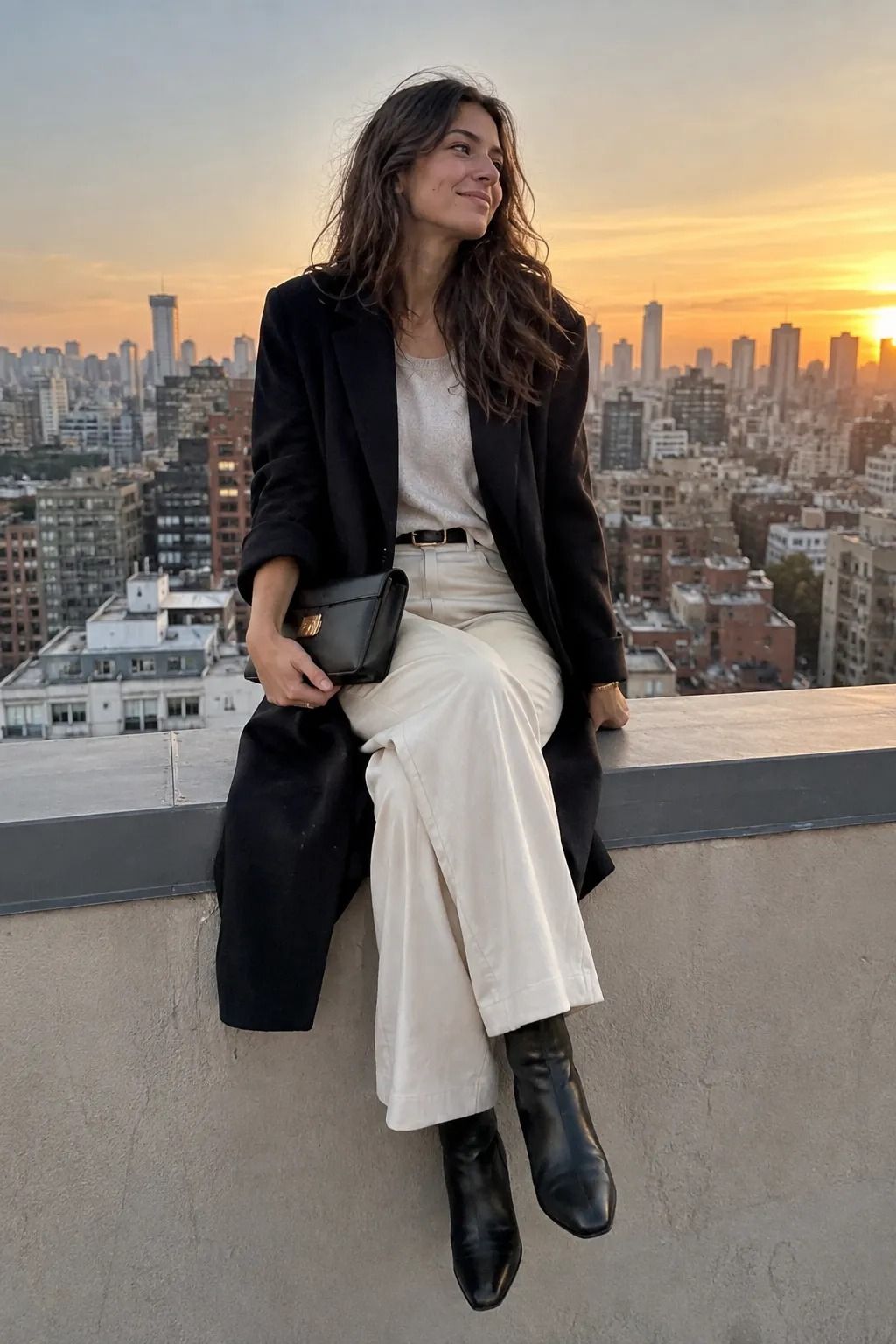
A structured clutch can make an affordable outfit look more considered because its shape brings discipline to soft fabrics. A black satin box clutch with a discreet metal closure looks sharp against velvet and fluid trousers. A firm rectangle also creates a polished contrast with a drapey dress.
The bag should hold the essentials without bulging. Phone, card case, keys, and lipstick are enough. An oversized soft pouch introduces a casual shape at the exact moment you want definition.
Consider the hardware. Warm gold supports burgundy, cream, espresso, and black.
Silver or pewter can look more graphic with charcoal, navy, or icy satin. The hardware doesn’t need to match every piece exactly, but it should relate to your dominant metal family.
A hard case may feel less convenient than a soft bag, but the silhouette is more deliberate. If you’re editing the entire palette, this vertical-stripe proportion guide offers another useful reminder: visual direction matters as much as color.
12Keep the Metal Family Consistent
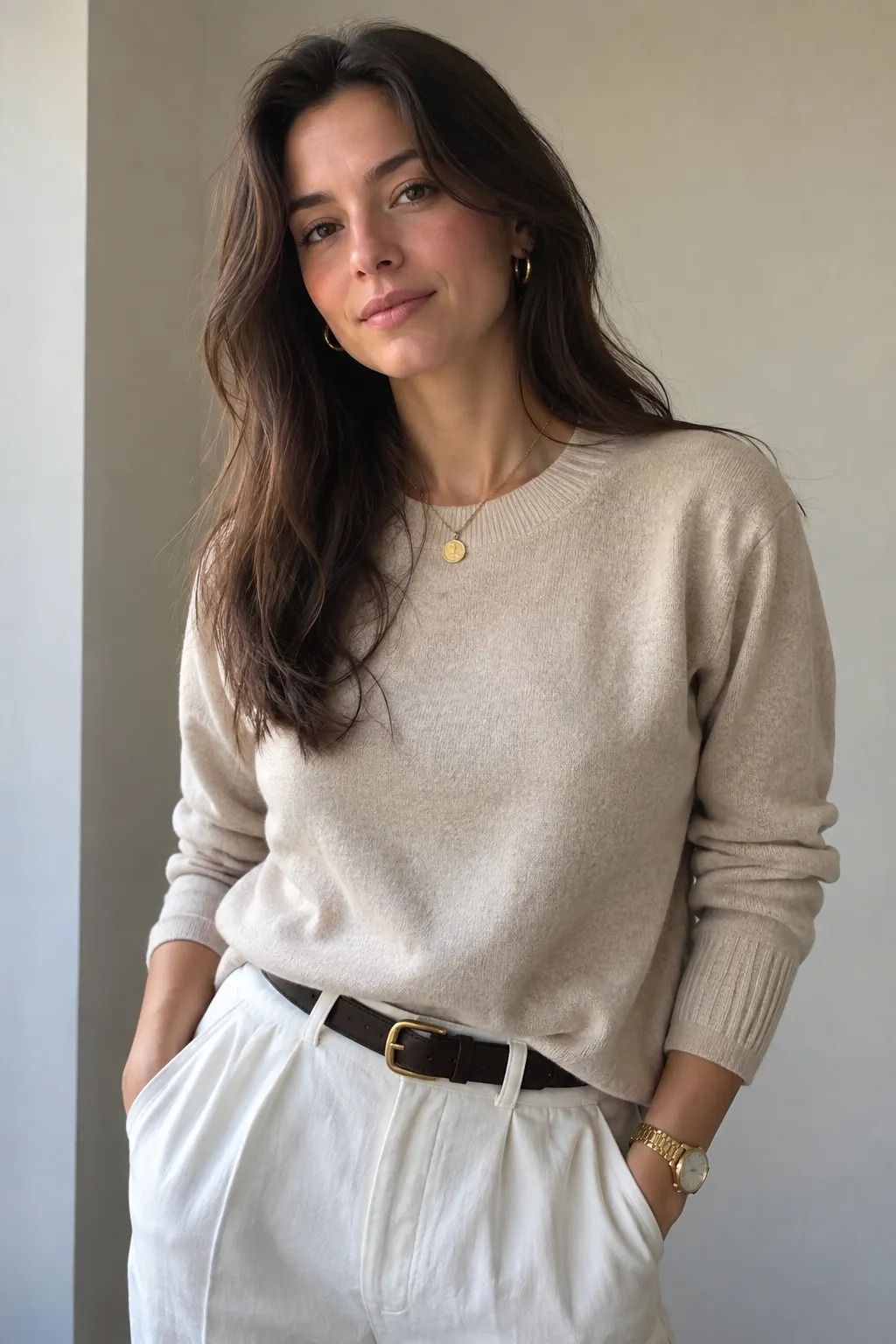
Keeping accessories within one metal family makes an outfit look deliberate almost immediately.
13Test Tights Against the Evening Dress
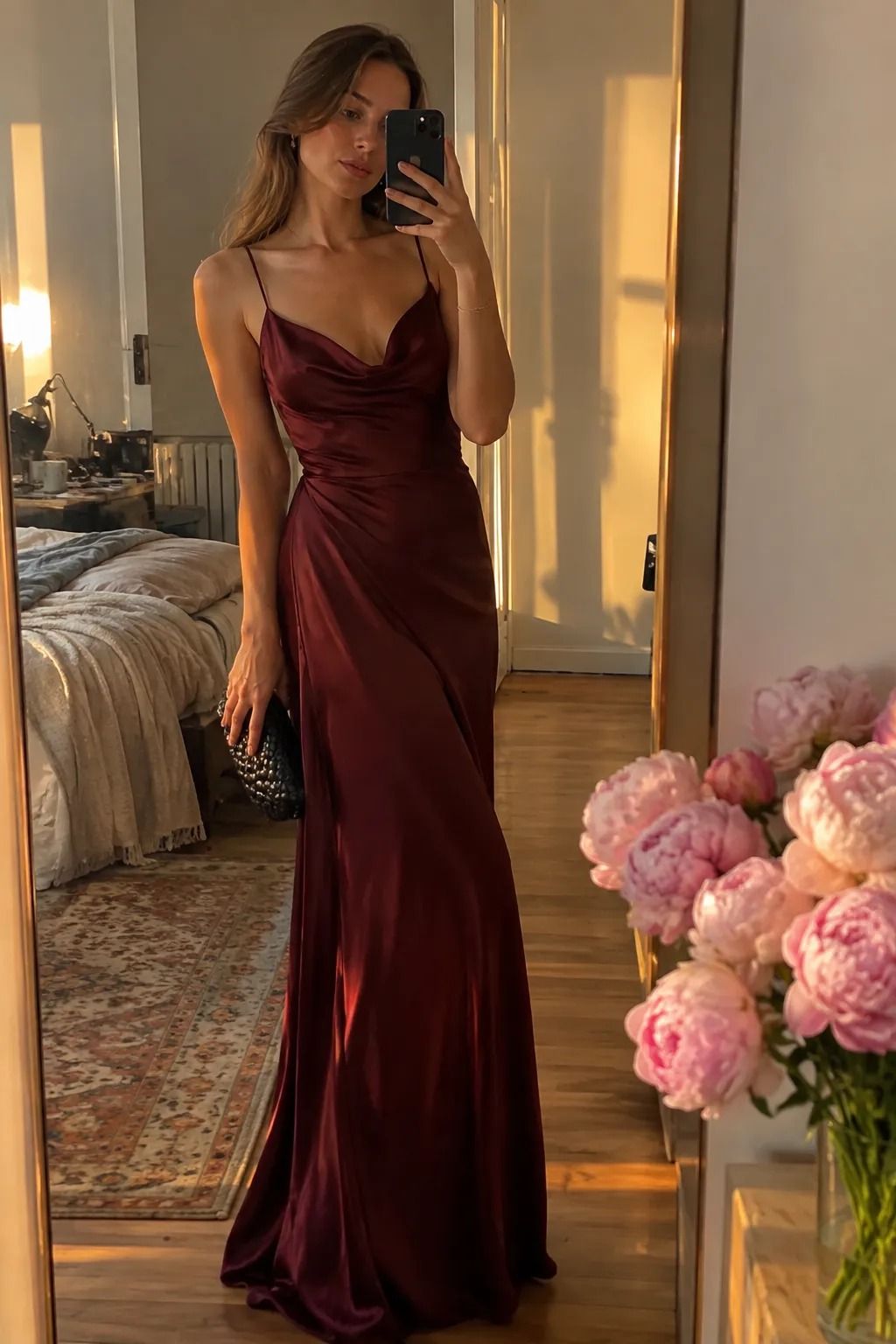
Sheer black tights can change an evening dress from exposed to composed, especially when the hem is short or the weather is cold. A matte finish keeps the leg line visible without adding another reflective surface.
Match the tights to the darkest part of the outfit whenever possible. A soft black dress and blue-black tights can look disconnected under bright light.
If the dress is satin, matte tights create a useful contrast. If the dress is velvet, a slightly sheer finish can stop the outfit from feeling too dense.
Heavy opaque tights can work with substantial shoes, thick velvet, and a structured hem. They may feel too blunt with a delicate satin dress and thin sandal. Your accessories need to support the weight of the tights.
Patterned tights are an option when the rest of the outfit is quiet. A fine dot or subtle seam can add personality without overwhelming the dress. A bold pattern needs a simpler shoe and minimal jewelry.
For another proportion-focused reference, this vertical-stripe styling guide explains why directional details can change the overall reading of an outfit.
14Burgundy Velvet Brings Quiet Drama
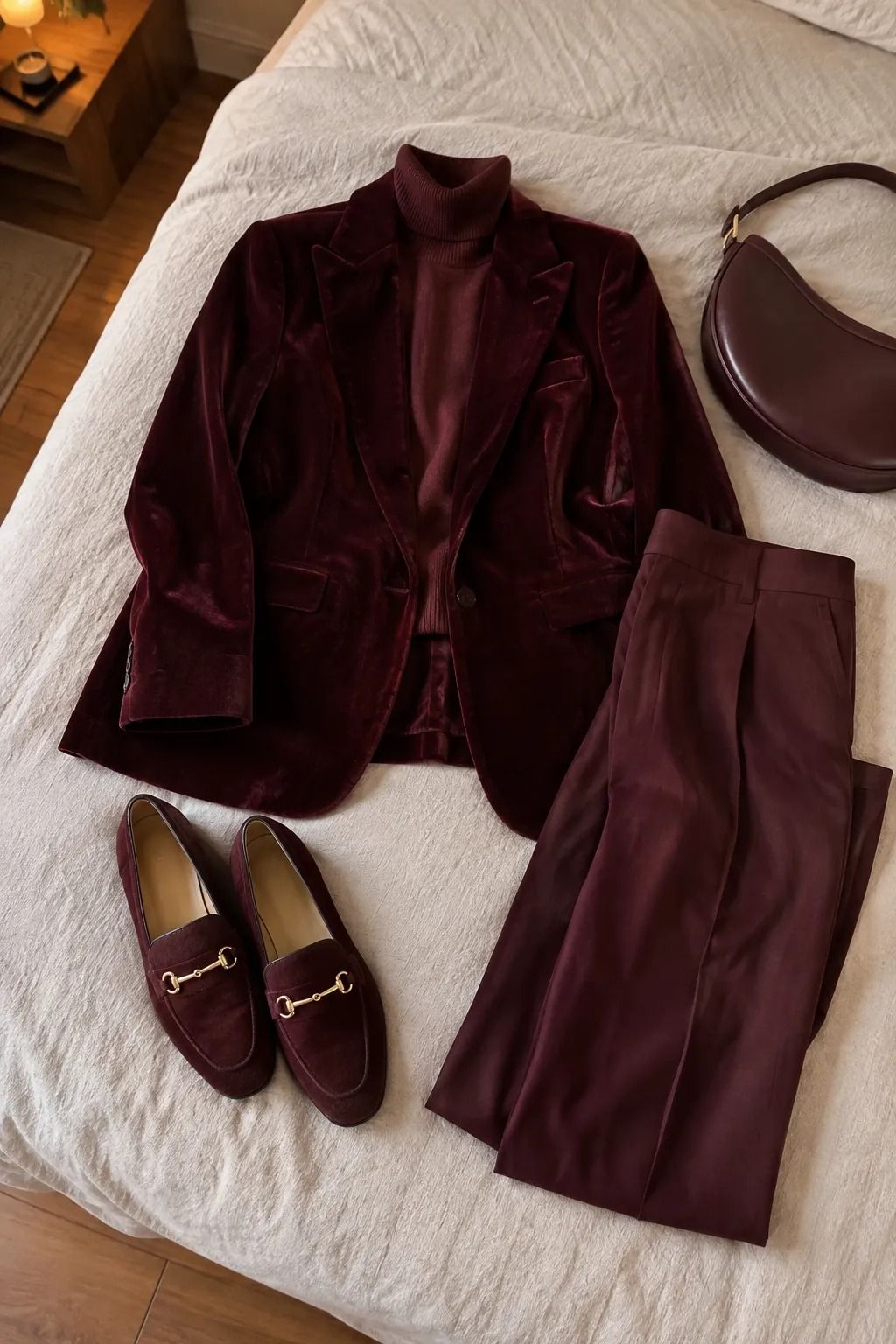
Burgundy velvet creates drama without relying on metallic shine. A deep burgundy camisole with black trousers feels rich and romantic, while a burgundy blazer gives a more assertive result. The color may look almost brown indoors and reveal a wine tone near a window.
Use burgundy on a dress, blazer, shoe, or small bag. One piece is enough to make the palette feel festive. Cream, black, espresso, and muted gold are reliable partners.
Bright red can compete with burgundy unless the contrast is very deliberate.
The color suits several levels of formality. A velvet dress feels glamorous with simple earrings and a narrow heel.
A burgundy shoe can refresh a black trouser suit. A small bag adds warmth without changing your entire silhouette.
Keep the supporting pieces crisp. Soft color looks especially polished beside a clean shoulder, pressed trouser, or structured clutch. This emerald velvet wardrobe idea shows how one intense material can remain controlled when the silhouette stays simple.
15Let Sleek Nails Finish the Outfit
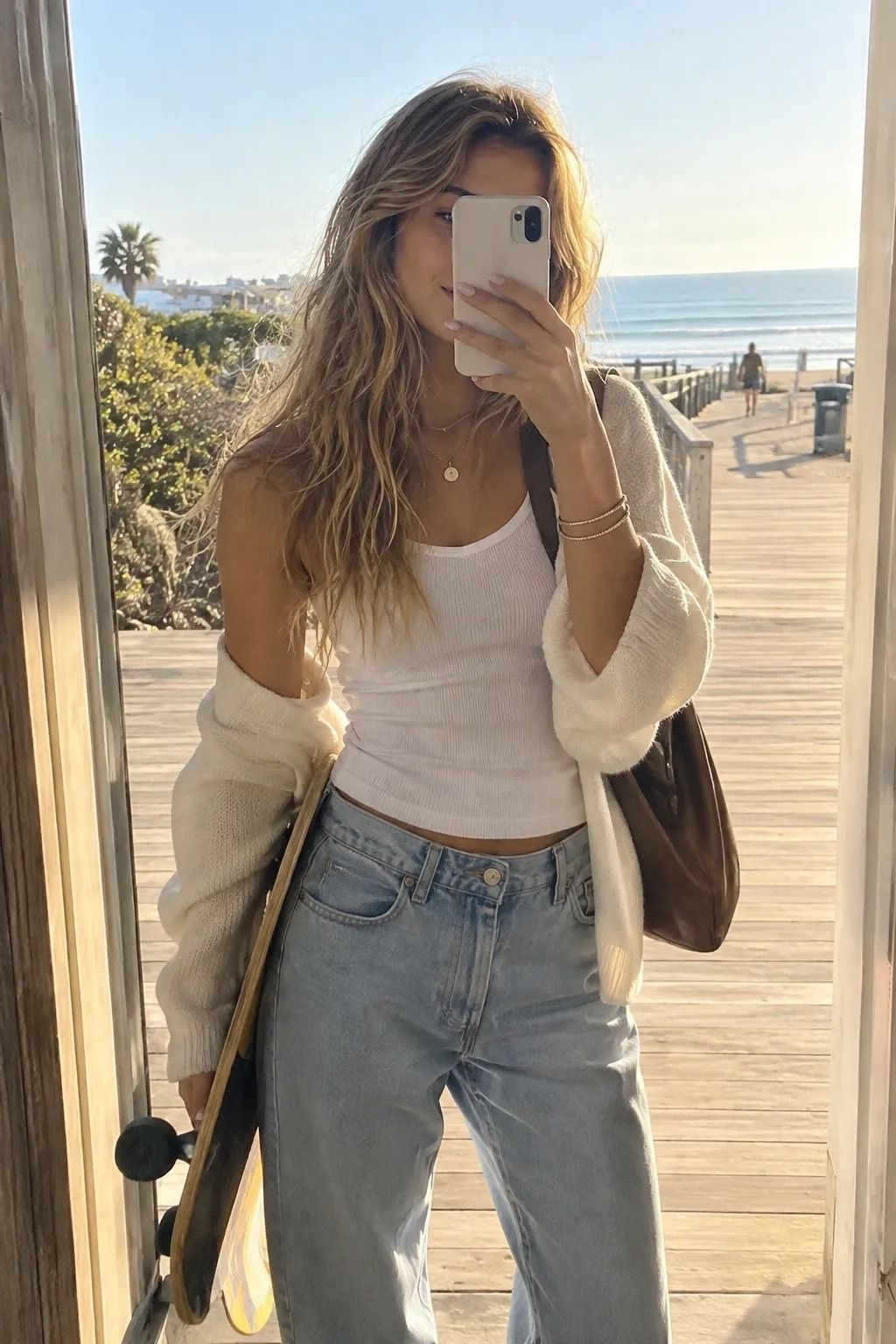
Sleek nails finish a classy New Year’s Eve outfit because hands appear during a toast, in photographs, and around a clutch. The best manicure depends on your outfit’s finish rather than on a complicated design.
A short almond shape subtly lengthens the appearance of the nail without requiring much length. A short square shape feels cleaner and more utilitarian.
For a minimalist outfit, try cream, sheer blush, muted burgundy, or a soft chrome. For a velvet look, a glossy dark wine shade creates a rich contrast.
A fine French line works on a short nail when the tip stays narrow. A small metallic dot near the cuticle adds interest without turning the manicure into a full pattern. A soft gradient can look polished when the colors remain close in value.
Match the finish to your clothing. Glossy nails echo satin and polished metal.
Matte nails calm a look that already contains crystals or metallic shoes. A single accent nail can work, but repeating the same detail in the ring or clutch hardware makes it feel intentional.
The manicure should be easy to maintain before the event. Keep the length practical.
Choose a color that won’t fight your outfit. Let the shape remain legible. A small edit can be dramatic!
How Much It Costs
The most useful budget choice is deciding which piece carries the look. If you already own black trousers, a blazer, or a simple dress, spend your attention on one visible upgrade, such as velvet, a polished shoe, or a structured clutch.
Don’t buy five inexpensive accents when one stronger material will do more. A cleaner shoulder, better trouser break, or richer fabric can change the entire silhouette. Your accessories should complete that decision, not distract from it.
The figures below are planning categories, not promises about any specific product. Your total depends on what you own, whether you shop second-hand, and whether the piece needs tailoring.
The free part is the edit. Pull every dark neutral, satin layer, metallic shoe, and formal bag you own onto one rail.
Build around the strongest piece. If you’re spending, spend on the garment that changes the silhouette.
For a clearer way to edit color, this three-color dressing approach can help you avoid scattered purchases.
Why These Looks Feel More Expensive
Expensive-looking style is usually a proportion problem before it is a price problem. A blazer with a clean shoulder, trousers that fall without dragging, and a shoe that continues the leg line will look more resolved than a heavily decorated outfit with poor balance.
Calm materials also carry evening light beautifully. Velvet absorbs it, satin reflects it, and crepe moves without demanding attention.
You don’t need every surface to shine. Too much shine can make an outfit look flatter because your eye has nowhere to rest.
The rule worth keeping is simple: choose one dramatic material, one supporting accessory, and one quiet base. This approach works for a dinner, a house party, or a formal event because you can adjust the level without losing the shape.
A small wardrobe benefits from repeatable foundations. The same black trousers can support velvet, satin, a fine knit, or a jewel-toned blouse.
The same pointed shoe can shift from polished to glamorous depending on your jewelry and bag. That flexibility is what makes the outfit feel effortless rather than overworked.
If you want one final reminder about tactile contrast, this fabric-mixing reference keeps the edit focused.
What People Always Want to Know
What is the best classy New Year’s Eve outfit for a small wardrobe?
I’d begin with a velvet blazer over black trousers. One strong layer creates several outfits with a satin camisole, fine knit, or simple blouse. Pointed shoes and one metal family can stay the same while your top changes.
Where can I buy classy New Year’s Eve outfit pieces on a budget?
Look at department-store sale sections, consignment shops, local thrift stores, and second-hand platforms. A well-cut blazer is the best search target. Check what you own first, then buy only the missing anchor piece.
How much does a classy New Year’s Eve outfit cost?
A refresh can cost under $100 when you use an existing base and add one accessory. A complete new look often costs more because shoes and tailoring add up. Your final total depends on the pieces already in your wardrobe.
Can I create a classy New Year’s Eve outfit on a budget?
Yes. I’d build around black trousers or a simple dark dress, then add a scarf, pearl drops, or a polished manicure. The outfit gains impact from contrast and editing, not from buying every seasonal detail.
Is a classy New Year’s Eve outfit worth it in a small wardrobe?
Yes. A blazer, satin top, pointed shoe, and structured clutch can serve several occasions. Small wardrobes benefit from repeated foundations. Your accessories can shift the mood while the silhouette remains reliable.
Is this style a good idea for a rental or shared closet?
Yes. Nothing here depends on permanent changes or specialized storage.
Use one garment rail, slim hangers, and a small accessory tray to keep your options visible. A clear view makes editing easier before the event.
For another saturated-fabric idea, this emerald velvet styling reference can help you compare a jewel tone with your existing dark neutrals.
Where I’d Start First
If I had to pick one, I’d start with the velvet blazer. It gives black trousers texture, makes satin feel intentional, and can soften a simple dress without adding bulk.
Then I’d choose one supporting detail: pearl drops, a narrow scarf, a structured clutch, or sleek nails. Not all four. The strongest outfit is the one where every piece has a role and nothing is competing for the last word.
Your final check is quick. Look at the shoulder, the trouser break, the shoe, and the brightest detail. If those four elements feel connected, the result can be polished, festive, and genuinely wearable.