
The best pre-wedding photoshoot dresses have one clear line, controlled movement, and a color that separates from the location. Your dress should move, catch light, and leave room for your expression. That’s the whole point!
A useful starting rule is simple: choose the feature you want remembered, then build the rest of the outfit around it. These ideas cover polished silhouettes, practical budgets, couple coordination, and fabrics that stay readable while you walk, turn, or sit.
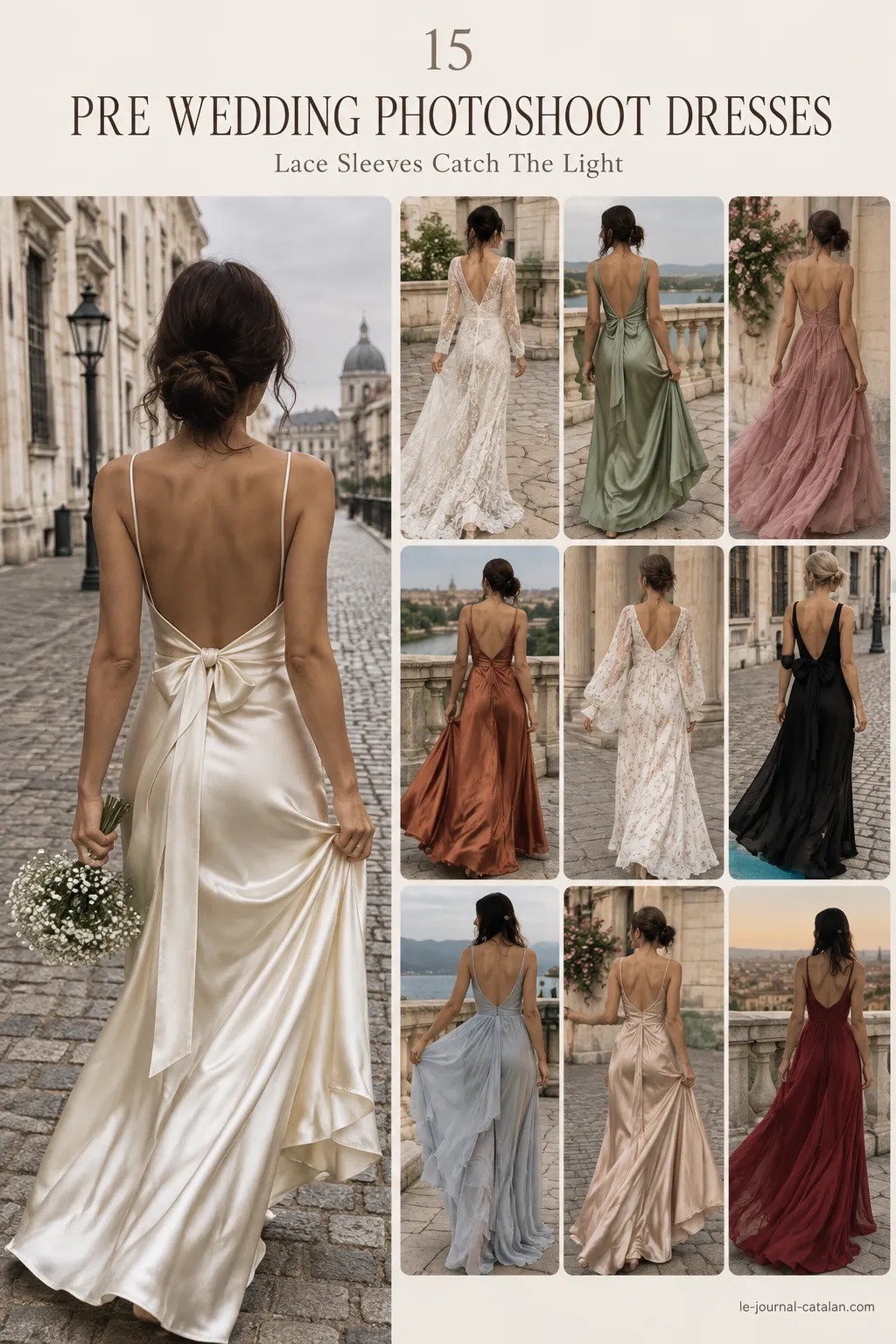
- Let Satin Slip Dresses Set the Line
- Why Do Off-Shoulder Gowns Work for Romantic Portraits?
- Red Meets Greenery: A Clear Contrast
- Give Puff Sleeves Room to Move
- When Does a Minimal White Dress Hold the Frame?
- Floral Prints Need a Scale Decision
- The Draped Neckline Rule
- Can Pastels Stay Visible in Couple Shots?
- Sequins and Light: Keep the Glimmer Controlled
- Choose a High Slit With Intention
- Cape Sleeves Take the Wind
- Corset Bodices, Softened by Simple Lines
- Let Ruffles Create the Motion
- Should Couples Match Their Dress Colors?
- Saree-Inspired Draping: The Long-Line Finish
1Let Satin Slip Dresses Set the Line
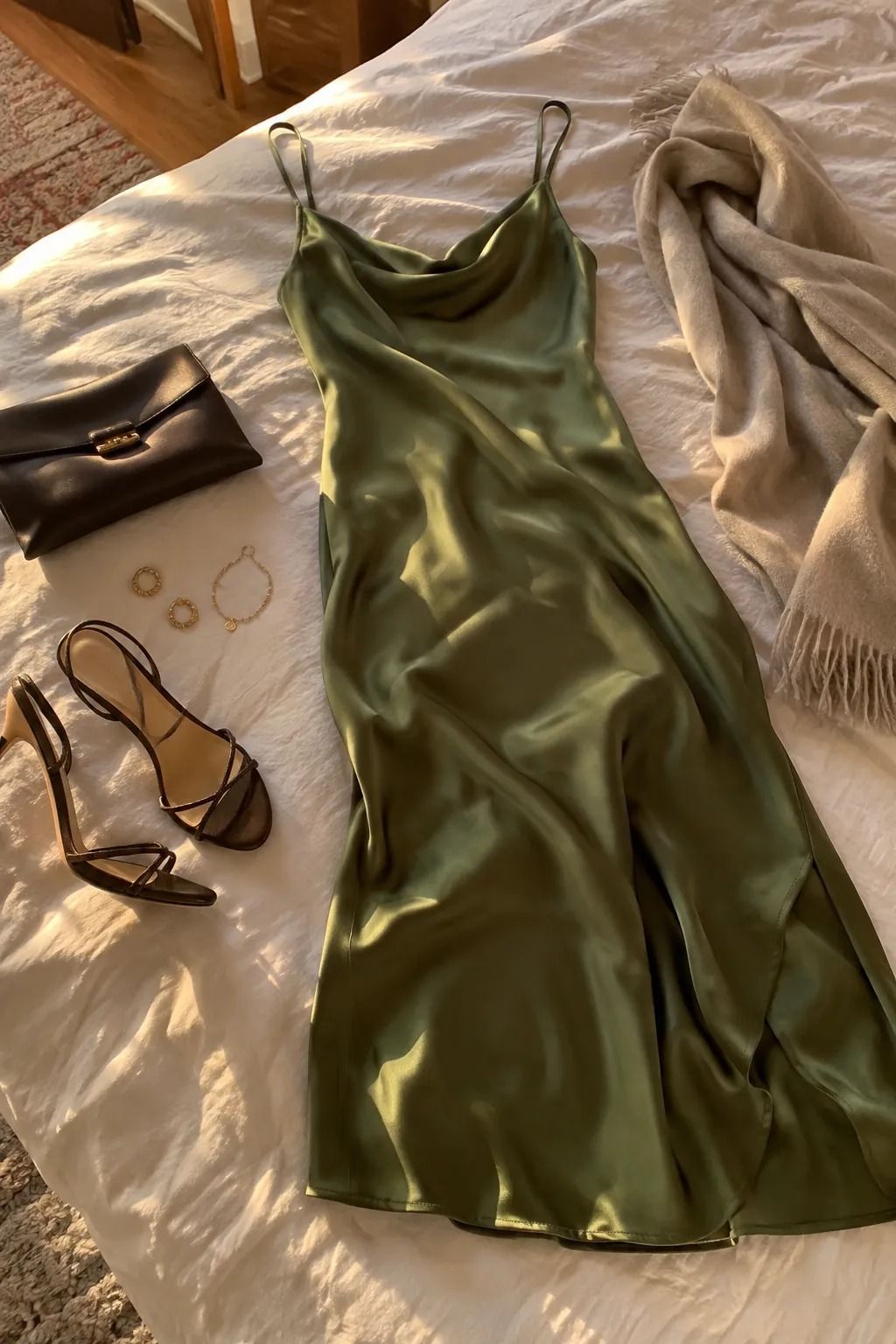
A satin slip dress gives your photos a clean vertical line, especially when the fabric is cut on the bias. Choose silk satin or a matte satin with enough weight to fall close to the body without clinging at every angle. The quiet shine catches a window, sunset, or streetlamp in small ribbons, so your movement becomes visible without needing a dramatic pose.
A cowl neckline softens the upper line, while a straight neckline feels more modern and graphic. If you’re choosing between two similar slips, check the hem first. A clean, even hem gives you more options for walking and turning than a train that only works from one angle.
Keep the accessories narrow and intentional. One pair of strappy sandals, a small clutch, and one fine earring are enough. You don’t need a second statement detail competing with the shine.
For a flatlay, keep the dress fully identifiable. Lay out the straps, neckline, and hem separately on a bare surface, then add only one pair of shoes and one small accessory.
I call this the One-Line Silhouette Rule: your eye should read the dress before it reads the styling. A crowded arrangement won’t give your photographer much useful information.
If you’re comparing simple evening shapes, these black-tie dress ideas for a polished budget offer useful proportion references. A slip doesn’t have to feel plain. With the right fabric, it can look sleek, romantic, and quietly dramatic.
2Why Do Off-Shoulder Gowns Work for Romantic Portraits?
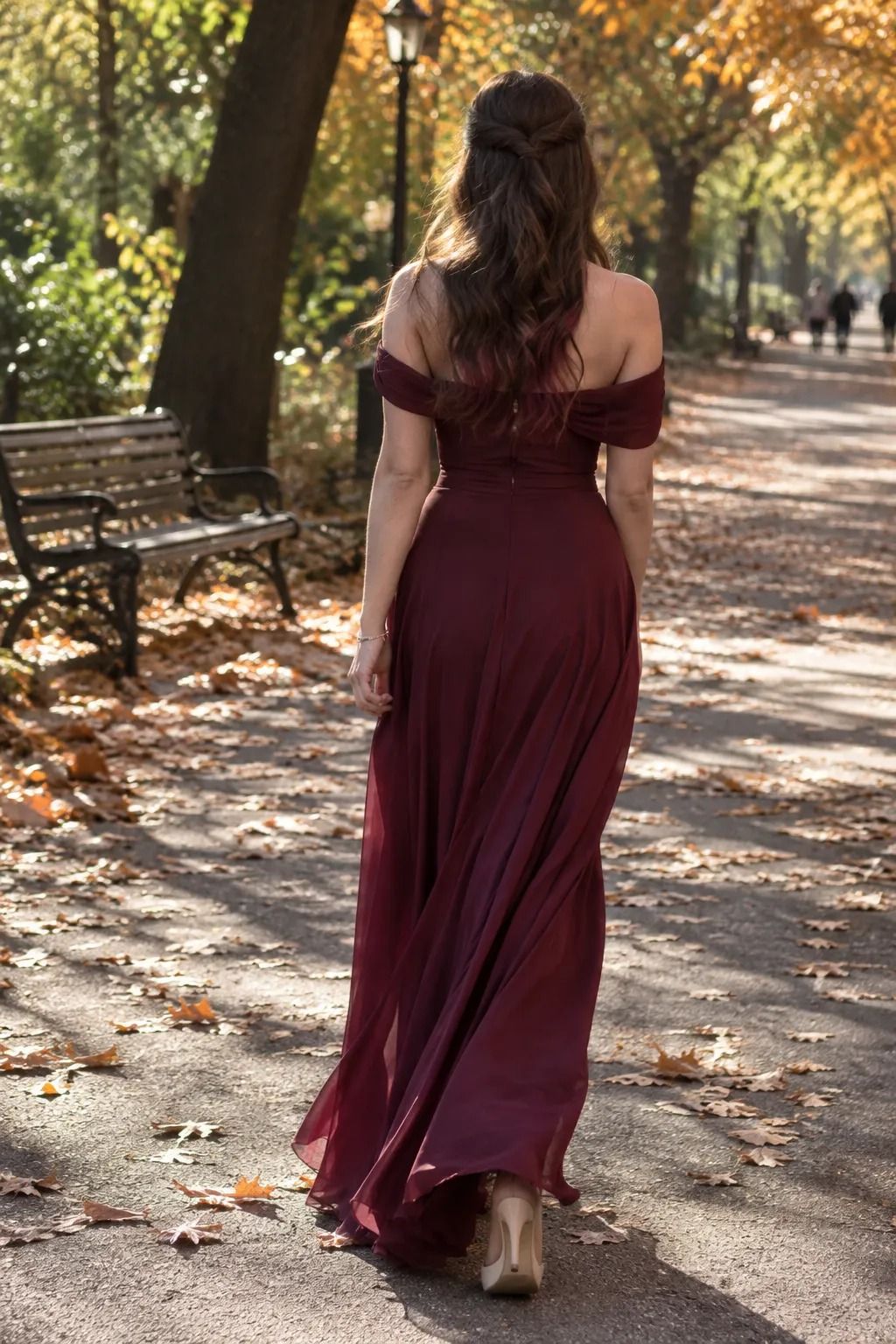
An off-shoulder gown works best when the neckline stays clearly separated from the background.
3Red Meets Greenery: A Clear Contrast
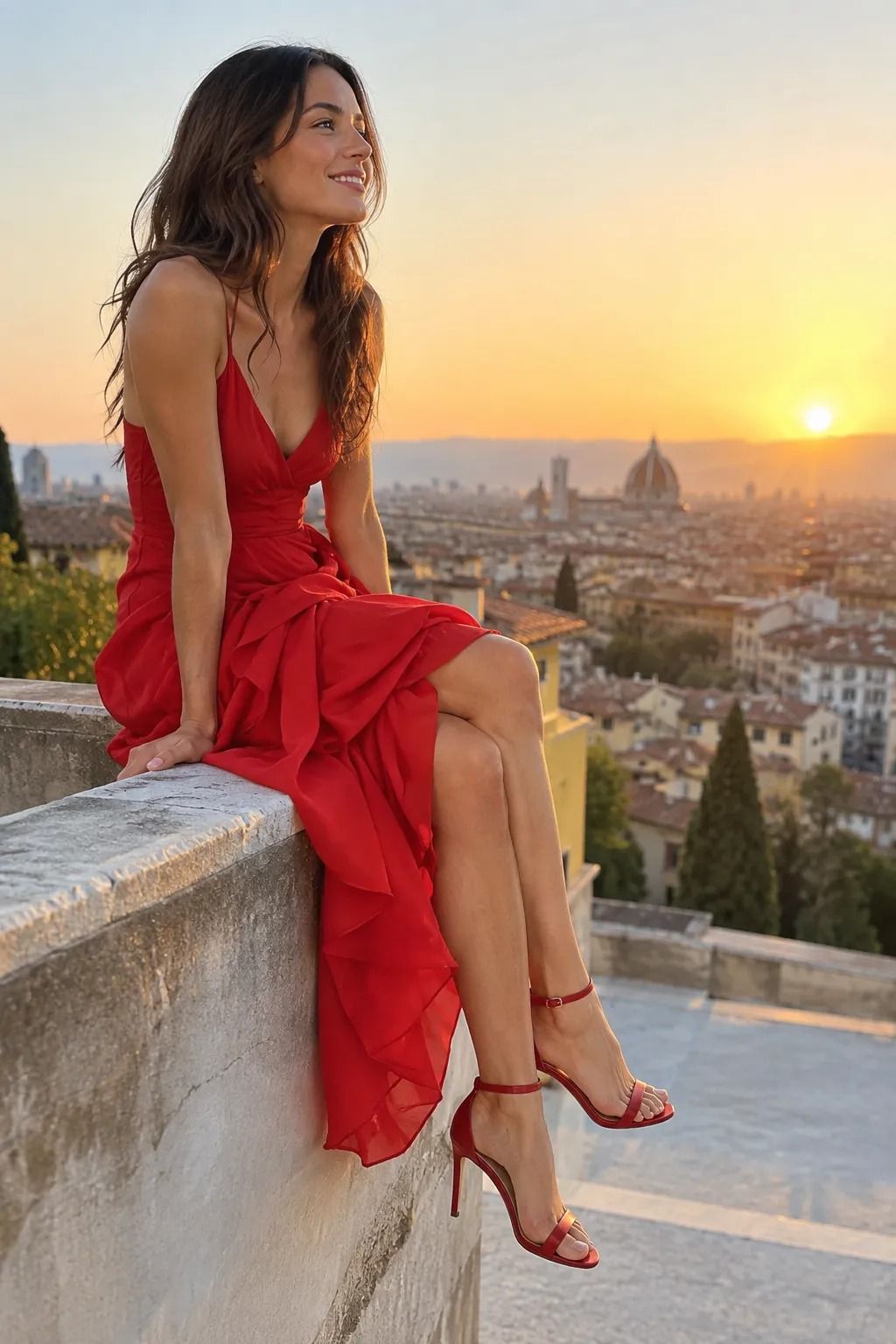
Red against deep green creates immediate separation, but the shade matters. A saturated tomato-red jersey dress feels lively and modern, while blue-red satin reads more formal and cool. For a rooftop portrait with a sunset skyline, I prefer a warm red because it holds its color after the light turns amber.
A fitted column dress makes the silhouette sharp, while a draped skirt gives the wind something to move. Either way, keep the neckline easy to read. A strong color already creates visual energy, so you don’t need sequins, oversized sleeves, and a dramatic necklace in the same outfit.
Your profile angle should show the neckline, waist, and hem as three distinct points. Don’t pull the skirt into an artificial pose. Let one step or a small turn create the movement naturally.
For jewelry, choose brushed gold with warm red or cool silver with blue-red. A small earring is often enough. If you’re considering an evening palette, these black-tie dress ideas with controlled color can help you narrow the accessories.
One red dress, one clean profile, and one visible skyline will say more than five competing details. And if you’re looking for a stronger statement, this combination can feel confident, cinematic, and wonderfully memorable!
4Give Puff Sleeves Room to Move
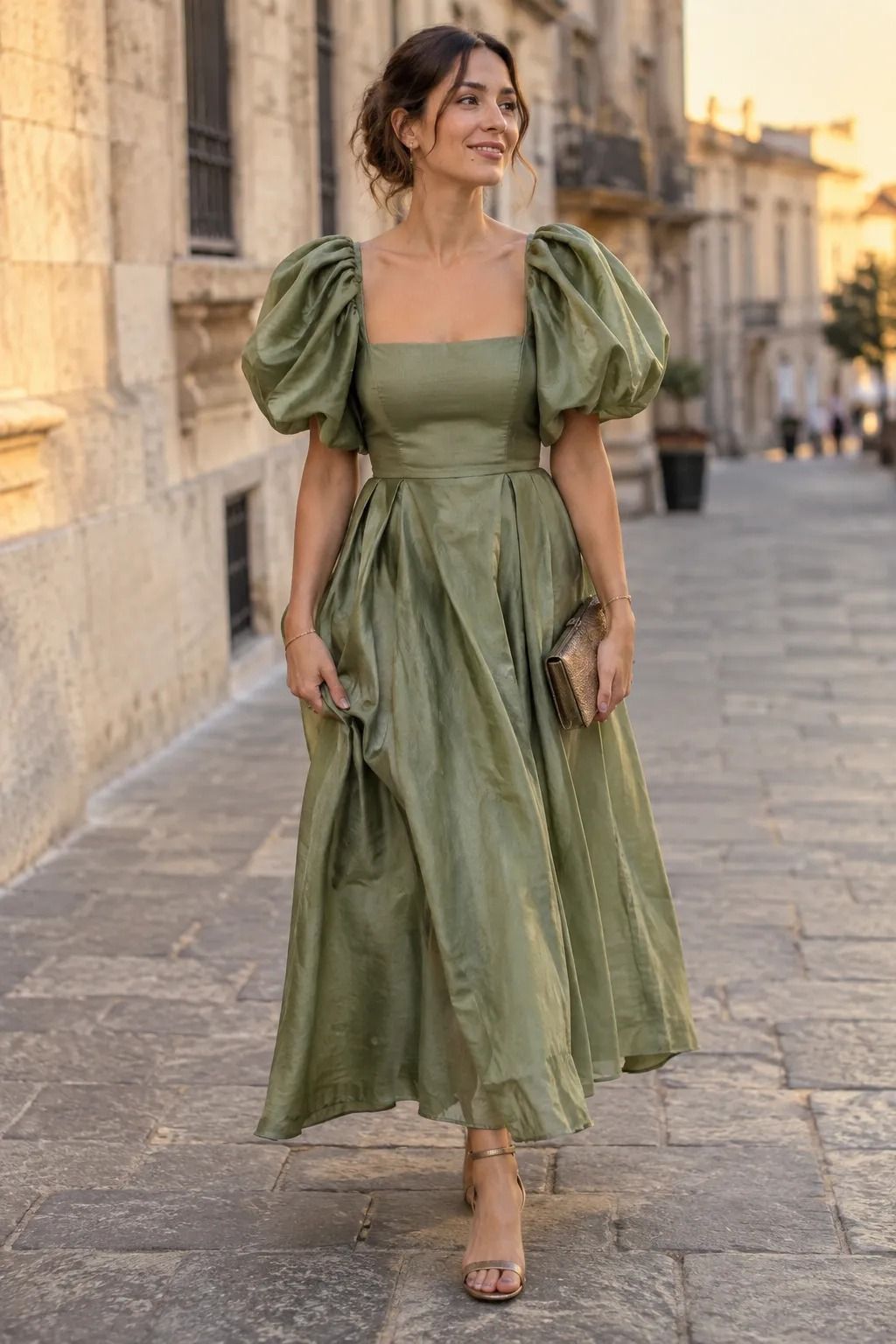
Puff sleeves bring volume near the face, which makes them useful in a simple street-style portrait. Look for cotton voile sleeves with a fitted cuff, or choose a structured taffeta sleeve if you want a sharper silhouette. The sleeve should hold a shape in still air but soften slightly when you move your arms.
A neutral studio background gives this dress room to be playful without becoming childish. Keep the shoes simple and let the skirt finish the story. I call this the Three-Shape Balance: one rounded sleeve, one defined waist, and one clean hem.
If all three areas are oversized, your figure can disappear in the photograph. But if only the sleeves carry volume, the look stays airy, whimsical, and easy to direct. A narrow shoe or clean pointed flat can stop the outfit from feeling too sweet.
A cropped jacket can work over a puff-sleeve dress if the photoshoot moves outdoors, but don’t hide the sleeve under a bulky layer. A short cardigan or fitted wrap preserves the shoulder shape. These easy travel dress ideas show how a defined silhouette can stay practical without losing polish.
5When Does a Minimal White Dress Hold the Frame?
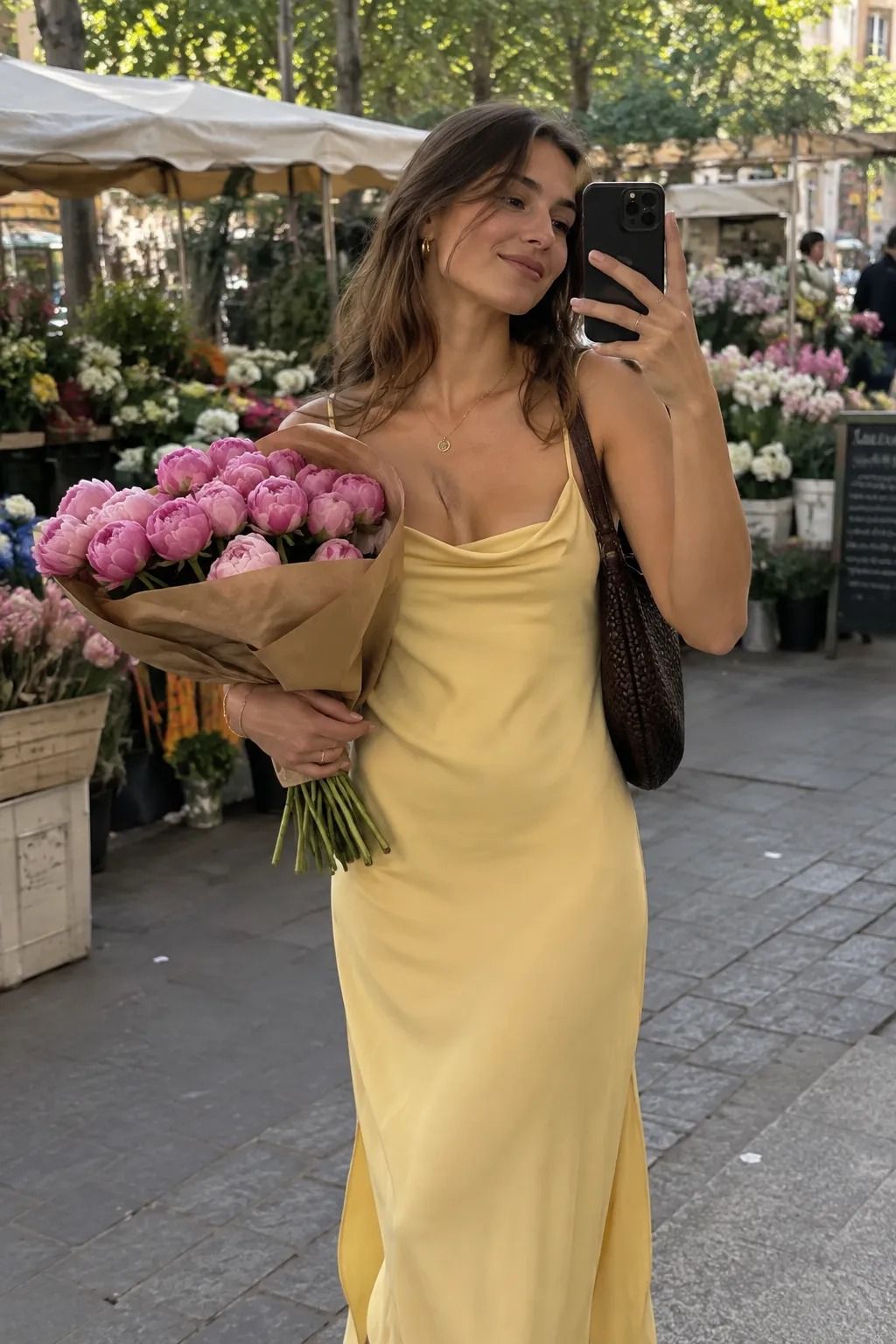
A minimal white dress can be powerful when the fabric has visible weight.
6Floral Prints Need a Scale Decision
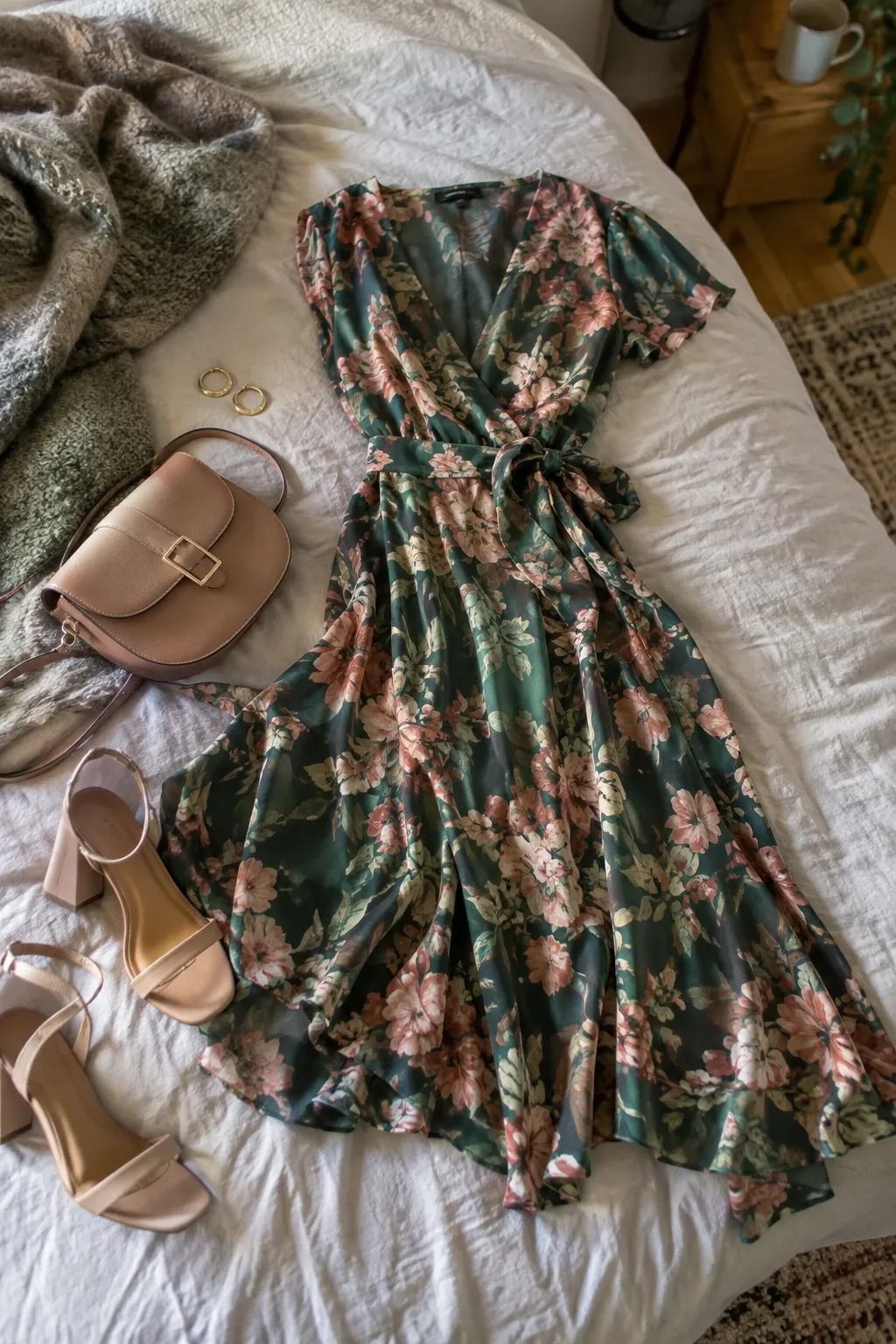
A floral print works outdoors when the scale of the pattern relates to the distance of the photograph. A washed cotton floral with medium blooms stays readable in a flatlay and in a walking portrait. Tiny flowers can disappear from farther away, while very large blooms may dominate your face.
Start by choosing the mood. A dark botanical print feels editorial and grounded.
A cream base with muted blue flowers looks softer. A saturated red or coral print feels more energetic and works well when the location is quiet.
Keep the accessories within the print’s existing palette. Add one pair of shoes in a shade already present, then stop.
You don’t need a second floral accessory. When the dress already contains several colors, a plain shoe creates a more intentional, balanced result.
For an outdoor frame, I prefer a print with two main colors and one quiet background because it leaves your photographer somewhere to place the eye. Why let a complicated pattern compete with the landscape when a focused print can make the whole outfit feel more considered?
These summer dress ideas for print scale are useful for comparing small, medium, and large motifs. The important question is whether the floral pattern remains recognizable when you step away.
7The Draped Neckline Rule
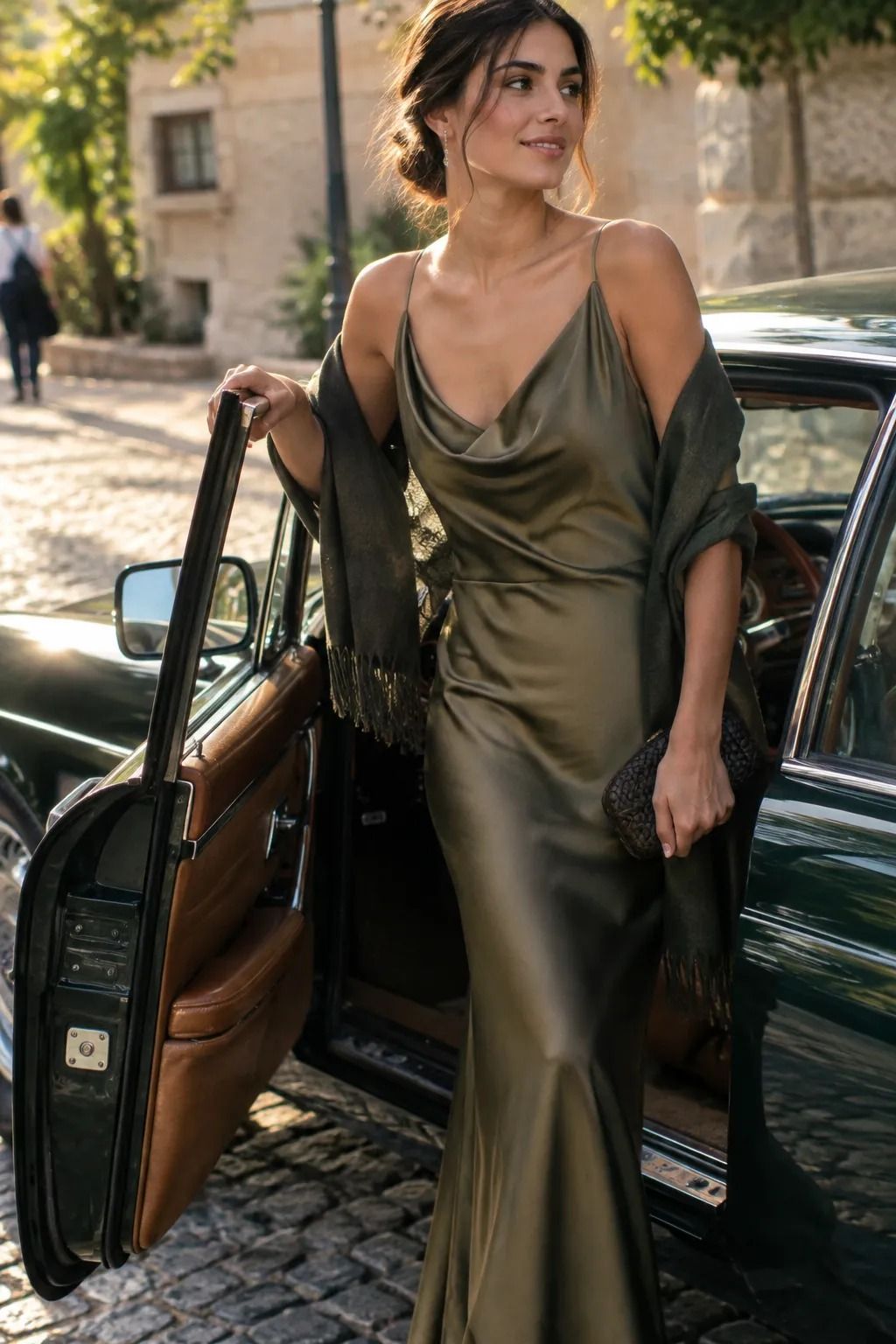
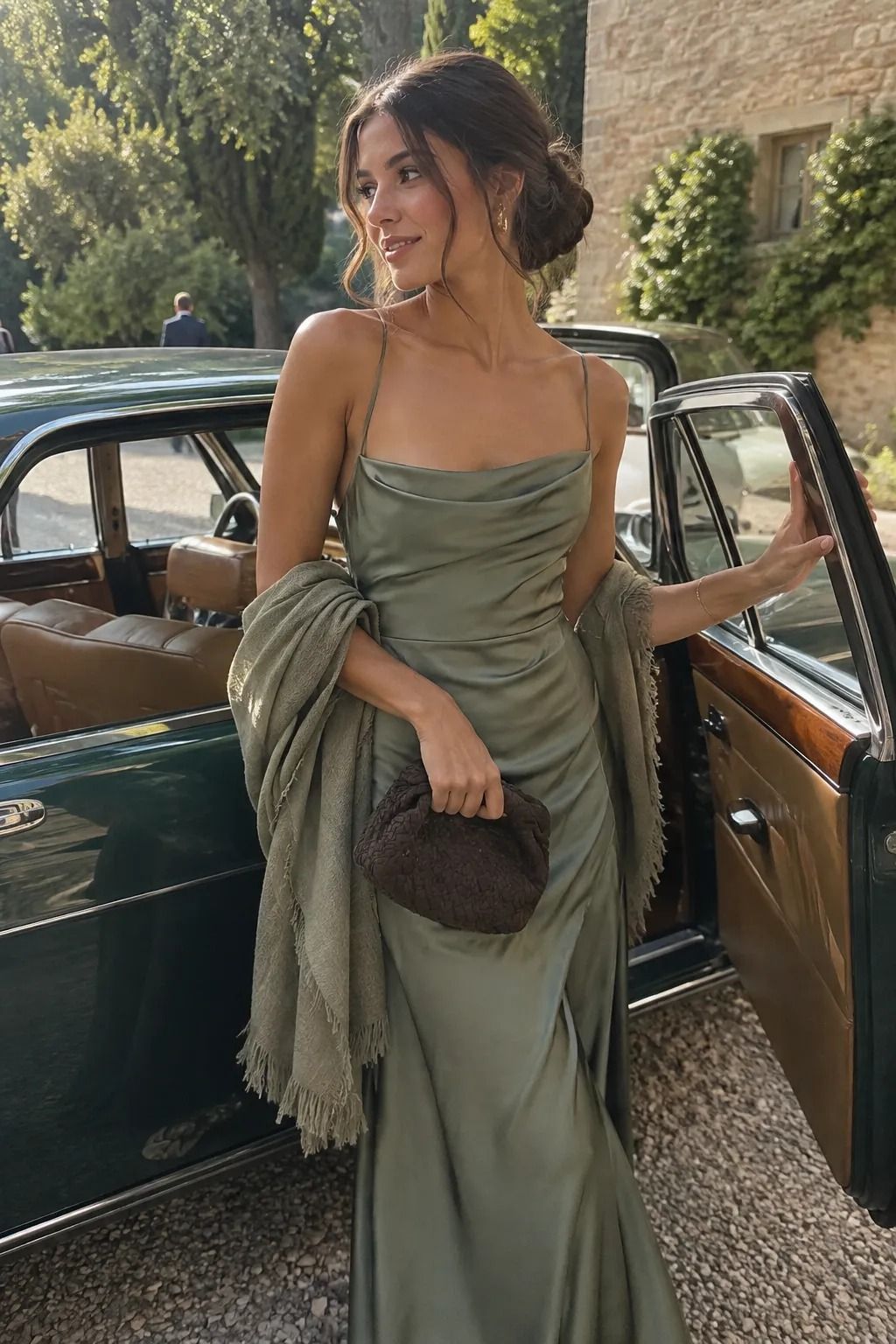
A draped neckline creates movement close to the face, but it needs a fabric that can fold without turning bulky. Choose fluid viscose jersey or lightweight satin with a soft recovery. The folds should fall in one direction, not gather into a stiff knot at the center of your chest.
A walking portrait beside a vintage car gives the neckline a strong setting because the leather interior adds a dark, matte counterpoint. Let your body angle toward the open door while your face turns back to the camera. Your hands can stay relaxed, and you won’t need a dramatic pose.
I call this the Two-Surface Rule: one soft fabric against one firm surface. Avoid heavy fringe or layered necklaces because they interrupt the drape and make the neckline look busy. A small geometric earring can echo the folds without competing with them.
If the neckline is low, choose a jacket with a clean lapel for the travel between locations. A cropped blazer can also give the dress a sharper second look. For a restrained shoe reference, these pearl-gray pump styling ideas show how a quiet accessory can support a flowing dress.
8Can Pastels Stay Visible in Couple Shots?
Pastel gowns can look gentle without fading into pale scenery.
9Sequins and Light: Keep the Glimmer Controlled
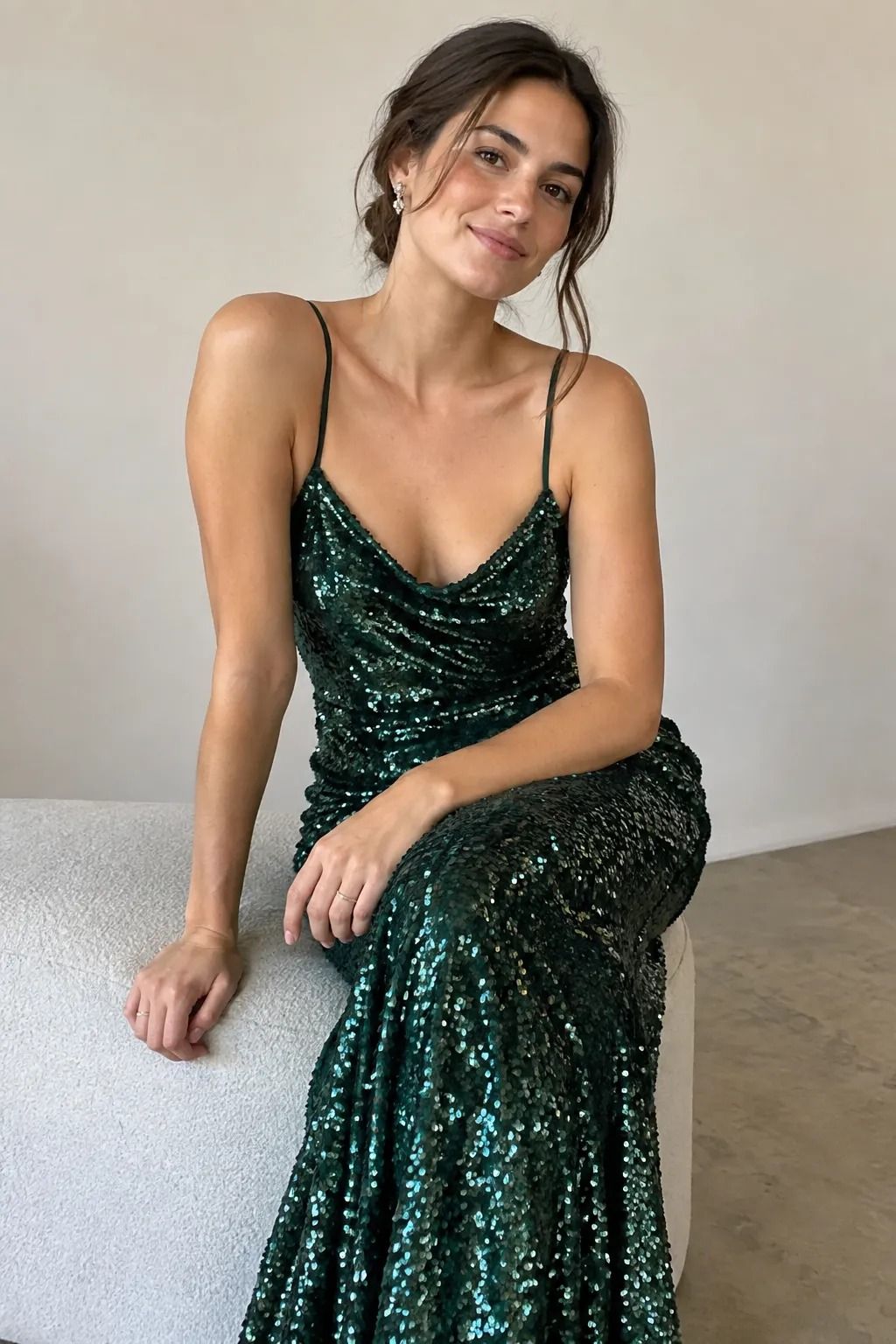
Sequins need controlled light. In a neutral studio, a smoked silver sequin dress can reflect softly across the bodice while the clean background keeps the texture legible. A champagne or pale gold surface gives a warmer result, but silver usually offers more contrast against neutral walls.
Don’t choose the brightest mirror finish simply because it sparkles in person. A smaller sequin or a matte-backed disc often photographs with more detail and less glare. If the dress is fully embellished, keep the shoes and jewelry nearly invisible.
A short sequin dress can feel playful and modern, while a floor-length version gives the same texture a more glamorous direction. The right length depends on the location and the degree of formality you want.
A hotel lobby supports a longer line. A rooftop or studio can handle a shorter hem.
Use the table below as a planning guide when you want the dress, light, and location to support one another.
These are planning ranges, not product quotes. Your actual total will depend on location, tailoring, rental policies, shoes, and whether you already own part of the outfit. If you’re styling a lower-cost look, these budget-friendly formal dress references can help you focus on line rather than decoration.
10Choose a High Slit With Intention
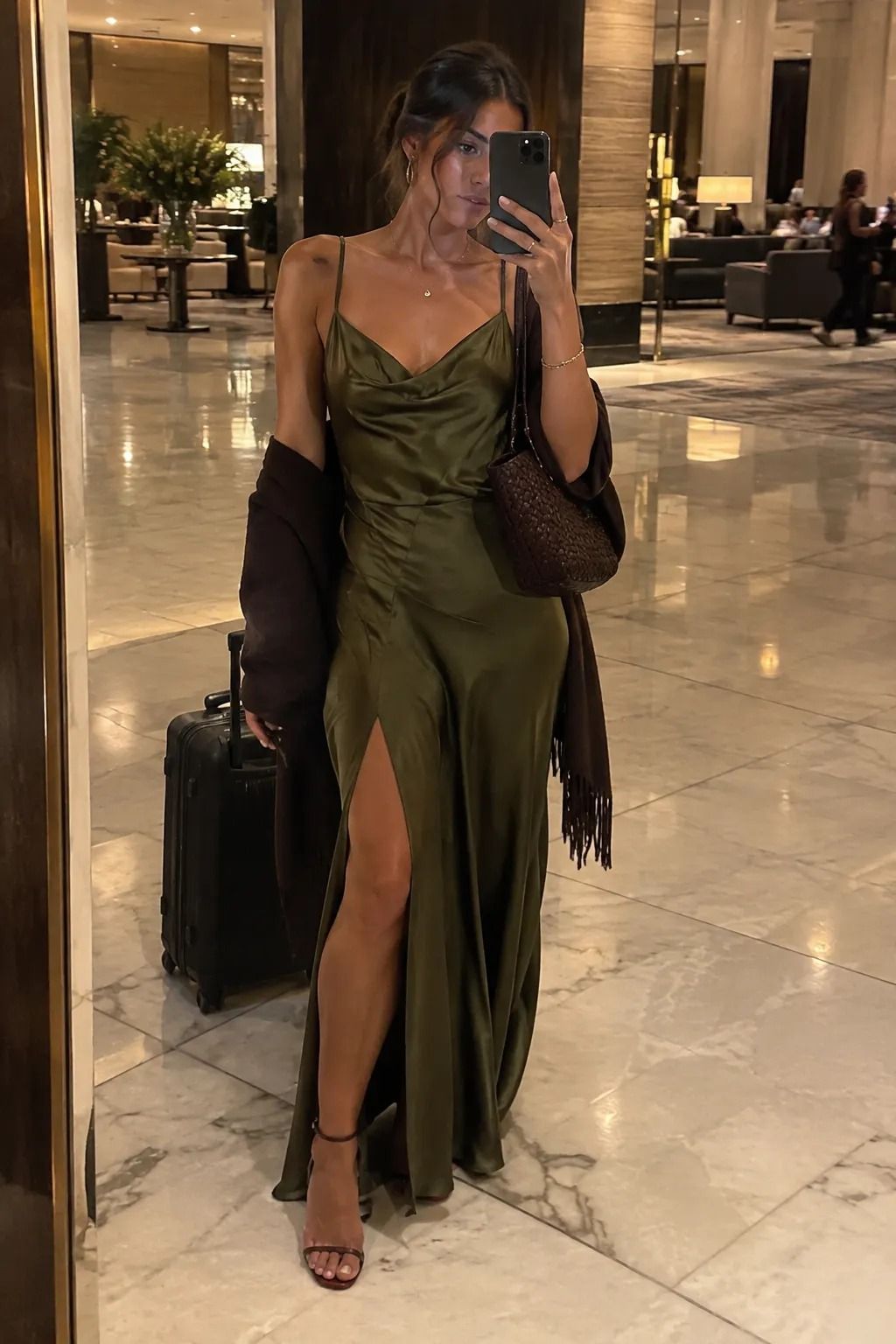
A high slit creates a clear leg line, but the opening should support your pose instead of forcing one. A crepe column gown with a controlled slit photographs well when you’re walking through a hotel lobby or standing beside luggage. The fabric remains smooth while the opening adds motion.
For a mirror portrait, place one foot slightly ahead of the other and keep the slit visible without pulling the skirt aside. Your phone can cover part of the torso, so the lower line needs to do more work.
I’d skip a second dramatic feature such as a plunging neckline and oversized sleeves. One strong opening is editorial; three can look like separate ideas competing in the same frame.
The shoe matters more than you might expect. A pointed pump lengthens the visual line, while a flat sandal makes the dress feel less formal. Choose the pair that matches the location rather than forcing a red-carpet mood onto a casual setting.
These pearl-gray pump ideas for summer dresses show how a quiet shoe can keep the dress in charge. A slit can feel bold, sleek, and polished when the rest of the outfit stays calm.
11Cape Sleeves Take the Wind
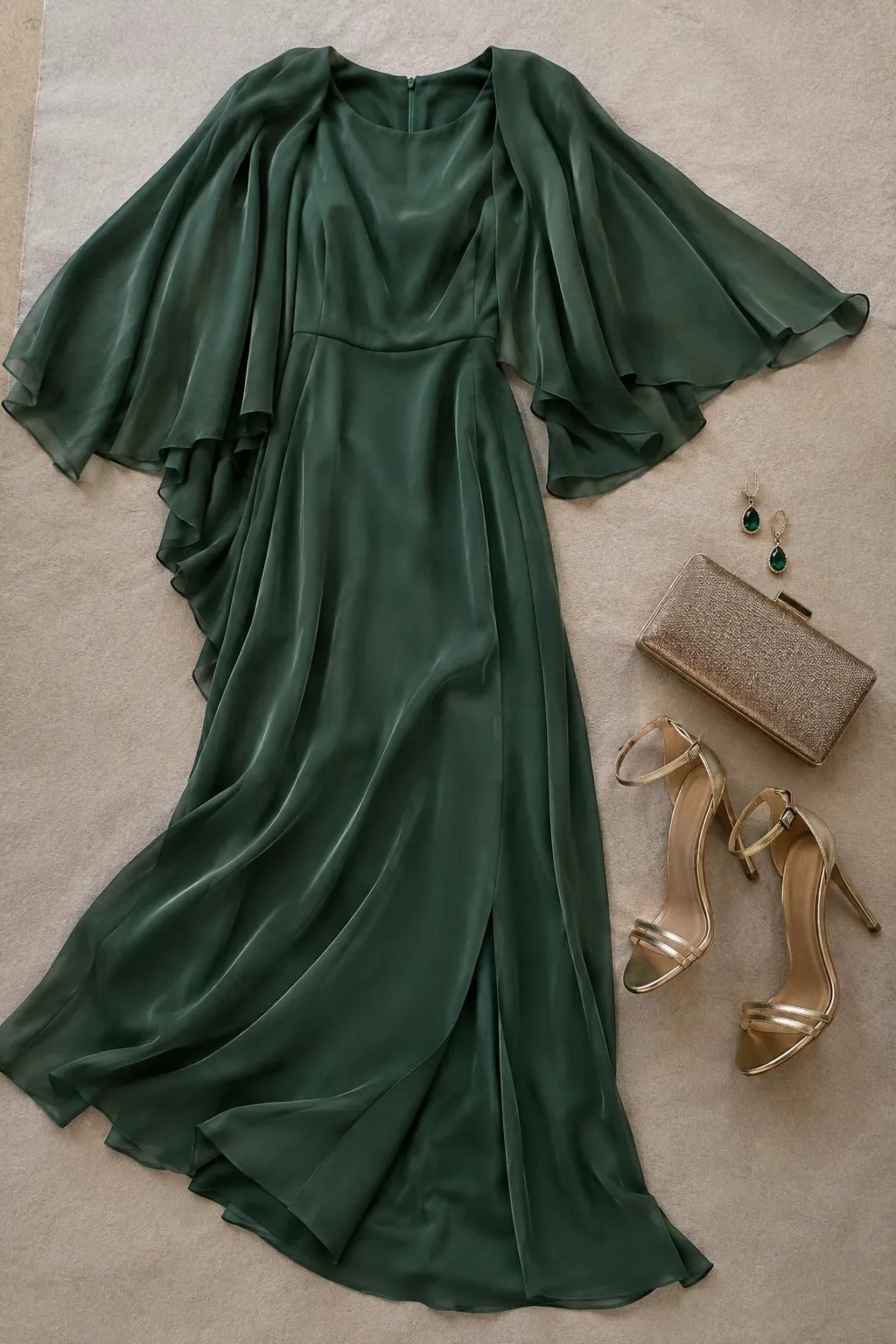
Cape sleeves need a fabric that can lift without becoming stiff. Choose lightweight georgette or a fine crepe with a clean shoulder seam. In a flatlay, spread the cape away from the bodice so the shape is unmistakable.
The viewer should see how the garment moves before noticing the color or accessories.
For a windy outdoor frame, capture the cape from the side rather than straight on. Your body remains visible while the fabric creates a second contour behind you. I call this the Moving Outline Principle: the best cape doesn’t hide your silhouette, it echoes it.
Avoid heavy embellishment at the shoulder because weight can flatten the drape. A single sculptural earring is enough, and your hands can stay free. If the cape is sheer, choose a simple underlayer in a matching tone so the outer shape remains the focus.
A cape dress can look formal without becoming stiff. A short cape sleeve feels contemporary, while a floor-length panel creates a more dramatic entrance.
For another polished proportion reference, explore these black-tie dress silhouettes. You’ll see why one moving element is often more effective than several.
12Corset Bodices, Softened by Simple Lines
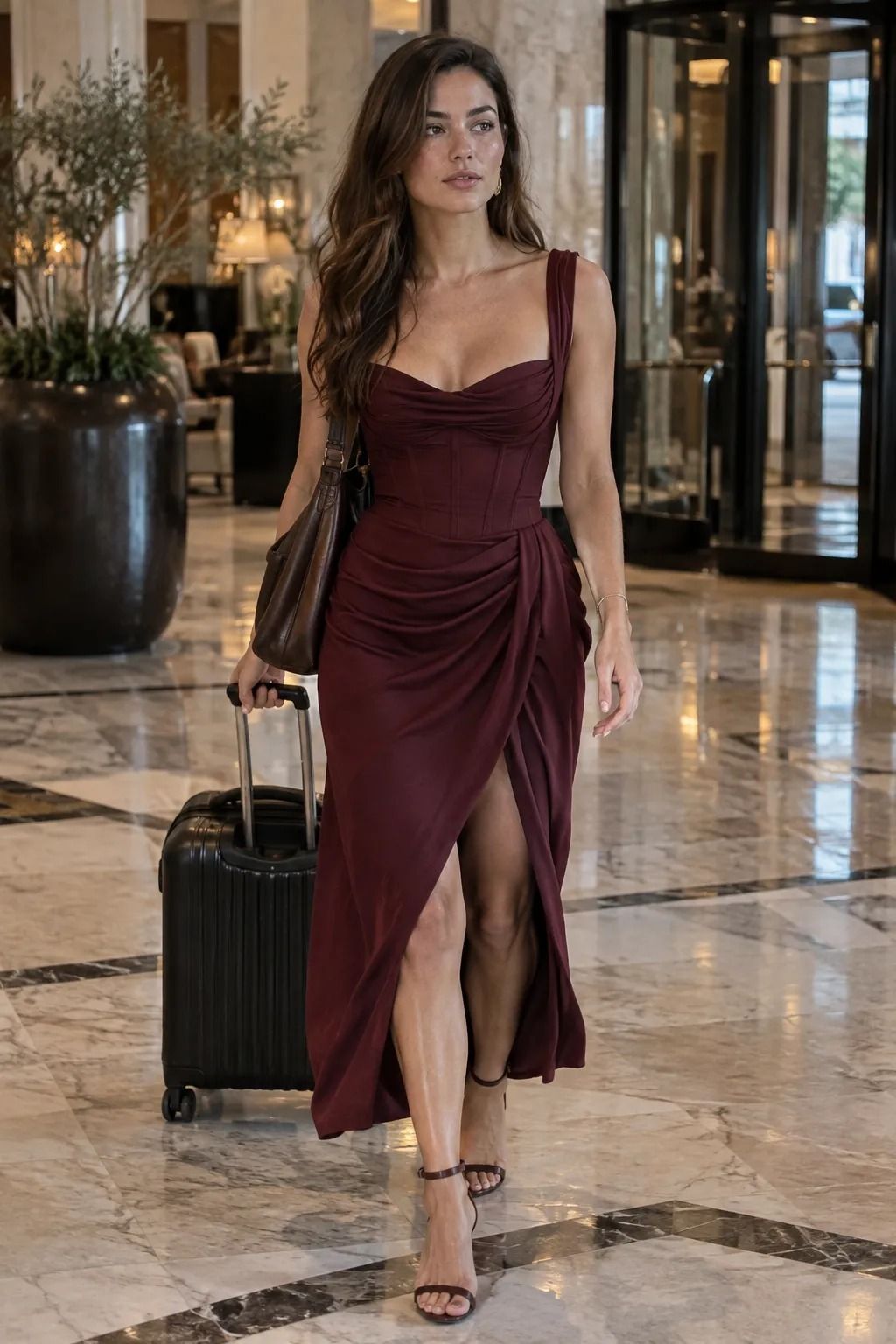
A corset bodice gives structure through seams, panels, and a defined neckline. Look for matte duchess satin or firm crepe with visible boning channels, rather than a glossy fabric that reflects every fold. In a hotel lobby, the marble floor and luggage already create polished lines, so a clear bodice keeps the portrait focused.
Your angle should show the seam work without compressing the bodice. Keep your shoulders relaxed and turn only slightly, so the corset remains architectural. I wouldn’t pair this shape with a heavily decorated skirt if the setting is already formal.
A plain column or restrained A-line skirt gives the bodice space to speak. You can add a soft wrap for movement between locations, but the wrap should come off when the structure is the subject. A small clutch and simple shoe will keep the result refined, sculptural, and wearable.
If you’re comparing formal silhouettes, these black-tie wedding guest dress proportions are a helpful reference. The goal isn’t to copy a formal guest look. It’s to understand how neckline, waist, and hem share attention.
13Let Ruffles Create the Motion
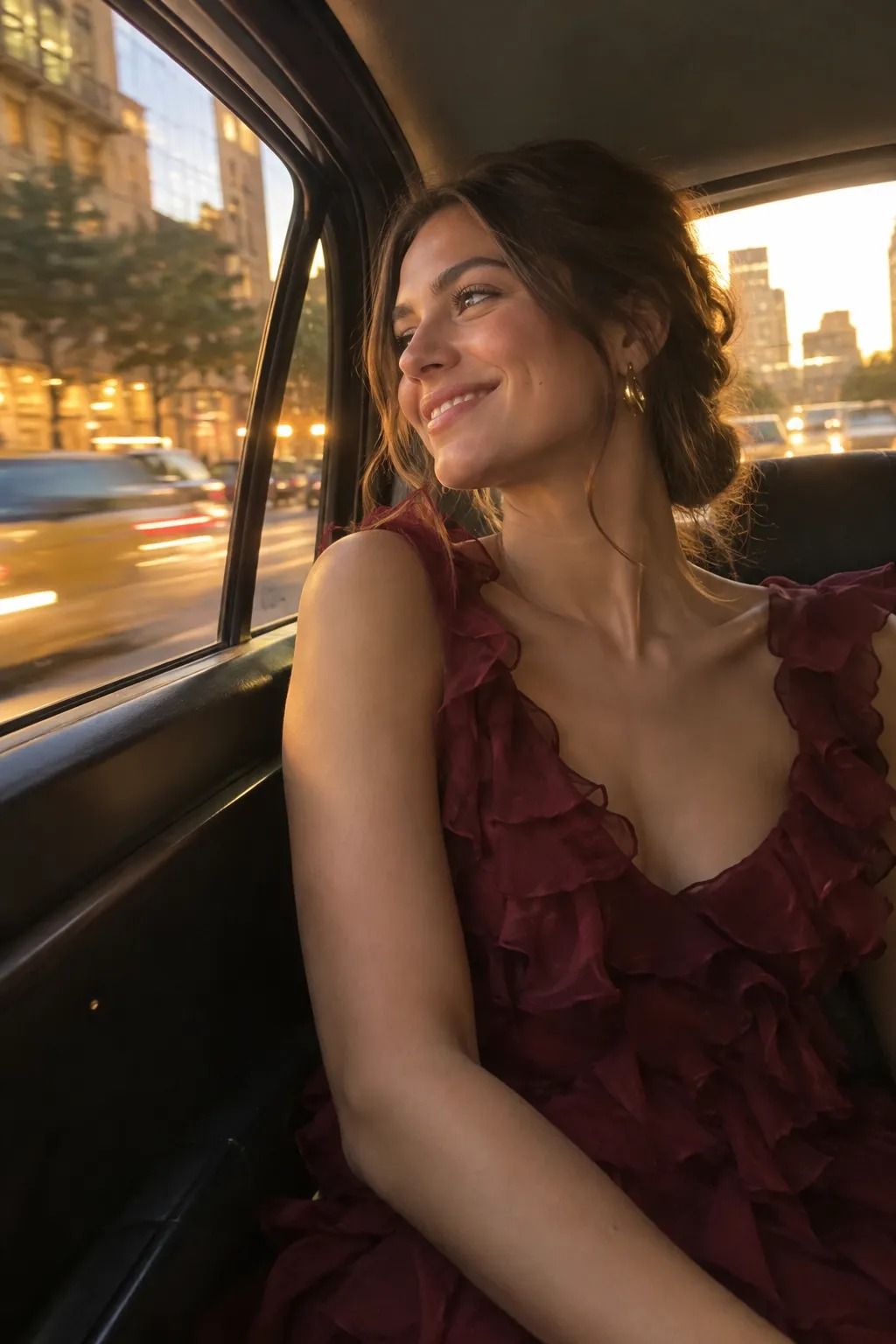
Ruffles photograph best when they have a clear direction.
14Should Couples Match Their Dress Colors?
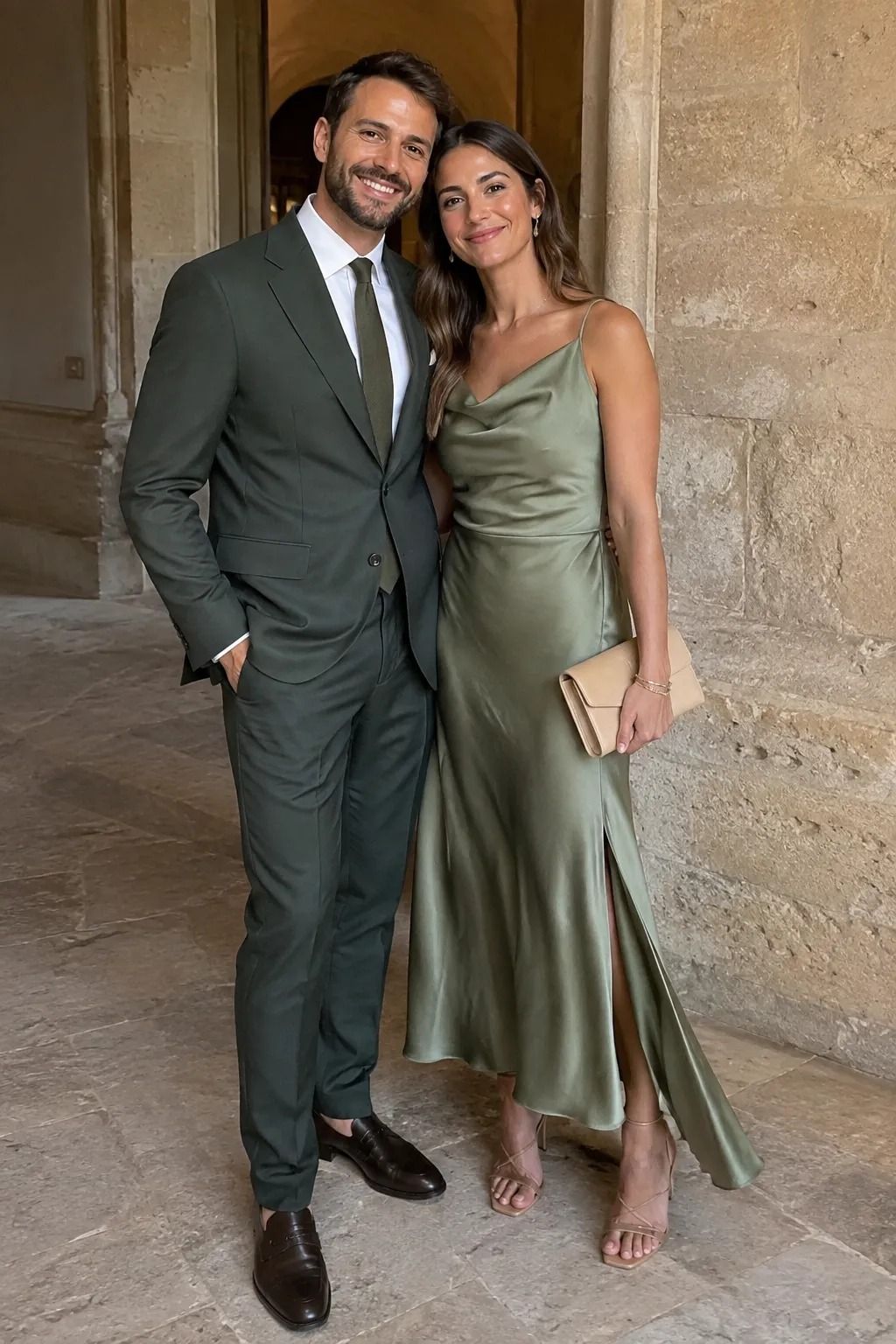
Matching doesn’t mean wearing identical colors. A better approach is to choose nearby tones, such as ivory with soft beige, dusty blue with charcoal, or terracotta with warm brown. The color relationship should be visible in the frame while each person keeps a separate silhouette.
For a clean studio portrait, let one outfit carry texture and the other carry color. A brushed cotton suit beside a smooth satin dress creates enough contrast without looking staged. Your photographer can place you shoulder to shoulder, then create a second composition with one person slightly behind the other.
Avoid exact matching red or bright white because small differences in shade can look accidental. If one person wears a pattern, the other can repeat just one color from it through a tie, shoe, scarf, or jacket.
A travel-ready pairing can remain relaxed. These favorite travel dress ideas show how coordinated color can stay comfortable and effortless. You’ll look connected without appearing dressed in a uniform.
15Saree-Inspired Draping: The Long-Line Finish
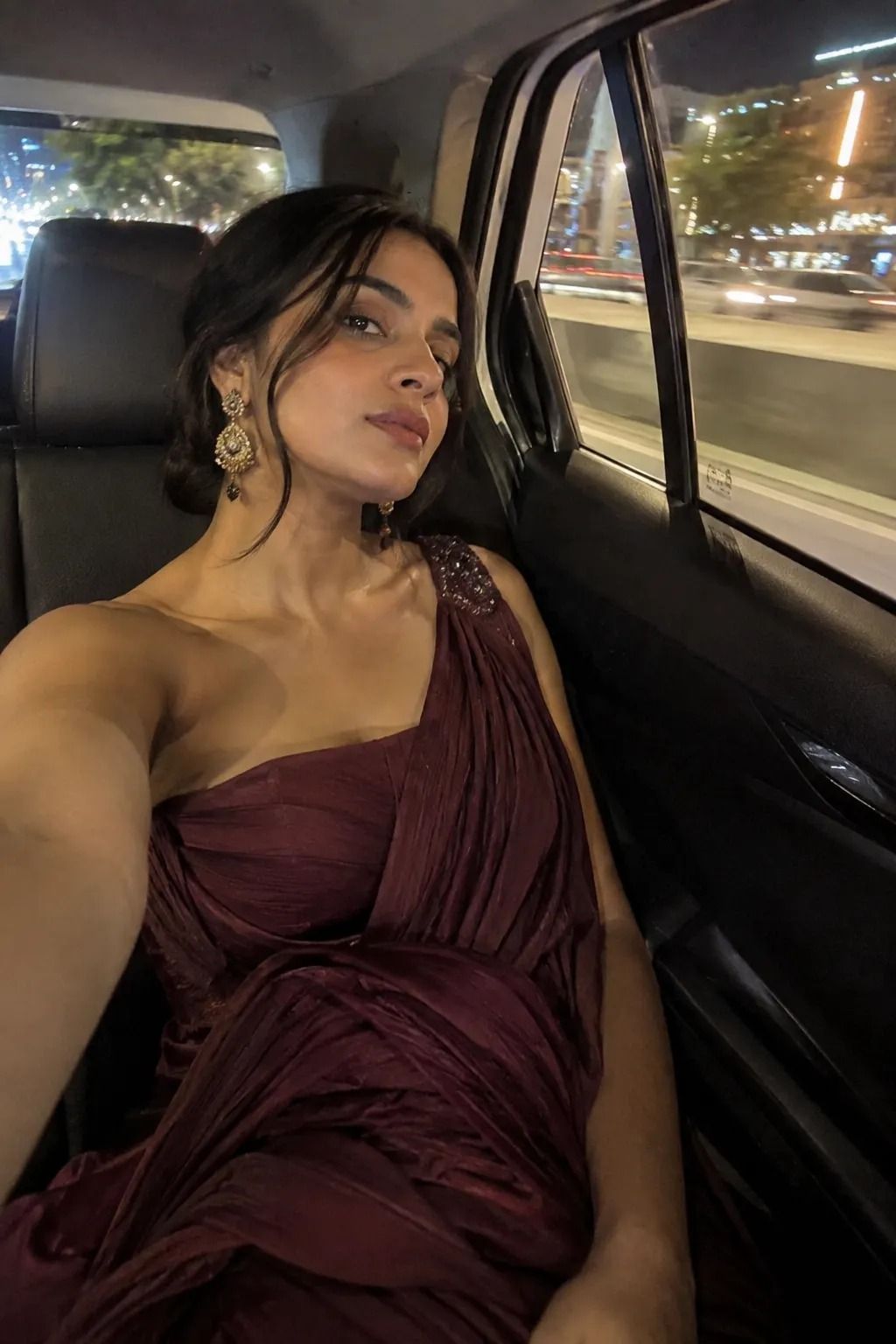
A saree-inspired gown gives you a long draped panel that can move through the frame like a ribbon.
The Three-Read Camera Rule
When I judge a pre-wedding dress, I look for three quick reads: the silhouette from a distance, the material at medium range, and one intimate detail close to the face or hands. If a dress only works in a close-up, it won’t carry a walking frame. If it only works from far away, the photograph may feel empty when expressions become the focus.
The strongest choices don’t depend on a complicated location. A satin slip can hold a quiet room. A red dress can give a rooftop its point of view.
A cape can create movement even when the pose is simple. You don’t need every trend in one outfit, and I wouldn’t combine sequins, a dramatic slit, and oversized sleeves unless the styling brief truly calls for excess.
Think about the second read as well. A matte fabric may look understated from across a room but reveal beautiful texture at medium distance.
A glossy finish catches light quickly, while crepe creates a smoother, quieter line. If you’re uncertain, ask which material will still look intentional when the light changes.
I also care about how the dress behaves between photographs. A long train may look striking in one frame but become difficult when you’re walking, sitting, or turning toward your partner.
A softer hem can give you more usable poses. The practical choice isn’t always the quietest one, but it should give you more than one good option.
The Questions I Get Asked Most
What is the best dress style for a pre-wedding photoshoot?
I’d start with a satin slip, clean crepe gown, or softly draped dress because the silhouette stays visible while you move. For a polished evening mood, compare these formal winter wedding guest dresses. Choose the shape that gives you more than one workable angle.
Where can I find a pre-wedding photoshoot dress on a budget?
I’d check local formalwear shops, second-hand boutiques, and rental studios before ordering a new gown. A simple crepe midi dress can photograph better than a heavily decorated option. I’d inspect the lining, hem, and zipper, then compare the total cost with these summer dress silhouettes.
How much does a pre-wedding photoshoot dress cost?
I’d plan around the table ranges rather than one fixed price. Borrowing may cost little, while renting or buying a formal gown can run into several hundred dollars. I’d protect the budget for fit, hem adjustments, and shoes because those details affect how confidently the dress moves.
Can I create a polished look on a budget?
Yes, I’d let one strong dress carry the frame. I’d borrow jewelry, choose a clean color, and use the location for texture instead of adding more accessories. A second-hand satin or matte jersey dress can work beautifully when the hem and neckline are in good condition.
Is a dramatic dress worth it for a small photoshoot?
I think it can be, provided the dramatic feature creates movement or a clearer outline. A cape, slit, or bold sleeve can add variety without requiring several outfits. I’d keep the rest restrained so the image doesn’t become crowded.
A quiet shoe and clean styling are often enough.
Should couples match their dress colors?
I’d coordinate rather than match exactly. Choose related shades or repeat one small color detail, then keep the silhouettes different.
Charcoal with ivory, brown with copper, or navy with pale blue can feel connected without looking like a uniform. Your location should still remain visible.
Where I’d Start First
If I had to pick one, I’d start with the satin slip dress. Its uninterrupted line catches movement without demanding a complicated pose, and the same gown can work in a flatlay, close portrait, or sunset walk. Pin the satin look for later, then choose your location around its texture.