
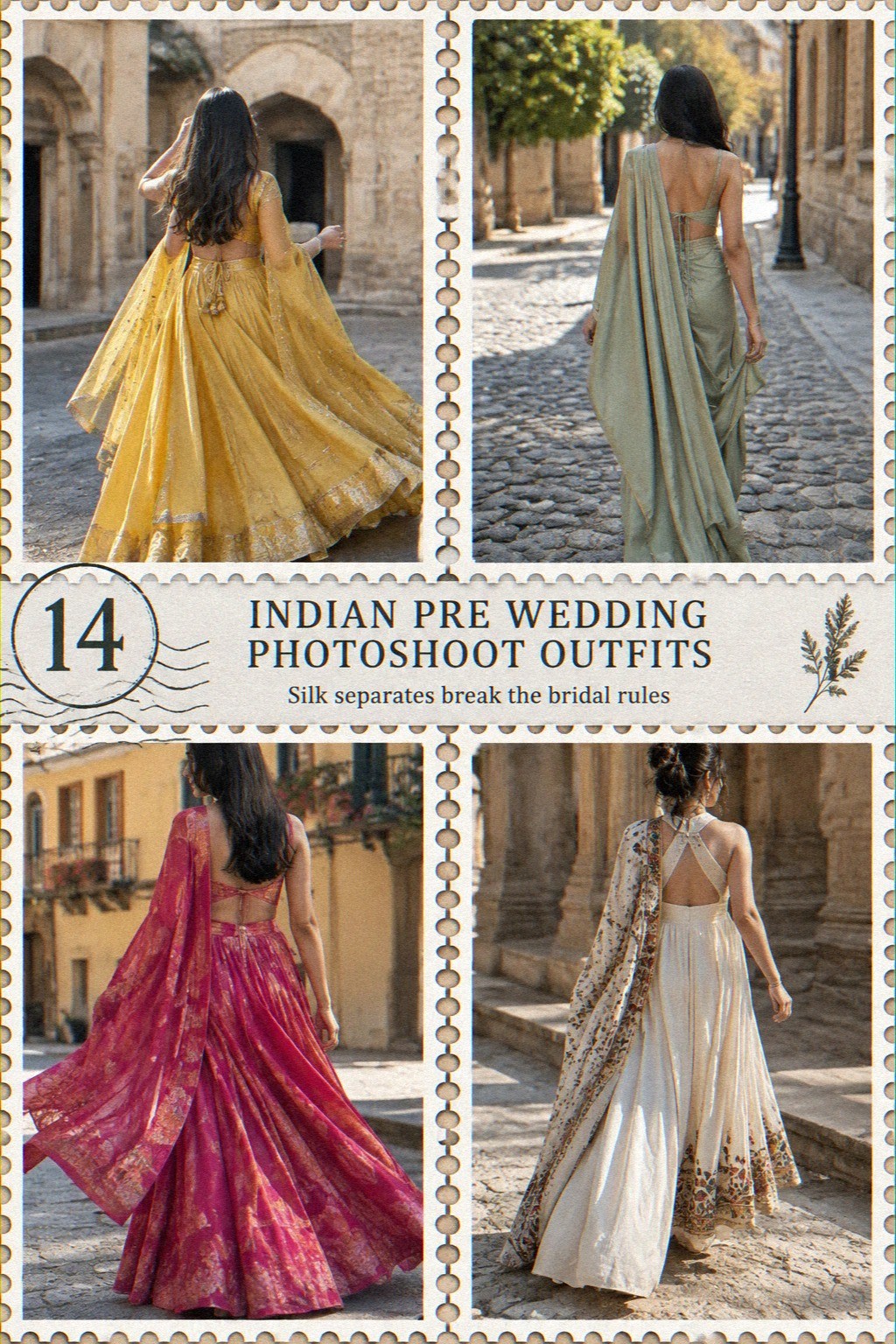
The useful test for a pre-wedding photoshoot outfit isn’t whether it looks elaborate on a hanger. It’s whether the silhouette, fabric, and accessories still read when you move. Silk, organza, velvet, chikankari, and structured tailoring can all create memorable frames without relying on a lehenga.
You’ll find fourteen distinct looks here, each matched to a setting, pose, and styling decision. The best value usually comes from choosing pieces you can restyle after the shoot. For more camera-ready inspiration, browse these pre-wedding photoshoot dresses that look stunning on camera.
- Start with a Silk Saree for Close-Up Texture
- Could a Pastel Sharara Set Be Your Easiest Movement Look?
- Haldi Style: Choose a Mirrorwork Anarkali
- Ivory Organza or Pearl Detail?
- Let a Jewel-Toned Velvet Suit Own the Flatlay
- Build a Candid Frame Around a Printed Coordinated Set
- Can a Cape-Style Gown Feel Indian and Modern?
- Dhoti Pants and a Peplum Top Define the Waist
- Chikankari Keeps Couple Portraits Calm
- Ruffles or a Belt: Give the Saree a Clear Shape
- At the Cafe, Let a Floral Anarkali Feel Lived-In
- Choose a Yellow Silk Kurta for Contrast
- Would an Indo-Western Skirt Give You the Strongest Back View?
- Bandhani Dupatta Over a Structured Jumpsuit
1Start with a Silk Saree for Close-Up Texture
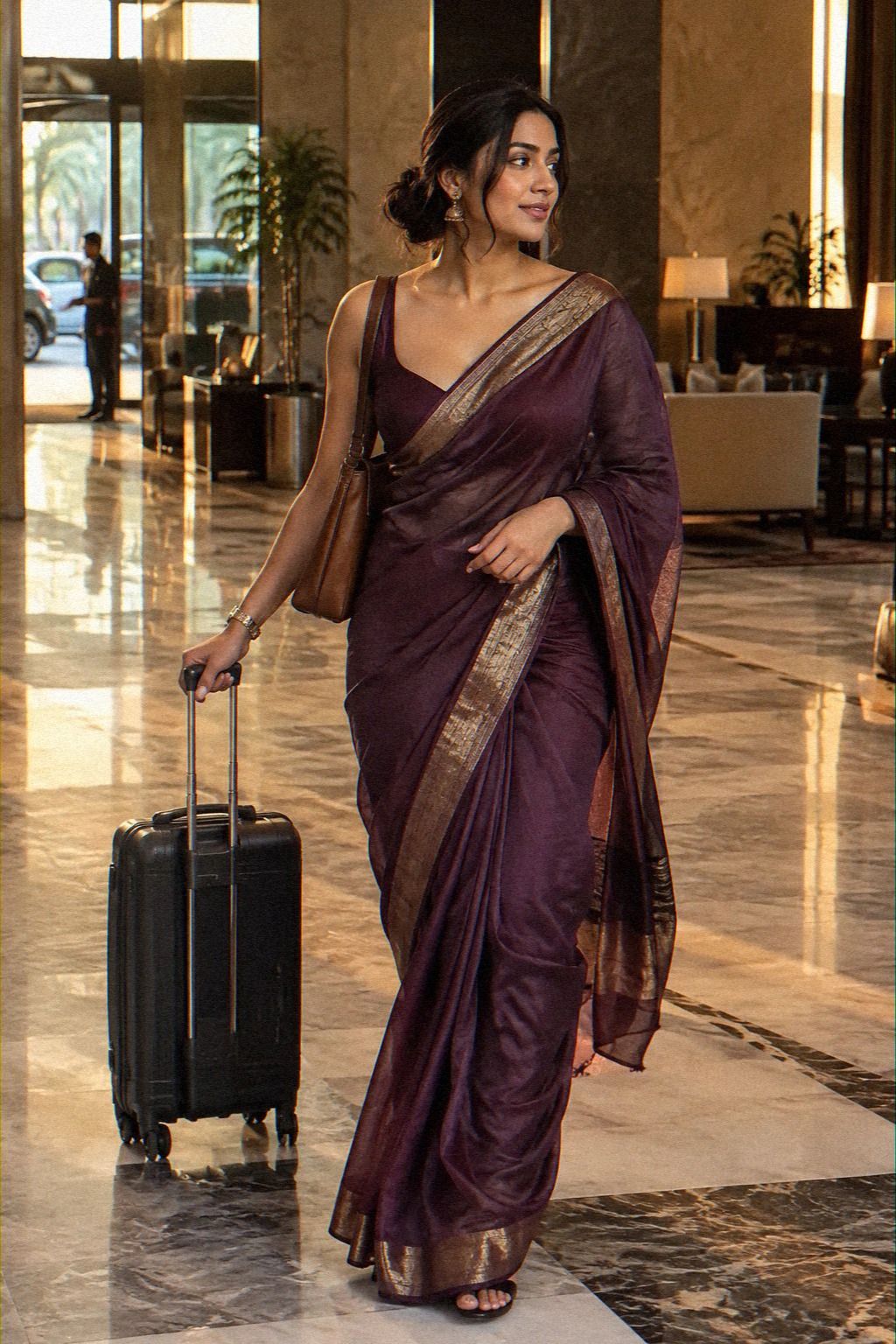
A silk saree gives you polish without making the photograph feel overworked. For a hotel-lobby frame, choose a Kanjeevaram silk saree or lightweight Banarasi silk with a restrained border, then let the accessories handle the close-up detail. Your pallu can trail beside the luggage, while gold bangles and a compact potli bag create a subtle travel story.
Keep your fitted blouse clean through the shoulders so the saree doesn’t collapse while you’re walking. A low bun, small jhumkas, and pointed flats keep the silhouette elegant but practical. I’d skip an oversized necklace because the cerused white oak floor and suitcase already provide visual weight.
If you’re working with a limited budget, restyle a saree you already own with a different blouse or belt. The cost stays controlled, but the frame can still feel refined and luminous. A good saree is often worth the spend because it can work for portraits, family events, and future celebrations.
This camera-ready dress guide can help you compare the same principle across silhouettes.
2Could a Pastel Sharara Set Be Your Easiest Movement Look?
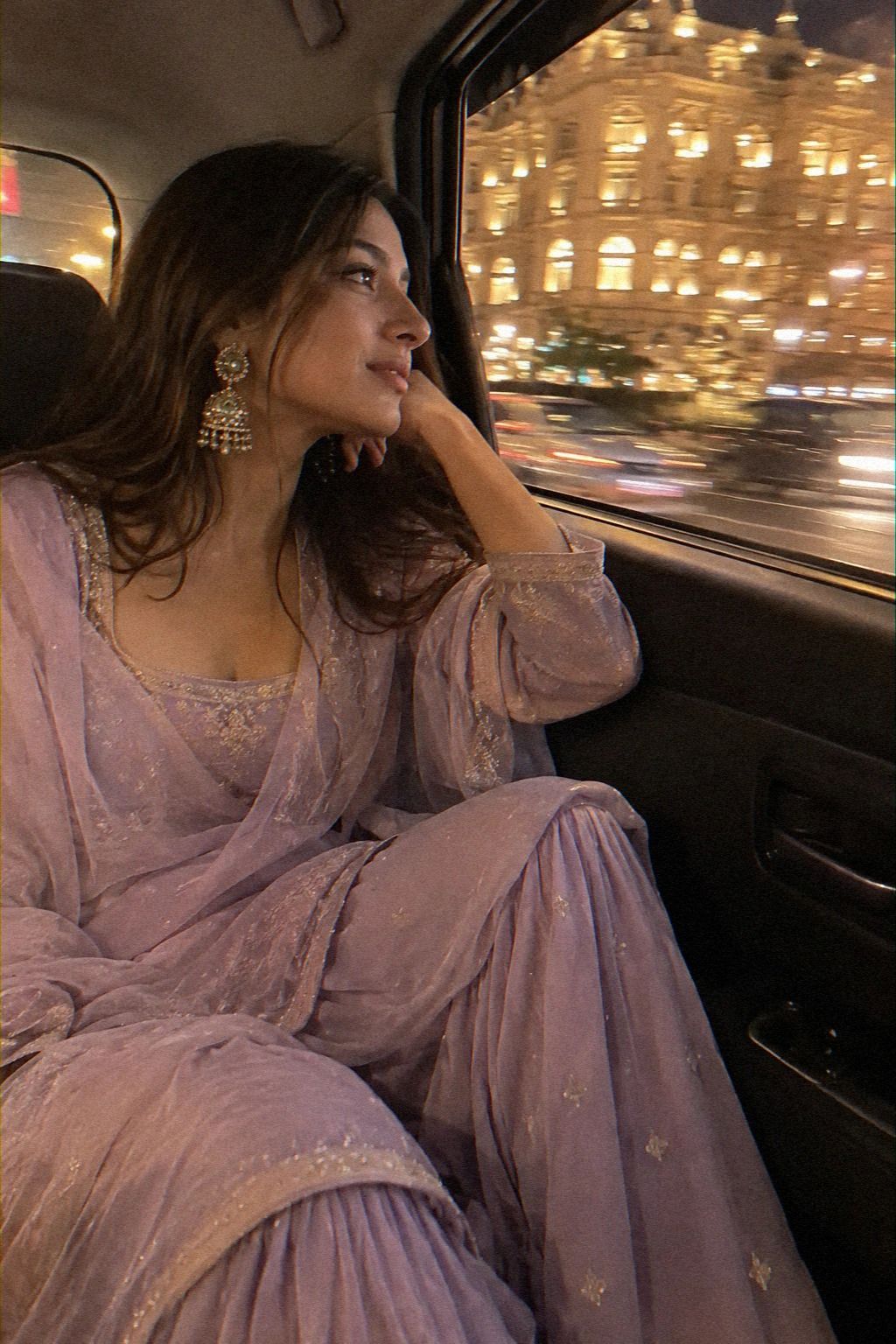
A pastel sharara set works when you want movement without committing to a full skirt.
3Haldi Style: Choose a Mirrorwork Anarkali
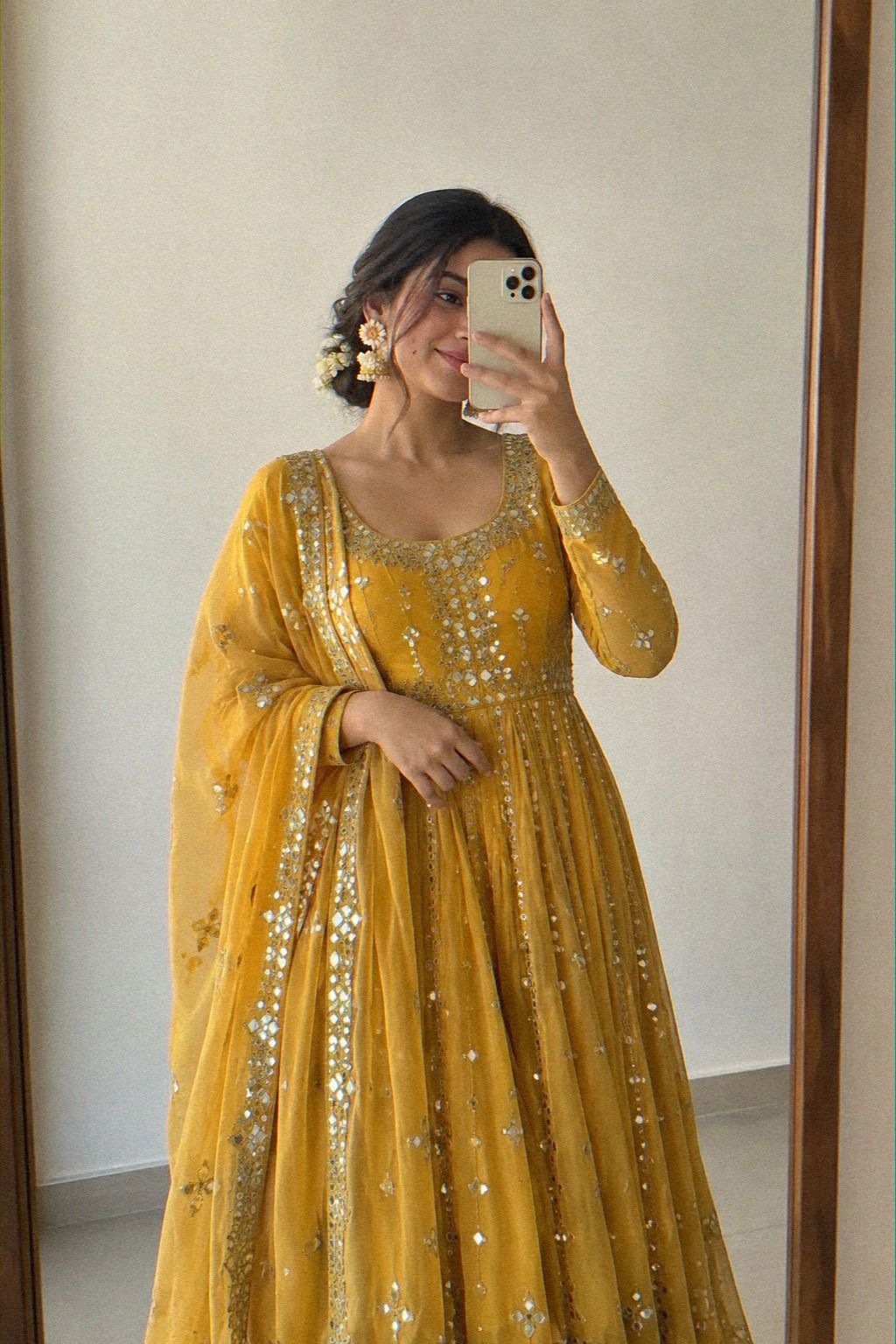
For a mirror selfie, a mirrorwork Anarkali gives you texture that survives a plain background. Pick sunflower yellow cotton silk with small reflective discs rather than heavy panels from neckline to hem. The details will catch light around your face without making the whole outfit noisy.
Choose three-quarter sleeves if you want the mirrorwork cuffs near your wrists to appear beside the phone. A fitted seam under the bust will preserve your shape when the phone is held high, but don’t cinch the outfit too tightly. The most flattering effect comes from a clean line and easy movement.
Keep your jewelry focused on one area. A stack of glass bangles, tiny floral earrings, and a low braid support the Haldi mood without competing with the Anarkali.
A little yellow powder on the cheek is enough. Good styling can do more than a bigger budget.
If you’re comparing ready-made and custom options, check the lining and sleeve construction before looking at decoration. A slightly simpler Anarkali with a clean fit often offers better value than one covered in heavy embellishment. These stunning photoshoot dress ideas are useful when you’re deciding how much detail the setting can handle.
4Ivory Organza or Pearl Detail?
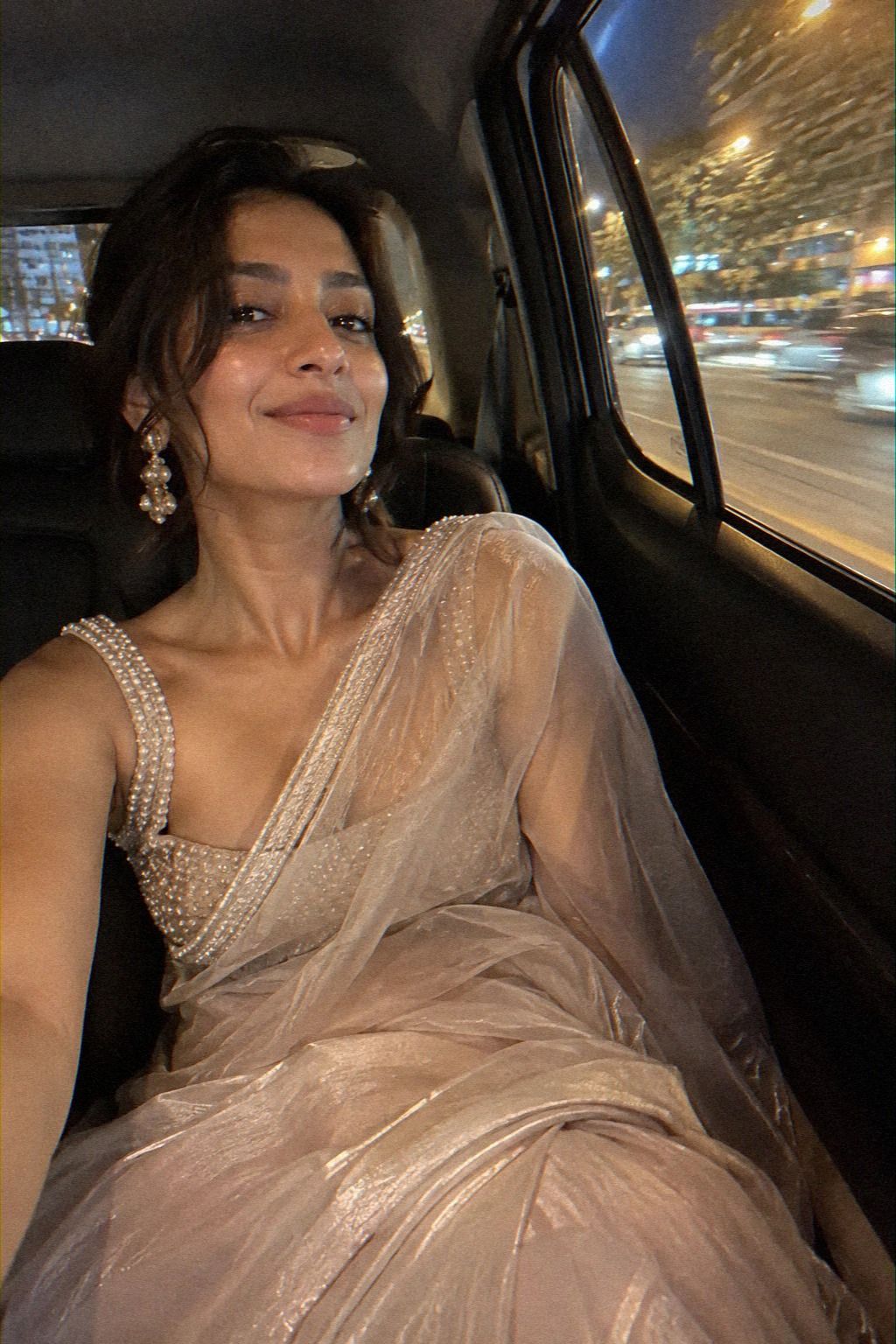
An ivory organza saree is made for reflected light, especially when you’re seated in a taxi with city lights behind you.
5Let a Jewel-Toned Velvet Suit Own the Flatlay
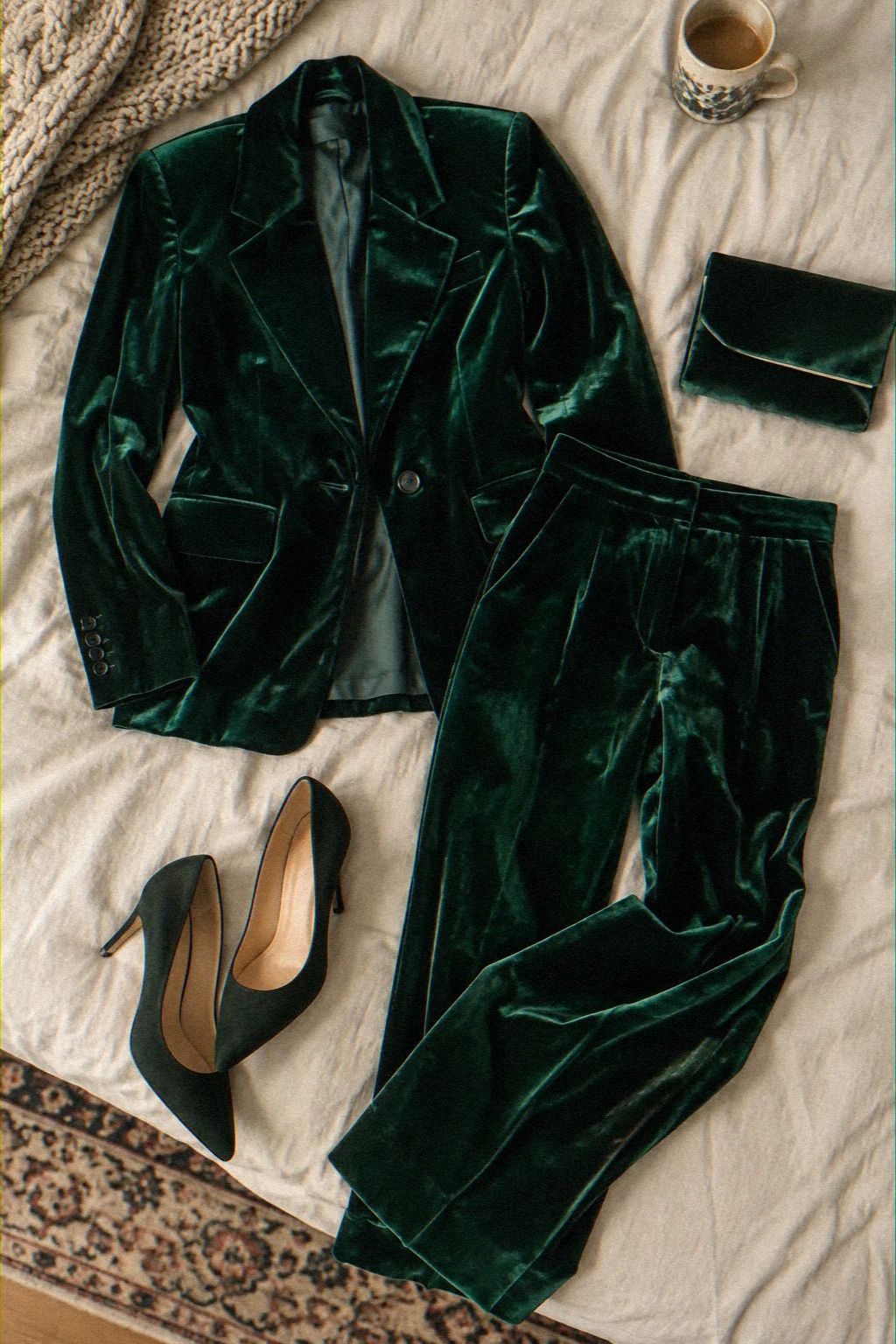
A jewel-toned velvet suit photographs richly when the pieces are separated in a flatlay. Choose emerald velvet, aubergine velvet, or deep sapphire rather than a pale shade that loses depth against a light background.
Lay out the velvet jacket, tailored trousers, blouse, and jewelry with enough space around each item. A compact embroidered clutch can add one focal point, but avoid filling every gap with accessories. The viewer should understand the outfit immediately.
Velvet has a strong visual presence, so keep the jewelry crisp: kundan earrings, a slim ring, or one antique-gold bangle. If the suit includes a long jacket, pair it with a fitted base layer so the proportions don’t become boxy.
The price can vary widely. A ready-made velvet suit may offer better value than commissioning a full custom version, especially if you’ll wear the pieces separately.
This look is dramatic, saturated, and sophisticated, but the investment stays sensible when every garment has a second use. For more polished silhouettes, browse these camera-friendly dress references.
6Build a Candid Frame Around a Printed Coordinated Set
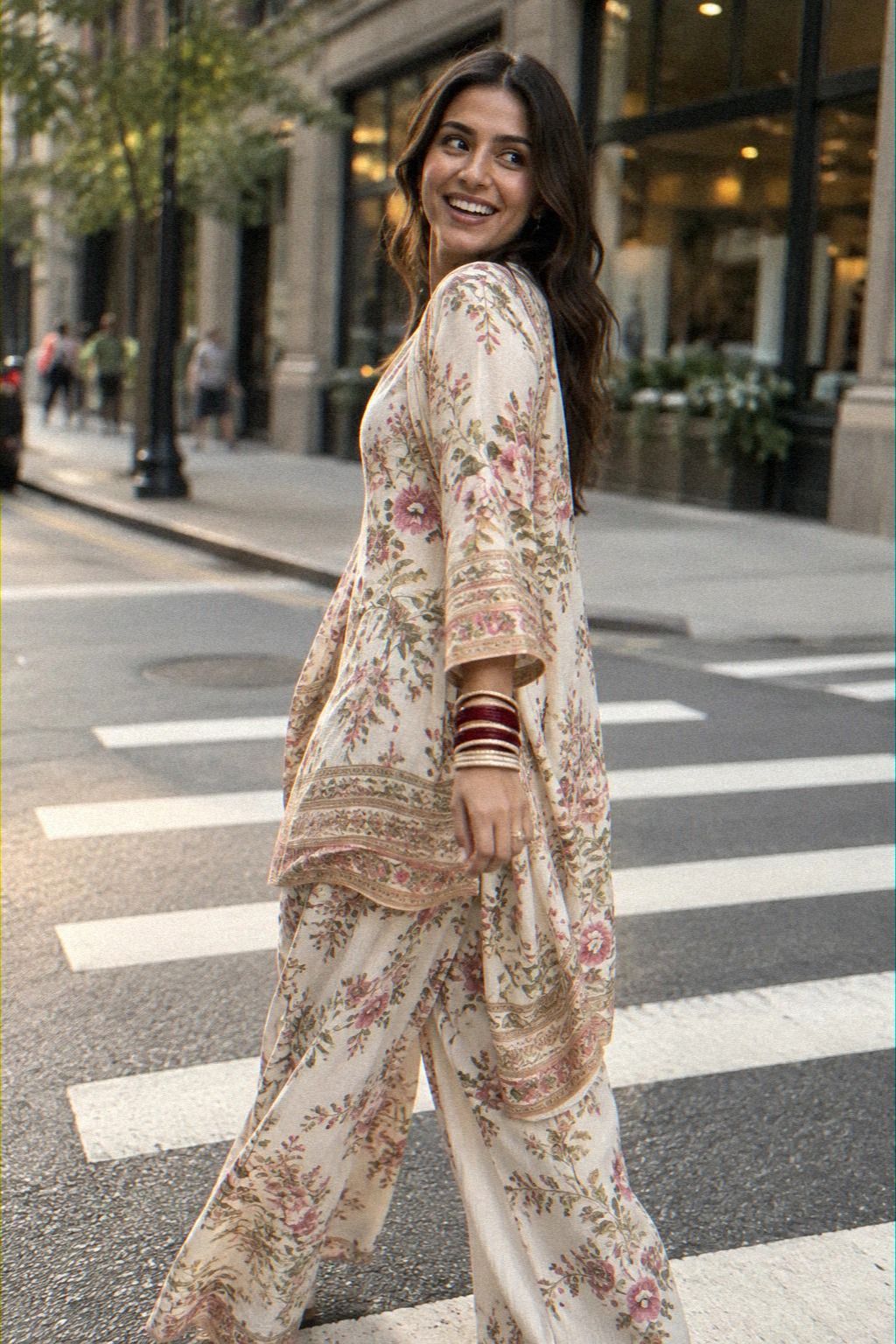
A printed coordinated set is a strong choice for a candid crosswalk photograph because the matching pieces create a clear silhouette while you’re moving.
7Can a Cape-Style Gown Feel Indian and Modern?
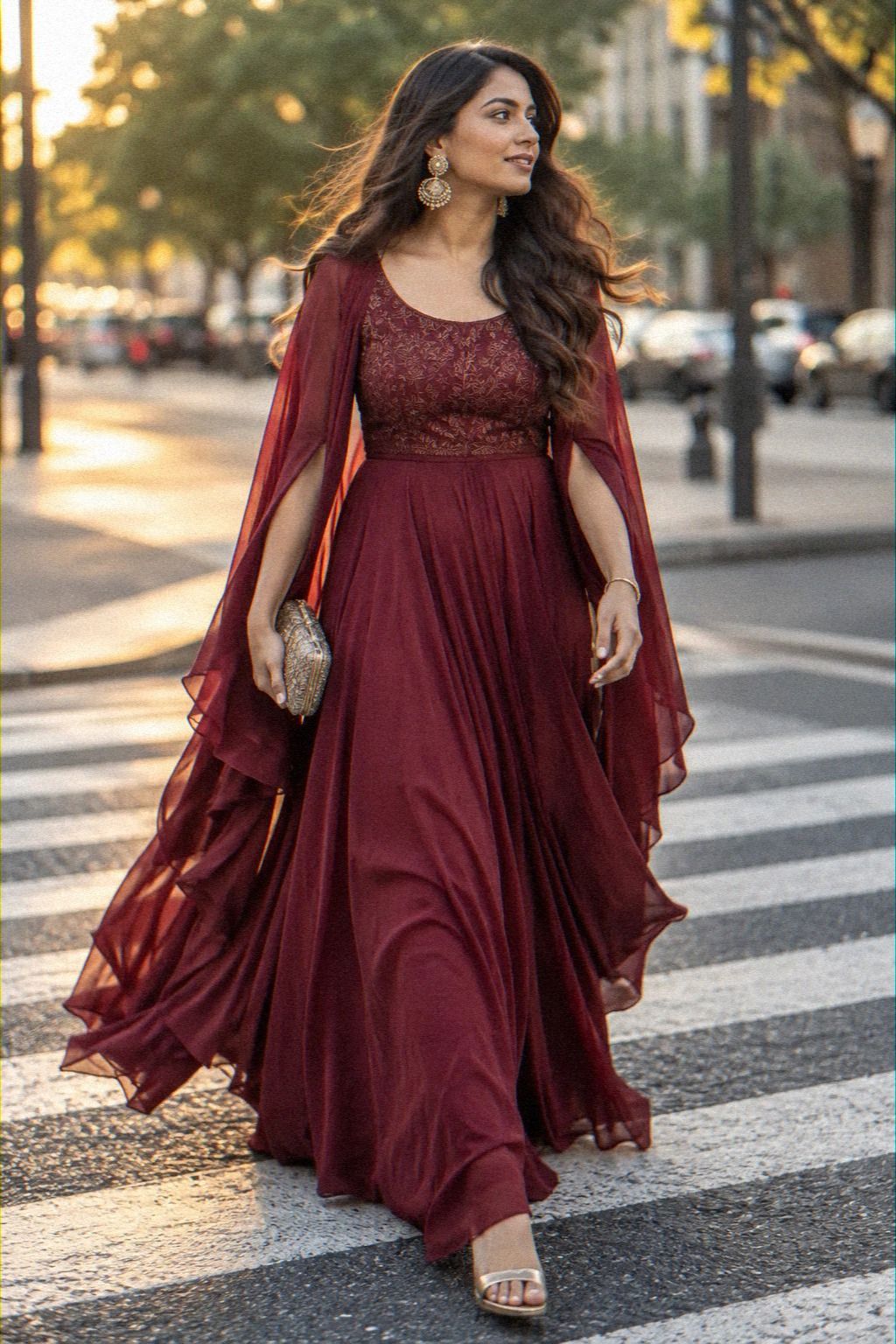
A cape-style gown brings Indian detailing into a modern street silhouette. Look for a crepe gown with a sheer embroidered cape, clean shoulder construction, and a hem that won’t catch on uneven pavement.
The cape should move independently from the base dress. That separation creates a striking frame when you turn or walk, while the fitted foundation keeps the proportions polished. Choose jhumkas or sculptural earrings instead of a large necklace because the neckline and cape already provide enough interest.
For a shorter shoot, this can be worth the rental cost. You get a statement silhouette without storing another formal garment afterward. Ask about alteration limits, cleaning fees, and return timing before committing.
A cape gown is especially effective when the background is simple. Against a plain wall, a quiet street, or a stone staircase, the movement reads clearly.
The overall effect is confident, modern, and romantic. If you’re weighing other dramatic shapes, compare this with these striking dresses for pre-wedding photographs.
8Dhoti Pants and a Peplum Top Define the Waist
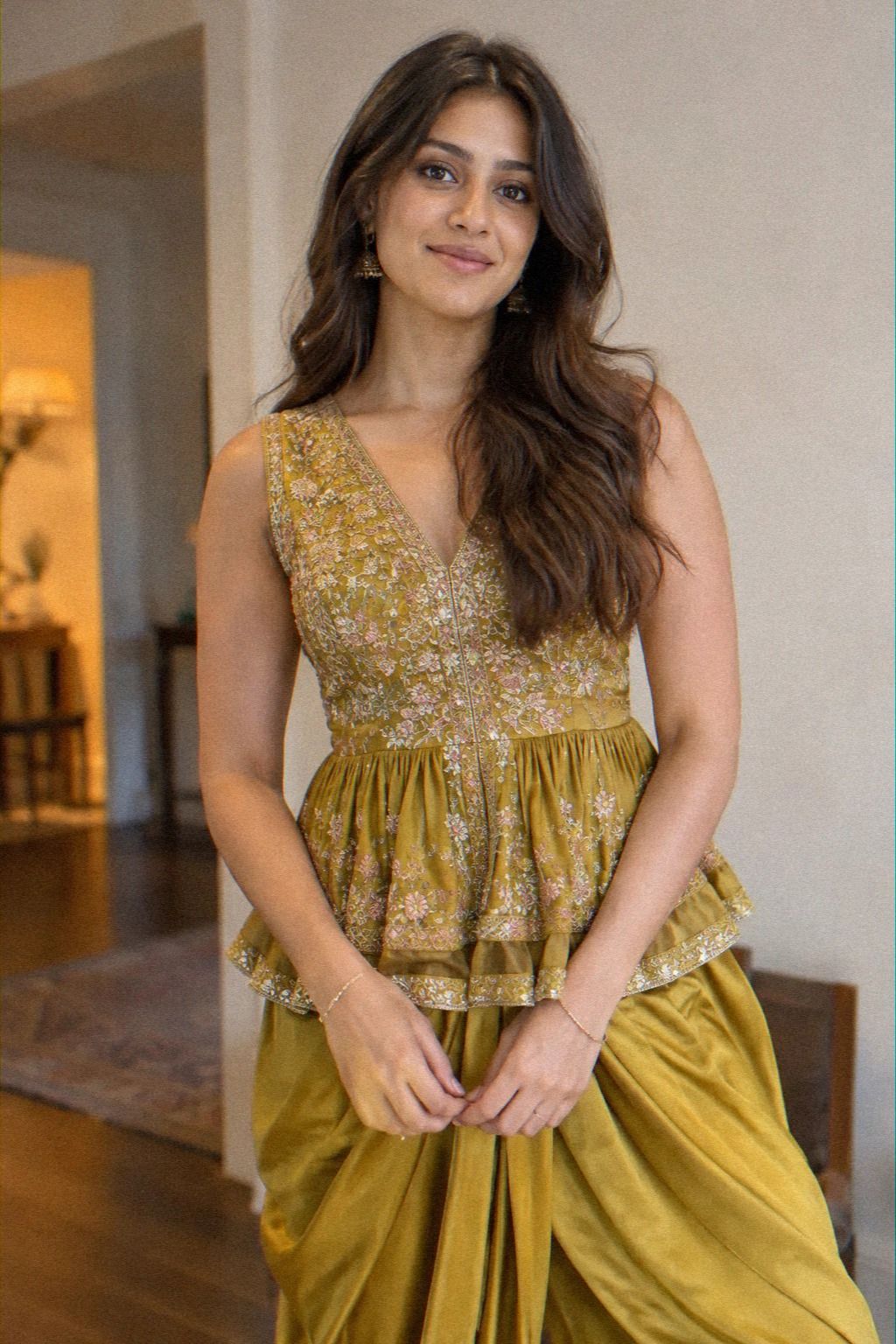
Dhoti pants and an embroidered peplum top give you shape around the waist while keeping the lower half relaxed. For a clean studio portrait, choose matte crepe dhoti pants with soft folds and a peplum top embroidered in tonal thread.
The proportions matter more than the amount of embroidery. I’d keep the peplum hem just above the widest part of the trousers because a longer top can blur the silhouette. Add small chandbalis and a neat ponytail so your face remains the center of the frame.
If you’re wearing this as a wedding look, deep coral, teal, or antique-gold thread will read better than pale embroidery against a neutral background. You’ll look dressed up, but you won’t lose the ease that makes the pose feel natural.
This can be an affordable alternative to a heavily embellished lehenga. The dhoti pants are relaxed, the top creates structure, and both pieces can be worn separately.
That combination gives you strong value when you’re planning more than one event. These beautiful photoshoot dress alternatives offer more ways to balance structure and movement.
9Chikankari Keeps Couple Portraits Calm
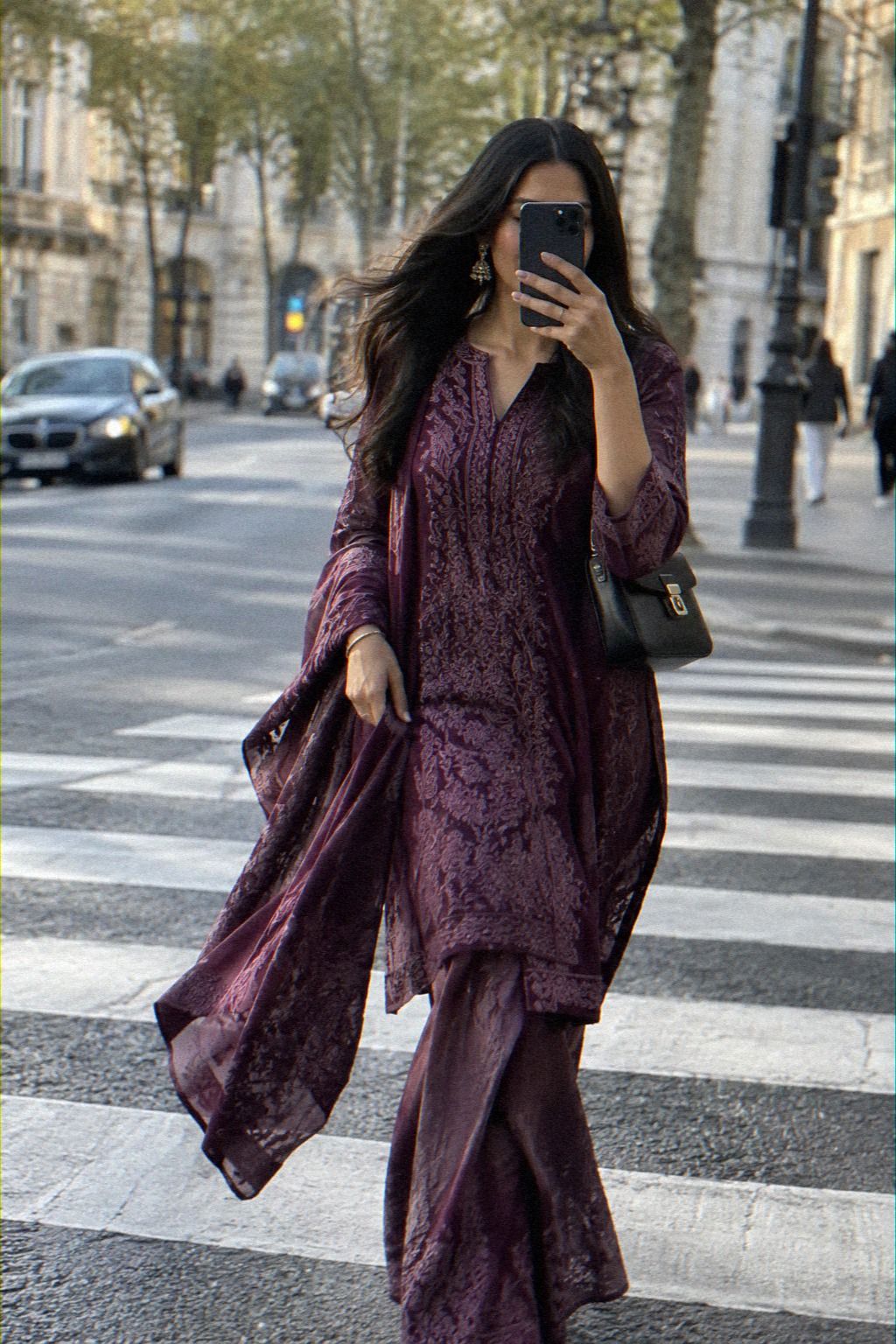
A monochrome Chikankari suit creates a calm base for couple portraits, especially when the background includes movement. Choose white-on-white Chikankari cotton with a straight kurta, narrow pants, and a matching dupatta.
Your partner can wear a related tone, such as ivory or pale stone, without copying the exact outfit. I’d keep the embroidery delicate so the couple’s body language remains visible. Small pearl studs or silver jhumkas will catch light without turning the frame into a jewelry portrait.
For a crosswalk selfie, drape the embroidered dupatta over one shoulder and leave your hands free. If you’re coordinating with your partner, use one shared detail, such as an ivory pocket square or matching white sneakers. You’ll get harmony without looking like you bought a uniform.
Chikankari is often worth considering when the shoot needs a softer, more understated mood. It feels tactile, fresh, and graceful, and the outfit can continue into daytime celebrations after the photographs are finished. This refined dress inspiration works well for similarly quiet styling.
10Ruffles or a Belt: Give the Saree a Clear Shape
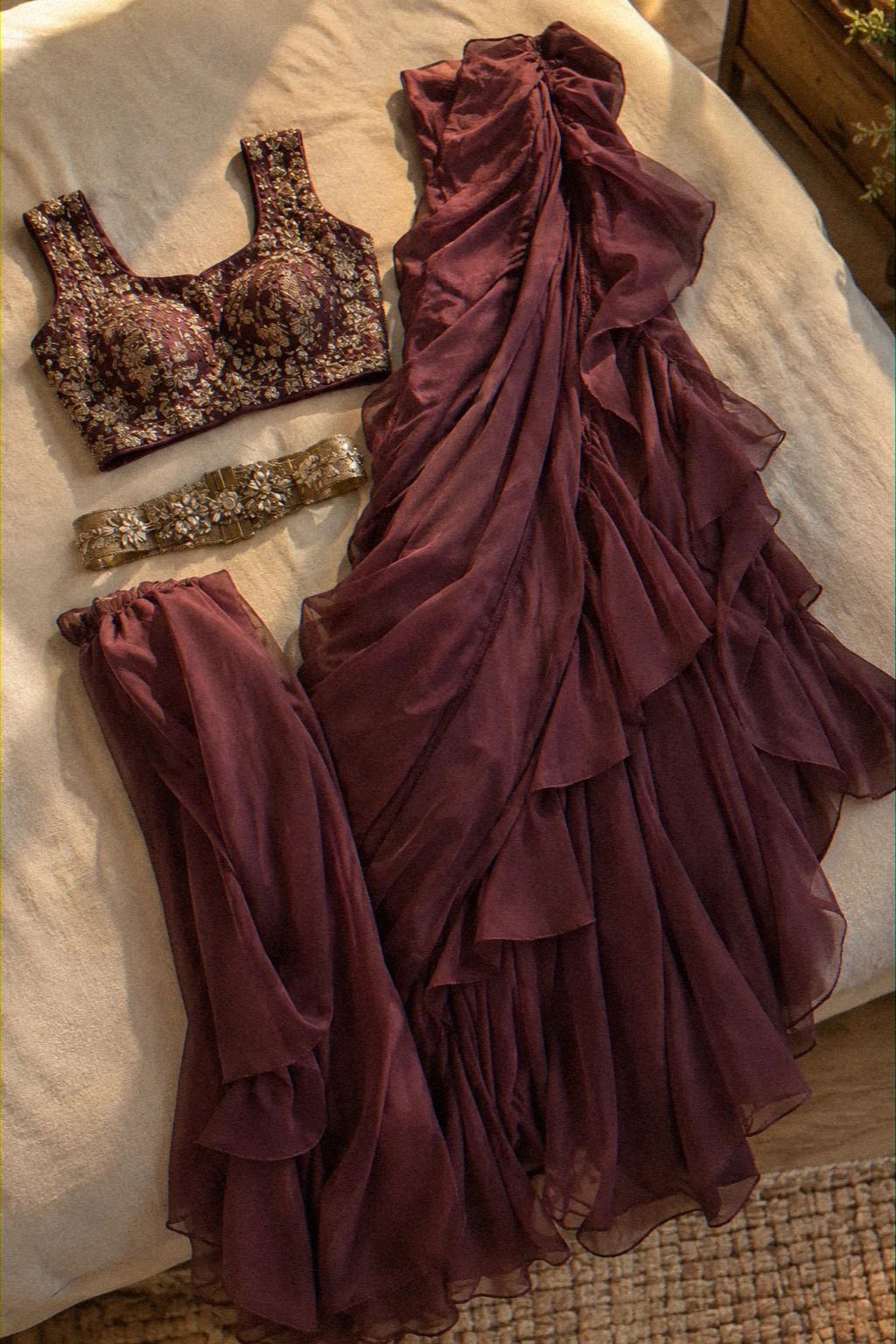
A ruffle saree gives you a saree silhouette with more movement, while a sculptural waist belt keeps the layers visually controlled. For a flatlay, separate the chiffon ruffle saree, structured belt, blouse, and jewelry so every piece is identifiable.
Fold the ruffled edge in a loose curve instead of stacking it flat. That shape shows why the saree works. The belt should be firm enough to hold the drape but not so wide that it hides the blouse.
Choose a matte metal finish or embroidered fabric rather than a glossy belt that reflects every light source. If you’re wearing the look for portraits, keep your earrings smaller and let the waist detail lead. The ruffles should move around your legs, not compete with a second statement accessory.
This is one of the strongest alternatives when you want a defined waist without a heavy lehenga. The cost can stay reasonable if you already own the blouse and invest only in the drape or belt. You can also compare it with these effortless camera-ready outfits.
11At the Cafe, Let a Floral Anarkali Feel Lived-In
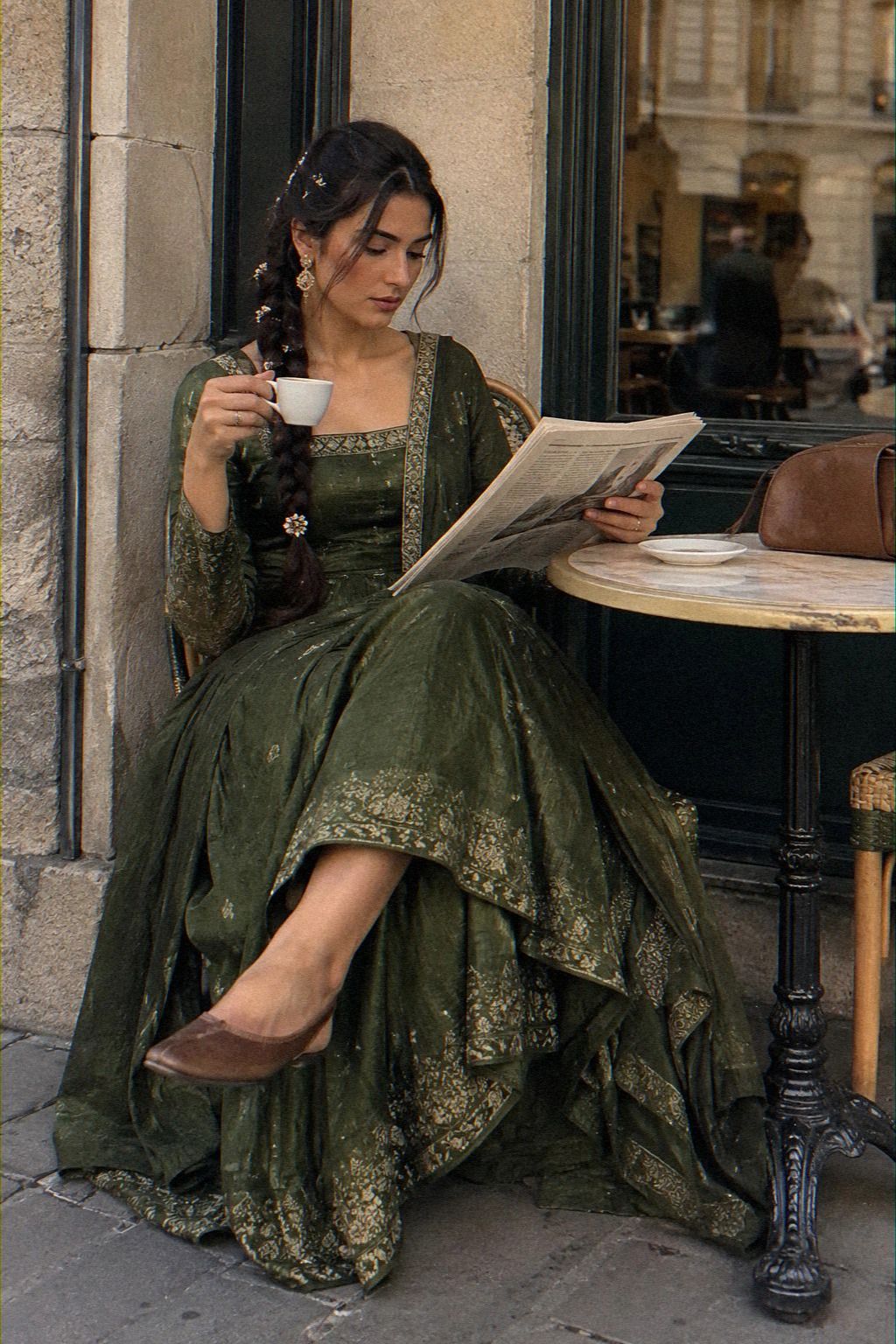
A floral Anarkali feels natural in a cafe setting because its movement suits a seated, everyday moment. Choose hand-painted floral cotton or printed viscose with a defined waist and fuller hem.
The cafe chair, newspaper, and espresso create a lifestyle frame, so your outfit should feel wearable rather than ceremonial. Braided hair accessories can carry the bridal reference without taking over the scene.
Keep the accessories close to your face and hair. A ribbon woven into the braid, tiny flowers, and delicate earrings will show beside the newspaper when you turn your head. I’d skip a large necklace because the neckline may disappear while you’re seated.
If you’re planning several photographs, let the flared Anarkali hem fall naturally over the chair instead of arranging every fold. Your relaxed posture will make the photograph feel intimate, and the floral print will keep it warm without becoming sugary. These romantic dress ideas for memorable photographs follow the same relaxed approach.
12Choose a Yellow Silk Kurta for Contrast
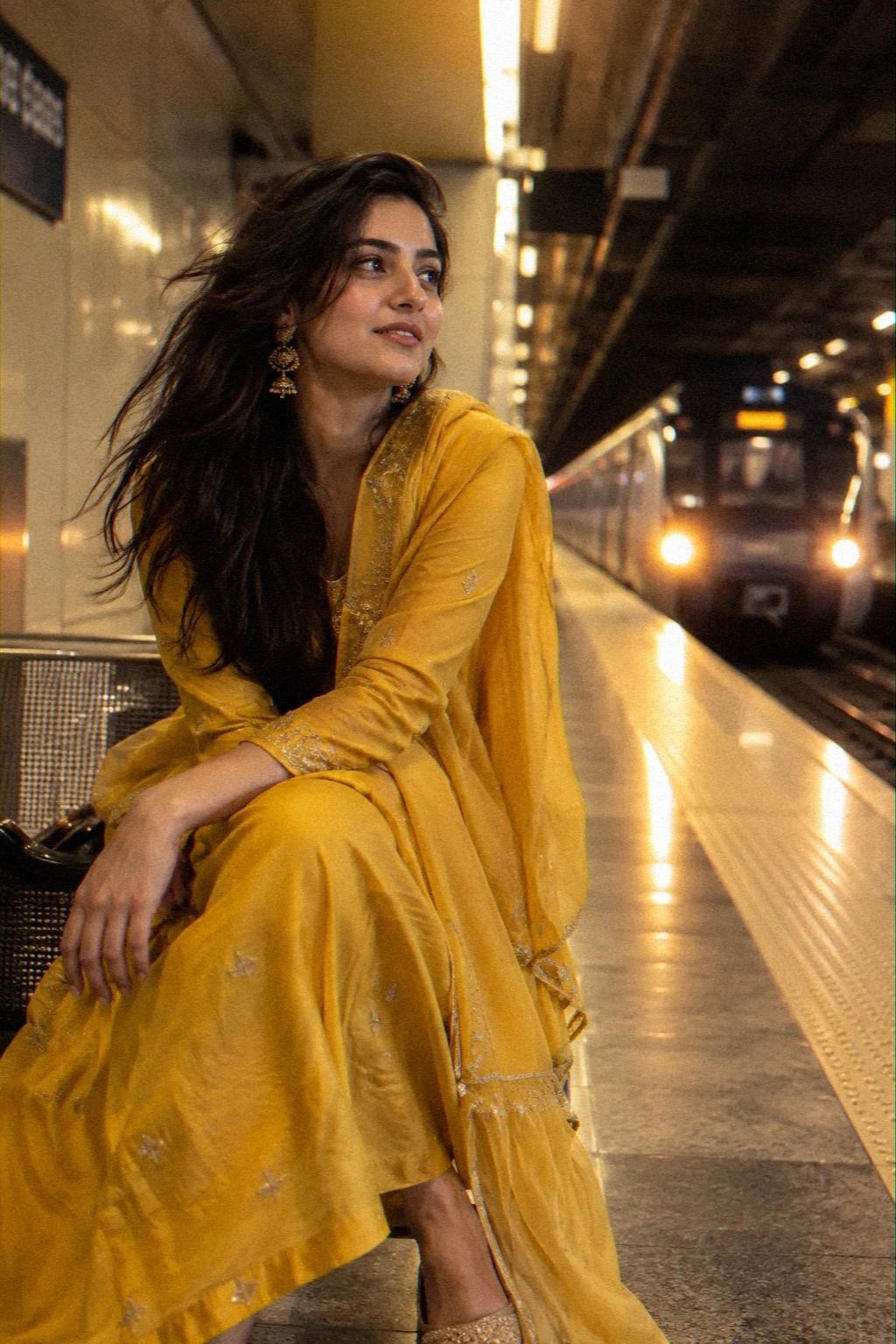
A yellow silk kurta works beautifully against the industrial energy of a subway platform.
13Would an Indo-Western Skirt Give You the Strongest Back View?
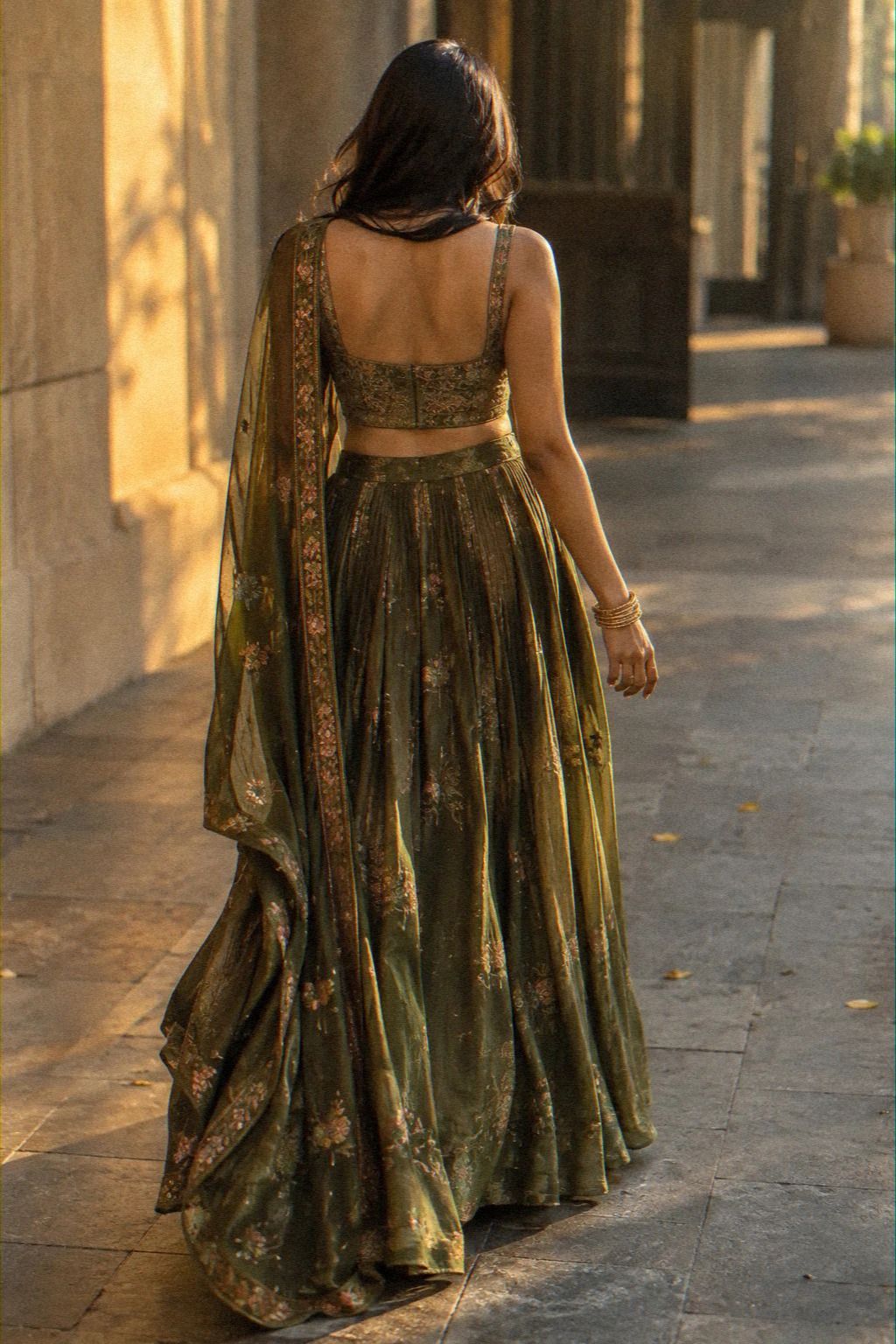
An Indo-Western skirt with a corset blouse gives you a strong back view against a clean neutral backdrop. Choose structured satin or matte brocade for the skirt, then pair it with a corset blouse that has a defined back detail.
A bow, lace-up panel, or embroidered border will make the walking-away frame feel intentional without requiring a busy background. If the skirt has volume, make sure the blouse ends at your natural waist so the proportions stay clean.
This is a wedding guest look, so keep the styling celebratory but not bridal. I’d avoid a red veil, oversized maang tikka, or excessive bridal jewelry. Instead, choose slim bangles and a small embroidered potli that hangs at your side.
The outfit can be worth it when you need one dramatic frame and several simpler ones. To control the price, pair a new blouse with a skirt you already own, or rent the full silhouette and use personal accessories. Browse these polished photoshoot dresses for more ways to create a memorable back view.
14Bandhani Dupatta Over a Structured Jumpsuit
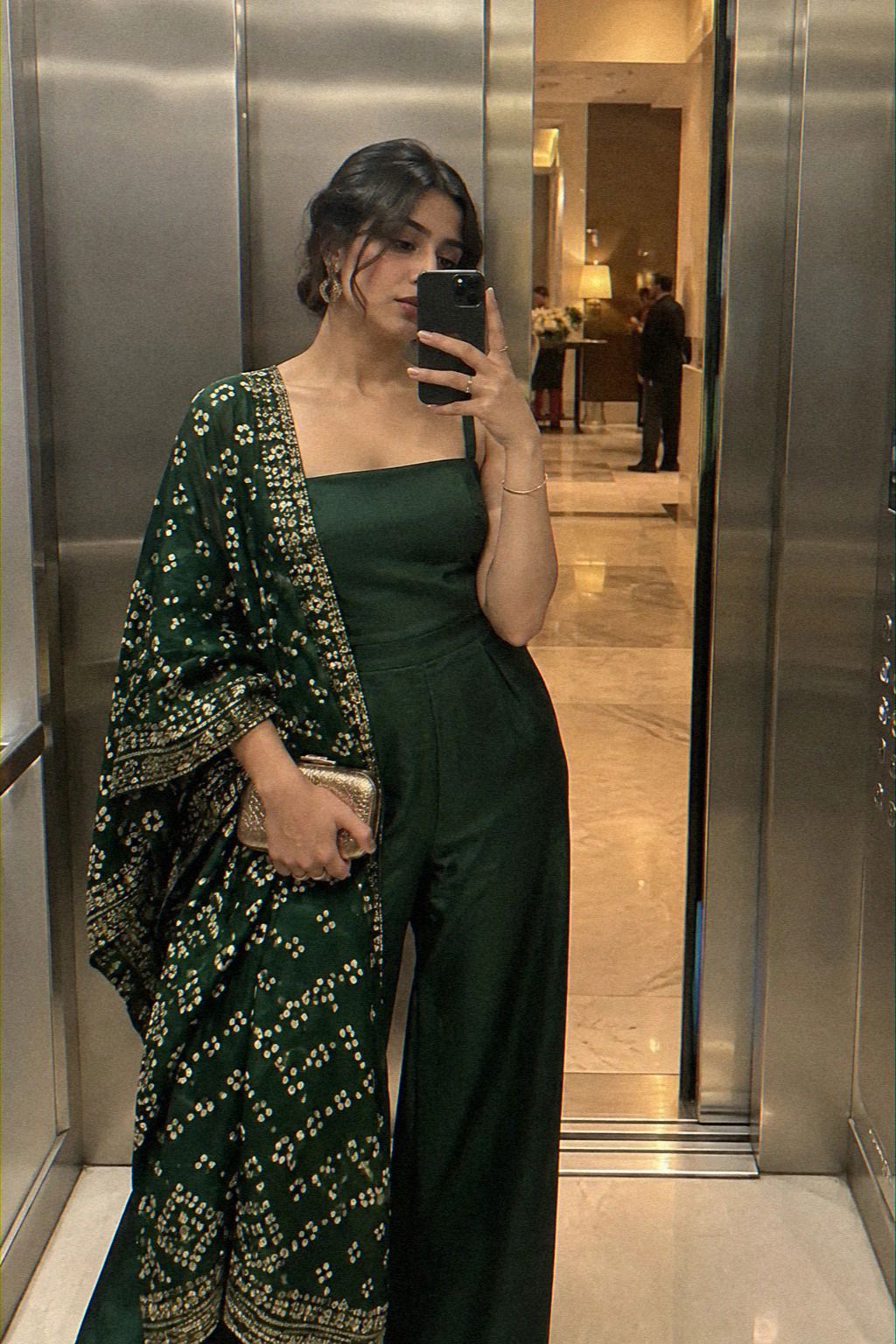
A Bandhani dupatta over a structured jumpsuit combines a clean base with one unmistakably Indian layer. Choose a black jumpsuit, ivory jumpsuit, or deep jewel tone with a defined shoulder and straight leg.
Let the Bandhani dupatta lead. Drape it over one shoulder, tie it at the wrist, or allow one end to fall behind you in an elevator mirror check. You don’t need several traditional accessories when the pattern already provides contrast.
Keep the footwear pointed and the jewelry compact. A slim belt can sharpen the waist, while gold hoops or a single cuff add polish without cluttering the reflection. This look gives you a crisp, confident silhouette and an effortless modern edge.
It’s also a strong value option because the jumpsuit can be worn again for dinners, parties, and travel. If you’re comparing the cost with a full lehenga, the repeat-wear potential makes the decision easier. These modern Indian photoshoot outfit ideas show why one traditional layer can transform a clean base.
How These Fourteen Looks Photograph Differently
The strongest pre-wedding photoshoot outfit isn’t always the most elaborate one. Your silk saree gives close-up texture, the sharara creates motion, the velvet suit controls a flatlay, and the jumpsuit gives you a sharp mirror silhouette.
A Practical Cost Guide
Use these as planning ranges rather than fixed quotes. Fabric, tailoring, location, and city can change the final price.
I’d choose your location before buying or tailoring anything. If you’re shooting in a hotel, silk and pearls will make sense. If you’re walking through a city, a sharara, cape gown, or coordinated set will give you more movement.
You’ll also avoid the common mistake of choosing an outfit that looks impressive on a hanger but disappears once you start moving. The right purchase should solve a clear problem: movement, texture, proportion, contrast, or budget.
The Questions Worth Answering First
What is the best Indian pre-wedding photoshoot outfit for a small shoot?
A silk saree and a structured jumpsuit are strong choices because they give you two distinct silhouettes without requiring a full wardrobe. The saree adds texture for close-ups, while the jumpsuit keeps movement easy. You’ll get variety from two outfits, not a crowded suitcase.
Where can I buy Indian pre-wedding photoshoot outfit pieces on a budget?
Look at local Indian-wear boutiques, resale platforms, and established retailers such as Fabindia or Manyavar, depending on your style and location. You can also borrow jewelry or buy a pre-owned dupatta. Always check the fabric, lining, alteration policy, and return terms before ordering.
How much does an Indian pre-wedding photoshoot outfit makeover cost?
The total depends on whether you’re tailoring, renting, borrowing, or restyling pieces you own. A silk saree with existing jewelry may need very little, while a complete custom look costs more. Your low-cost options include changing the drape, hairstyle, accessories, and location.
Can I create these looks on a budget?
Yes, and you don’t need fourteen new outfits. Restyle one saree with a different blouse, borrow statement earrings, and use a familiar kurta with a new dupatta.
You can also alter a ready-made Anarkali or coordinate separates you already own. That usually offers better value than buying a complete new wardrobe.
Is an Indian pre-wedding photoshoot outfit worth it in a small space?
Yes. A small space can make details easier to control, especially for a mirror selfie, flatlay, or waist-up portrait. Choose one strong texture, keep the background quiet, and make sure your jewelry or embroidery remains visible near your face.
Is an Indian pre-wedding photoshoot outfit a good idea for a rental?
Yes. Rental outfits let you test a dramatic silhouette without storing it afterward. Ask about alteration limits, cleaning fees, damage deposits, and return timing.
For your own styling, use removable hair accessories and a dupatta rather than permanent changes to the outfit.
The Outfit Choice I’d Make First
I’d choose based on movement and setting before choosing the most elaborate garment. A saree that catches light, a dupatta that lifts in the wind, or a belt that defines the waist can give your photographer more to work with than heavy embellishment.
My favorite approach is to build contrast across the shoot. Pair one traditional texture with one modern silhouette, then repeat a color detail between you and your partner. That might be ivory Chikankari with a matching pocket square, or a Bandhani dupatta beside a clean tailored suit.
I’d also leave room for imperfect frames. The taxi window, coffee cup, subway draft, and half-turned smile are useful because they show how your outfit behaves in real movement. A polished portrait matters, but the photograph people remember is often the one where your clothes look lived in and your expression isn’t being managed.
Most importantly, choose pieces you can move in. If you’re adjusting the blouse, holding the hem, or worrying about a slipping dupatta, the camera will catch it.
Comfort here doesn’t mean plain. It means your attention stays on the person beside you, which is exactly what a pre-wedding photograph should preserve.
Where I’d Start First
If I had to pick one, I’d start with the pastel sharara set. Its wide panels create movement, the earrings catch night light, and you won’t spend the shoot managing a heavy hem. Pin it for later, then compare it with these pre-wedding photoshoot dresses that look stunning on camera.