
Big and tall wedding suits finally fit when you measure the man, not the label. The right jacket proportions and trouser rise matter more than the number printed inside the garment. If you’re planning a fitting, this guide will help you protect your budget, improve comfort, and build a polished outfit that can handle the ceremony, dinner, and dancing.
Start with this practical guide to wedding suit fitting, especially if you’re comparing formalwear for a mature wedding style.
Here’s what it looked like before
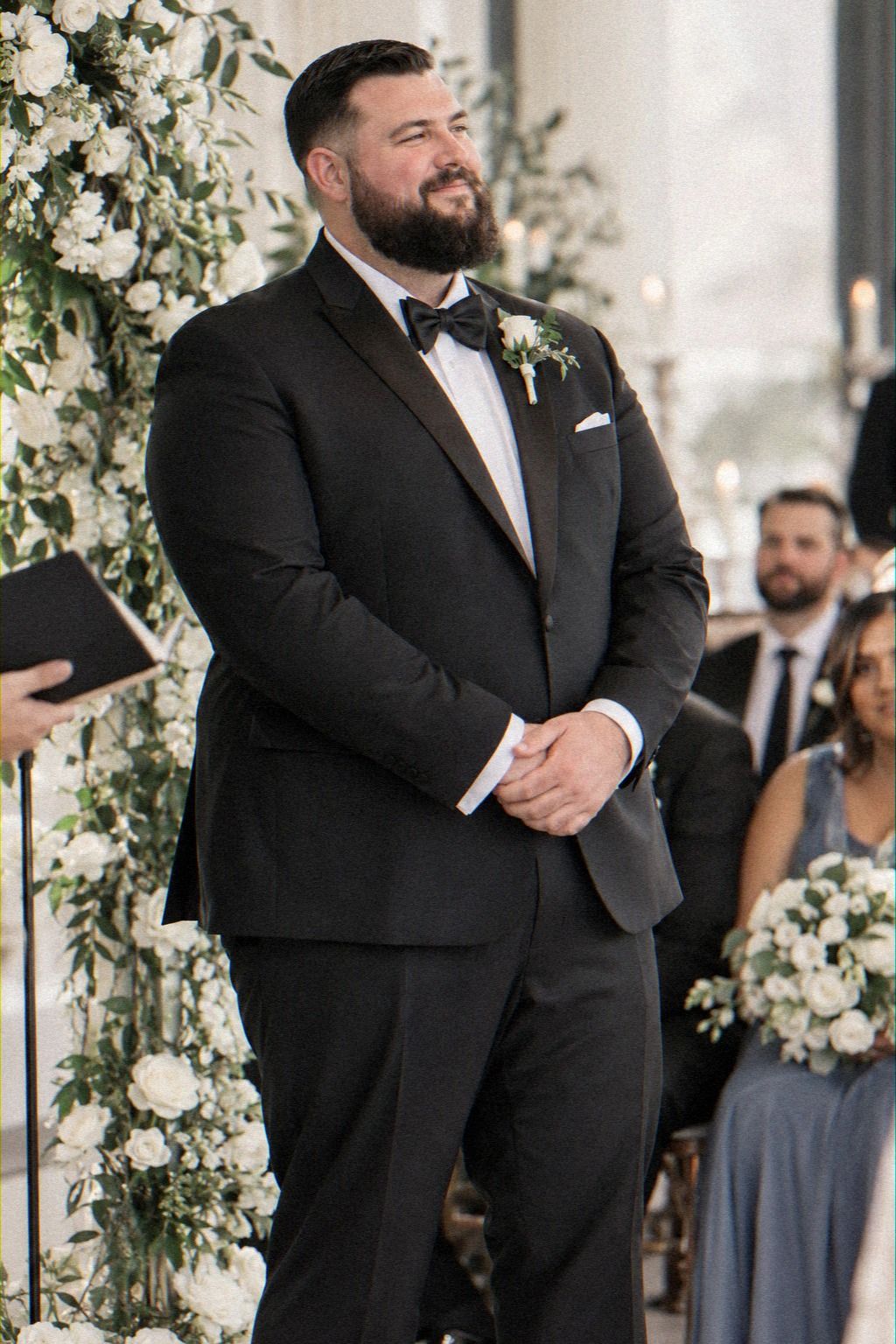
Before the fit was corrected, the problem wasn’t the man’s frame. It was the suit’s proportions.
The jacket front closed technically, but it pulled toward the button and made the lapels lose their crisp line. The trousers looked generous through the leg while the natural waist and seat were poorly balanced, so the wearer kept adjusting them whenever he stood.
That isn’t a confidence problem. It’s a garment problem.
Before comparing colors, write down every detail that needs attention: pulling at the button, a collar gap, sleeves swallowing the cuff, or a shifting trouser line. You can solve those issues without chasing a slimmer silhouette. If your starting point is comfort, you’ll make sharper decisions later.
- What Should You Measure First?
- Choose a Jacket That Closes Comfortably
- The Sleeve-Cuff Check Makes the Difference
- Why Does Trouser Rise Matter More Than Width?
- Pick a Straight Cut for His Hips
- Check the Collar Gap Without Tightness
- Build a Classy Look Around One Suit
- Add Suspenders for a Cleaner Trouser Line
- Can the Jacket Move When He Sits?
- Dark Wool, Crisp Shirt: Why the Contrast Works
- Finish His Outfit With Wide Dress Shoes
- Keep the Tie Proportional to His Frame
- How Should His Suit Relate to the Wedding Party?
- Review Every Fit Detail Before Alterations
1What Should You Measure First?
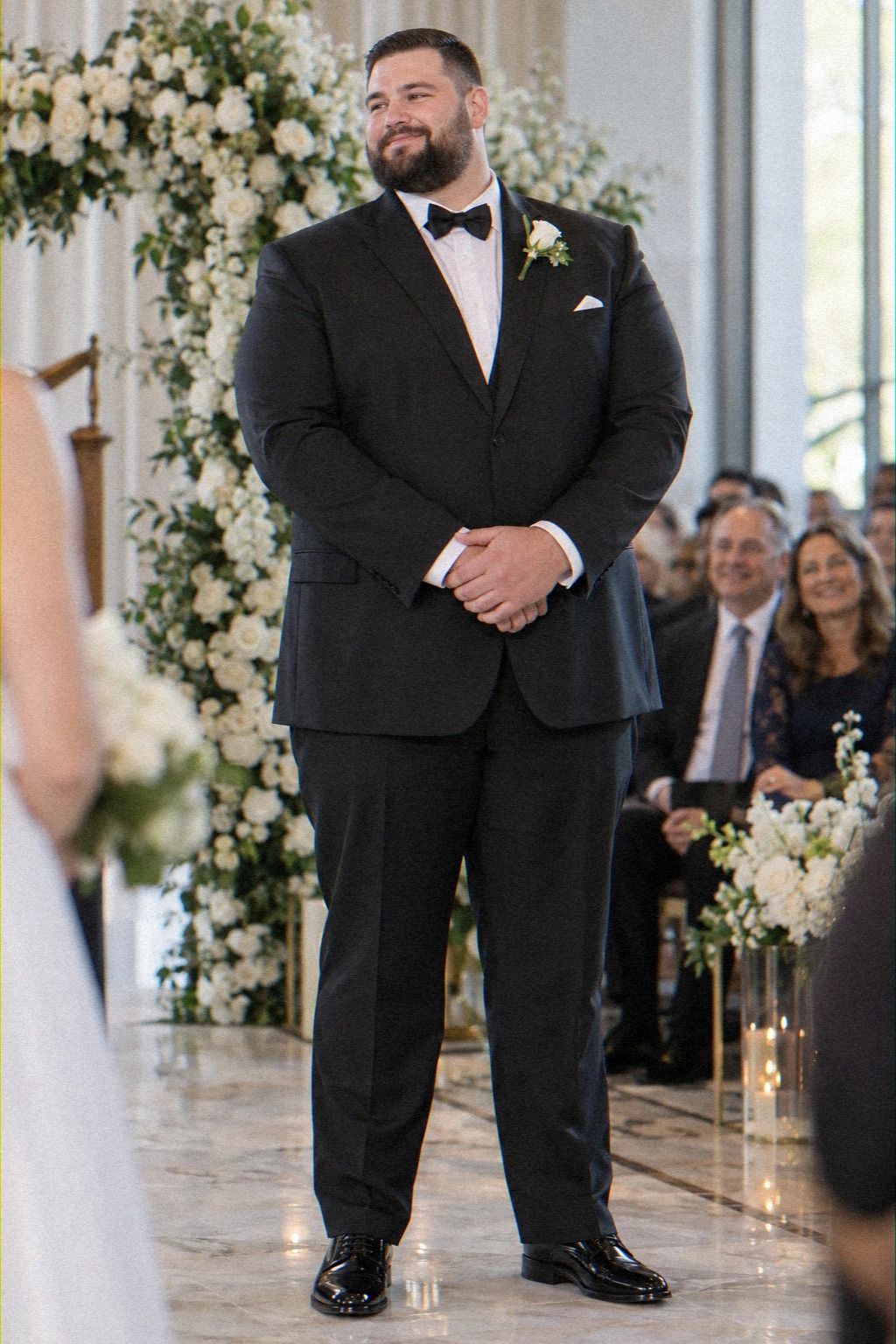
Start with three measurements because one chest number can’t explain how a suit will sit. Measure the chest measurement, waist measurement, and seat measurement separately. The point isn’t to force a smaller label.
It’s to understand where the jacket and trousers need room.
I call this the Three-Point Fit Check. Your chest controls the jacket’s front, your waist affects closure, and your seat changes how the trousers fall behind you. If you’re shopping from a garment chart, compare all three numbers with the garment’s own guidance.
A generous chest with a narrower seat can look just as awkward as a tight waist. You shouldn’t trust the label alone. A retailer that publishes garment measurements offers better value than one that only lists a size number.
You can compare this method with our guide to wedding outfits for men over 50. The audience isn’t the point here; the measurement logic is.
2Choose a Jacket That Closes Comfortably
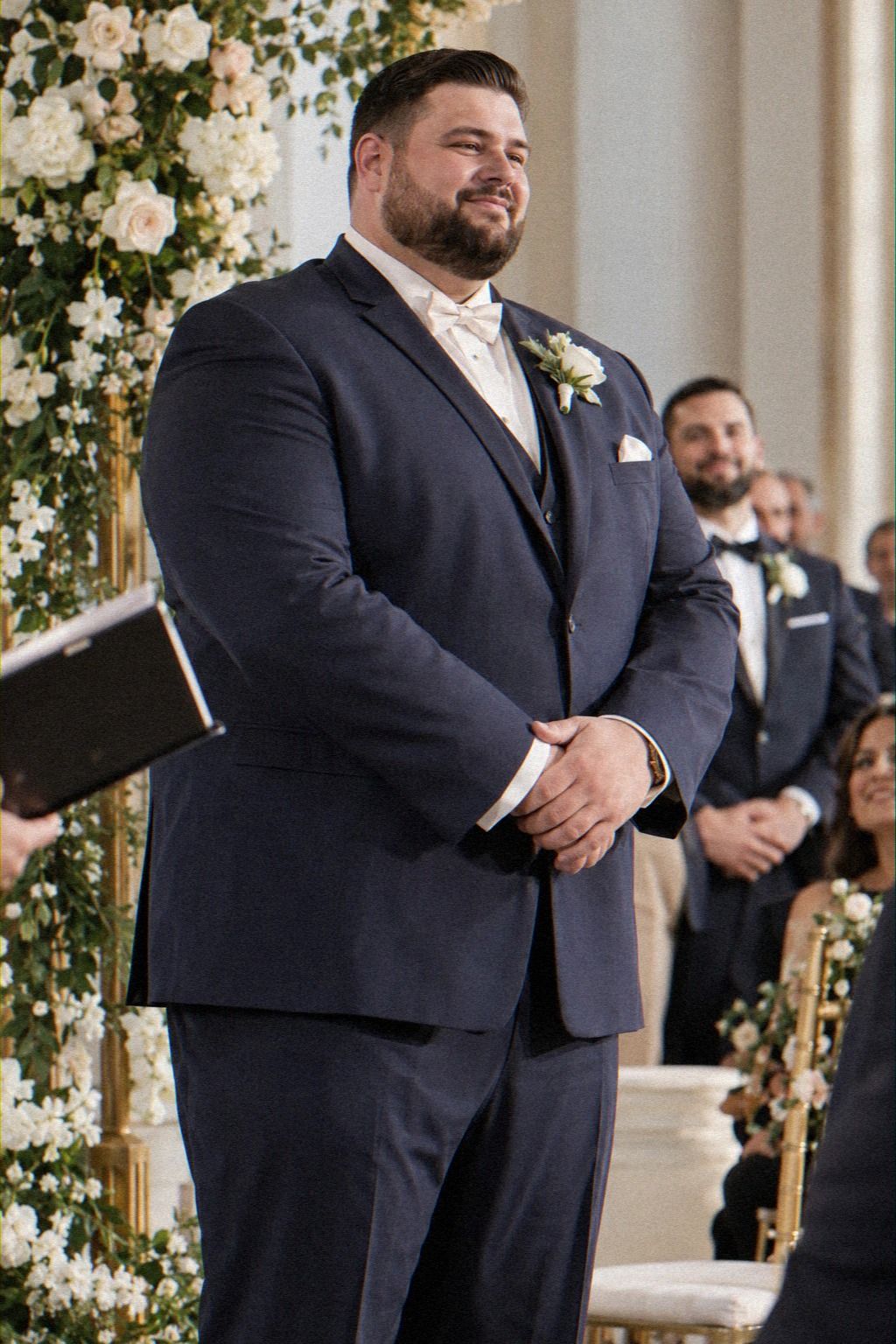
The first buying decision is the jacket closure. Close the jacket while standing naturally, then sit, reach forward, and turn from side to side. The button stance should stay level without forcing the front into diagonal wrinkles.
Look at the side seam and the lapel roll. If the jacket pulls across your chest, sizing up may help, but it can also create excess fabric at your shoulder. If your shoulder fits and your waist needs only a modest adjustment, alterations may offer better value than replacing the entire suit.
The jacket doesn’t need to feel loose everywhere. It needs useful ease where your body moves. A structured wool suiting jacket can look sharp while remaining comfortable if the chest and seat aren’t fighting the pattern.
If you’re unsure how much room is enough, use this big-and-tall wedding fit guide as a second reference. The goal is a clean closure, not an oversized outline.
3The Sleeve-Cuff Check Makes the Difference
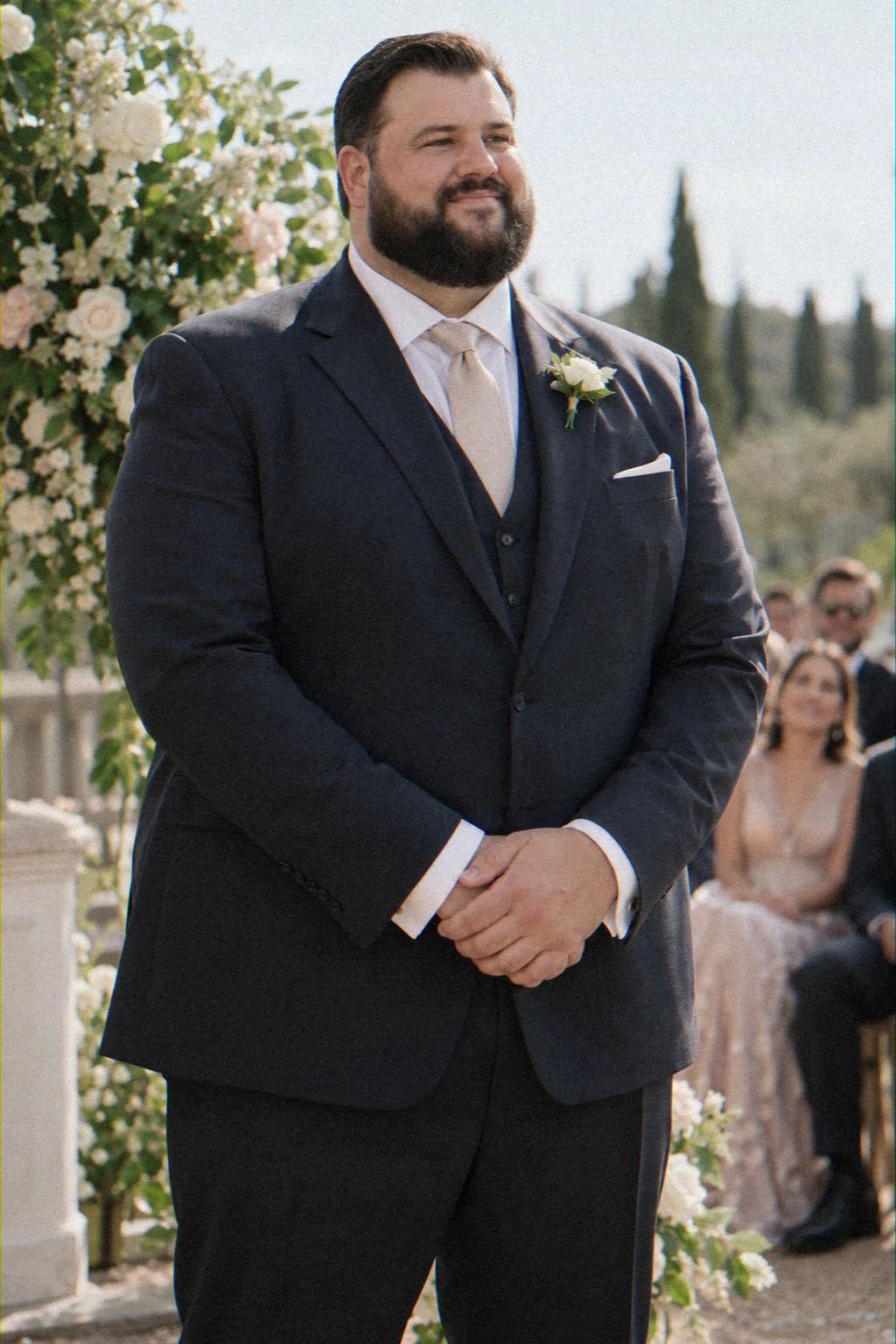
Sleeve length changes the entire impression of a suit. Compare the sleeve length with the shirt cuff while your arms hang naturally.
A small glimpse of shirt keeps the outfit intentional. Too much cuff makes the jacket look short, while no cuff at all can make the whole look heavy.
A practical target is roughly a quarter to half an inch, but your arm length matters more than a rigid rule. Cotton poplin gives a crisp edge, while a softer shirt may disappear beneath a sleeve that’s only slightly too long.
Don’t shorten the sleeve before checking the armhole and sleeve buttons. If the sleeve is too long because the jacket itself is oversized, tailoring only the cuff won’t solve the larger proportion issue. That’s an important budget decision for you.
For more guidance on wedding suit proportions, compare the sleeve, shoulder, and cuff together. One measurement rarely tells the whole story.
4Why Does Trouser Rise Matter More Than Width?
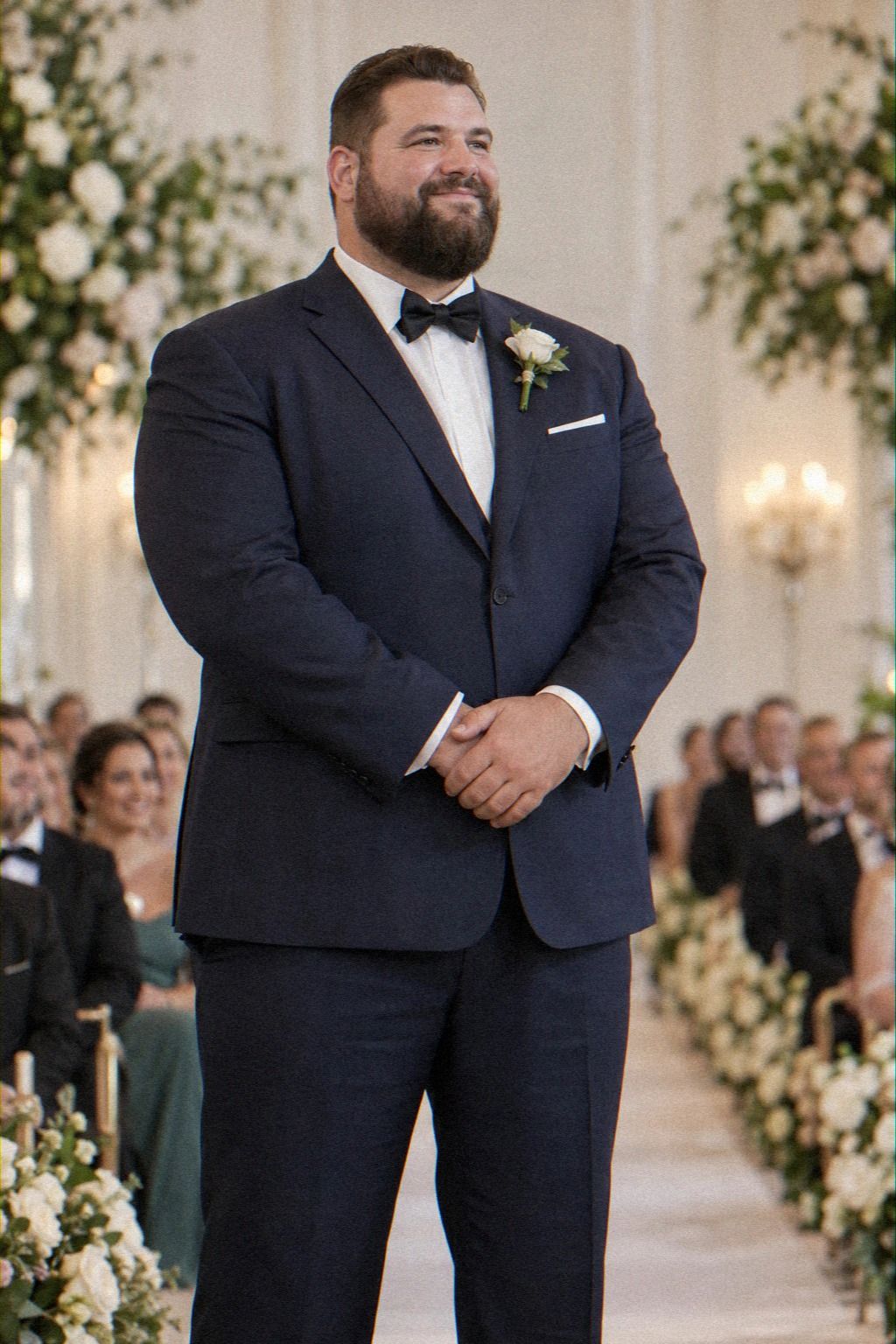
A trouser can look roomy through the leg and still feel wrong at the top.
5Pick a Straight Cut for His Hips
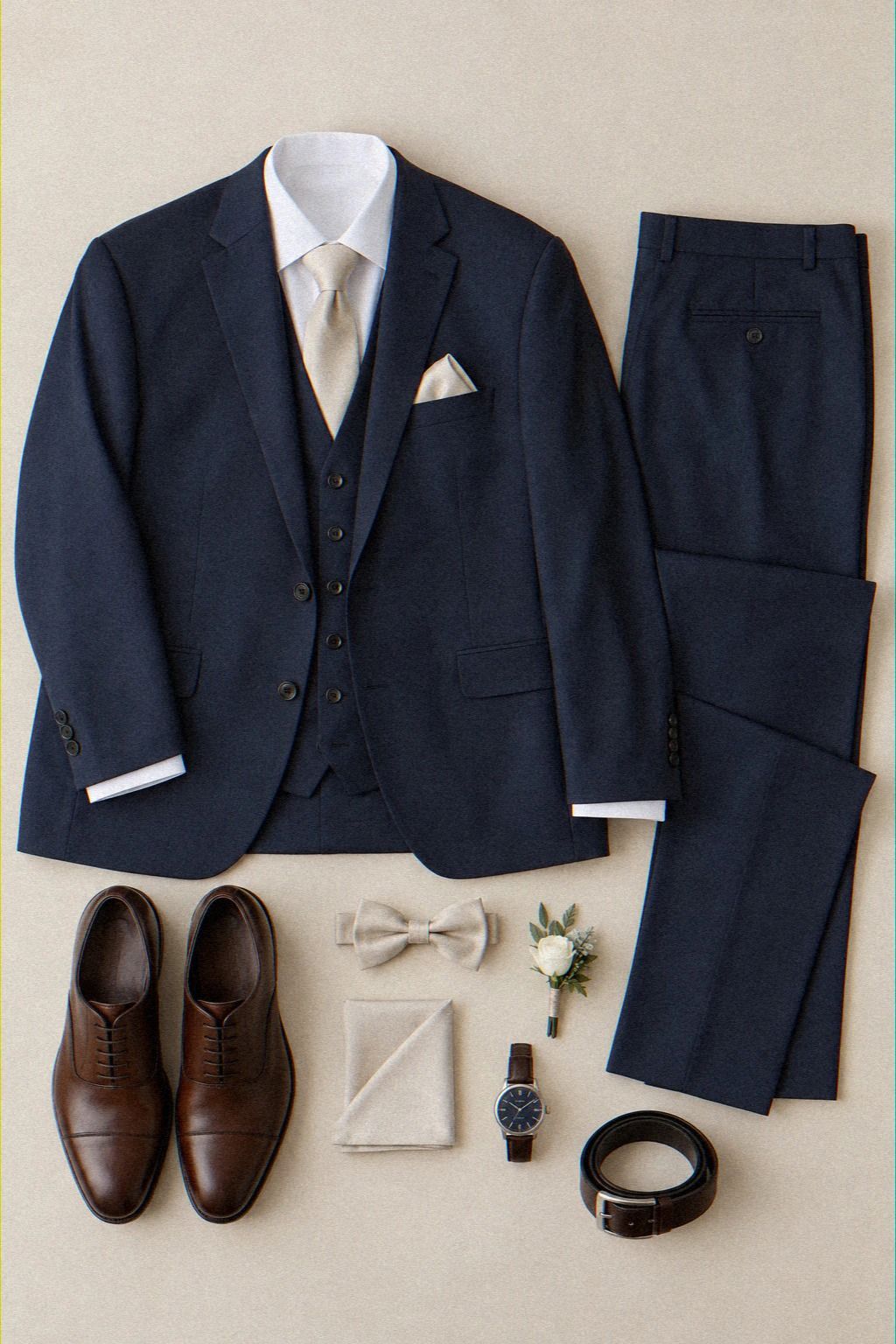
A straight cut often falls cleaner over a wider hip because the fabric doesn’t trace every curve. It creates a relaxed, balanced line from the jacket to the trouser leg without making the outfit look shapeless.
Look for enough room at the seat and a smooth transition through the side seam. The trousers shouldn’t cling at the back, but they also shouldn’t balloon below the pocket. A straight cut is especially useful when your chest, waist, and seat don’t match standard size charts.
Pair that shape with a balanced dress shoe. The shoe gives the trouser hem a visual endpoint, so an extremely narrow toe can make the lower half appear unstable. This is a small styling choice with a surprisingly polished result.
If you’re comparing alternatives, save this straight-cut wedding suit reference before you shop. It can keep an attractive but unsuitable silhouette from taking over your budget.
6Check the Collar Gap Without Tightness
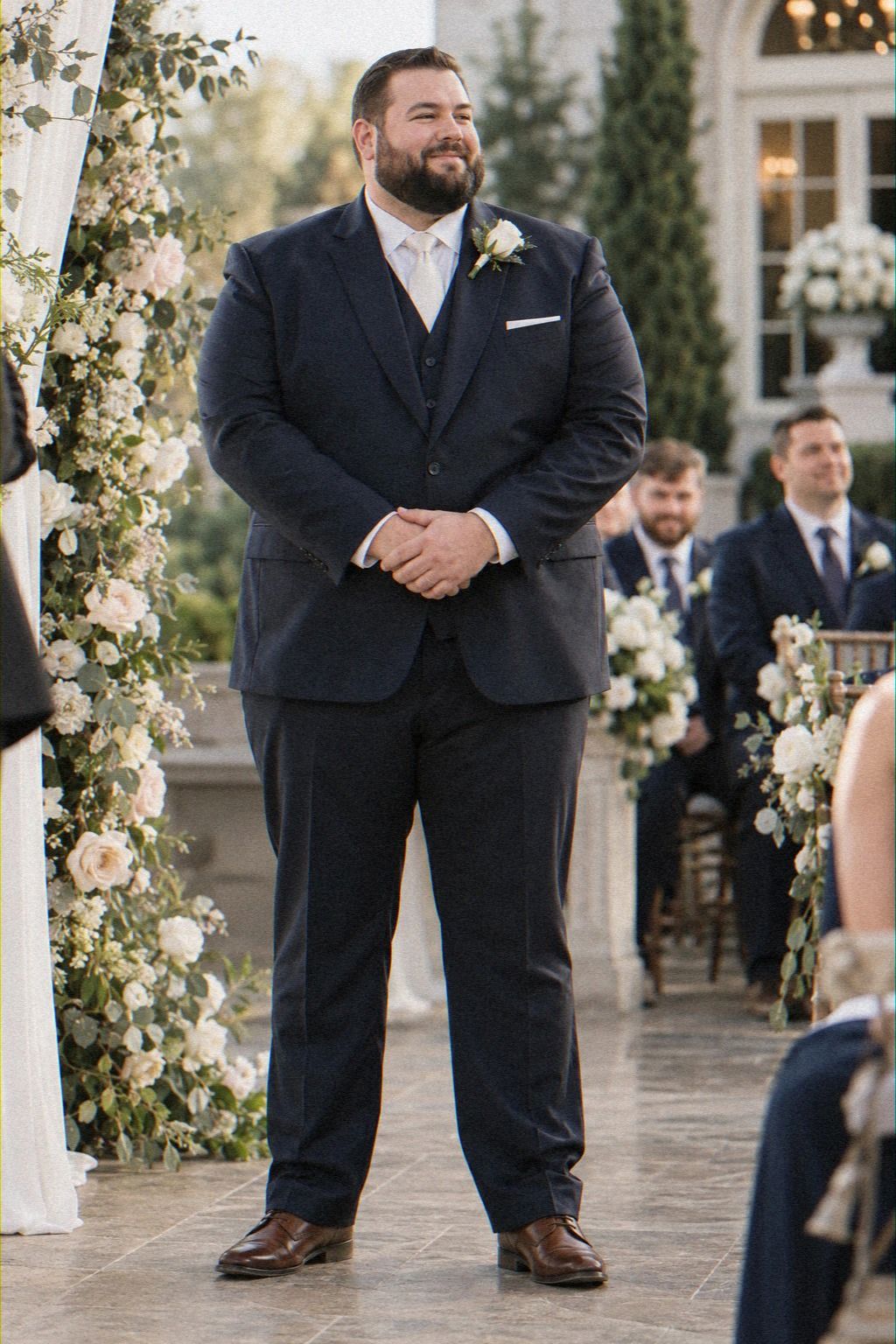
The shirt collar should meet the neck cleanly without lifting away or pressing into the skin. The jacket collar should rest over it rather than fight it. A small gap can make an otherwise refined suit look borrowed.
I call this the Collar Gap Rule. You need enough ease to turn your head and sit comfortably, but not so much that the collar floats behind you. Your tie knot should fill the space without choking the neckline.
A structured spread collar can balance broad jacket lapels and sit neatly around your face. It also gives the tie a defined position, which helps your entire outfit look deliberate.
For more ideas, our guide to mature wedding style offers another way to think about collars, jackets, and formality. A crisp collar is a small detail, but it can make a substantial difference.
7Build a Classy Look Around One Suit
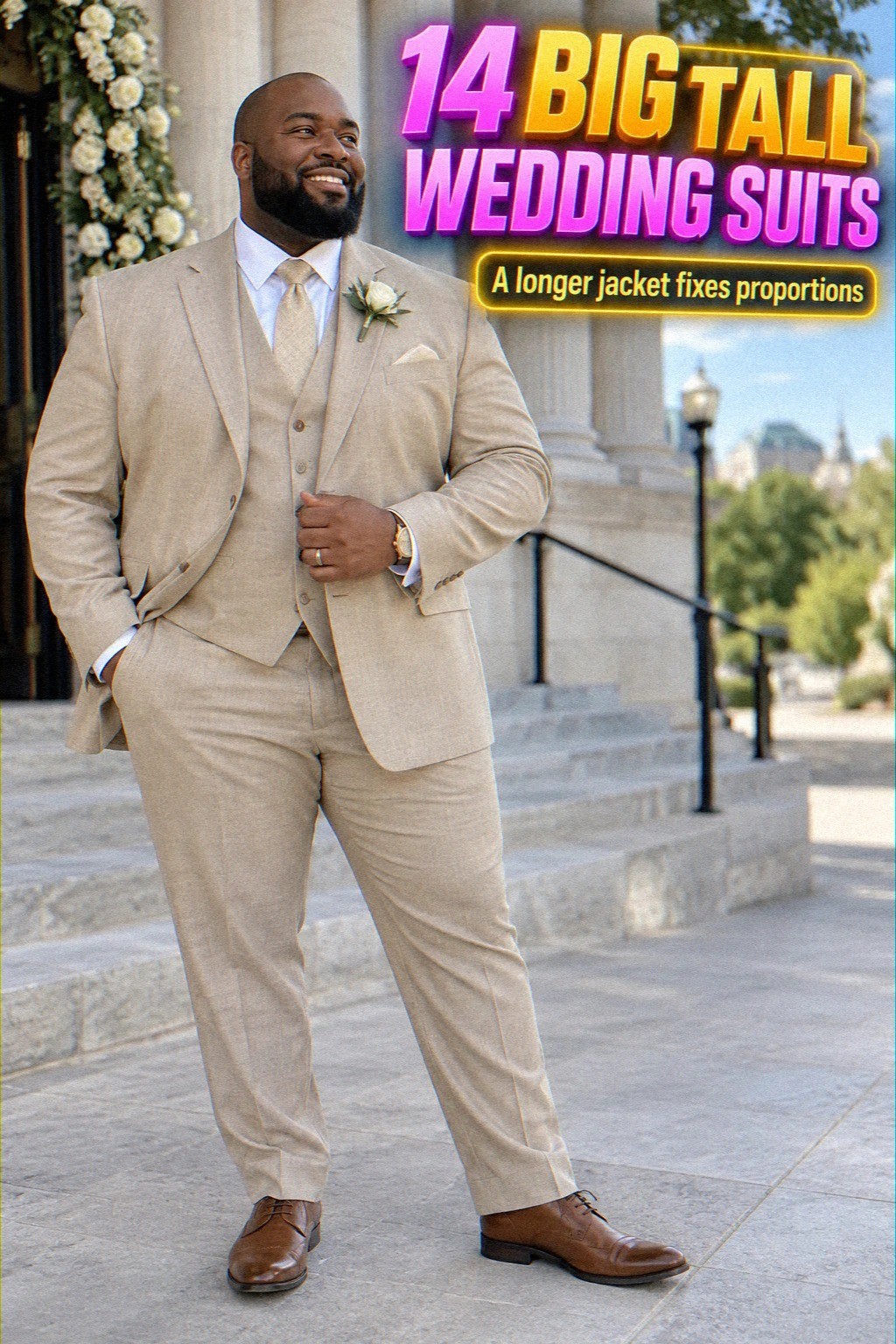
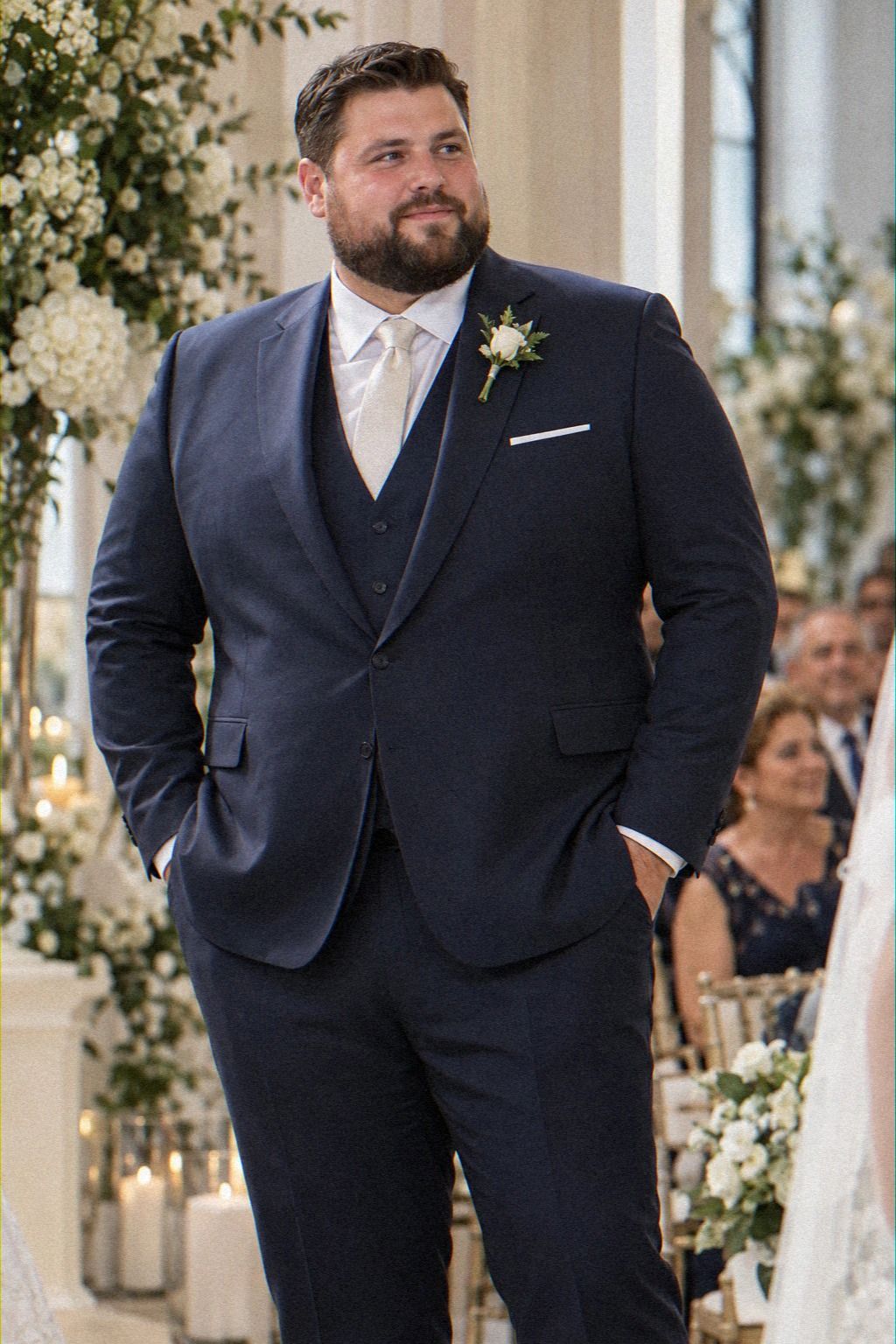
One suit can feel formal without becoming stiff.
8Add Suspenders for a Cleaner Trouser Line
Suspenders can hold trousers from the shoulders instead of pulling the waistband tightly around your middle. That creates a smoother front and lets your shirt fall without a belt pressing across it.
Choose button-on suspenders in a restrained width. Check for suspender buttons before the wedding morning because not every trouser includes them. You don’t want a fastening problem when the ceremony is about to begin.
I’d skip a bulky belt if it creates a horizontal interruption. If you’re wearing suspenders, let them do their job and keep your waistline visually quiet. This can be a practical upgrade when your budget is limited because it improves the line without requiring a new jacket.
For a more complete suit accessories guide for a wedding, compare the suspenders with the jacket hem and shirt length. The accessory should support your silhouette, not compete with it.
9Can the Jacket Move When He Sits?
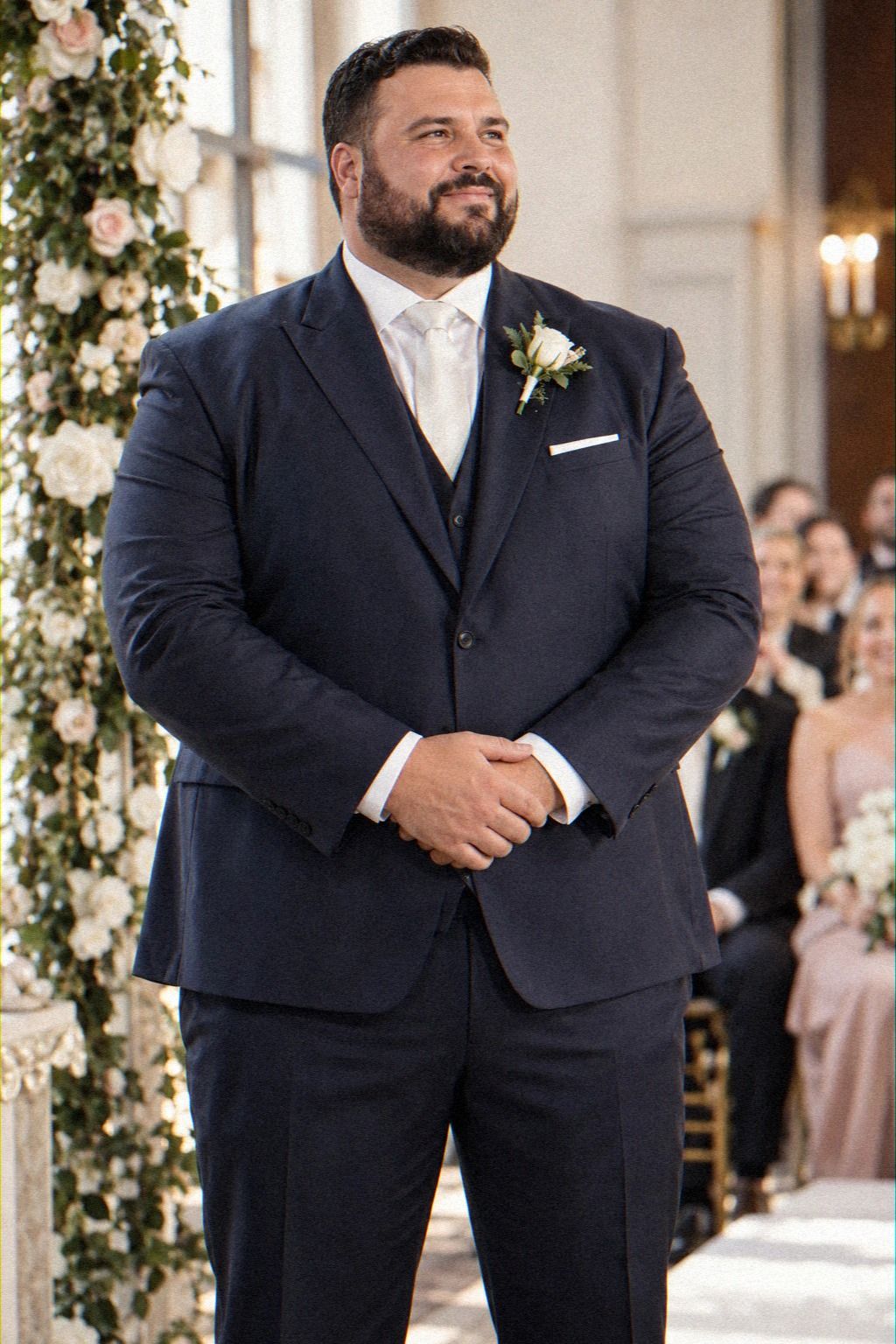
A suit that looks excellent while standing can become uncomfortable the moment you sit. Test the jacket closure, trouser rise, shirt cuff, and collar in motion. Sit down, stand up, turn, and reach forward.
Watch whether the jacket rides up at the back or whether the waistband slides down. If your trousers need constant adjustment, the problem may be the rise rather than the waist measurement. If your sleeves pull sharply when your arms move, check the armhole before paying for alterations.
This is where value becomes visible. A suit that stays coherent through several positions is more valuable than one that looks impressive in a single pose. The test costs nothing before you buy.
Use this comfortable wedding tailoring checklist during your store appointment. The right garment should make movement feel ordinary, not like a performance.
10Dark Wool, Crisp Shirt: Why the Contrast Works
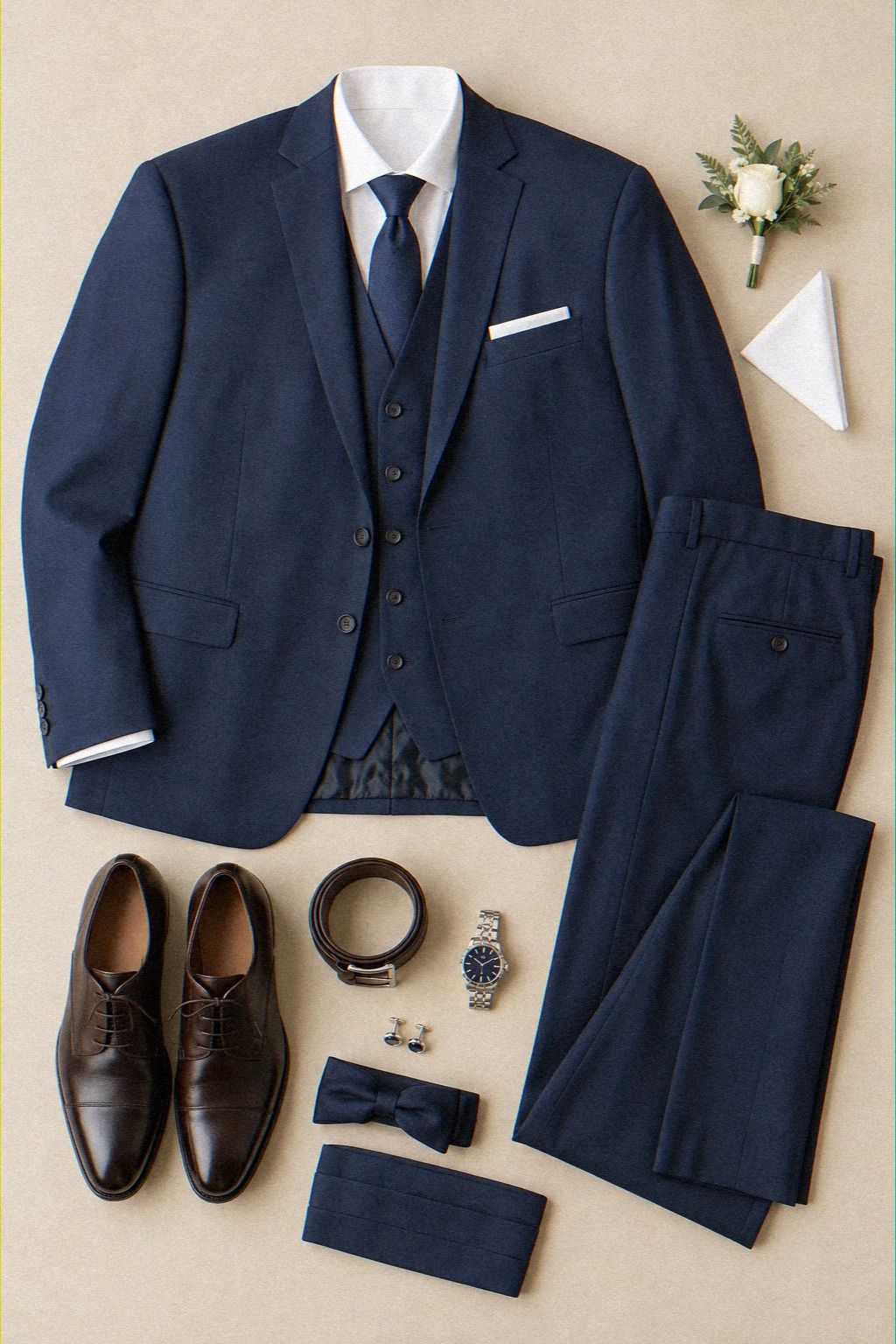
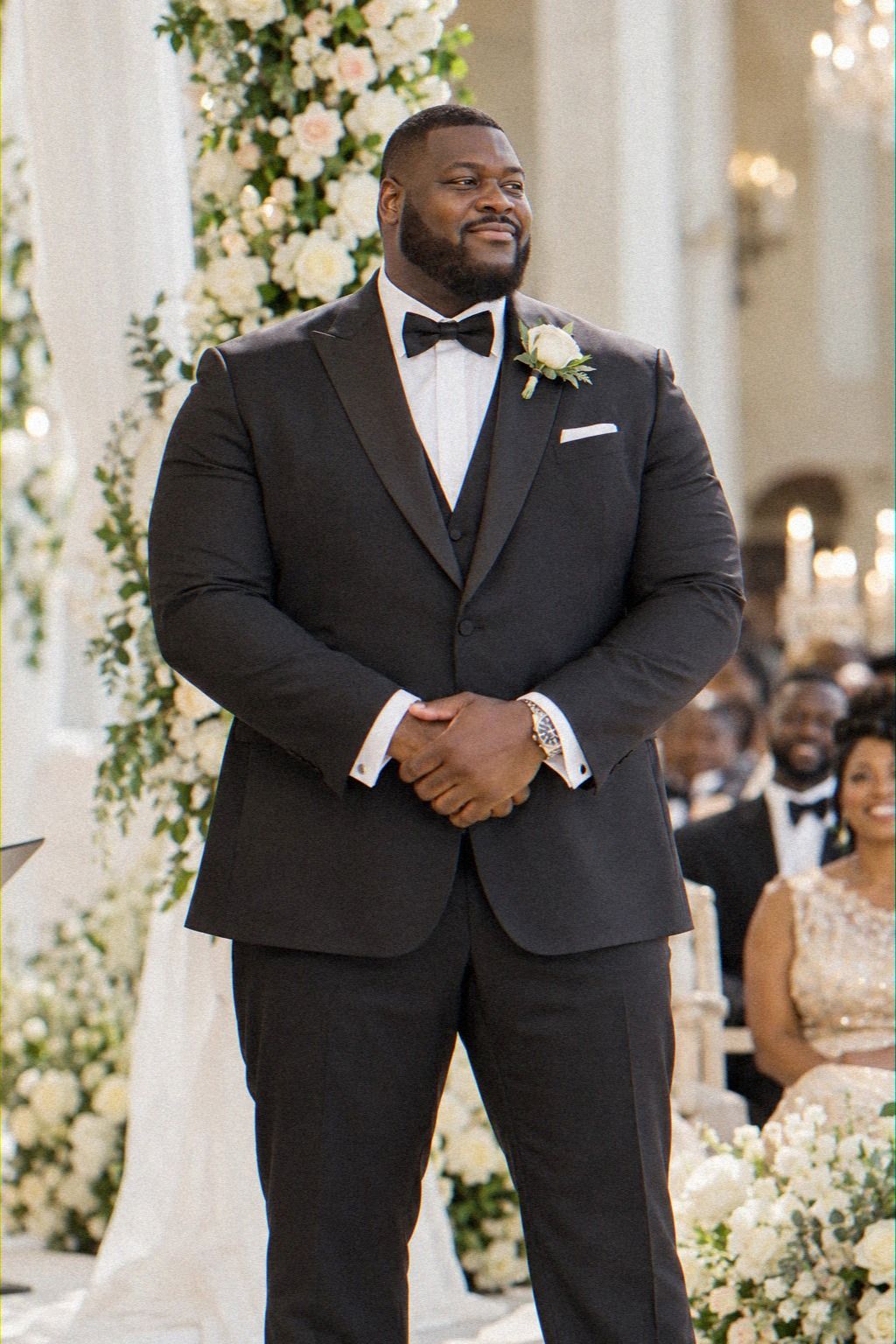
Dark fabric needs enough light near the face to prevent the outfit from looking dense.
11Finish His Outfit With Wide Dress Shoes
The right shoe gives the trousers a stable endpoint. A wider dress shoe can balance a larger frame more naturally than a very narrow, pointed shape.
I prefer a rounded almond toe rather than an extremely pointed toe. Your shoe should give your foot room without looking oversized beneath the hem. Polished leather can work beautifully, but a mirror shine may feel too formal beside softer wool.
Check the shoe width, the trouser opening, and the trouser hem together. If you’re buying shoes for the wedding, walk in them indoors first. You don’t need a dramatic style change at ground level.
A comfortable, versatile pair may be worth it if it can serve future ceremonies, work events, and formal dinners. That is often better value than a highly decorative pair you’ll wear once.
12Keep the Tie Proportional to His Frame
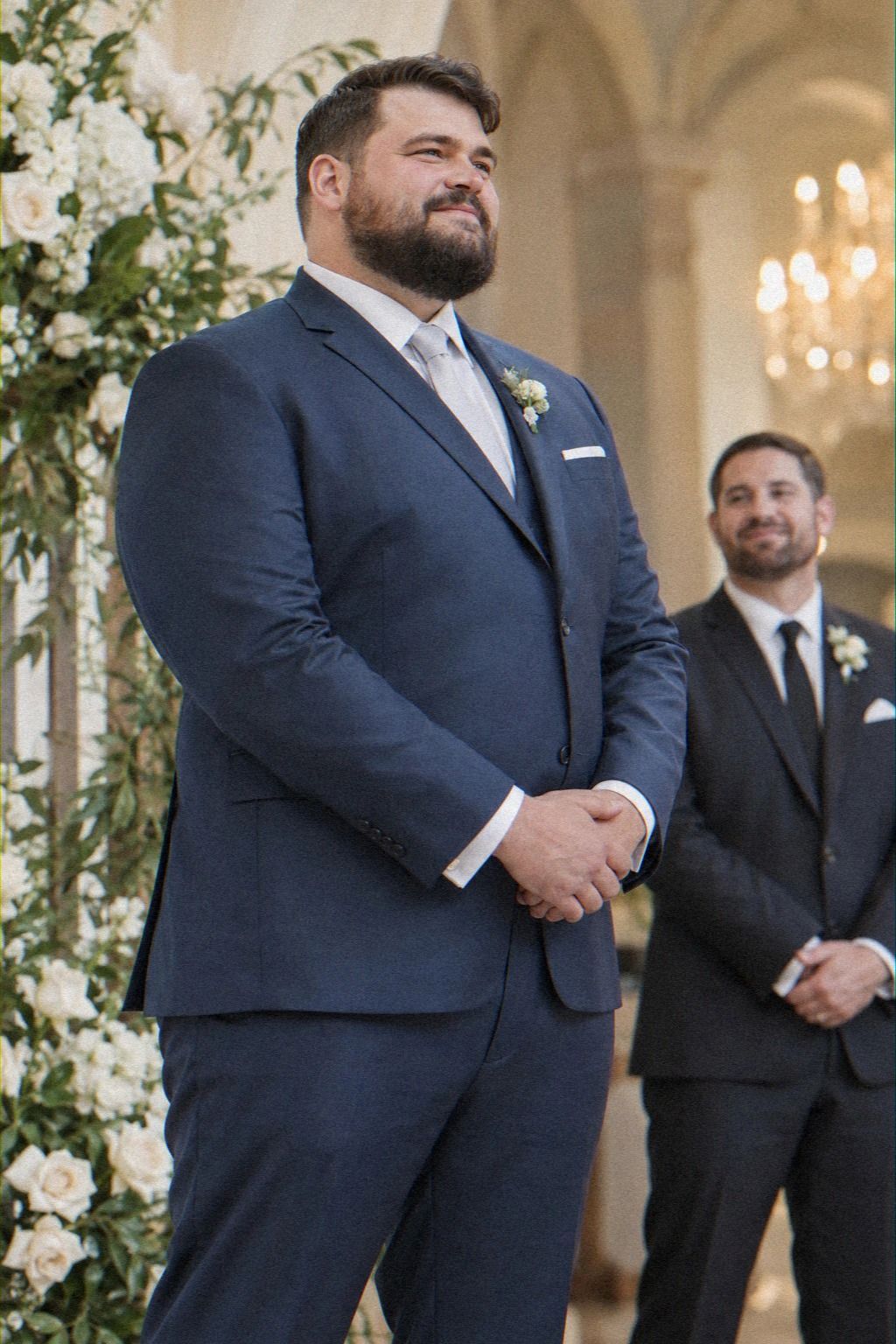
A narrow tie can look disconnected from the jacket lapels and shirt collar. A very wide one can swallow the front. Choose a medium width that fills the space without becoming the first thing people notice.
The Lapels-Meet-Tie Rule keeps the outfit balanced. Your tie should relate to the width of the jacket lapels, and the knot should fill the collar without forcing it open.
I’d choose a four-in-hand knot when the goal is relaxed polish. A tie bar isn’t necessary unless your shirt and jacket need that detail. Adding one more horizontal element can make the front feel crowded.
The tie doesn’t need to be expensive. It needs an appropriate width, a controlled finish, and a color that works with your shirt and suit. That’s a better use of a limited budget than buying several interchangeable accessories.
13How Should His Suit Relate to the Wedding Party?
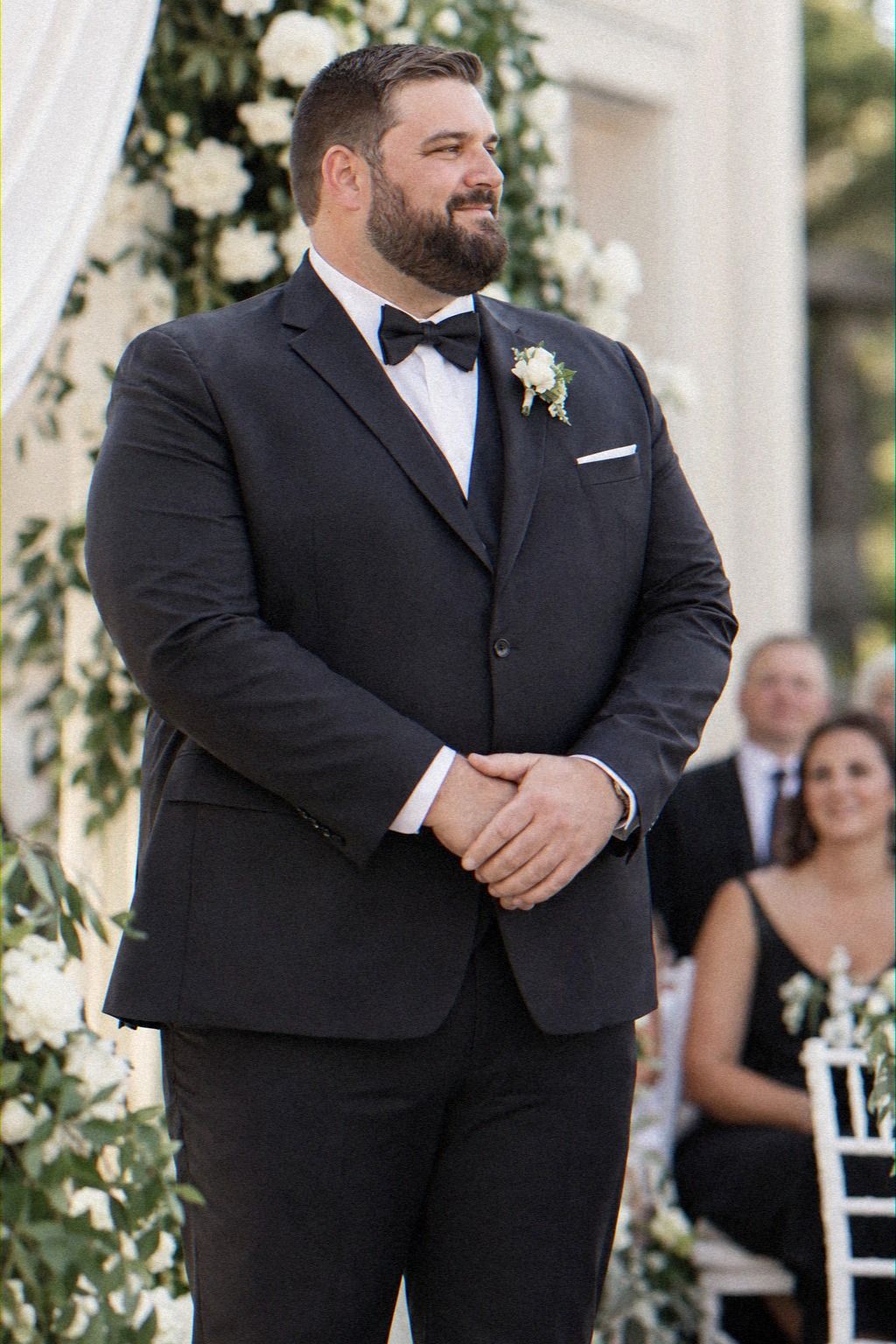
The suit should coordinate with the wedding party without becoming a copy of every other outfit. Start with the event’s dress code, then decide whether your suit should blend, contrast, or quietly anchor the group.
A dark suit works with soft neutrals, muted jewel tones, and classic white shirts. If the attendants are wearing saturated colors, keep your tie or pocket square restrained. If the group is dressed in pale tones, a dark jacket can provide a confident, elegant center.
Don’t chase exact color matching unless the couple has requested it. Fabric texture and formality matter just as much as hue. A matte wool suit beside glossy accessories can look more sophisticated than a perfect color match with competing surfaces.
For another perspective, review this coordinated wedding-party style guide. The useful question isn’t “Does everything match?” It’s “Does everything belong to the same occasion?”
14Review Every Fit Detail Before Alterations
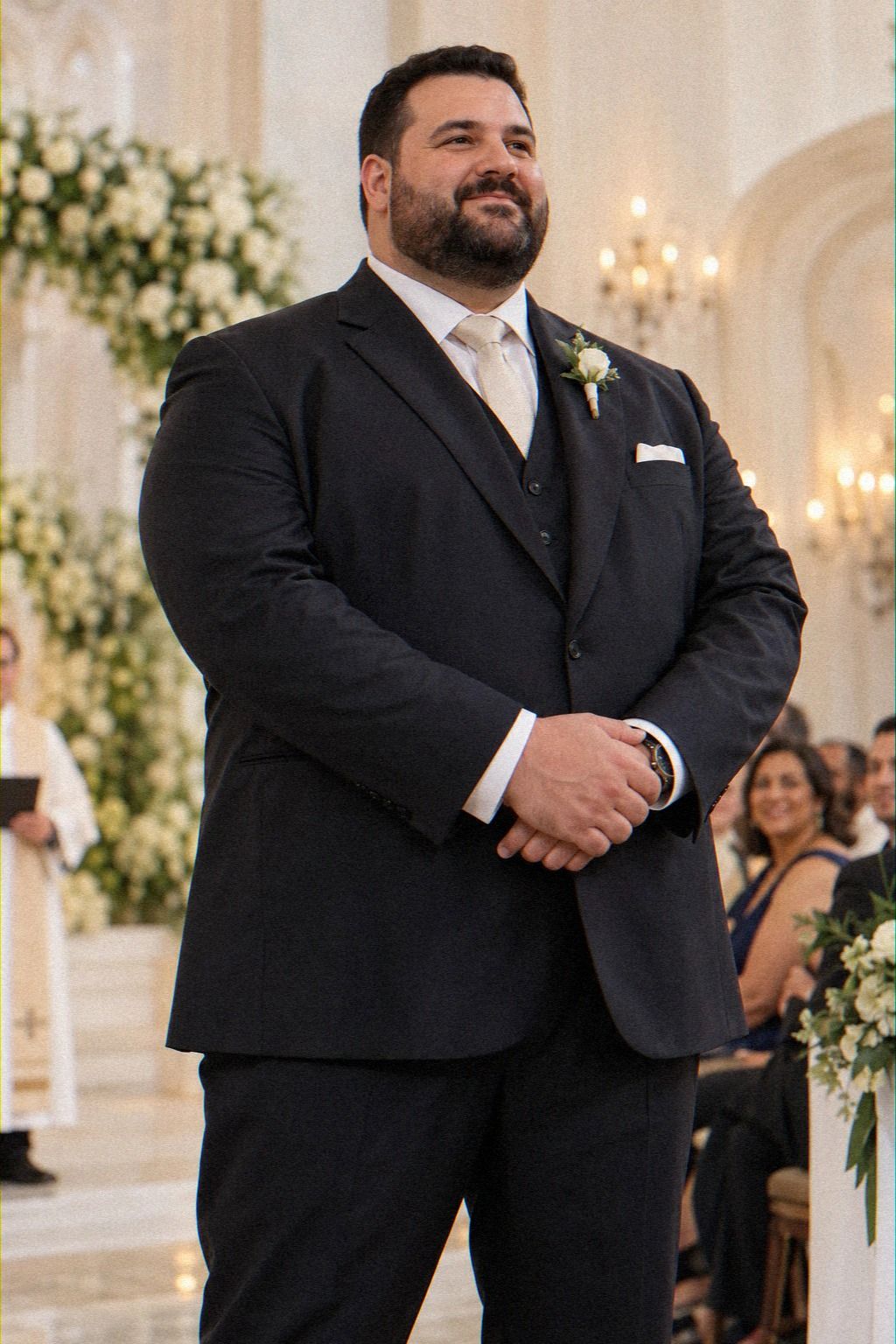
Use a final Before-Alterations Checklist. Review the jacket closure, collar, sleeves, trouser rise, hem, and shoes in that order. Check the suit standing naturally, then sit once and walk several steps.
Your tailor should see the suit while you stand naturally and sit once. I wouldn’t approve every alteration at the same time. Start with jacket and trouser balance, then reassess your sleeves and hem.
For more help before booking wedding suit alterations, ask which changes are easy, which are expensive, and which cannot be corrected cleanly. A good adjustment should make you forget the garment is there.
How Much Did the Suit Cost?
The honest answer is that a big-and-tall wedding suit doesn’t have one reliable total. The final cost depends on the base suit, size availability, alterations, shirt, shoes, and formal accessories.
The following figures are illustrative USD planning ranges, not quotes. Prices vary by retailer, fabric, construction, and location.
If you’re working with a limited budget, spend first on the jacket and trouser cut. Next, pay for alterations that affect your movement.
Then consider the shirt and shoes. Decorative extras come last.
A $400 suit with $150 of useful tailoring may offer better value than a $900 suit that still pulls across the chest. Don’t pay a premium simply for a label if the measurements don’t cooperate.
You can also compare this wedding outfit planning guide before setting your final budget. It helps you separate the changes that improve fit from the details that merely add cost.
Why I Stopped Chasing the Largest Number
The safest choice isn’t always the roomiest jacket. Extra fabric at the shoulder and side seam doesn’t automatically create comfort. It can create folds that make the suit look unplanned.
A larger size label isn’t automatically more generous where you need it, and a smaller number isn’t automatically more polished. Read the garment as a system. The shoulder, chest, waist, seat, rise, sleeve, and hem all have to cooperate.
I also don’t treat comfort as a compromise. A comfortable jacket can look more formal because the wearer stands naturally.
He doesn’t pull at the front, push the sleeves down, or keep checking the waistband. Those movements distract from the outfit during formal moments.
The straight cut wins when it follows the frame without tracing every curve. The dark suit wins when it creates a calm foundation for the shirt and tie. The quieter accessories win when they let the tailoring speak.
If I had to make one buying decision first, I’d choose the jacket that closes smoothly and remains comfortable while seated. That choice protects your budget, improves the silhouette, and makes every later detail easier.
What People Always Want to Know
What is the best big-and-tall wedding suit for a small wedding?
I’d choose a jacket and trouser combination that closes without strain and stays comfortable while sitting. Look for a straight or gently shaped cut, a shirt with enough collar room, and shoes with a balanced toe. Comfortable proportions will look more polished than extra decoration.
Where can I buy big-and-tall wedding suit pieces on a budget?
I’d start with retailers that publish garment measurements and alteration guidance. Compare the jacket, waist, seat, and rise instead of shopping by label alone.
A reputable second-hand shop can also offer strong value if the garment has usable seam allowance and sound fabric. This budget wedding style guide can help you organize those comparisons.
How much does a big-and-tall wedding suit makeover cost?
I wouldn’t trust a fixed total without the suit, alteration quote, shirt, and shoes. As a planning range, a complete outfit may run from roughly $475 to $1,540 depending on your choices. Spend first on the base fit, then decide which accessories you truly need.
Can I create this look on a budget?
Yes. I’d reuse a suitable shirt or tie, choose one dark suit as the foundation, and prioritize alterations that affect movement.
A clean fit does more visual work than a vest, elaborate pocket square, or extra shine. That approach is often worth it for a one-day event.
Is a big-and-tall wedding suit worth it for a small wedding?
Yes, if the garment fits correctly. A smaller guest list can mean more formal moments and closer interaction, so a smooth jacket and secure trouser line still matter.
You don’t need a louder outfit. You need useful ease, a comfortable collar, and calm proportions.
Is a big-and-tall wedding suit a good idea for a rental?
It can be, if the rental service takes measurements seriously and allows time for a proper fitting. Ask to sit, walk, and close the jacket before accepting it.
If the collar gaps or the trousers slide, request another cut. A rental still needs to move with you.
For more fitting ideas, review this formal wedding outfit reference.
Where I’d Start First
If I had to pick one, I’d start with the jacket closure. It reveals chest, waist, and proportion problems before accessories distract you. A jacket that closes flat lets every later choice look intentional.
Pin this guide for your fitting day, then check the suit seated as well as standing. The right big-and-tall wedding suit won’t ask you to tug, pull, or adjust it all day. That quiet comfort is what makes the final look feel confident.