
Indian winter wedding guest outfits work best when warmth is built into the silhouette, not hidden under a bulky coat. A shawl can shape the whole look when its color, weight, and drape are chosen deliberately. Velvet, brocade, pashmina, and full sleeves keep the outfit festive while preserving movement. Here are 14 combinations with a clear styling point, a realistic budget angle, and enough polish for a formal celebration.
- Velvet Anarkali With Embroidered Shawl Layers
- Can a Jewel-Tone Saree Handle Thermal Tights?
- Brocade Lehenga Styled With a Velvet Cape
- Build the Sharara Around a Long Coat
- The Pashmina Balance: Sequined Saree and Cropped Jacket
- How Should You Belt an Embroidered Palazzo Suit?
- Let the Jhumkas Lead: Velvet Salwar Kameez
- Metallic Lehenga With a High-Neck Blouse
- Banarasi Saree Styled With a Fitted Jacket
- Why Does a Pastel Anarkali Need an Ornate Velvet Dupatta?
- Ground a Sequin Kurta Set With Embellished Ankle Boots
- When Does a Jewel-Tone Gharara Need a Warm Shawl?
- Draped Saree Gown With Full-Sleeve Blouse
- Bridal-Inspired Lehenga With Layered Pearl Accessories
1Velvet Anarkali With Embroidered Shawl Layers
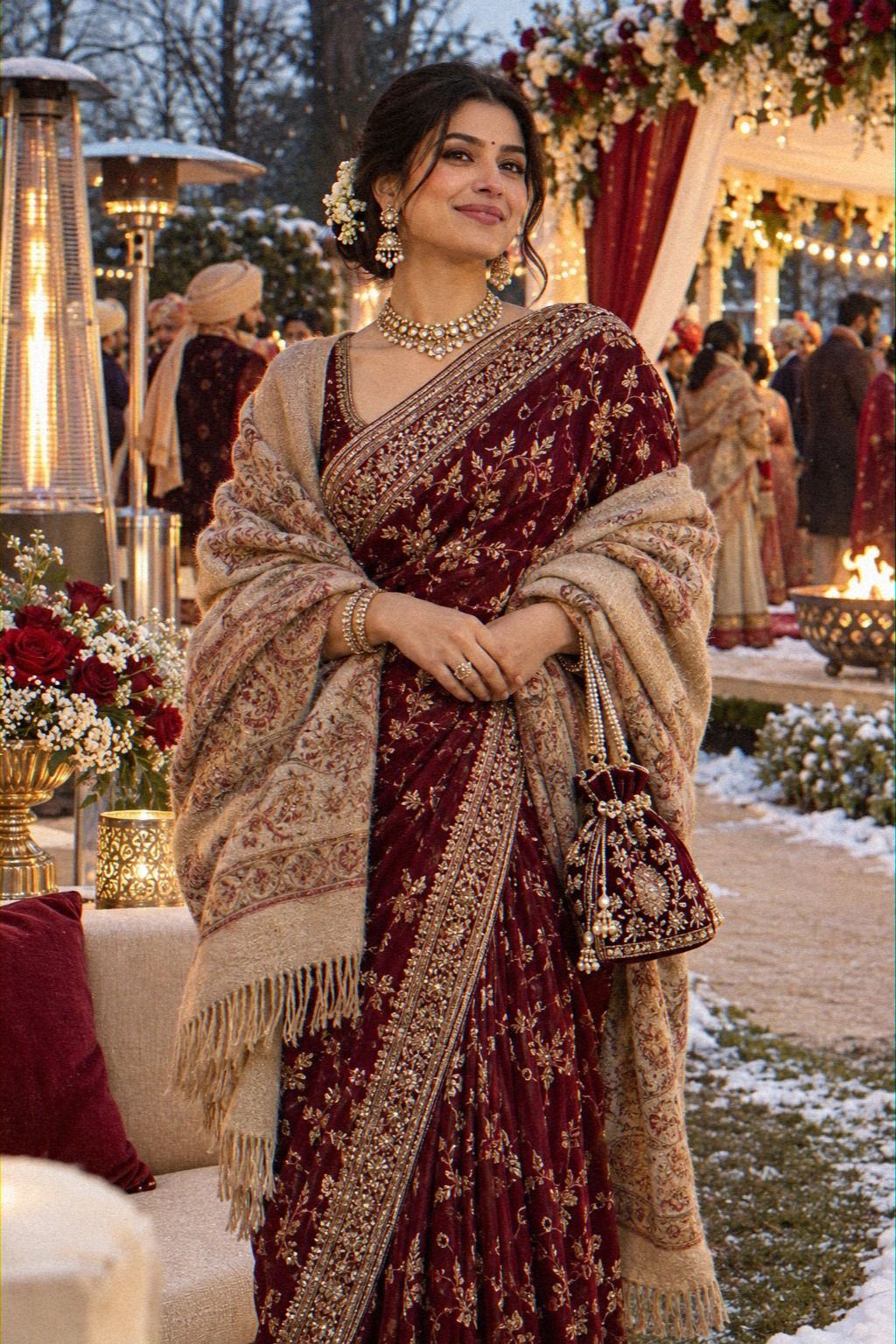
A velvet Anarkali already carries visual weight, so your shawl should add warmth without swallowing the flare. Choose a terracotta velvet Anarkali with a narrow embroidered border, then drape a lighter shawl over one shoulder and let the front panel remain visible. The combination looks polished, romantic, and quietly dramatic.
Your best layer is a wool-silk embroidered shawl in antique gold, olive, or stone. It should sit on the shoulder rather than bunch at the elbows. I’d skip a second heavy velvet layer because it makes the skirt drag and hides the embroidery that gives the outfit its personality.
Keep your footwear pointed and low enough for walking. Leather block-heel pumps or slim ankle boots work better than delicate sandals when the pavement is cold. If you’re attending an open-air ceremony, add thermal tights beneath the Anarkali and keep the shawl loose enough for easy movement.
The result is warm, elegant, and wearable beyond one event. For more cold-weather styling ideas, compare this silhouette with outdoor winter wedding guest outfits for freezing ceremonies. The reference is especially useful if you’re weighing the value of one substantial layer against several thin pieces.
2Can a Jewel-Tone Saree Handle Thermal Tights?
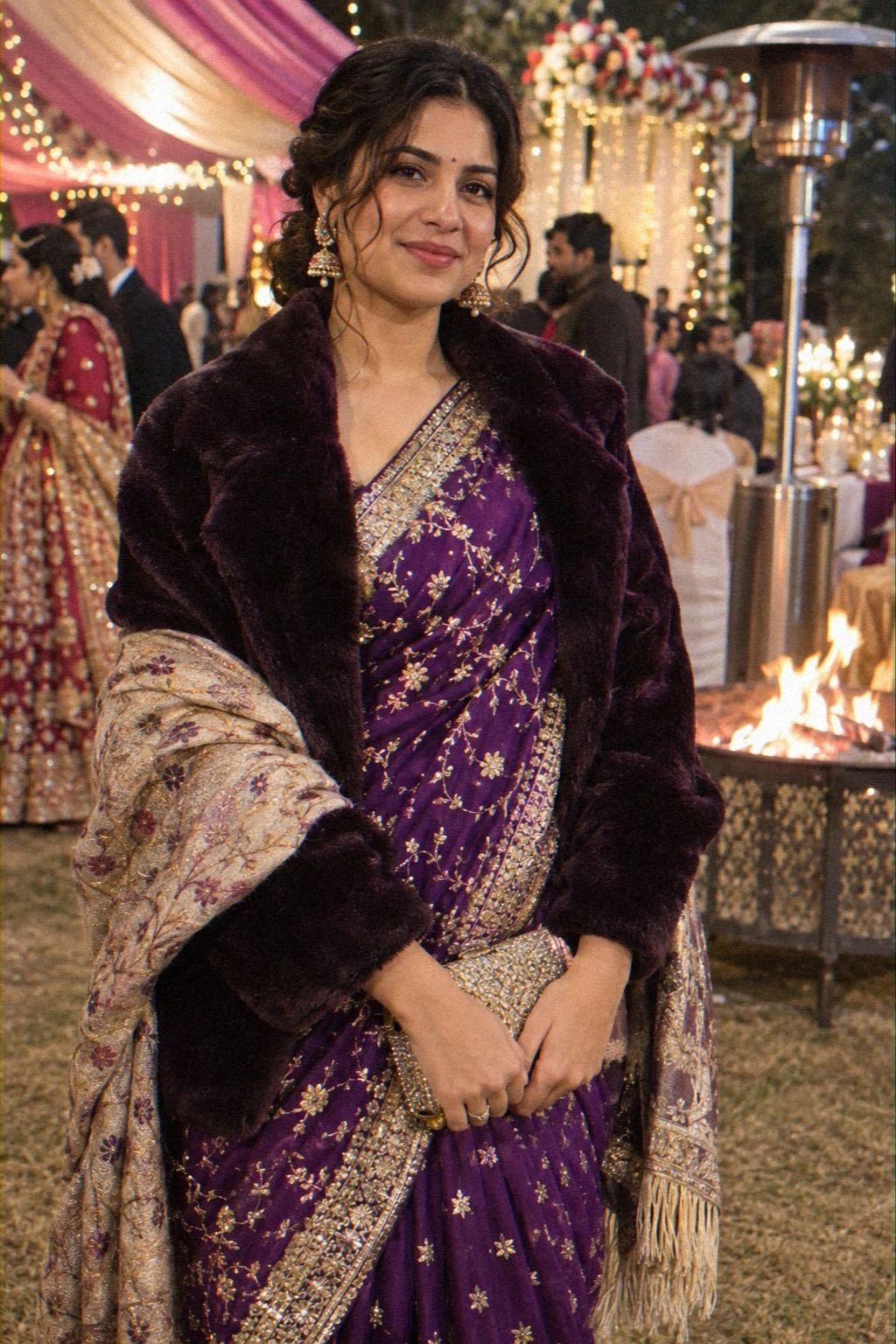
A jewel-tone saree can handle a practical base layer if your blouse and drape are chosen with care.
3Brocade Lehenga Styled With a Velvet Cape
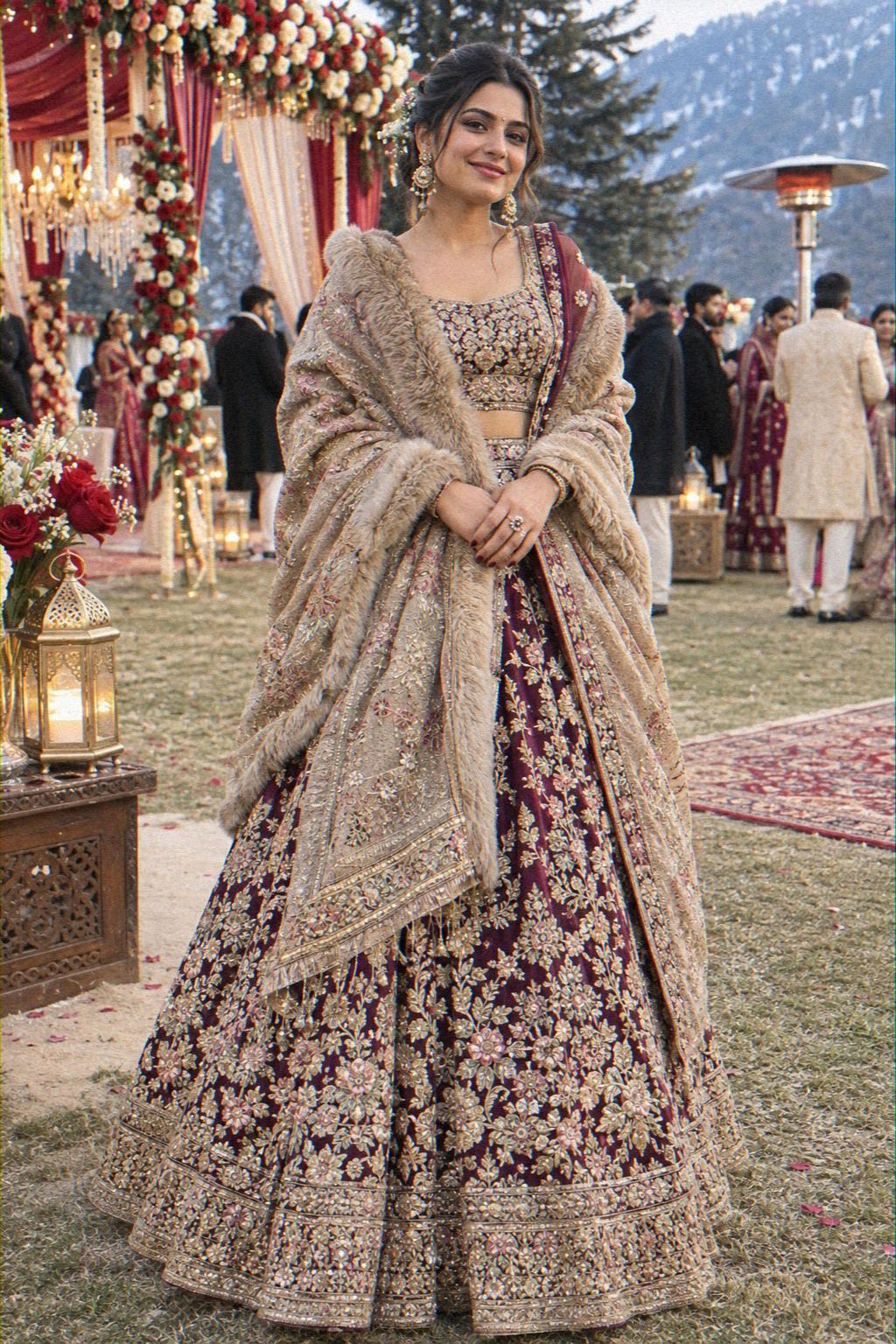
Brocade brings pattern, shine, and structure, so your cape should simplify the outline around it. A plum-and-rose-gold brocade lehenga looks strongest with a solid velvet cape that ends above the widest part of the skirt. That hem placement keeps your proportions clear and prevents the outfit from becoming one uninterrupted block of fabric.
Choose a cape with a modest front opening and a defined shoulder seam. Your arms can move, your blouse remains identifiable, and the brocade panel stays visible. I’d avoid a floor-length cape with a heavily decorated lehenga because the two hems compete every time you walk.
The cotton-velvet cape can be lined with satin for smoother movement over embellished fabric. Keep the lining quiet, since a bright contrast flash can make the cape look separate from the outfit. If you’re working with a neutral lehenga, a soft grey, rose-gold, or deep plum cape creates a rich, festive contrast.
Accessories should be small and deliberate. Pearl studs, a slim potli bag, and low metallic heels give your look understated refinement without adding another ornate surface. For a related proportion guide, browse plus-size winter wedding guest outfits that look amazing.
The useful takeaway is the same: let the outer layer clarify the shape instead of hiding it.
4Build the Sharara Around a Long Coat
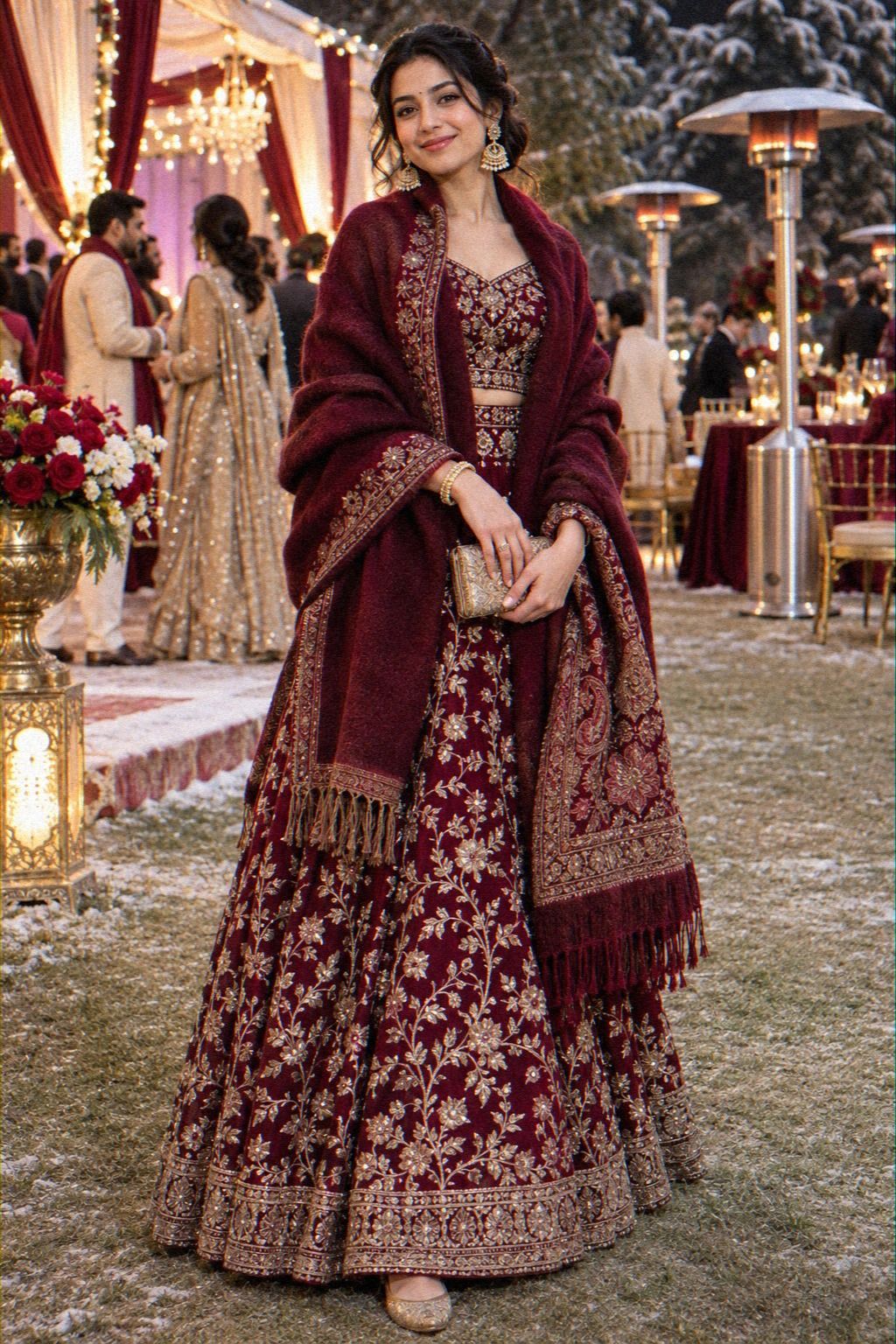
A silk sharara needs a coat that respects its volume. Start with a navy silk sharara set, then add an embellished long coat that finishes around mid-calf. Your trousers still flash at the hem, while the coat gives the outfit a clean vertical line.
The coat should be fitted at the shoulder and easy through the waist. I’d skip a very tight cut because it pulls across the embroidery and makes the sharara look heavier than it is. A softly structured coat in matte velvet with seed-bead embroidery feels festive without looking like evening outerwear borrowed from another outfit.
Wear a slim thermal camisole beneath the kurta if the venue is cold. Your base layer should stay close to the body, with no visible neckline competing with the coat. Don’t add a thick sweater under silk; the fabric will catch at the elbows and interrupt the smooth fall.
Finish with metallic pointed mules or low heels and one long earring. The outfit is already polished, so your accessories should create movement rather than more shine. For coordinated event dressing, see winter wedding guest outfits for your husband or boyfriend.
The matching principle is simple: coordinate color depth, not identical fabrics.
5The Pashmina Balance: Sequined Saree and Cropped Jacket
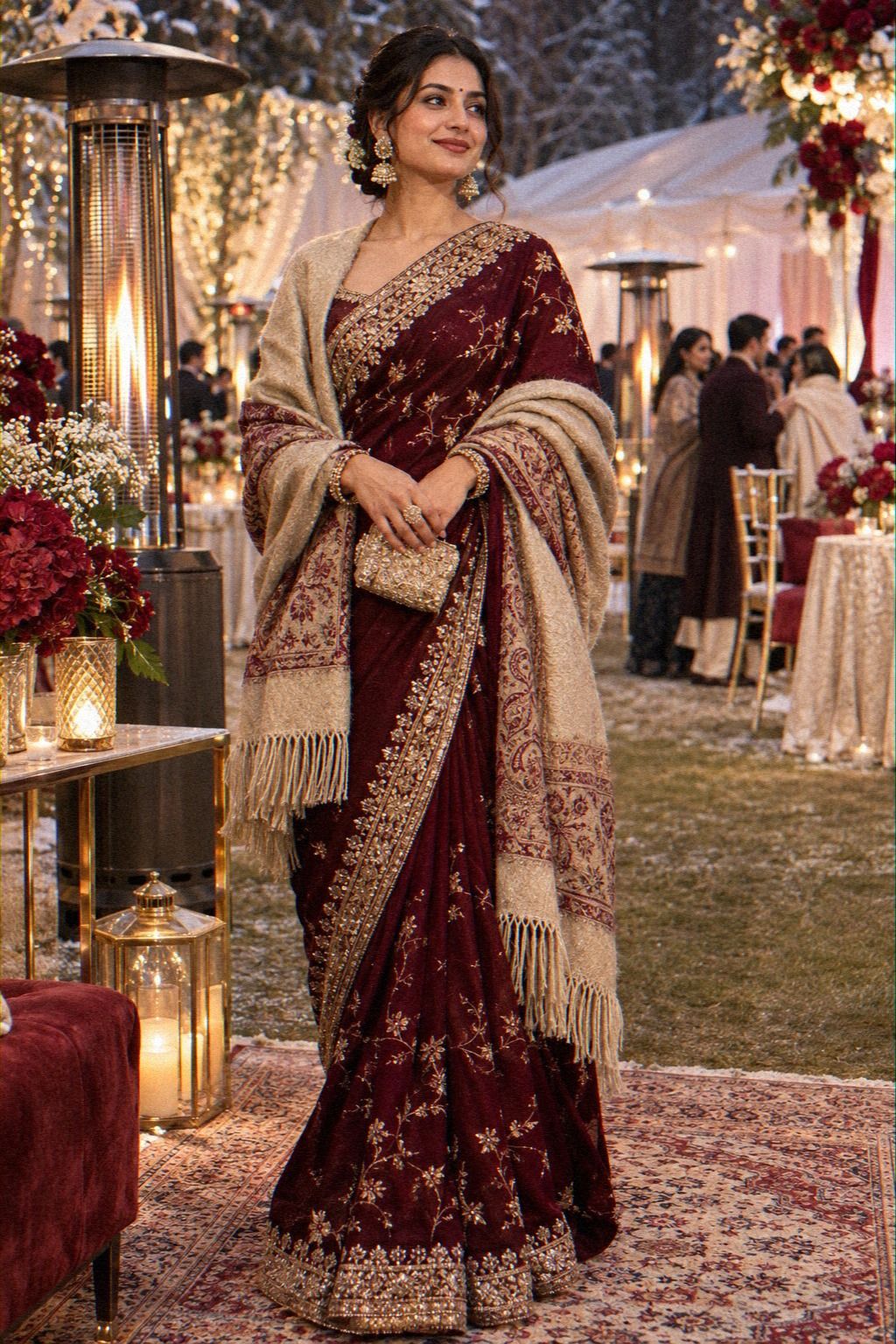
A sequined saree can look cold if every layer is glossy.
6How Should You Belt an Embroidered Palazzo Suit?
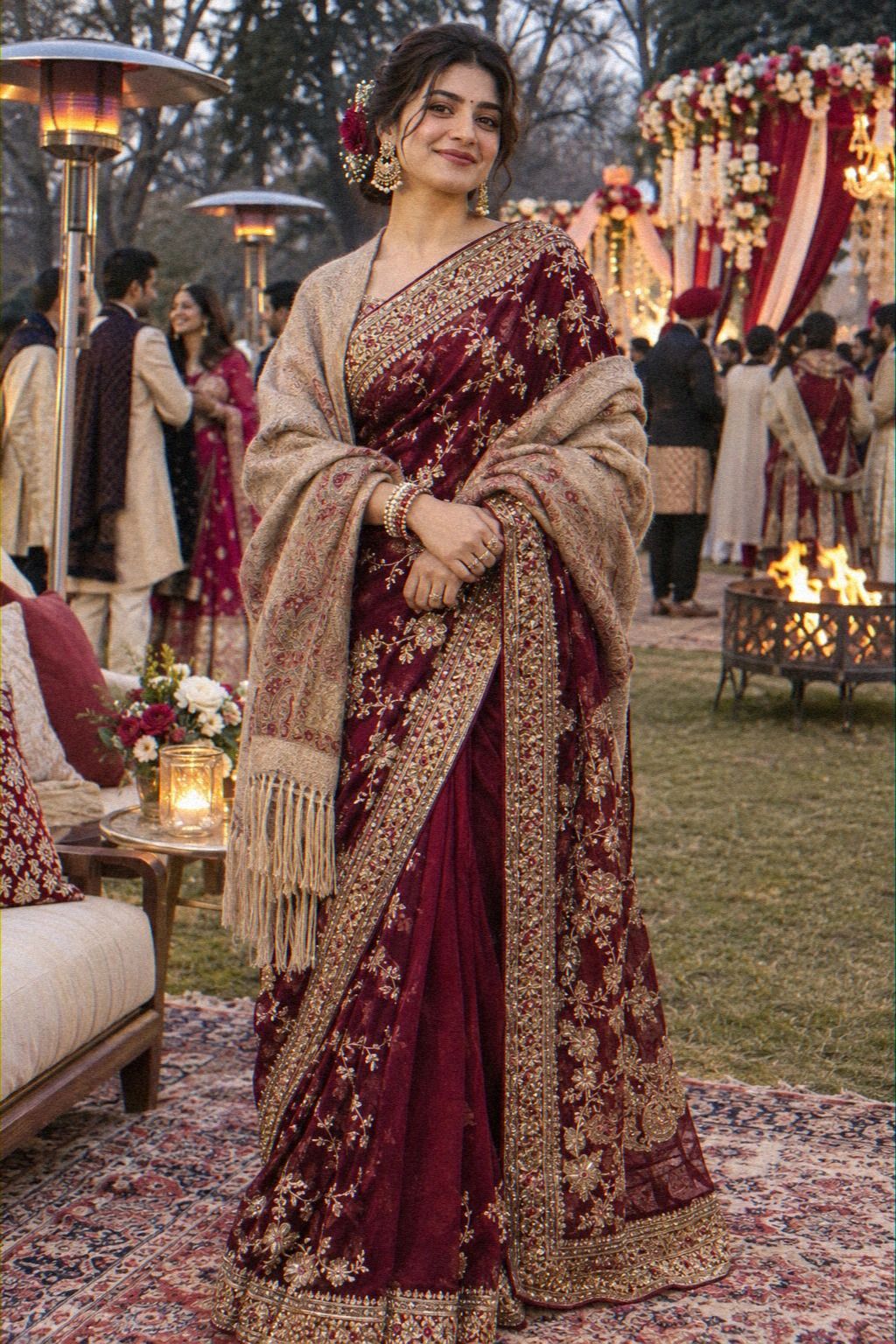
A palazzo suit gives you comfort through the legs, but the wide shape needs a firm upper layer. Choose a forest-green embroidered palazzo suit with a belted cape in rust, natural oak, or deep forest green. Your waist gets definition, the trousers keep their airy movement, and the outfit works beautifully for a daytime ceremony.
The belt should sit at your natural waist without compressing the cape. A narrow rust leather belt is enough when the suit carries floral embroidery. I’d skip a wide jeweled belt because it can make the cape look costume-like and may snag on the palazzo fabric as you sit.
For a park setting or an autumn courtyard, wear suede ankle boots beneath the trousers. Your hem should skim the top of the boot, not pool around it. If you’re petite, a slightly raised heel keeps the palazzo line long without turning the outfit into formalwear that feels difficult to walk in.
The palette can be warm and inviting without becoming dull. Add a terracotta lip, a small embroidered bag, and earrings that echo one thread in the suit. If you’re comparing the cost of tailoring versus buying a new set, plus-size winter wedding guest outfits that look amazing offers useful silhouette ideas before you commit.
7Let the Jhumkas Lead: Velvet Salwar Kameez
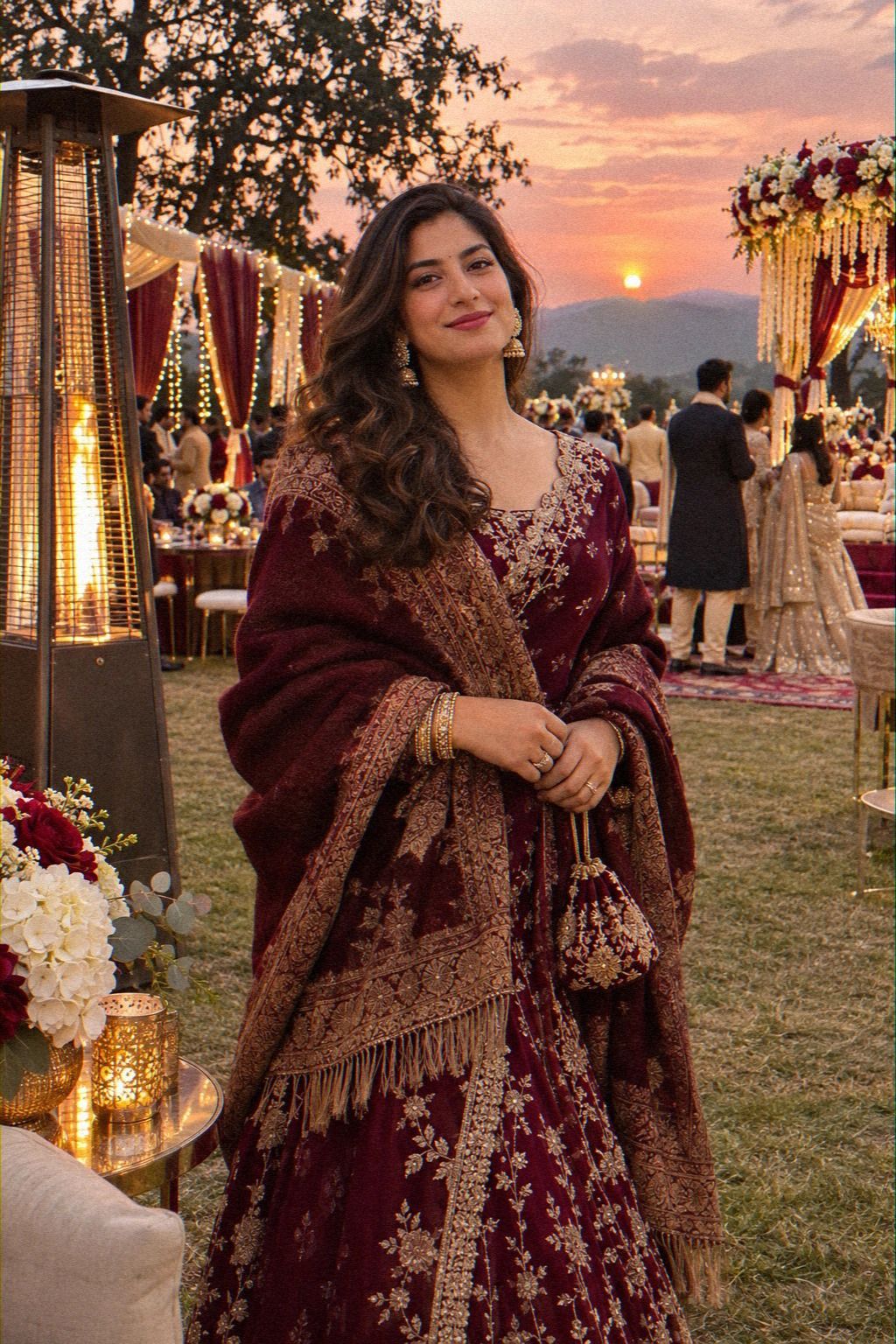
Velvet salwar kameez looks especially strong when the neckline and earrings do the styling work. Choose a dusty-rose velvet kameez with straight trousers or a gently tapered salwar. The fabric already feels opulent, so the rest of the outfit can stay crisp and controlled.
A high round neckline or modest V-neck gives statement jhumkas enough space. Keep the dupatta lightweight and draped behind one shoulder rather than wrapped tightly around the neck. A heavy scarf plus velvet can make the upper body look crowded and limit arm movement.
Choose antique-brass jhumkas with a small embroidered potli and pointed flats or low block heels. The earrings bring a festive finish without requiring a full necklace, while the shoes keep the outfit manageable across a long reception.
This is a strong value option when you already own velvet separates. Add one memorable accessory, then reuse the trousers with a silk kurta later.
If you need more footwear direction, compare the proportions with winter wedding guest outfits with boots that still look formal. One good pair can do more work than a second decorative layer!
8Metallic Lehenga With a High-Neck Blouse
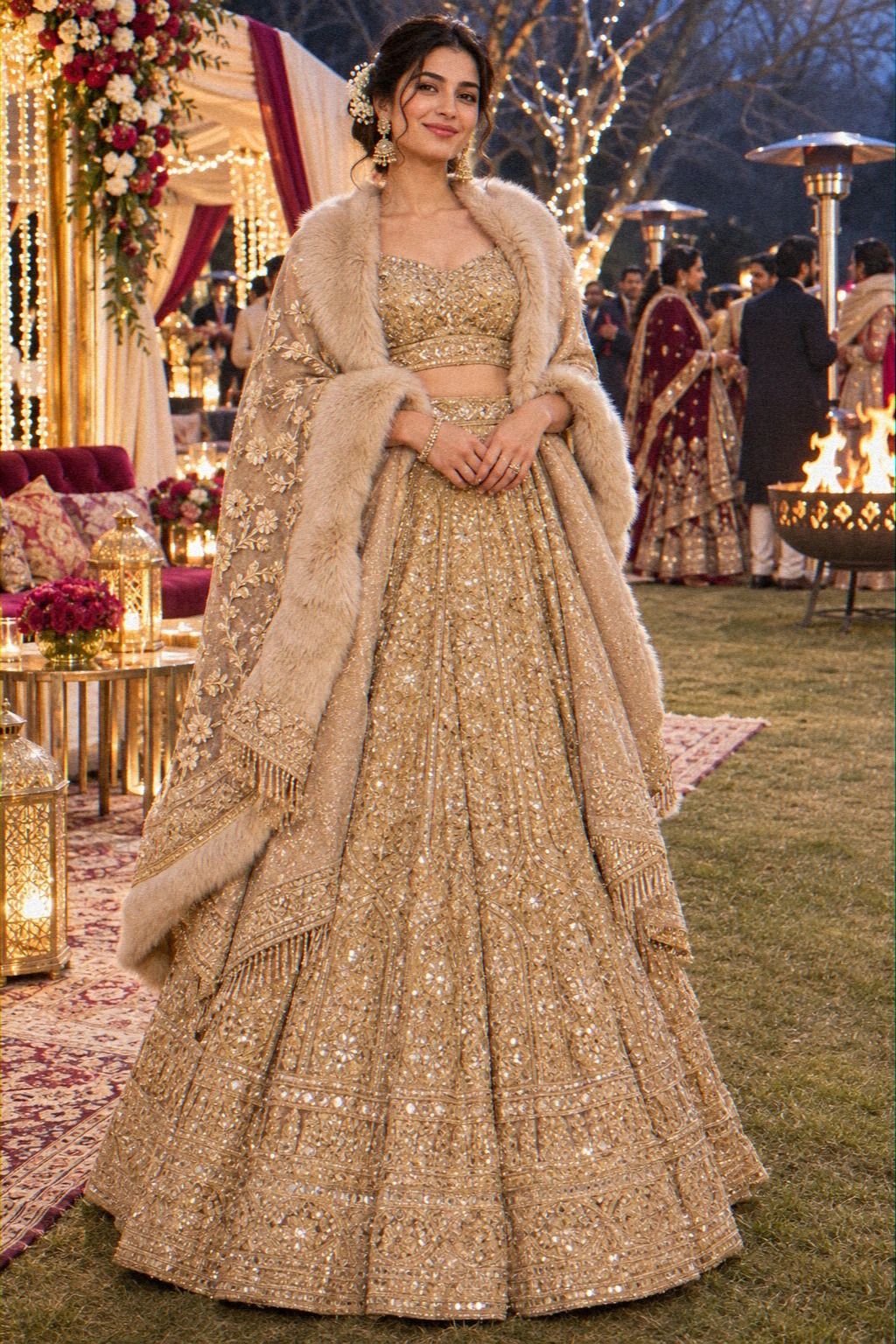
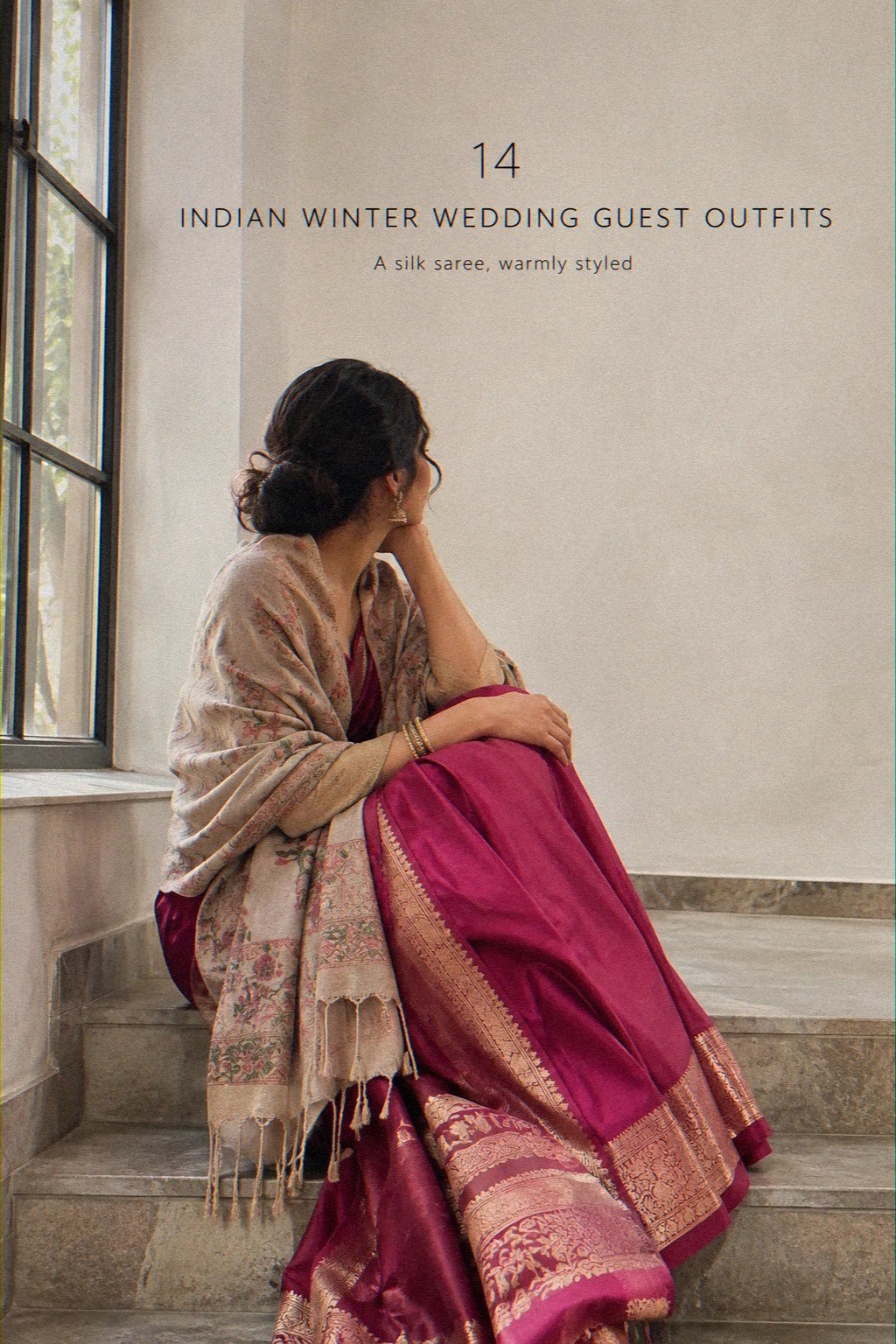
Metallic fabric needs a quiet frame, which is why a high-neck blouse works so well.
9Banarasi Saree Styled With a Fitted Jacket
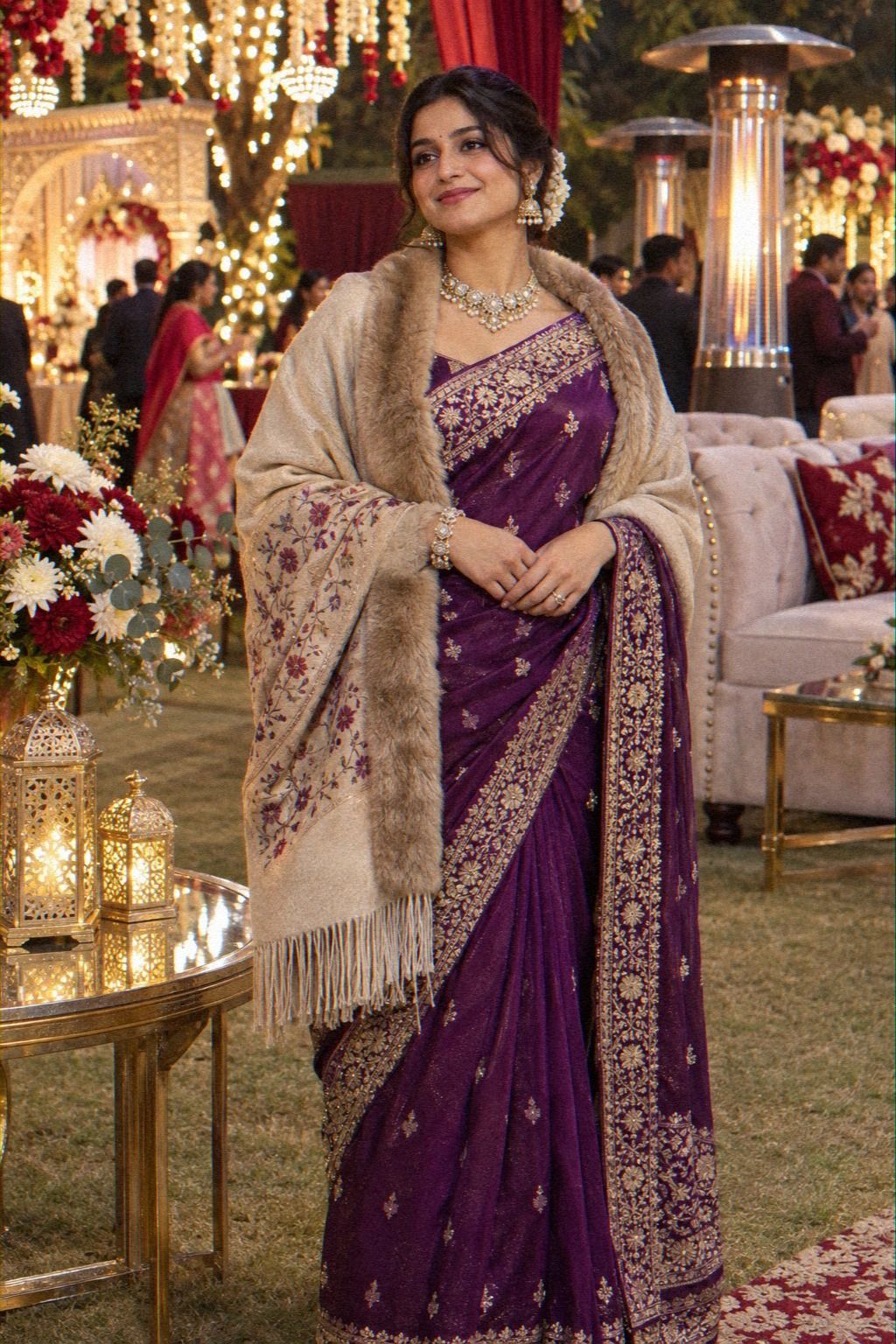
A Banarasi saree has enough pattern to stand alone, so your jacket should create shape rather than add decoration. Drape a midnight-blue Banarasi silk saree with a fitted jacket in ivory, copper, or deep navy. Your waist stays defined, the brocade remains visible, and the look feels distinctive without becoming busy.
Choose a jacket with a clean front and sleeves that finish at the wrist. I’d avoid a cropped jacket that ends directly at the fullest part of your bust, since it can interrupt the saree’s vertical fall. A hip-length cut is usually easier to balance, especially when the border is broad.
The best material is matte wool crepe or velvet with a smooth lining. It gives you insulation without introducing another competing pattern. If you’re wearing a heavy gold border, use plain buttons and let the Banarasi weave provide the detail.
Closed-toe shoes keep your feet comfortable while the saree stays the focus. A slim heel, pointed flat, or polished boot can work. For more footwear options, take a look at winter wedding guest outfits with boots that still look formal.
Spend on the jacket only if its cut will work with at least two other garments.
10Why Does a Pastel Anarkali Need an Ornate Velvet Dupatta?
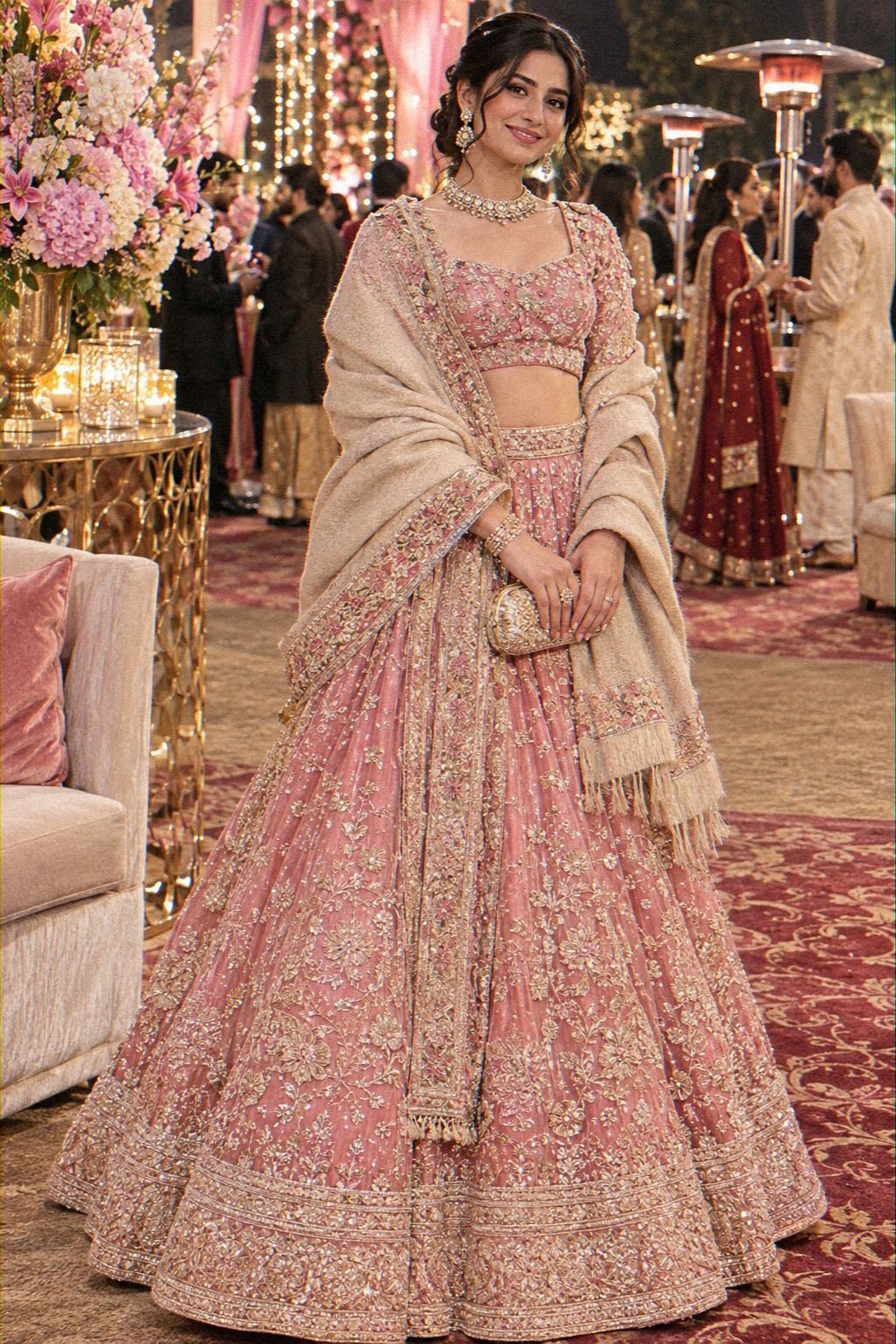
Pastel dressing can feel festive in winter when the texture carries the richness.
11Ground a Sequin Kurta Set With Embellished Ankle Boots
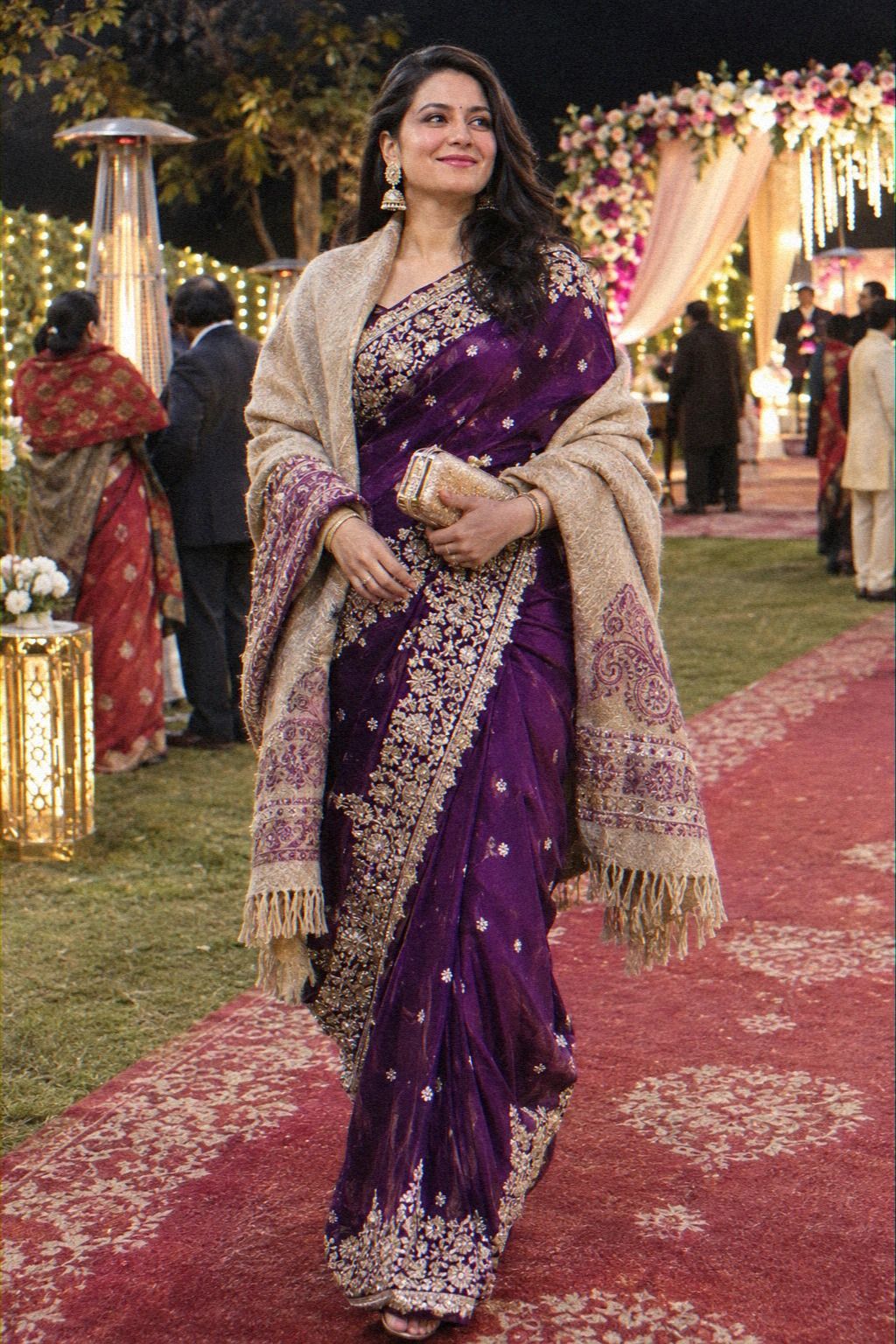
A sequin kurta set gains a more grounded personality when you style it with ankle boots. Start with a terracotta sequin kurta and matching straight trousers, then add embellished boots in stone, olive, or muted brass. Your footwear becomes part of the outfit instead of disappearing beneath a long hem.
Keep the boot shaft narrow enough to sit cleanly beneath the trouser leg. I’d avoid a chunky lug sole with delicate sequins because the contrast can feel accidental. A pointed or almond toe gives your silhouette more length, especially when the kurta ends above the knee.
Choose a silk-blend kurta lining that won’t cling to tights or thermal leggings. Your base layer should be smooth and close-fitting, with no bunching at the waist. If the venue is chilly, a sleeveless quilted vest can go beneath a long coat for travel, then come off before the ceremony.
The vintage-car setting suits a little attitude. Add sculptural earrings, a small top-handle bag, and a berry lip.
This outfit is elegant, modern, and practical enough for moving between the car and the reception. It works!
If you’re dressing as a couple, winter wedding guest outfits for your husband or boyfriend can help coordinate the color story without matching exactly.
12When Does a Jewel-Tone Gharara Need a Warm Shawl?
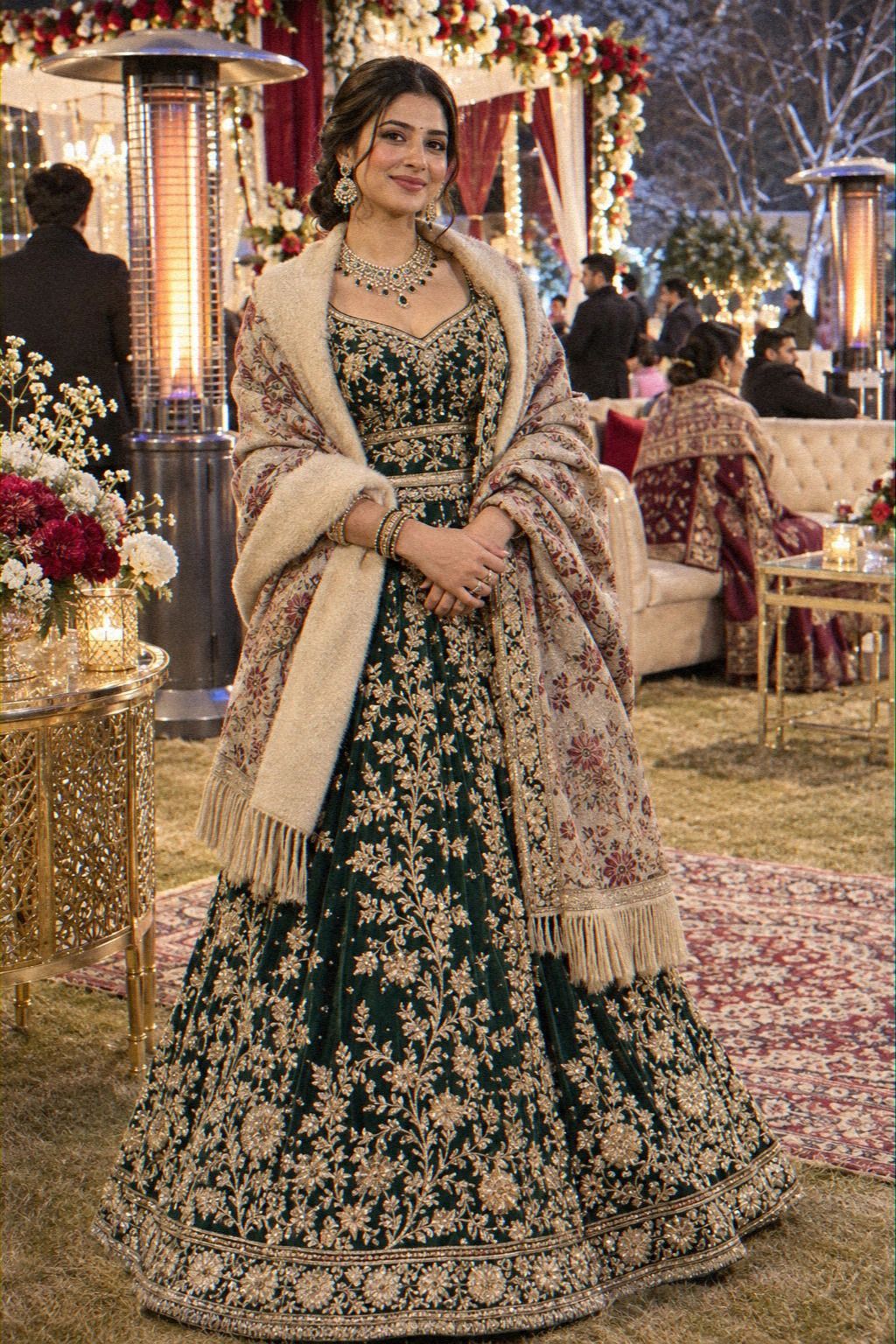
A jewel-tone gharara looks most balanced when the shawl follows the movement of the trousers. Choose a clay-toned gharara set with a shorter kurta, then add a shawl in linen or aged brass that rests on the shoulders without hiding the flare.
A cashmere-blend shawl in linen, cream, or aged brass creates a useful contrast against the warm clay color. If the gharara has heavy embroidery, choose a plain weave with a narrow border. If the outfit is simpler, a lightly embellished shawl can supply the festive finish without making the proportions feel overloaded.
Let the shawl fall behind the elbows rather than wrapping it tightly around the torso. That keeps your hands free and preserves the wide trouser line. Wear pointed juttis or low metallic heels so the hem doesn’t drag when you move between the ceremony and reception.
This combination has strong value because every piece can be separated later. The gharara works with a lighter dupatta, and the shawl works over a saree or dress. For more proportion ideas, browse plus-size winter wedding guest outfits that look amazing.
You’ll get a more useful result by judging the hem and shoulder width together!
13Draped Saree Gown With Full-Sleeve Blouse
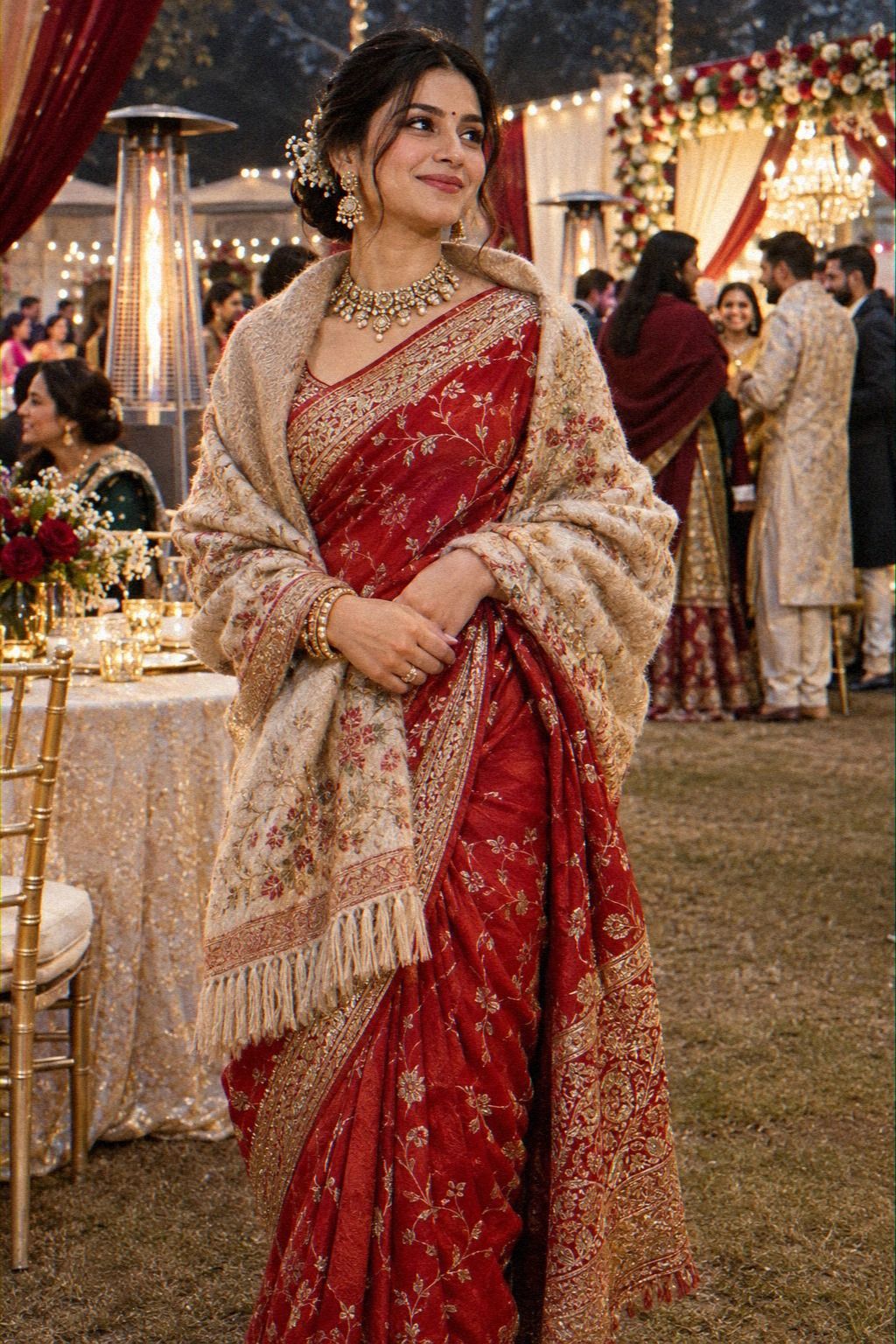
A draped saree gown gives you the fluidity of a saree with a more secure waist and hem. Choose a plum draped saree gown with a full-sleeve blouse in velvet, satin, or matte crepe. Your torso stays covered, the skirt falls in one clean sweep, and the look feels dramatic without being difficult.
The sleeve should fit close to the wrist without pulling across the upper arm. I’d avoid a sheer sleeve if warmth is the purpose, unless it sits over a fitted thermal layer that matches the visible fabric. The gown should also have enough room for a short step, since a narrow hem can make stairs awkward.
A satin drape with a velvet bodice gives you contrast without needing extra embellishment. Keep the jewelry near the face: long earrings, a small hair ornament, or one sculptural cuff. Your accessories shouldn’t interrupt the diagonal drape across the waist.
For shoes, choose a pointed heel or dressy boot with a secure strap. The outfit doesn’t need a busy setting to hold attention.
It’s refined, glamorous, and easy to adapt for a formal evening. If you’re comparing footwear before buying, winter wedding guest outfits with boots that still look formal is a helpful place to compare shapes.
14Bridal-Inspired Lehenga With Layered Pearl Accessories
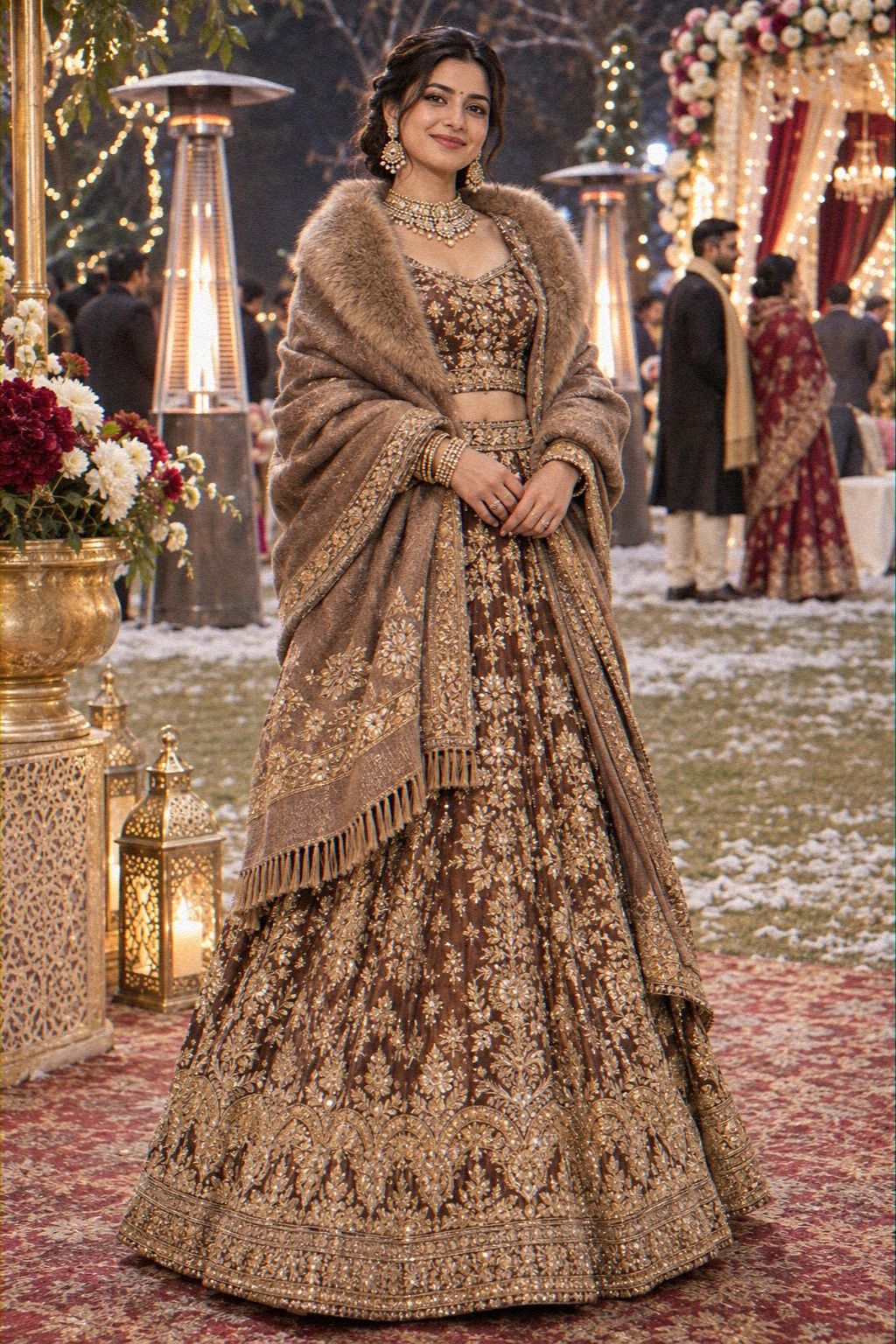
A bridal-inspired lehenga can work for a guest when you control the intensity.
The Layering Rule I’d Keep
Warmth in Indian wedding dressing isn’t about piling on every rich fabric at once. It’s about giving each layer one job. Velvet adds depth near the body.
Pashmina protects the shoulders. A fitted jacket defines the waist.
Thermal tights solve the cold without changing the visible silhouette. Once you assign those roles, your outfit becomes easier to judge in a mirror.
I’m most persuaded by the combinations that preserve one clear focal point. If your saree has a strong Banarasi border, the jacket should stay quiet.
If your lehenga is metallic, the blouse should frame it. If your Anarkali is velvet, the shawl can bring contrast through embroidery or color.
You don’t need every surface to sparkle for the look to feel celebratory.
I’d also choose movement over decoration whenever the two compete. A cape that lets you lift your arms is more useful than one with heavier embroidery.
A shawl that stays on your shoulder is worth more than one that needs constant adjustment. You’ll look more composed because you’re not managing the outfit every few minutes.
The most practical test is simple: can you sit, walk, reach for your bag, and step outside without changing the whole silhouette? If the answer is yes, the outfit has done its work. And if you’re still deciding between a cape and a coat, choose the layer that leaves your main garment recognizable from the front.
For more cold-weather comparisons, outdoor winter wedding guest outfits for freezing ceremonies is a useful reference.
The Questions I Get Asked Most
What is the best Indian winter wedding guest outfit for a small Indian winter wedding?
A velvet Anarkali with an embroidered shawl or a jewel-tone saree with thermal tights gives you warmth without excess volume. I’d choose one strong material and one practical layer. Your outfit will feel festive in a smaller venue without crowding your movement.
Where can I buy Indian winter wedding guest outfit pieces on a budget?
Look for velvet separates, wool-blend shawls, and embellished accessories at local boutiques, resale shops, and established Indianwear retailers. Facebook Marketplace and thrift stores can also help with shawls and clutches. You’ll get more value from one quality layer than several thin pieces.
How much does an Indian winter wedding guest outfit cost?
A complete outfit can cost about $100 to $300, depending on the fabric, embellishment, and accessories. I’d reduce the total by reusing shoes, choosing a plain blouse, or borrowing a shawl. Your existing jewelry may already provide the festive finish.
Can I create an Indian winter wedding guest outfit on a budget?
Yes, and I’d build around one garment you already own. Add thermal tights, a secondhand shawl, and polished closed-toe shoes.
A velvet belt or statement earrings can change the silhouette without requiring a new full outfit. That approach usually offers better cost-per-wear value than buying every piece at once.
Is an Indian winter wedding guest outfit worth it in a small space?
Yes. A small venue rewards a controlled silhouette because your layers remain visible and your accessories don’t get lost. I’d choose a fitted jacket, cropped cape, or narrow shawl.
You’ll look intentional without needing a wide skirt or dramatic trailing fabric.
Is an Indian winter wedding guest outfit a good idea for a rental or travel stay?
Yes. I’d pack pieces that layer without steaming for hours, such as a velvet blouse, a silk saree, and a lightweight shawl. A garment bag, removable brooch, and foldable clutch help you finish the look without permanent alterations or bulky luggage.
For coordinated travel dressing, winter wedding guest outfits for your husband or boyfriend offers another useful comparison.
These are planning ranges, not fixed prices. The final cost depends on whether you’re buying a complete set, tailoring separates, reusing shoes, or choosing secondhand accessories.
Where I’d Start First
If I had to pick one, I’d start with the jewel-tone saree and thermal tights. The hidden base layer solves the cold without changing the drape, and a velvet blouse keeps the outfit visibly festive. It’s a versatile, high-value choice when you want one purchase to cover more than one celebration.
Pin this combination for later, then build your shoes and jewelry around its strongest color. If you need a practical footwear alternative, compare it with winter wedding guest outfits with boots that still look formal. Spend where the silhouette changes, save where the accessory can be reused.