
The most useful fix was a visible bedtime boundary built around what I wore, where I sat, and how consistently I followed the same sequence. I’d been changing blankets and losing sleep, but the real issue was an inconsistent routine. These 11 sleepwear ideas make your side feel intentional without pretending that clothing can train a dog.
- Matching Satin Pajamas for Bedtime Boundaries
- Can an Oversized Sleep Shirt Create Personal Space?
- Monochrome Loungewear Keeps the Silhouette Uncluttered
- Matching Satin Pajamas for Bedtime Boundaries
- Can an Oversized Sleep Shirt Create Personal Space?
- Monochrome Loungewear Keeps the Silhouette Uncluttered
- Build a Three-Texture Knitwear Combination
- The Wrap-and-Release Method: Why a Silk Robe Works
- Coordinate a Dog Bandana and Pajama Accent
- Contrast Piping Frames Your Sleepwear Silhouette
- Which Slippers Make the Bedtime Routine Easier?
- Personalized Cuffs Make Shared Bedtime Playful
- Wide-Leg Pajamas Prevent Blanket Tangles
- Soft Headbands Complete a Dog-Friendly Sleep Look
1Matching Satin Pajamas for Bedtime Boundaries
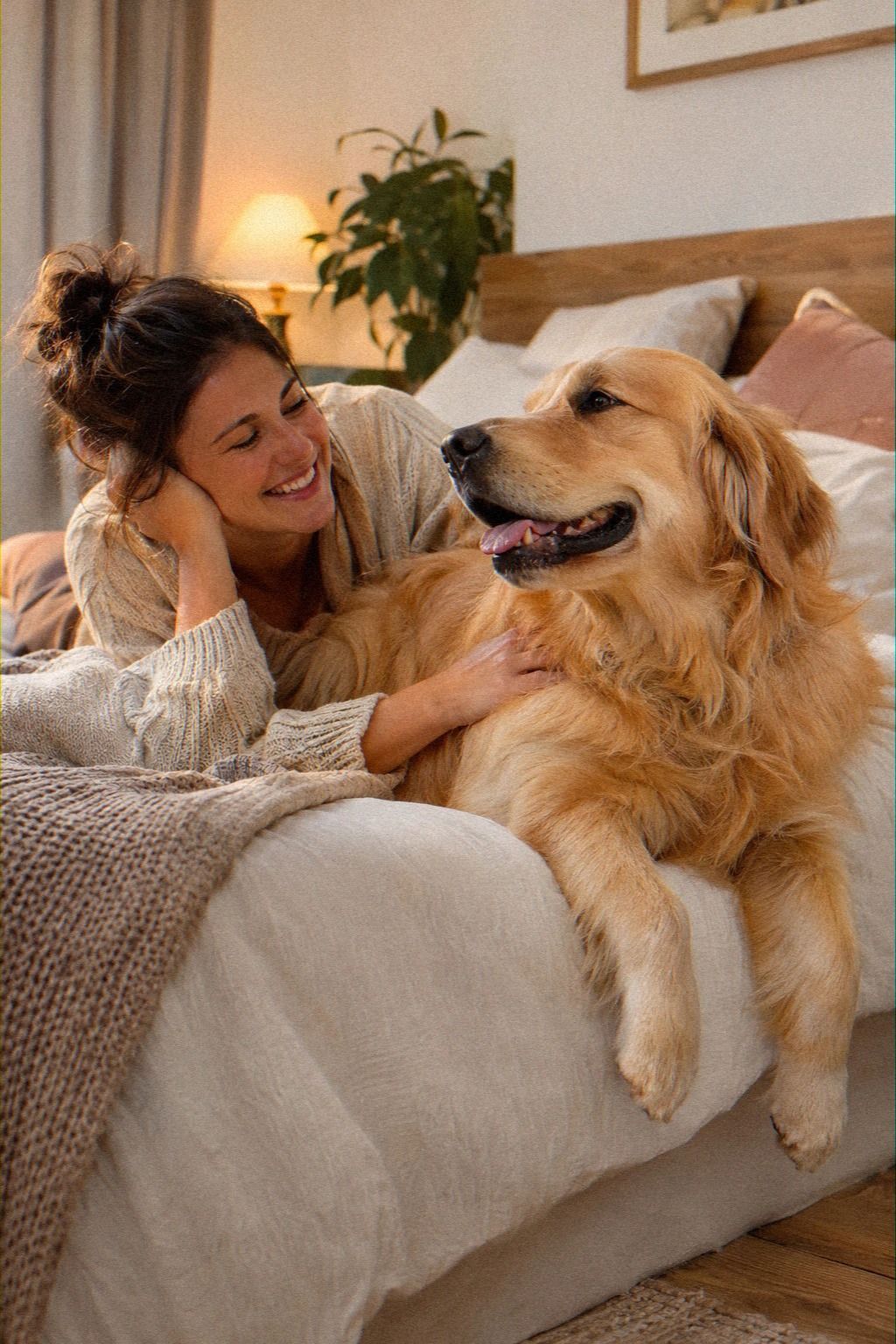
Matching pajamas create the clearest visual cue at bedtime. A terracotta satin set or stone version gives your silhouette a polished vertical line, while the same color on the top and trousers keeps the outfit calm and understated.
I’d choose satin with a little weight rather than paper-thin fabric. You’ll notice the difference when you sit, stand, or move beneath the covers.
The fabric should skim your body, not cling to every movement. A relaxed pajama set can feel more worth it than a cheaper pair that twists after washing.
I wouldn’t choose loud novelty prints here. They’re playful, but they can make a repeatable routine feel less deliberate. A muted olive satin pajama set gives you a clean starting point, and that small ceremony can help you slow down.
Look at the closure, too. Buttons can feel crisp, while a pull-on style is quicker on tired evenings.
If you choose a button front, make sure the placket lies flat when you sit. A smooth waistband matters just as much as the color because bunching can make an otherwise elegant set feel fussy.
Typical US cost by tier:
2Can an Oversized Sleep Shirt Create Personal Space?
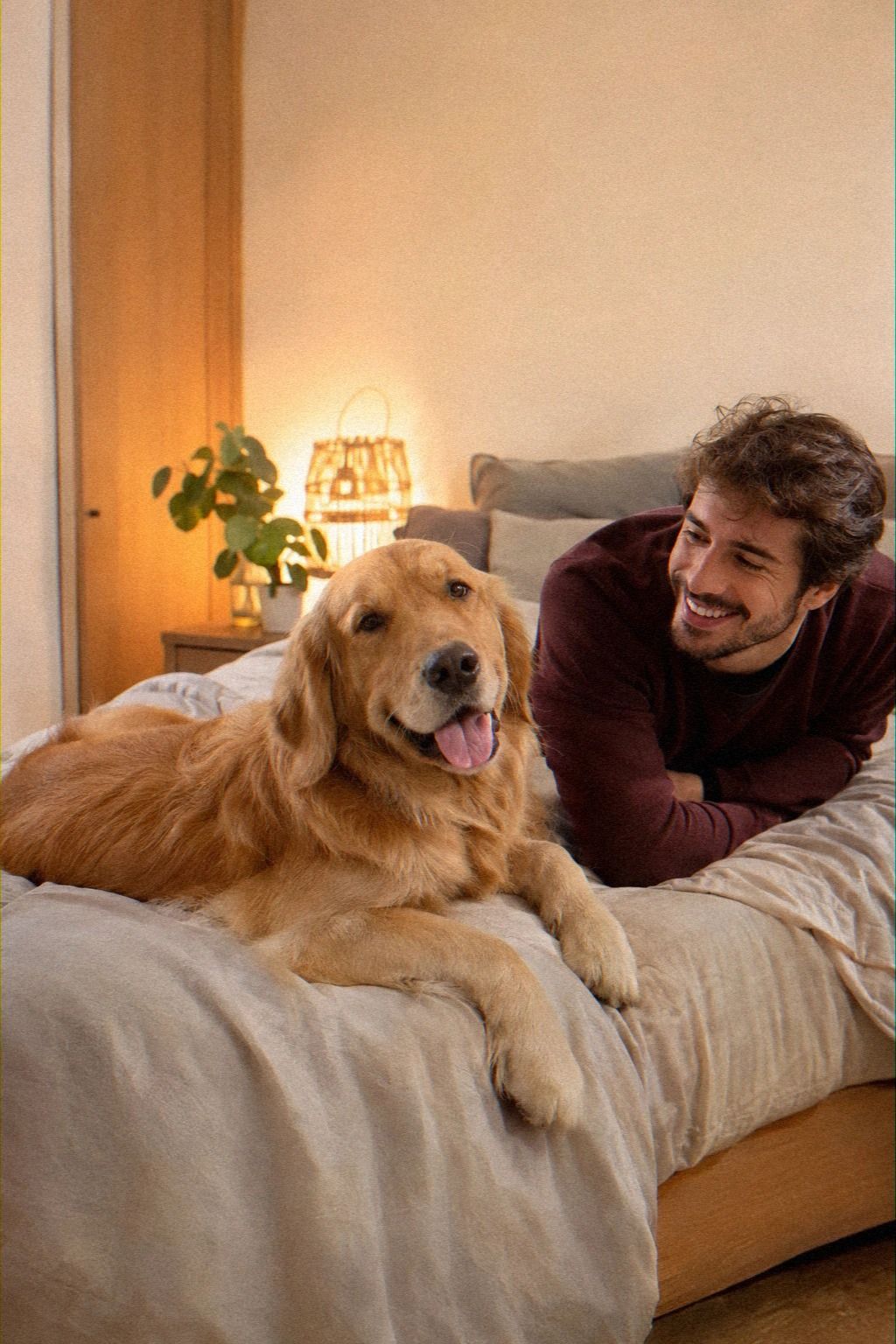
An oversized sleep shirt creates visual space through proportion.
3Monochrome Loungewear Keeps the Silhouette Uncluttered
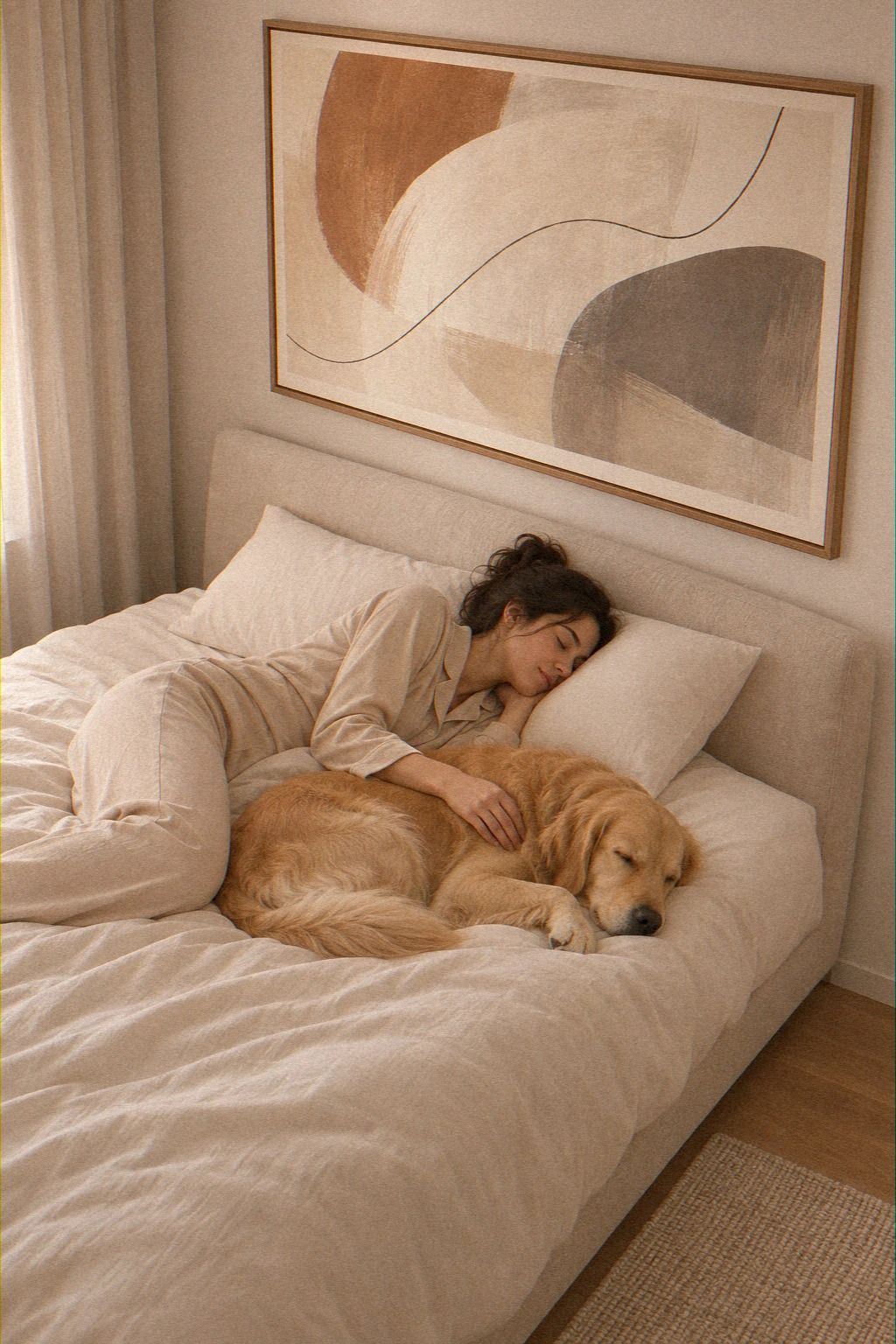
Monochrome loungewear makes bedtime look deliberate without requiring a matching set. A plum jersey top with wide-leg trousers, or a soft grey cardigan over a close-toned tank and jogger, gives your body one uninterrupted column.
The finish can vary within the same color family. A matte cotton jersey beside brushed fleece or fine-gauge knit creates depth without breaking the line.
Don’t use three unrelated neutrals just because they’re comfortable. Each color break becomes another visual event, and the outfit can start to look accidental.
One small accent is enough. Try a slim rose-gold watch, grey scrunchie, or polished claw clip. The best value comes from pieces you already own and can repeat easily.
Monochrome doesn’t have to mean plain; it just needs a clear point of view.
Grey can look sleek, but it may show lint. Plum feels richer and makes fabric texture more visible. Rose gold is especially useful as a small accent when you want something warmer than a plain neutral.
4Build a Three-Texture Knitwear Combination
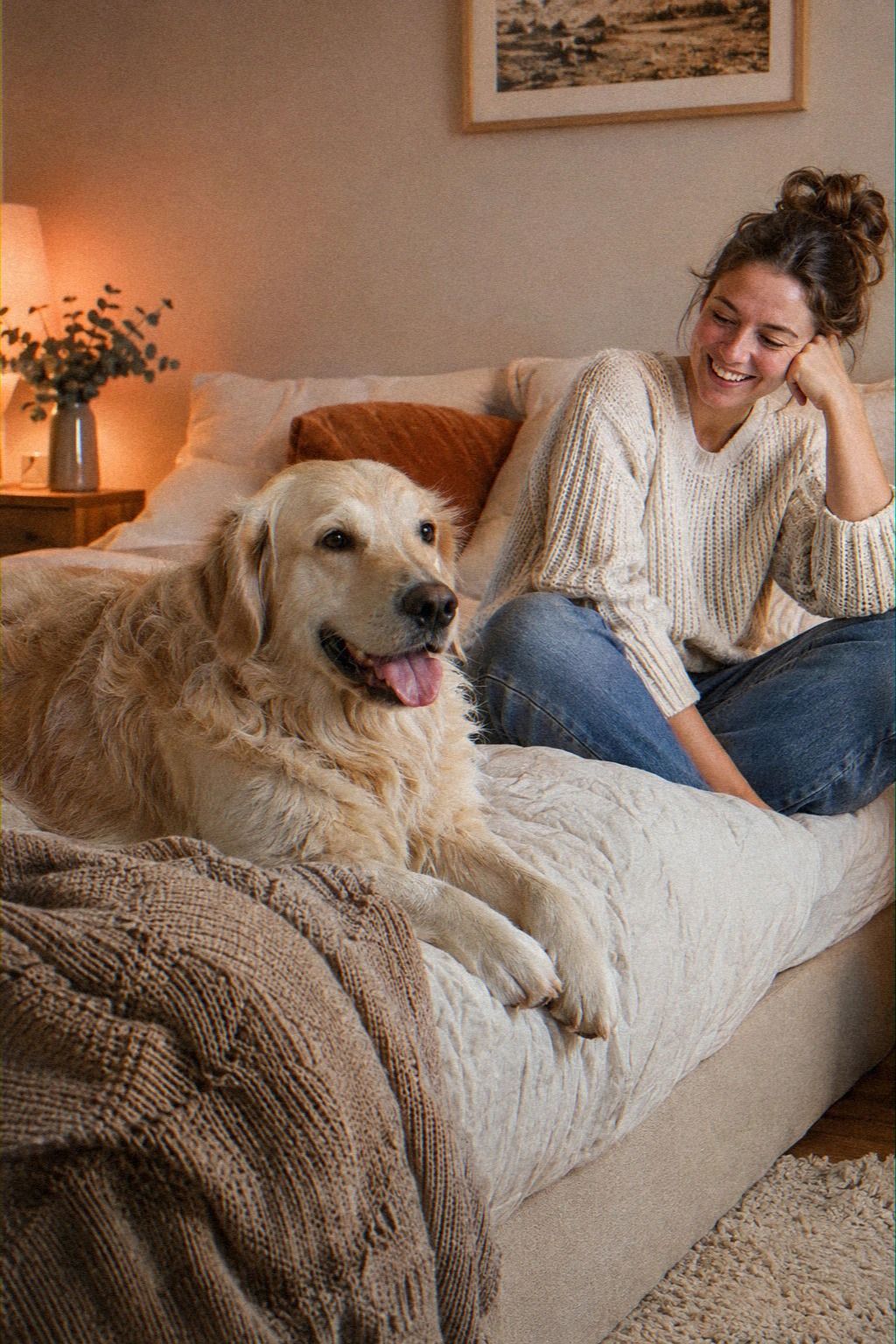
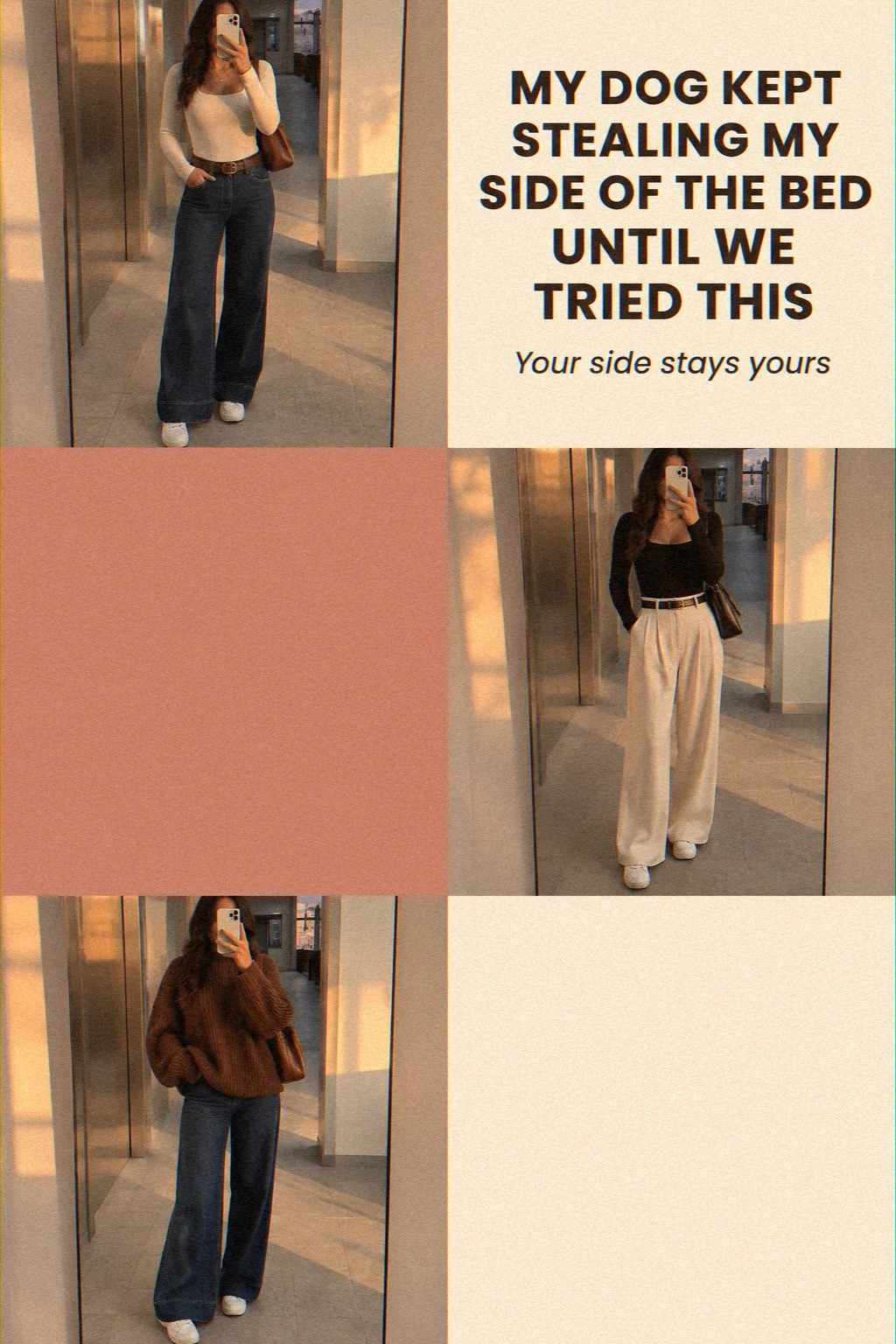
Layered knitwear gives sleepwear a tactile identity. Start with a fine ribbed tank, add a soft cardigan, then finish with relaxed knit trousers. Each garment should have a clear role, so you can get dressed quickly instead of negotiating with a crowded drawer.
The strongest combination uses three textures, not three random layers. Smooth rib at the base, a slightly fuzzy knit in the middle, and a dry, matte trouser finish create contrast your eye can follow. A lightweight merino cardigan is often more worth it than a thick sweater that makes your shoulders look bulky.
If you’re warm indoors, swap the cardigan for an open cotton shirt. If you’re petite, keep the hem around the high hip so your legs don’t look shortened. A cropped knit layer can make the whole outfit feel more polished without adding much cost.
Watch the sleeve proportions. A full sleeve under a wide cardigan can feel crowded, while a close-fitting base layer keeps the combination clean.
For a slouchier outfit, let only one piece be oversized. The other two should give the silhouette some structure.
5The Wrap-and-Release Method: Why a Silk Robe Works
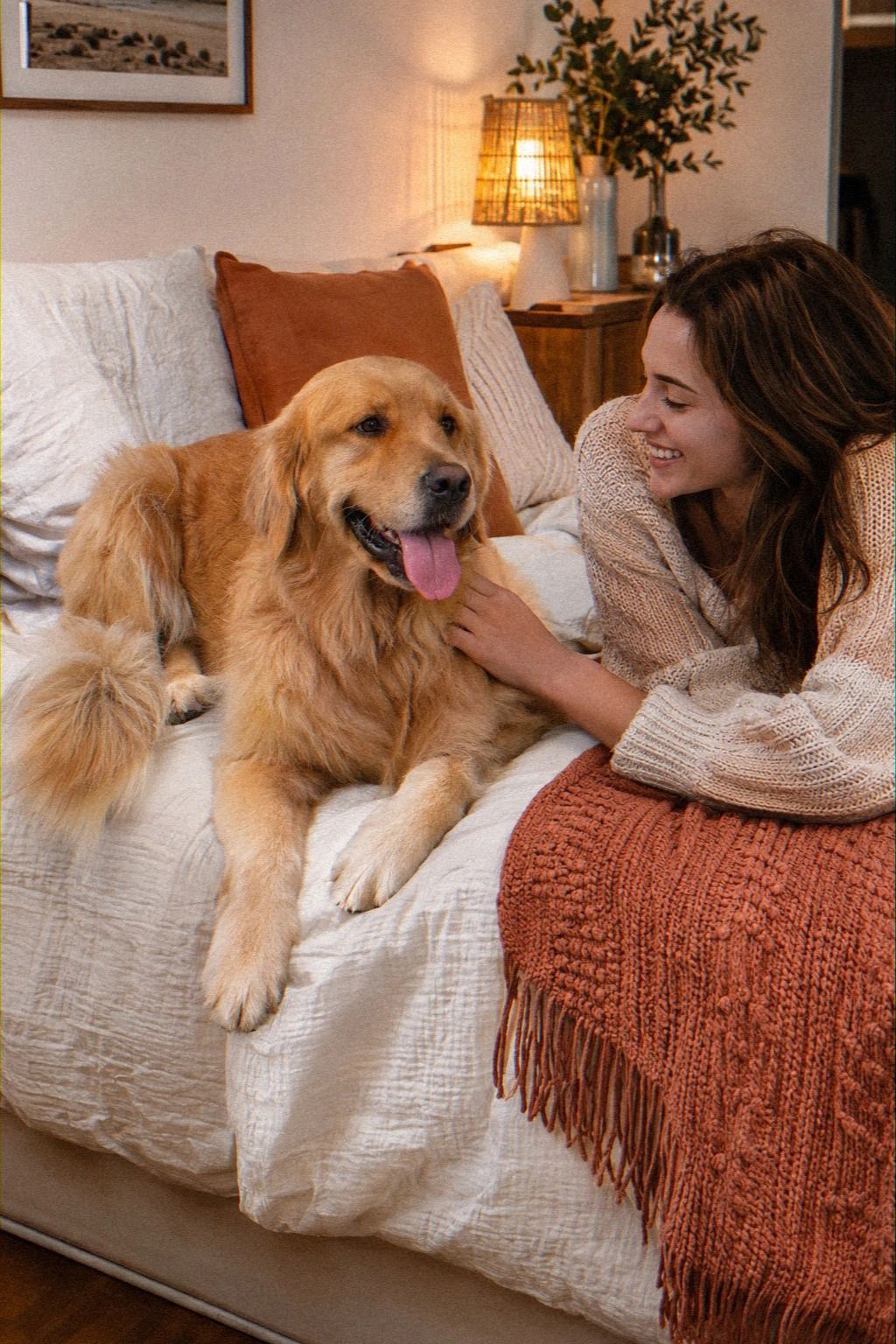
A robe changes how you move because its tie creates a clear center line and its length establishes a finishing layer.
6Coordinate a Dog Bandana and Pajama Accent
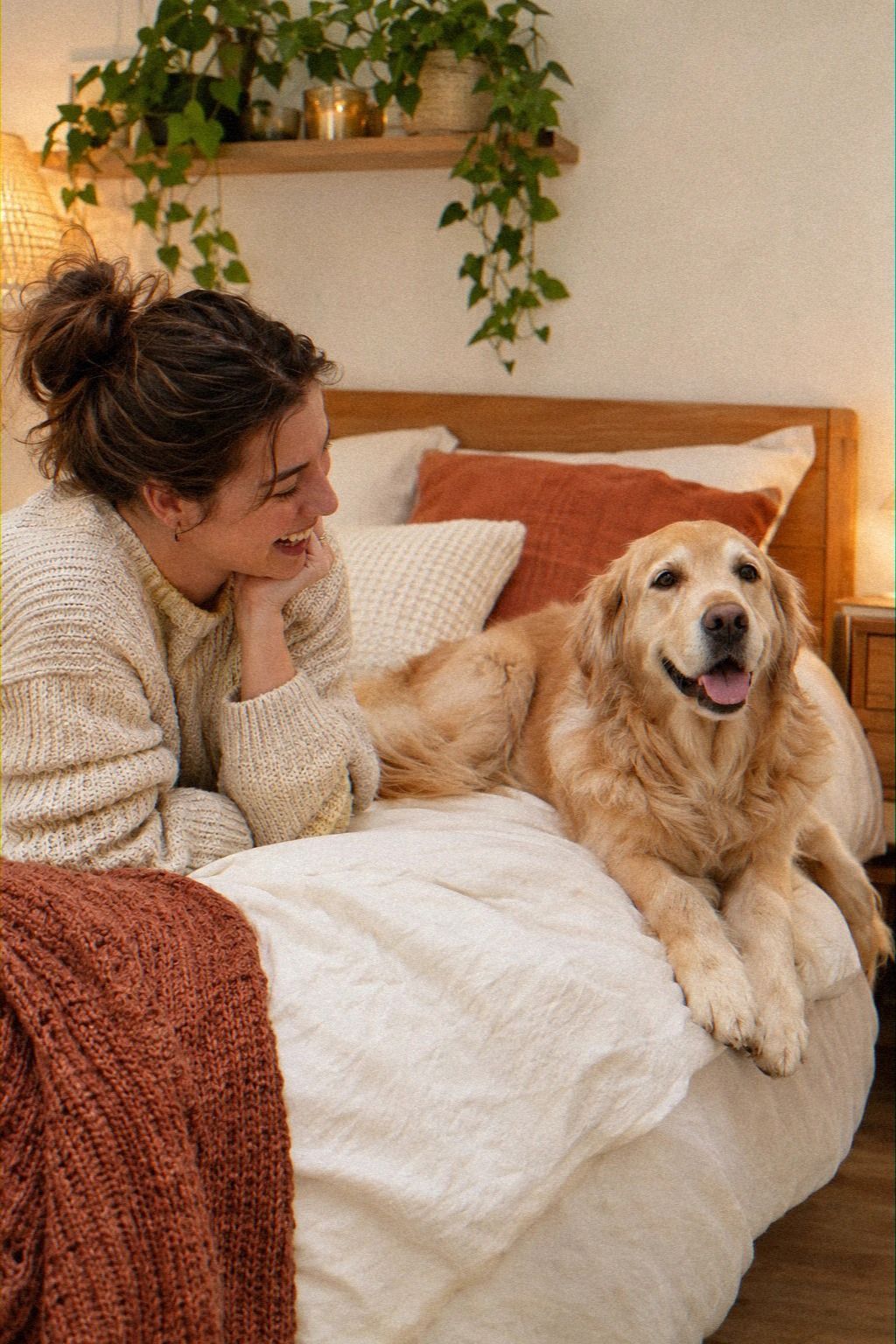
Coordinating your pajamas with your dog’s bandana makes the look playful without turning your dog into a costume. Repeat one small detail, such as forest-green piping, a warm tan stripe, or a rust tone.
Keep the connection subtle. A cotton bandana with a simple border works better than a novelty print competing with your sleepwear. The same accent can appear on your cuff, scrunchie, or slipper trim.
Check that the bandana fits comfortably and has no loose decoration. The styling idea is about visual harmony, not forcing your dog to participate.
If your dog dislikes accessories, use the color reference only in your own outfit. That’s still a complete look.
A bandana isn’t necessary for the idea to work. You can echo a collar color, leash tone, or favorite toy instead. The point is to create one recognizable detail, not to make the dog and owner look identically dressed.
7Contrast Piping Frames Your Sleepwear Silhouette
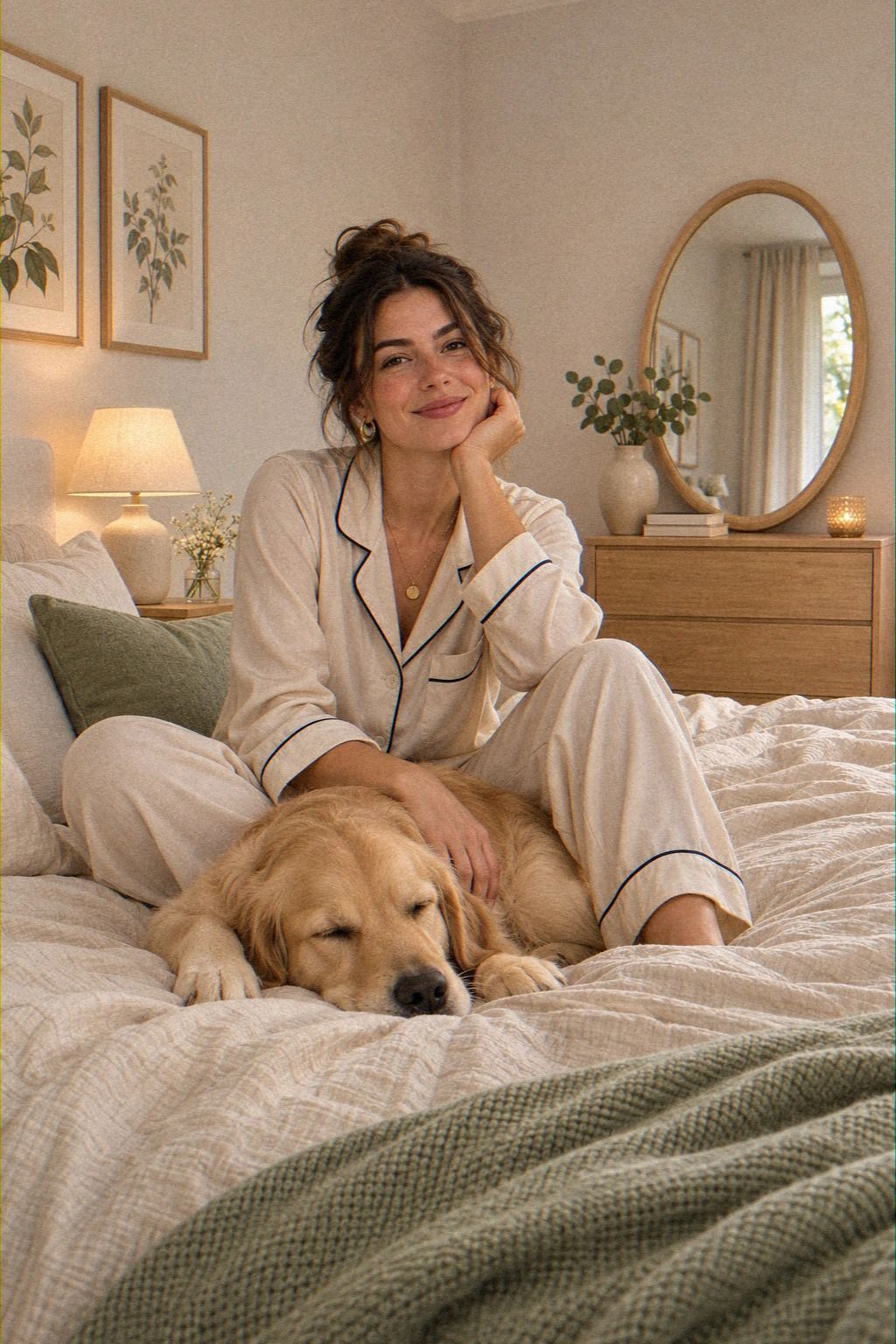
Contrast piping frames the outline of sleepwear in a way a plain set can’t.
8Which Slippers Make the Bedtime Routine Easier?
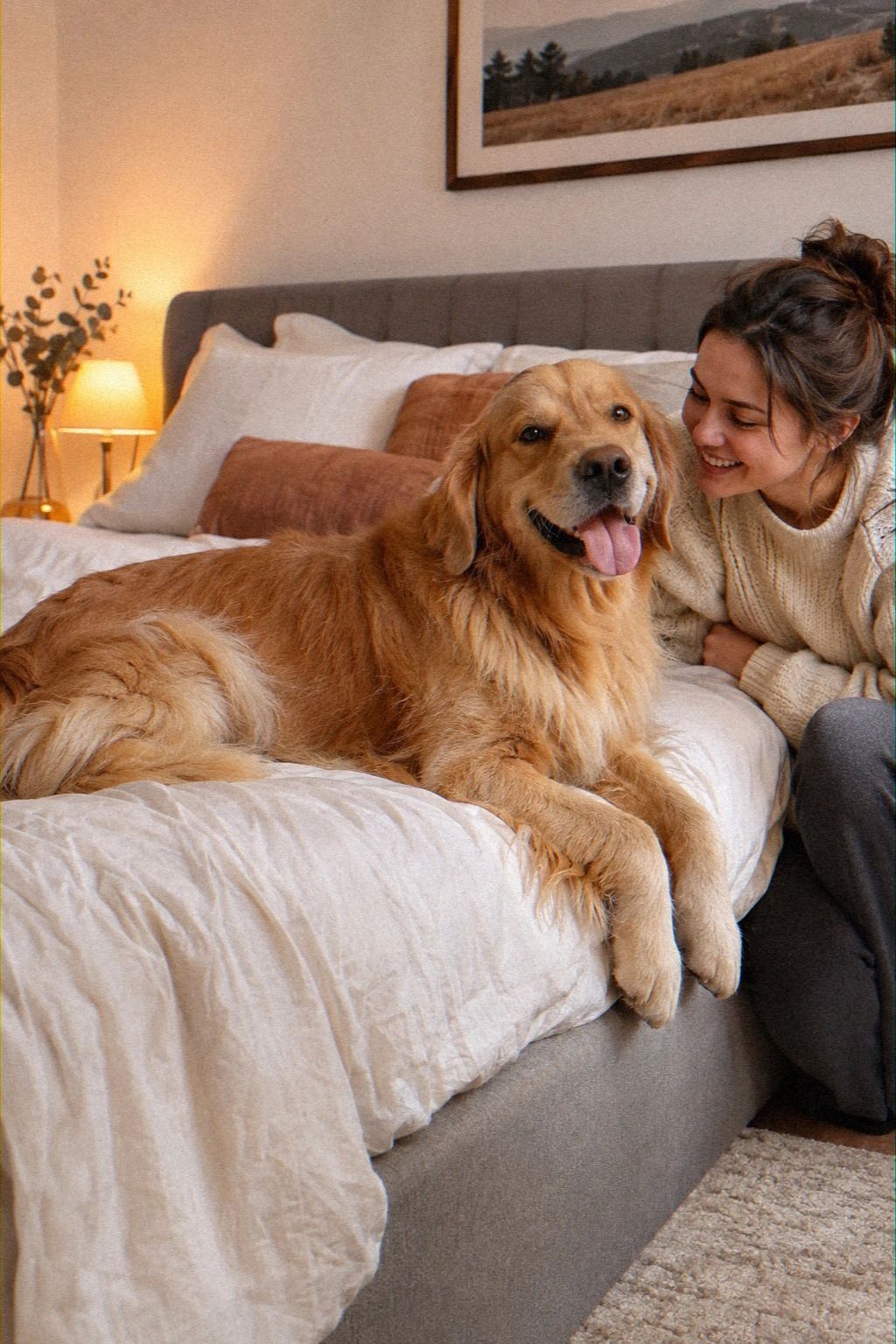
Slippers can signal the final stage of your routine because they’re the last footwear you put on and the first thing you remove. Choose a low-profile mule if you want an open back, or a closed slipper with a flexible sole if your feet tend to get cold.
The best pair should have a stable fit, a washable upper, and a sole that won’t catch on fabric. A shagreen-textured accent looks polished, but cotton terry or brushed fleece may offer better value if you wash slippers often.
I’d avoid oversized soles, trailing ties, and decorative pieces that snag. A minimal felt slipper can look more polished than a heavily embellished version. It’s a small purchase, but the right pair can make the routine feel finished.
Color can connect the slippers to the rest of the outfit without matching exactly. A camel slipper works with warm white and black. If you wear wide-leg trousers, choose a slipper with enough shape to remain visible beneath the hem.
9Personalized Cuffs Make Shared Bedtime Playful
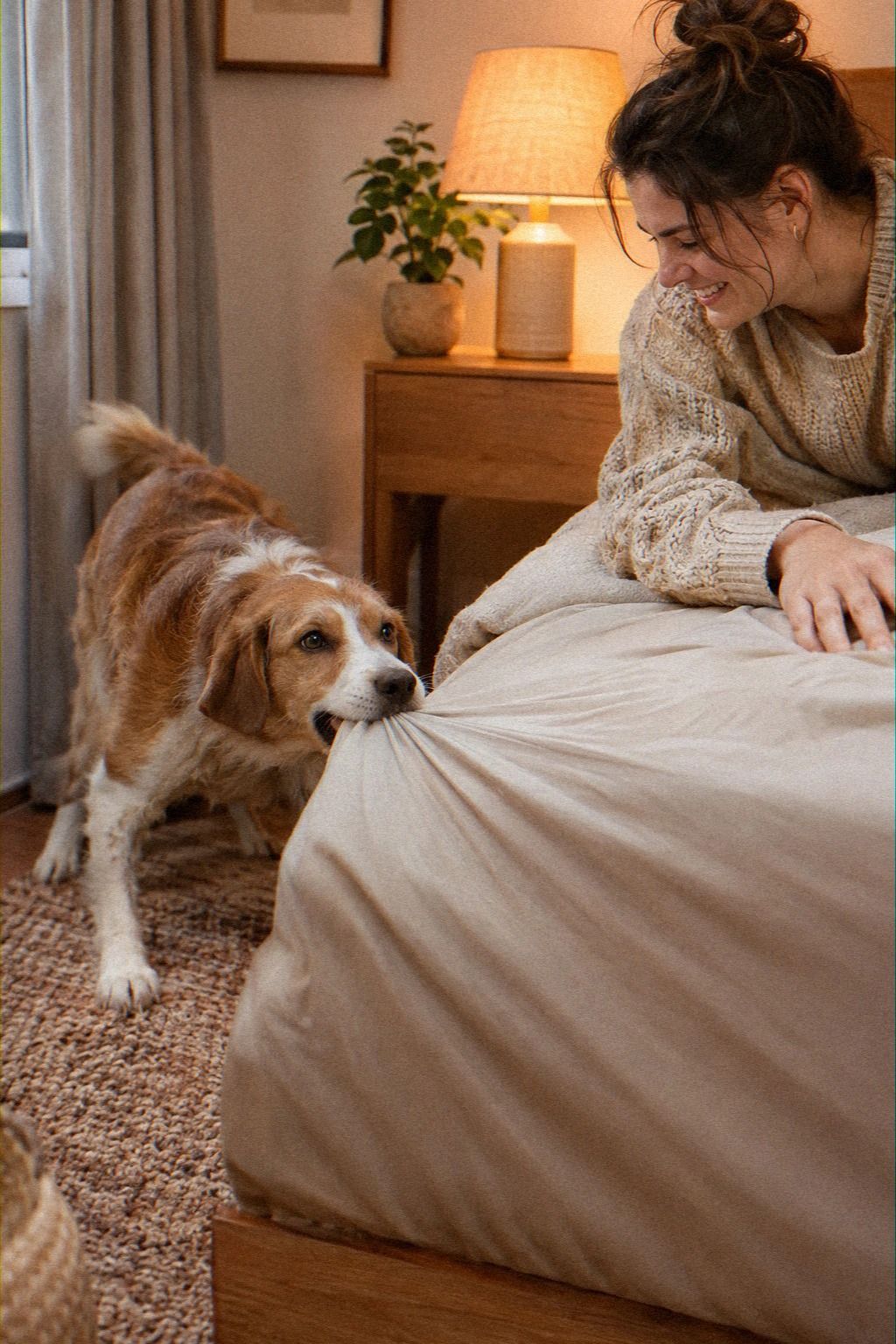
Personalized cuffs add personality where your hands can see it. A sleep shirt with embroidered initials, a copper button, or a narrow ivory linen cuff feels personal without making the whole outfit look themed.
Keep the detail close to the wrist or sleeve opening. That placement gives you a visual marker while you’re reading, drinking tea, or reaching for a lamp. I’d avoid large lettering across the chest because it turns a quiet sleepwear look into merchandise.
If you’re making the detail yourself, use a removable fabric label or a few simple stitches. You don’t need a costly custom order to create a distinctive finish. Check that no thread or trim is loose before settling in, especially if your dog likes to investigate clothing.
A contrasting cuff can also solve a practical styling problem. It gives a plain jersey top a defined edge and makes a cardigan look more intentional when the sleeve is folded back. Keep the finish flat so it doesn’t become uncomfortable in bed.
10Wide-Leg Pajamas Prevent Blanket Tangles
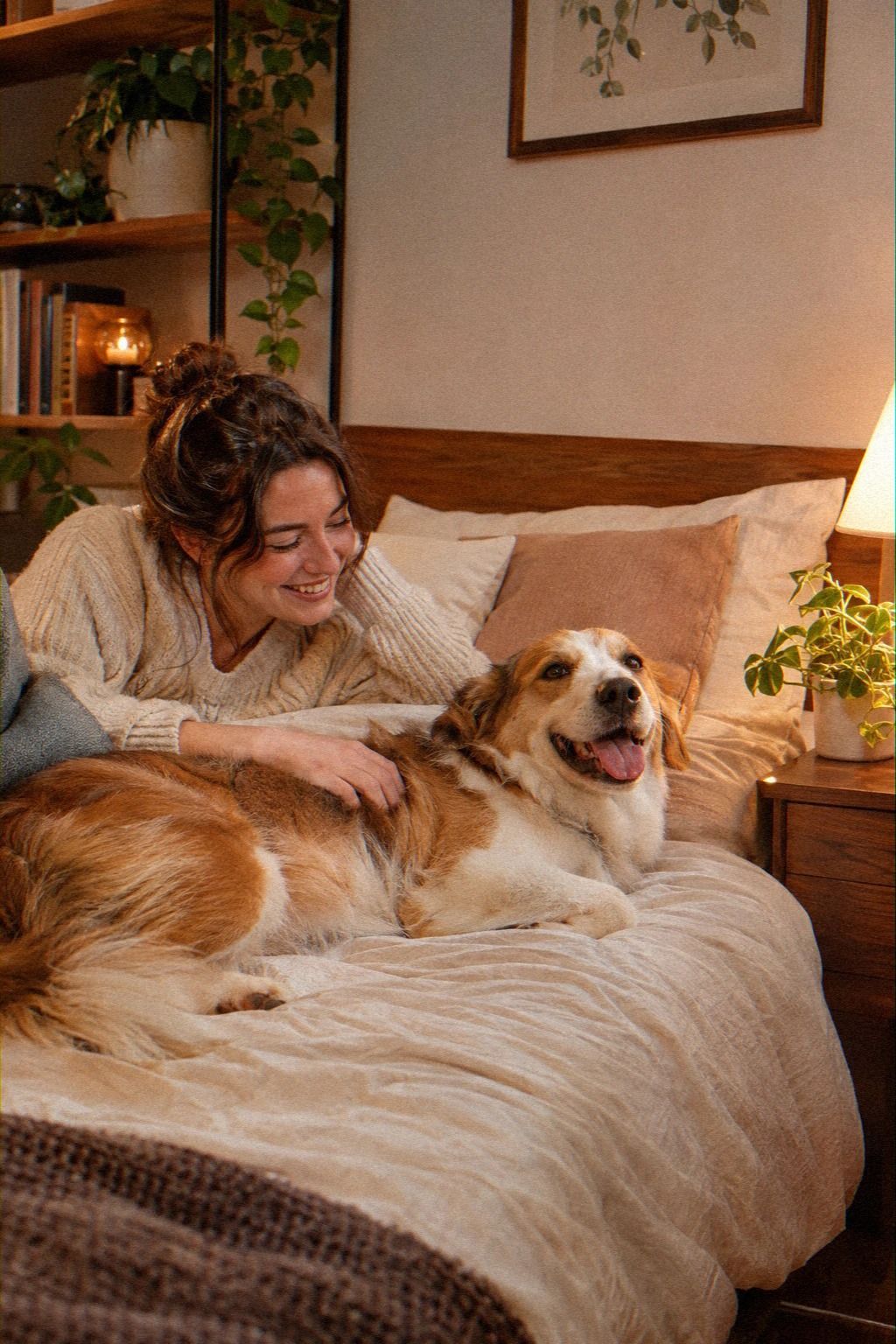
Wide-leg pajamas create an open drape around your legs, which can feel easier when you’re sitting or shifting position. Choose trousers with a waistband that stays flat and a hem that clears the floor. You’ll get relaxed movement without creating a fabric loop for your feet or your dog’s paws to catch.
A 120-gsm cotton voile or lightweight brushed cotton gives you movement without excessive volume. I’d skip very heavy fleece if you already dislike bunching. The extra fabric may look cozy, but it doesn’t always provide good value.
The stronger outfit uses a shorter fitted tank or neat warm-cream knit top above the wide leg. That proportion keeps your silhouette balanced. Ask yourself this: do you want more cloth, or more control?
For bedtime, I’d choose the open drape every time.
Pay attention to the rise. A high-rise trouser can keep the top tucked neatly, while a mid-rise cut may feel less restrictive.
Either can work, but the waistband shouldn’t roll when you sit. A fluid wide-leg trouser looks elegant only when the fabric moves freely instead of catching under your heels.
11Soft Headbands Complete a Dog-Friendly Sleep Look
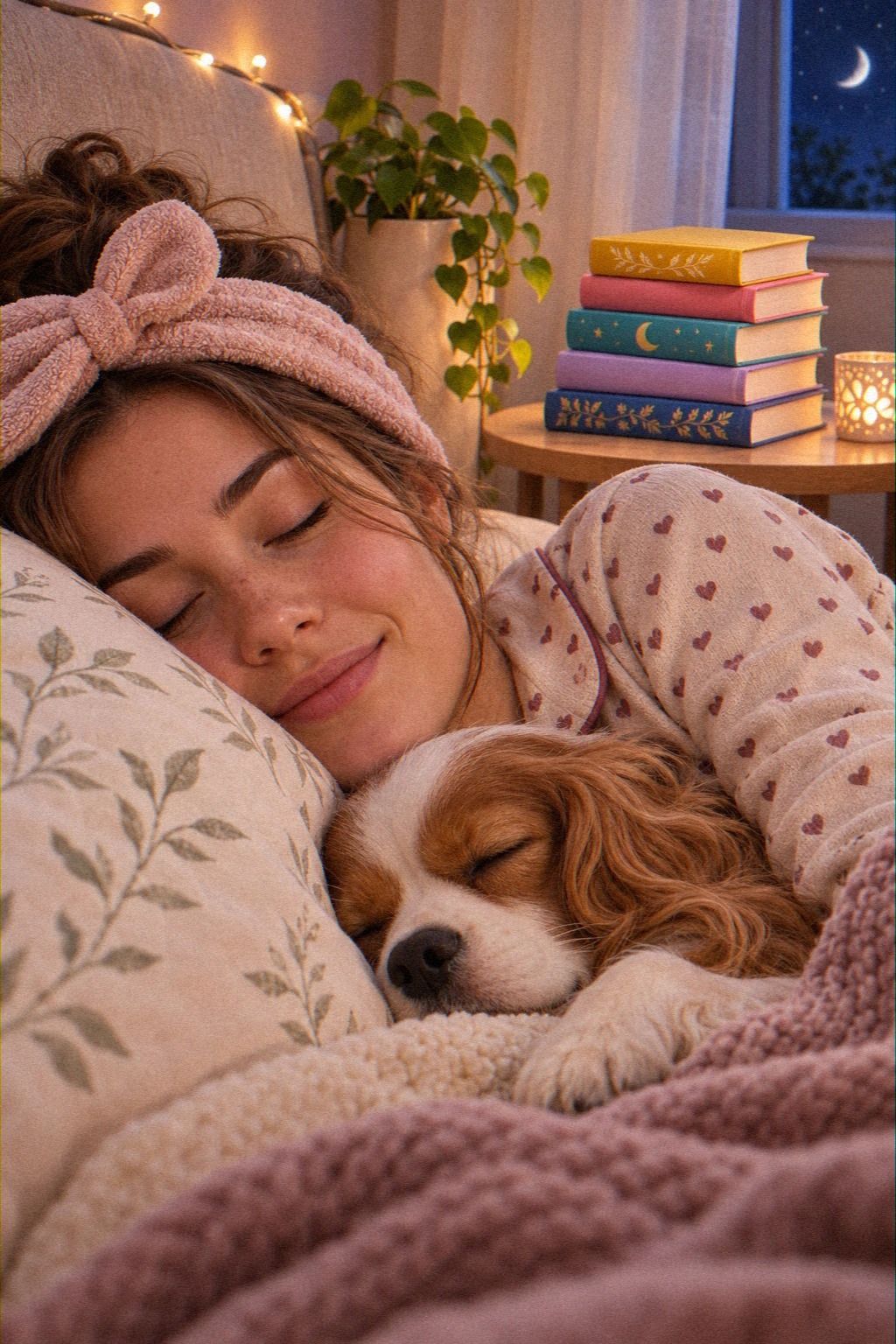
A soft headband frames your face without adding a hard accessory. Choose a wide modal jersey headband with a flat seam so it holds your hair gently without creating a bulky ridge.
You’ll want the headband to repeat the mood of your pajamas, not necessarily the exact color. Terracotta works with stone, while muted olive adds contrast to a terracotta or stone look. A washed cotton headband is often more practical than a shiny synthetic one.
I’d avoid stiff elastic, narrow bands that slip, and oversized knots that press against your head. If you’re wearing your hair up, leave enough room for the fabric to sit above the nape. This small frame makes the routine feel complete.
A twisted front adds visual interest, but a flat band is easier to pair with a robe or high collar. If your sleepwear already has piping or embroidery, choose a plain headband. The accessory should finish the look, not compete with it.
Start With the Silhouette, Not the Color
The silhouette controls how the outfit moves. A straight sleep shirt feels different from wide-leg trousers, and a fitted tank under a cardigan creates a different proportion from a long robe.
Begin with one shape that solves your actual problem. If fabric tangles around your legs, try a shorter top and a clean trouser. If you feel swallowed by oversized layers, choose a relaxed but structured set.
The right choice is usually the one you’ll reach for without thinking.
Color comes second. A cream monochrome palette, charcoal column, or muted olive combination can all work if the proportions feel intentional.
Try the outfit while sitting, standing, and walking a few steps. A garment that looks attractive on a hanger may twist at the waist or pool around the ankles once you move. The useful question isn’t whether the shape is fashionable.
It’s whether the shape remains easy at the end of the day.
A Simple Care Check Before You Buy
The cost of sleepwear includes care. Check whether the garment can be machine-washed, whether the elastic is replaceable, and whether the fabric will become transparent or misshapen after repeated use.
Cotton poplin, modal jersey, and washable satin are usually easier to maintain than delicate silk. That doesn’t make silk a bad purchase. It simply means the piece needs to match your habits.
I’d rather own two durable sets than five fragile ones. The more often you wear a garment, the more its value improves. A polished outfit that stays in the drawer isn’t a bargain.
Look at the care label before falling for the finish. Hand washing, air drying, and careful folding may be reasonable for one special robe, but they’re less convenient for a set you’ll wear several nights a week. A machine-washable fabric often wins through sheer repeatability.
What Makes the Cost Worth It?
A higher price can be worth it when the garment improves fit, fabric hand, construction, and repeat wear. Look at the seams, waistband, buttons, and hem before deciding. A flat waistband and clean stitching can matter more than a recognizable label.
For a budget refresh, begin with one versatile piece. A washable cotton trouser may offer more value than a decorative robe if you’ll wear it several nights a week. You can add an accent later.
The best budget isn’t always the lowest number. It’s the amount that gives you a comfortable, attractive piece you’ll actually use.
Compare cost per wear instead of judging the tag alone. A simple set worn twice a week may earn its place faster than a striking robe reserved for rare occasions. If the item works with two or three pieces already in your wardrobe, it has a stronger case.
Keep the Routine Easy to Repeat
A bedtime outfit works best when the order stays simple. Choose the pajamas, add one layer, put on slippers, and remove the final accessory before sleeping. You don’t need a complicated ritual.
I’d keep one complete combination together: matching top, trousers, robe, and headband. That makes the decision fast on tired evenings. If the outfit needs special styling every time, you probably won’t keep using it.
Clothing can support your habits, but it can’t solve every behavior problem. If your dog’s nighttime behavior remains difficult, consider a comfortable pet area and advice from a qualified trainer. The outfit is one part of the routine, not a substitute for practical support.
Keep the most-used pieces within easy reach. A small basket or drawer divider can hold the set without requiring a full wardrobe search. The simpler the sequence, the more likely you are to repeat it consistently.
What I Learned About Clothes, Dogs, and Bedtime Boundaries
The useful lesson is that clothing can shape your own behavior without making claims about your dog’s mind. When you change into the same kind of relaxed outfit, put on slippers, lower the light, and follow the same order, bedtime can feel more predictable.
I’d start with the silhouette before chasing a trend. A satin set, oversized shirt, or wide-leg pajama creates a different movement pattern, and that matters more than a seasonal color. After that, choose one repeatable accent: piping, a bandana echo, a cuff, or a headband.
Too many details make bedtime feel like styling work. You won’t keep doing it if every evening requires a new decision. Your best sleepwear is the outfit you’ll wash, reach for, and wear again.
There’s also a practical limit. A robe tie shouldn’t trail near your feet.
A headband shouldn’t pinch. A dog bandana shouldn’t have loose decoration.
A soft garment shouldn’t replace proper training or a comfortable pet area.
The strongest boundary is behavioral and visual at the same time. The clothes remind you what comes next, while the repeated sequence gives the evening a recognizable shape. That can make your own choices easier even when your dog remains unpredictable.
The Questions Worth Answering First
What is the best look for a small sleep space?
A monochrome pajama set or tailored oversized sleep shirt works well because it keeps your silhouette visually clean. Choose a compact cotton set, then add one slim headband or cuff detail. You’ll avoid extra layers that bunch when space is limited.
Where can I buy sleepwear on a budget?
Look for washable sleepwear at department stores, discount retailers, thrift stores, and second-hand marketplaces. You’ll often find cotton pajamas under ordinary loungewear sections rather than specialty displays. Check seams, cuffs, elastic, and fabric transparency before buying.
How much does a sleepwear refresh cost?
A clothing-focused refresh can stay around $50 to $300, depending on whether you buy one set or build several coordinated layers. Free options include restyling pieces you own, repeating one color, and using an existing robe or headband differently.
Can I create this look without buying anything?
Yes. Pair one neutral top with matching trousers, move a cardigan into your bedtime rotation, and coordinate a small accessory such as a cuff or headband. If you shop, choose one washable cotton piece before adding decorative details.
Is a coordinated sleepwear look worth it?
It can be worth it if the clothes make your routine easier and you’ll wear them regularly. A one-color outfit, low-profile slippers, and one soft layer create more impact than several rarely used accessories. Value comes from repeat wear, easy care, and a comfortable fit.
Is this approach suitable for a rental?
Yes. Clothing changes are naturally rental-friendly, and removable accessories don’t require alterations. Try a washable headband, robe, soft slippers, or fabric cuff.
You can create a polished routine without changing the walls, layout, or permanent fixtures.
Where I’d Start First
If I had to pick one, I’d start with monochrome loungewear. It gives you a clear silhouette without extra fabric, noise, or clutter. Build it from pieces you already own before buying anything new.
Your dog may negotiate, but your routine will finally have a shape.